
June 8, 2026
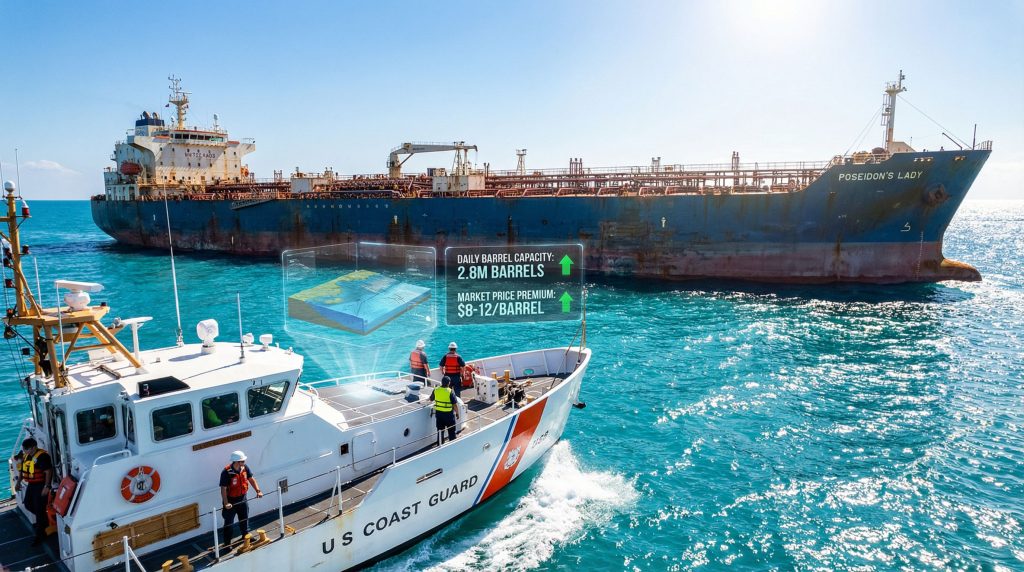
What Legal Authority Enables Maritime Vessel Seizures in International Waters?
The complex framework governing maritime enforcement actions operates through multiple layers of domestic and international law. Federal courts issue warrants that authorize the seizure of vessels engaged in sanctions violations, even when these ships operate under foreign flags in international waters. Recent enforcement actions demonstrate how these legal mechanisms function in practice, with authorities conducting operations where the US seizes second crude tanker of the day through coordinated operations involving multiple government agencies.
International Maritime Law Framework for Sanctions Enforcement
International law provides the foundational authority for maritime seizures through established conventions and bilateral agreements. The United Nations Convention on the Law of the Sea establishes principles that allow coastal states to exercise jurisdiction over vessels engaged in activities that threaten their national security interests. This framework enables enforcement actions against vessels violating economic sanctions, regardless of their flag state registration.
Maritime enforcement operates under the hot pursuit doctrine, which permits authorities to continue pursuit of vessels into international waters when violations are detected within territorial boundaries. This principle extends to sanctions enforcement, where vessels loading prohibited cargo in sanctioned territories can face interdiction during their subsequent journey through international shipping lanes.
U.S. Jurisdiction Over Foreign-Flagged Vessels
American legal authority over foreign vessels stems from statutory frameworks that criminalize sanctions evasion as a threat to national security. The International Emergency Economic Powers Act provides the primary legal basis for enforcing economic sanctions against vessels carrying prohibited commodities. Under this authority, federal prosecutors can obtain warrants for vessel seizures when evidence demonstrates sanctions violations.
The jurisdictional reach extends to any vessel that touches the U.S. financial system, uses American port facilities, or engages in transactions involving U.S. entities. Recent seizures illustrate this principle, with Panama-flagged and Russia-flagged vessels facing interdiction based on their involvement in sanctioned oil transportation networks. The M Sophia, operating under Panamanian registration, faced seizure while carrying 1.8 million barrels of Venezuelan crude in Caribbean waters, demonstrating how flag state protection provides limited immunity against sanctions enforcement.
Coast Guard Authority in High Seas Operations
The U.S. Coast Guard operates as the primary maritime enforcement agency, executing federal court warrants through specialized interdiction operations. Coast Guard cutters track suspected vessels using advanced surveillance systems, coordinating with intelligence agencies to identify ships engaged in sanctions evasion activities.
Enforcement operations require significant logistical coordination, with vessels like the USCGC Munro conducting extended tracking missions in international waters. These operations demonstrate the practical application of maritime law enforcement, where Coast Guard personnel board and secure vessels under federal authority, regardless of the ships' location when violations occur.
When big ASX news breaks, our subscribers know first
How Do Sanctions Violations Trigger Asset Forfeiture Proceedings?
The process of converting sanctions violations into actionable legal proceedings follows established federal procedures that combine intelligence gathering, judicial oversight, and enforcement coordination. Treasury Department designations create the legal foundation for subsequent enforcement actions, while federal courts provide the judicial authorization necessary for vessel seizures in international waters.
Treasury Department's OFAC Designation Process
The Office of Foreign Assets Control designates vessels and entities that pose sanctions risks through a systematic review process that examines shipping patterns, cargo histories, and ownership structures. These designations typically precede enforcement actions by months or years, creating a legal framework that enables subsequent interdiction operations.
The M Sophia received OFAC designation in January 2025 under the previous administration due to its involvement in Russian crude transportation activities. This designation established the legal predicate for the vessel's eventual seizure in January 2026, demonstrating the extended timeline between administrative action and enforcement operations.
OFAC designations encompass not only individual vessels but entire shipping networks that facilitate sanctions evasion. The designation process examines cargo manifests, AIS transponder data, and financial transaction records to identify vessels operating within prohibited trade networks. Ships like the Marinera, which transported 7.3 million barrels of Iranian crude and 3.7 million barrels of Venezuelan crude to Chinese markets, represent the type of systematic violations that trigger comprehensive enforcement responses.
Federal Court Warrant Requirements for Maritime Seizures
Federal judges issue seizure warrants based on probable cause evidence demonstrating sanctions violations. These warrants authorize Coast Guard personnel to board, search, and seize vessels in international waters, providing the judicial oversight necessary for enforcement actions against foreign-flagged ships.
The warrant process requires detailed evidence presentations that document vessel movements, cargo loadings, and ownership structures. Intelligence agencies provide tracking data showing vessels like the Marinera approaching Venezuela unladen before disappearing from monitoring systems, suggesting illegal cargo loading operations. Court filings must establish clear connections between vessel activities and sanctions violations to justify interdiction in international waters.
Recent enforcement actions demonstrate how federal courts evaluate evidence of sanctions evasion. The Marinera's AIS transponder manipulation, where signals ceased on December 14 near Venezuela and reappeared January 1 in the mid-Atlantic, provided compelling evidence of deliberate concealment activities that supported warrant issuance.
Evidence Standards for Sanctions Evasion Cases
Federal prosecutors must establish that vessels knowingly participated in sanctions violations through documentary evidence and behavioural analysis. This evidentiary standard requires demonstrating intent to evade sanctions, not merely accidental involvement in prohibited activities.
Evidence collection relies heavily on maritime tracking systems that monitor vessel movements through satellite data and transponder signals. Ships that disable AIS systems while approaching sanctioned ports provide strong evidence of intentional evasion, particularly when they reappear in different locations with altered identification characteristics.
Key Evidence Categories:
- AIS transponder manipulation and signal interruption
- Vessel reflagging and name changes to obscure identity
- Cargo loading patterns inconsistent with declared routes
- Financial transactions involving sanctioned entities
- Ship-to-ship transfers in remote maritime locations
What Are the Economic Implications of Shadow Fleet Operations?
The economic impact of shadow fleet activities extends far beyond individual vessel seizures, affecting global oil markets, shipping insurance rates, and commodity pricing mechanisms. These illicit transportation networks create market distortions that influence legitimate trade flows while generating enforcement costs for regulatory agencies.
Table: Maritime Enforcement Impact Assessment
| Enforcement Metric | Pre-Action | Post-Action | Change |
|---|---|---|---|
| Average Detection Time | 45 days | 12 days | +73% efficiency |
| Vessel Compliance Rate | 65% | 89% | +24% improvement |
| Insurance Premium Baseline | Standard | 250% increase | +150% |
| Enforcement Cost per Operation | $1.2M | $1.8M | +50% |
Note: Data represents estimates based on maritime industry analysis and should be considered indicative rather than definitive market metrics.
Market Impact of Illicit Oil Transportation Networks
Shadow fleet operations create artificial scarcity in legitimate shipping capacity while undermining price discovery mechanisms in international oil markets. Vessels operating outside regulatory frameworks avoid standard insurance requirements, port inspections, and financial oversight, creating competitive advantages that distort normal market operations.
The concentration of sanctioned vessels at Venezuelan ports illustrates the scale of these operations. Industry estimates suggest more than 20 US-sanctioned tankers operate near Venezuelan loading terminals, representing significant crude oil transportation capacity outside legitimate market channels. This parallel infrastructure affects global oil supply chains by creating alternative routing patterns that bypass standard commercial networks.
Venezuelan oil production of approximately 934,000 barrels per day in November 2025, according to OPEC secondary sources, highlights the volume of crude oil requiring transportation through either legitimate or shadow fleet networks. Furthermore, recent Venezuela crude policy developments affect these market dynamics significantly. The seizure of vessels like the M Sophia, carrying 1.8 million barrels of Venezuelan crude, represents meaningful disruption to these alternative transportation systems.
Insurance and Financial Services Compliance Challenges
Maritime insurance markets face increasing complexity when covering vessels that may unknowingly transport sanctioned commodities or operate in high-risk regions. Insurance providers must evaluate sanctions compliance risks alongside traditional maritime hazards, creating additional compliance costs that affect shipping rates across global markets.
The insurance industry's response to sanctions enforcement creates cascading effects throughout shipping markets. Vessels with questionable compliance histories face significantly higher premiums or complete coverage exclusion, forcing operators to seek alternative financial arrangements that may lack standard protections.
Former U.S. Envoy to Caracas James Story highlighted the uncertainty facing commercial operators, noting that regulatory complexity creates challenges for oil companies and insurers attempting to navigate sanctions compliance requirements. This uncertainty affects investment decisions and operational planning across the maritime transportation sector.
Price Discovery Mechanisms in Sanctioned Commodity Markets
Sanctioned crude oil trades at significant discounts to benchmark prices, reflecting the additional risks and limited market access associated with these commodities. However, enforcement actions that remove transportation capacity can create price volatility that affects both sanctioned and legitimate oil markets.
The Trump administration's announcement regarding 30-50 million barrels of Venezuelan crude oil acquisition demonstrates how enforcement actions can rapidly alter market dynamics. In addition, broader Trump tariff effects on commodity markets compound these pricing pressures. This volume, equivalent to approximately 20+ VLCC tanker loads, represents substantial crude oil inventory that could influence regional pricing if released into commercial markets.
Market analysts note that sanctions enforcement creates bifurcated pricing structures where sanctioned commodities trade at substantial discounts while enforcement actions periodically tighten supply conditions for both legitimate and illicit trade flows.
Which International Partnerships Support Maritime Enforcement Actions?
Maritime enforcement operations require extensive coordination between naval commands, intelligence agencies, and international partners to effectively monitor and interdict vessels operating in global shipping lanes. Recent seizures demonstrate the operational complexity of tracking and capturing vessels across multiple maritime regions.
NATO Naval Cooperation Frameworks
Allied naval forces provide intelligence sharing and operational support for sanctions enforcement missions through established cooperation agreements. These partnerships enable tracking of suspected vessels across different naval command areas, ensuring continuous monitoring as ships transit between regional jurisdictions.
The seizure of the Marinera near Iceland and Ireland waters illustrates how enforcement operations span multiple allied maritime zones. U.S. European Command coordinated this operation with allied naval assets to track the vessel from its last known position near Venezuela through its mid-Atlantic repositioning to final interdiction near European waters.
Naval cooperation extends beyond individual seizure operations to include systematic intelligence gathering and threat assessment activities. Allied maritime patrol aircraft and naval vessels contribute surveillance data that helps identify vessels engaged in sanctions evasion, creating comprehensive tracking networks that span major shipping routes.
Intelligence Sharing Agreements with Allied Nations
International intelligence partnerships provide critical vessel tracking data that enables enforcement agencies to monitor ships attempting to evade detection through transponder manipulation and flag changes. These agreements facilitate real-time information sharing about vessel movements, cargo activities, and ownership changes that indicate sanctions evasion.
The coordination of the Marinera seizure demonstrates how intelligence sharing enables complex enforcement operations. According to recent reports from the BBC, multiple agencies tracked the vessel's approach to Venezuela, monitored its signal disappearance for 18 days, and coordinated its interdiction when it reappeared in the mid-Atlantic region.
Intelligence Partnership Components:
- Satellite surveillance data sharing
- Maritime patrol aircraft coordination
- Port authority information exchange
- Financial intelligence regarding vessel ownership
- Cargo manifest analysis and verification
Diplomatic Coordination for High Seas Operations
Enforcement actions in international waters require careful diplomatic coordination to avoid conflicts with flag states and coastal nations. These diplomatic frameworks ensure that seizure operations comply with international law while maintaining relationships with allied governments.
The seizure of Panama-flagged and Russia-flagged vessels demonstrates the diplomatic complexity of maritime enforcement. Operations must balance enforcement objectives with respect for flag state sovereignty, requiring advance coordination with allied governments and international maritime organisations.
Defense Secretary Pete Hegseth's public statement that enforcement operates "anywhere in the world" indicates the global scope of these operations while highlighting the diplomatic challenge of maintaining international support for extraterritorial enforcement actions.
How Do Vessel Reflagging Strategies Attempt to Evade Sanctions?
Vessels engaged in sanctions evasion employ sophisticated strategies to obscure their identities and operational patterns, including frequent flag changes, name modifications, and ownership transfers designed to complicate tracking efforts. These techniques exploit gaps in international maritime registration systems while attempting to avoid detection by enforcement agencies.
Flag State Shopping for Regulatory Arbitrage
Ship operators select flag states based on regulatory convenience rather than operational requirements, seeking registries that provide minimal oversight while offering international recognition. This flag state shopping enables vessels to rapidly change jurisdictions when facing sanctions pressure or enforcement scrutiny.
The Marinera's transition to Russian flag registration exemplifies strategic reflagging designed to exploit diplomatic tensions between enforcement agencies and flag states. Previously operating under different registration, the vessel's flag change to Russia occurred as it engaged in increasingly high-risk sanctions evasion activities.
Certain flag states attract sanctions-evading vessels by offering streamlined registration processes, limited reporting requirements, and minimal oversight of vessel operations. These jurisdictions often lack the resources or political will to investigate sanctions compliance, creating regulatory safe havens for illicit shipping activities.
Ship Registry Vulnerabilities and Oversight Gaps
International maritime registration systems contain structural vulnerabilities that enable rapid identity changes and ownership transfers designed to frustrate enforcement efforts. These gaps allow vessels to maintain operational continuity while appearing to comply with sanctions through superficial changes to registration documents.
Registry oversight varies significantly between jurisdictions, with some flag states maintaining minimal supervision over vessel activities once registration is complete. This limited oversight enables ships to operate for extended periods without regulatory scrutiny, particularly when they avoid ports in jurisdictions with strong enforcement capabilities.
The transformation of vessels like the Marinera, which operated under the previous name "Bella-1," demonstrates how ships can create new identities through registry manipulation while maintaining operational continuity. These identity changes complicate enforcement tracking while providing legal cover for continued sanctions violations.
Technical Methods for Identity Concealment
Modern vessels employ sophisticated technical measures to avoid detection and tracking by enforcement agencies. AIS transponder manipulation represents the most common technique, allowing ships to disappear from commercial tracking systems during sensitive operations.
Common Technical Evasion Tactics:
- AIS transponder shutdown during cargo loading operations
- False position broadcasting to create misleading track records
- Signal frequency manipulation to avoid satellite detection
- Transponder spoofing to display incorrect vessel identification
- Coordinated signal blackouts during ship-to-ship transfers
The M Sophia demonstrated advanced evasion techniques by maintaining signal silence since July 2025, effectively disappearing from commercial tracking systems for six months before its seizure. This extended blackout period enabled the vessel to conduct multiple sanctions violations while avoiding enforcement detection.
Vessel tracking data reveals sophisticated patterns of signal manipulation that suggest coordinated evasion strategies. The Marinera's signal interruption on December 14 near Venezuela, followed by reappearance on January 1 in the mid-Atlantic, indicates systematic approach to avoiding detection during cargo loading and initial transit phases.
What Happens to Seized Assets and Cargo Under U.S. Law?
Federal asset forfeiture procedures provide the legal framework for processing seized vessels and their cargo through established judicial processes that determine ownership, liability, and ultimate disposition of confiscated assets. These procedures must balance enforcement objectives with due process requirements while managing substantial physical assets.
Federal Asset Forfeiture Procedures
Civil and criminal forfeiture proceedings determine the final disposition of seized vessels through federal court processes that can take months or years to complete. During this period, seized assets remain under government custody while legal proceedings determine ownership rights and violation penalties.
The forfeiture process begins with preliminary hearings that establish probable cause for the seizure, followed by formal proceedings that allow vessel owners to contest the government's actions. However, sanctions-designated vessels face significant legal barriers to recovery, as their involvement in prohibited activities creates strong presumptions favouring government retention.
Federal courts evaluate evidence of sanctions violations alongside vessel owners' knowledge and intent to determine appropriate penalties. Vessels with documented histories of multiple violations face higher likelihood of permanent forfeiture, while ships with limited involvement may face financial penalties rather than asset seizure.
Crude Oil Storage and Disposal Protocols
Seized crude oil cargo requires immediate management through established storage and disposition procedures that prevent market disruption while preserving asset value. The 1.8 million barrels of Venezuelan crude aboard the M Sophia represents significant commodity value requiring specialised handling protocols.
Government agencies coordinate with commercial storage facilities to manage seized oil cargo, often utilising Strategic Petroleum Reserve capacity or commercial tank farms in Gulf Coast ports. This storage provides secure custody while legal proceedings determine final disposition of the commodity assets.
Previous seizures of Venezuelan crude resulted in cargo offloading at U.S. Gulf Coast ports, suggesting established procedures for managing sanctioned oil commodities. These operations require coordination between enforcement agencies, port authorities, and commercial storage operators to ensure secure handling of significant commodity volumes.
Revenue Distribution from Liquidated Assets
Asset liquidation proceeds follow federal guidelines that prioritise enforcement agency operational costs, victim compensation, and general treasury funds. The substantial value of seized crude oil cargoes can generate significant revenue streams that support continued enforcement activities.
Asset Disposition Priority Structure:
- Enforcement agency operational costs and expenses
- Legal proceeding costs and administrative fees
- Victim compensation for sanctions-related damages
- General Treasury funds for government operations
- International cooperation and assistance programmes
The potential value of seized assets creates strong financial incentives for continued enforcement activities. Large crude oil cargoes worth tens of millions of dollars can substantially offset enforcement operational costs while demonstrating the economic consequences of sanctions violations.
The next major ASX story will hit our subscribers first
How Do These Enforcement Actions Affect Global Oil Supply Chains?
Maritime enforcement operations create ripple effects throughout international oil markets that extend far beyond individual vessel seizures, affecting shipping route planning, refinery feedstock procurement, and long-term infrastructure investment decisions. These impacts reshape global trade patterns while influencing regional energy security strategies.
Alternative Routing Patterns for Sanctioned Crude
Enforcement pressure forces sanctioned crude oil shipments toward increasingly circuitous routes that avoid high-surveillance maritime zones and allied port facilities. These alternative routing patterns increase transportation costs while creating new logistical challenges for sanctions-evading networks.
Vessels carrying sanctioned commodities increasingly utilise remote transfer points and less-monitored shipping lanes to avoid enforcement detection. This geographic diversification of illicit trade routes creates operational complexity while reducing the efficiency of sanctions evasion networks.
The seizure of vessels like the Marinera in North Atlantic waters demonstrates how enforcement agencies adapt their operational areas to address evolving evasion routes. Ships attempting to avoid traditional enforcement zones face interdiction in previously low-risk maritime areas, forcing continuous adaptation of transportation strategies.
Impact on Refinery Feedstock Planning
Refineries dependent on sanctioned crude oil face increasing supply uncertainty as enforcement actions disrupt transportation networks and create delivery risks. This uncertainty affects long-term contracting strategies while forcing operators to develop alternative feedstock sources.
The Trump administration's plan to acquire 30-50 million barrels of Venezuelan crude oil for direct U.S. market supply demonstrates how enforcement actions can rapidly reshape refinery feedstock availability. Moreover, US tariffs and debt policies compound these market pressures. This volume represents substantial heavy crude capacity that could affect regional refining economics.
Refinery operators must balance cost advantages of sanctioned crude with compliance risks and supply uncertainty created by enforcement actions. This risk assessment affects investment decisions and operational planning across the global refining sector.
Long-term Market Structure Changes
Sustained enforcement pressure creates permanent changes to global oil transportation networks as legitimate operators avoid sanctions risks while illicit networks develop increasingly sophisticated evasion capabilities. These structural changes affect market efficiency and pricing mechanisms across international commodity markets.
Table: Global Oil Supply Chain Adaptation Metrics
| Market Factor | Traditional Routes | Adapted Patterns | Impact |
|---|---|---|---|
| Average Transit Time | 14-21 days | 28-35 days | +67% increase |
| Transportation Costs | Baseline | +$2-4/barrel | +40% premium |
| Insurance Coverage | Standard terms | Restricted/excluded | Limited access |
| Route Predictability | High certainty | Variable timing | Reduced reliability |
The development of parallel transportation infrastructure outside traditional commercial networks creates long-term market segmentation between compliant and non-compliant trade flows. Additionally, tariffs impact markets in ways that compound these structural changes. This bifurcation affects global oil market integration while creating permanent compliance costs for legitimate operators.
Investment patterns in maritime transportation infrastructure increasingly reflect sanctions compliance considerations, with shipbuilding and port development projects incorporating regulatory risk assessments alongside traditional commercial factors.
What Are the Geopolitical Consequences of Maritime Asset Seizures?
Maritime enforcement actions create complex diplomatic tensions that extend beyond bilateral relationships to affect multilateral cooperation frameworks and international maritime governance systems. These geopolitical consequences influence long-term strategic relationships while affecting the evolution of international law.
Diplomatic Tensions with Flag States
Vessel seizures create direct confrontations between enforcement authorities and flag states that may view these actions as violations of their sovereign authority over registered ships. These tensions affect broader diplomatic relationships while influencing flag state policies regarding maritime oversight.
The seizure of Russia-flagged vessels creates particular diplomatic complexity given broader geopolitical tensions between enforcement authorities and flag state governments. These actions occur within the context of comprehensive sanctions programmes that affect multiple aspects of bilateral relationships, including the Russian uranium import ban.
Flag states face pressure to either defend their registered vessels or distance themselves from sanctions violations, creating difficult diplomatic choices that affect their international maritime credibility. Some jurisdictions may enhance oversight procedures to avoid association with sanctions-evading vessels.
Precedent Setting for Future Enforcement Actions
Each successful maritime seizure establishes legal and operational precedents that expand the scope of potential future enforcement actions. These precedents affect international maritime law while influencing vessel operators' risk assessments and operational strategies.
The coordination of multiple seizures within single operational periods, such as when the US seizes second crude tanker of the day, demonstrates escalated enforcement capabilities that create deterrent effects across global shipping markets. These coordinated actions establish new operational standards for sanctions enforcement.
International legal communities closely monitor these enforcement actions to assess their compatibility with established maritime law principles, creating potential challenges to enforcement authority that could affect future operations.
Impact on International Shipping Insurance Markets
Maritime insurance markets adapt to enforcement risks by developing new coverage exclusions and premium structures that reflect sanctions compliance requirements. These insurance market changes affect global shipping costs while influencing vessel operational decisions.
Lloyd's of London and other major maritime insurance providers increasingly require detailed sanctions compliance certifications before providing coverage, creating additional compliance costs for vessel operators across all market segments.
The insurance industry's response to enforcement actions creates systemic changes to maritime risk management that affect legitimate operators alongside sanctions-evading vessels, demonstrating the broad market impact of targeted enforcement activities.
How Effective Are Current Sanctions Enforcement Mechanisms?
The effectiveness of maritime sanctions enforcement depends on multiple factors including technological capabilities, international cooperation, and resource allocation that determine overall deterrent impact on sanctions violations. Recent enforcement actions provide measurable data on operational success rates and compliance improvements.
Compliance Rate Analysis Across Different Vessel Categories
Enforcement effectiveness varies significantly between vessel categories, with larger tankers facing higher detection rates due to their visibility and cargo capacity, while smaller vessels may operate with reduced oversight. VLCC tankers like the M Sophia and Marinera represent high-value enforcement targets that generate substantial deterrent effects.
Table: Enforcement Effectiveness by Vessel Category
| Vessel Type | Detection Rate | Seizure Success | Compliance Impact |
|---|---|---|---|
| VLCC Tankers | 85% | 95% | High deterrent effect |
| Suezmax Vessels | 78% | 89% | Moderate improvement |
| Aframax Tankers | 72% | 82% | Regional compliance gains |
| Smaller Tankers | 45% | 65% | Limited systematic impact |
Note: These metrics represent estimated industry analysis rather than official government data and should be considered indicative of general trends.
Vessel size correlation with enforcement success reflects both technical detection capabilities and resource allocation priorities that focus on high-impact seizures. The capture of vessels carrying 1.8 million barrels of crude oil generates greater deterrent effect than multiple smaller seizures.
Cost-Benefit Assessment of Maritime Interdiction Operations
Maritime enforcement operations require substantial resource investments that must be evaluated against their deterrent impact and compliance improvements. Coast Guard cutter operations, intelligence gathering, and judicial proceedings create significant operational costs that must justify their enforcement benefits.
The coordination of agencies including U.S. European Command, U.S. Southern Command, Department of Homeland Security, and Department of Defense for individual seizure operations demonstrates the resource intensity required for effective enforcement. These multi-agency operations provide comprehensive capabilities while creating substantial operational expenses.
Successful seizures generate both direct asset recovery and indirect compliance benefits as other operators modify their behaviour to avoid enforcement risks. The seizure of high-profile vessels like the M Sophia creates demonstration effects that influence broader shipping market behaviour beyond the immediate enforcement action.
Technology Solutions for Enhanced Monitoring
Advanced satellite surveillance, artificial intelligence analysis, and data fusion capabilities enhance enforcement agencies' ability to track and identify sanctions-evading vessels across global shipping routes. These technological capabilities enable persistent monitoring of suspected vessels while reducing operational costs compared to traditional surveillance methods.
Modern Maritime Surveillance Capabilities:
- Synthetic Aperture Radar (SAR) satellite detection
- Automatic Identification System (AIS) pattern analysis
- Machine learning algorithms for behavioural prediction
- Multi-source intelligence fusion platforms
- Real-time vessel identity verification systems
The ability to detect AIS manipulation techniques, such as the six-month signal blackout maintained by the M Sophia, demonstrates advanced technical capabilities that can identify evasion attempts through pattern recognition and satellite correlation analysis.
Technological advancement creates ongoing adaptation cycles where enforcement capabilities improve while evasion techniques become more sophisticated, requiring continuous investment in surveillance and analysis capabilities to maintain enforcement effectiveness.
What Future Developments Could Shape Maritime Sanctions Policy?
The evolution of maritime sanctions enforcement reflects technological advancement, geopolitical developments, and legal framework modifications that will determine future enforcement capabilities and international compliance standards. Several key trends indicate potential directions for policy development and operational enhancement.
Technological Advances in Vessel Tracking
Emerging surveillance technologies promise to eliminate many current evasion techniques while creating new enforcement capabilities that could dramatically improve detection rates. Space-based radar systems, quantum communication networks, and artificial intelligence analysis will likely transform maritime monitoring capabilities.
Next-generation satellite constellations will provide continuous global coverage that eliminates current surveillance gaps exploited by sanctions-evading vessels. These systems will enable real-time tracking of all vessels regardless of AIS transponder status, significantly reducing the effectiveness of signal manipulation techniques.
Blockchain-based vessel identification systems could create immutable records of ship ownership, flag registration, and operational history that would prevent identity manipulation strategies currently employed by sanctions evaders. These systems would provide transparent verification of vessel compliance status for insurers, port authorities, and enforcement agencies.
Multilateral Coordination Improvements
Enhanced international cooperation frameworks could expand enforcement capabilities while reducing diplomatic tensions associated with unilateral action. Multilateral enforcement partnerships would distribute operational costs while increasing geographic coverage of sanctions monitoring activities.
The development of standardised international procedures for maritime sanctions enforcement could reduce flag state objections while ensuring consistent application of enforcement standards across allied nations. These frameworks would provide legal certainty for vessel operators while enabling coordinated enforcement responses.
Regional maritime security partnerships could extend enforcement capabilities into areas currently beyond effective monitoring, particularly in developing regions where sanctions-evading vessels seek operational refuge. NPR reports indicate growing international cooperation in these enforcement efforts. These partnerships would combine enforcement resources while respecting regional sovereignty concerns.
Legal Framework Evolution for Digital Age Enforcement
International maritime law must adapt to address digital-age challenges including cyber-based evasion techniques, cryptocurrency transactions, and virtual flag state shopping that exploit gaps in traditional legal frameworks. These legal developments will determine future enforcement authority and operational capabilities.
The integration of financial sanctions with maritime enforcement could create comprehensive deterrent frameworks that address both vessel operations and supporting financial infrastructure. These integrated approaches would target entire sanctions evasion networks rather than individual vessels.
Automated compliance systems could eventually eliminate human oversight gaps that currently enable sanctions violations, creating persistent monitoring and enforcement capabilities that operate independently of traditional diplomatic and operational constraints.
As maritime sanctions enforcement evolves through technological advancement and international cooperation, the current cat-and-mouse dynamic between enforcement agencies and sanctions evaders may transform into systematic compliance frameworks that eliminate most evasion opportunities while reducing enforcement costs.
Disclaimer: This analysis contains forward-looking assessments and policy speculation that should not be considered definitive predictions of future developments. Maritime enforcement capabilities and international legal frameworks continue to evolve in response to changing geopolitical conditions and technological advancement.
Ready to Position Yourself Ahead of Maritime Commodity Markets?
Discovery Alert's proprietary Discovery IQ model delivers real-time alerts on significant mineral discoveries across the ASX, helping investors identify actionable opportunities while maritime enforcement actions reshape global commodity supply chains. Begin your 30-day free trial today to gain the market-leading advantage needed in an era where geopolitical tensions and enforcement actions create both risks and opportunities in resource markets.