May 22, 2026
The global rare earth elements market operates within a complex web of supply chain vulnerabilities that extend far beyond simple extraction and processing. Understanding the intricate dynamics of monazite mineralization, carbonatite geology, and downstream refining capabilities reveals why certain deposits possess strategic significance that transcends conventional mining economics. The Lindian Resources Kangankunde Rare Earths Project exemplifies how geological advantages intersect with supply chain security imperatives, particularly when considering rare earth reserves distribution patterns and their implications for global markets.
Furthermore, the technical mechanisms governing rare earth element separation, the geopolitical implications of processing capacity concentration, and the operational frameworks required for large-scale production create a multifaceted investment landscape. This complexity becomes increasingly relevant as nations prioritise critical minerals energy transition strategies to secure their energy futures.
Geological Characteristics That Define World-Class Rare Earth Deposits
Carbonatite-Hosted Mineralization and Processing Advantages
Carbonatite-hosted rare earth deposits represent a geological formation type that offers distinct processing advantages compared to alternative mineralization styles. The Lindian Resources Kangankunde Rare Earths Project in Malawi exemplifies this geological advantage through its monazite-dominant mineralogy within a Cretaceous carbonatite complex. This specific geological setting produces ore that requires less complex metallurgical processing compared to bastnaesite-dominant deposits commonly found in other global locations.
The technical superiority of monazite mineralization stems from its crystalline structure and chemical composition. Unlike bastnaesite, which often requires multiple stages of flotation and magnetic separation, monazite can be efficiently concentrated through conventional gravity separation techniques. Consequently, this processing simplicity translates directly to operational cost advantages and reduced environmental impact from chemical reagent usage.
Key Geological Metrics for Kangankunde:
- Total Rare Earth Oxide (TREO) grade: 2.19% across 261 million tonnes
- Critical NdPr content: 1.2 million tonnes
- Deposit age: 117-129 million years (Cretaceous period)
- Mineralization style: Monazite-dominant carbonatite
- Impurity profile: Exceptionally low radioactive elements
Comparative Resource Quality Analysis
When evaluated against global rare earth deposits, Kangankunde demonstrates superior characteristics in multiple critical parameters. The 45-year mine life projection for initial operations places this project among the longest-duration rare earth developments worldwide, providing exceptional supply security for offtake partners and strategic stability for investors.
Moreover, the low impurity content significantly reduces downstream processing complexity, particularly regarding radioactive waste management protocols that add substantial costs to many competing projects. This geological advantage becomes increasingly important as environmental regulations tighten globally and waste disposal costs escalate, highlighting the critical minerals strategic importance in modern resource planning.
When big ASX news breaks, our subscribers know first
Infrastructure Integration and Development Timeline Advantages
Strategic Transportation Corridor Positioning
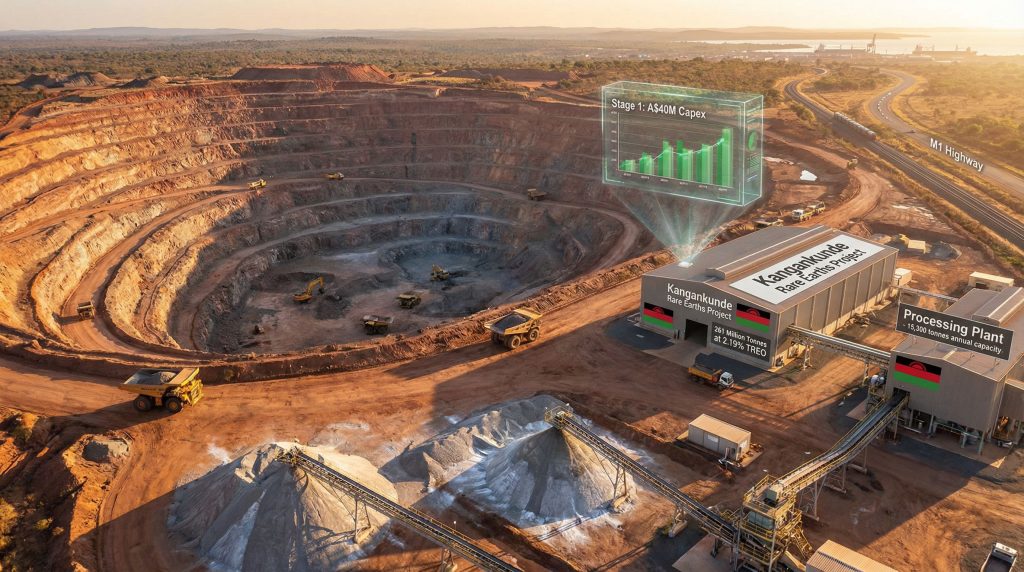
The Kangankunde project benefits from exceptional infrastructure positioning within established Southern African transport networks. Located 90 kilometres north of Blantyre and 13 kilometres south of Balaka, the project maintains direct access to Malawi's primary transportation infrastructure without requiring substantial new construction.
Transportation Infrastructure Framework:
| Infrastructure Component | Distance/Specification |
|---|---|
| M1 Highway Access | Sealed road to site entrance |
| Rail Network | 9 kilometres to existing infrastructure |
| Port Connectivity | Direct rail to Nacala Port, Mozambique |
| Local Access | 5 kilometres unsealed road to mining lease |
The rail connection to Nacala Port creates a direct export pathway to global markets, eliminating the logistical complexity and cost burden associated with developing new transportation infrastructure. This connectivity advantage represents significant capital savings compared to greenfield projects requiring extensive infrastructure development.
Power Supply and Utilities Infrastructure
Grid connectivity scheduled for completion in July 2026 eliminates the capital-intensive requirement for standalone power generation facilities. This infrastructure advantage reduces both initial capital expenditure and ongoing operational costs while providing reliable power supply for processing operations.
In addition, the proximity to existing electrical infrastructure demonstrates the strategic value of project location selection in minimising development risk and accelerating production timelines. Projects requiring new power generation facilities often face extended permitting processes and substantial additional capital requirements.
Risk Management Through Phased Development Strategy
Stage 1 Production Framework and Capital Efficiency
Lindian Resources has structured the Kangankunde development through a carefully designed phased approach prioritising capital efficiency and operational de-risking. Stage 1 operations target 15,300 tonnes annual production of monazite concentrate at 55% TREO grade over the projected 45-year operational period.
Stage 1 Technical Specifications:
| Parameter | Specification |
|---|---|
| Annual Production Capacity | 15,300 tonnes monazite concentrate |
| TREO Grade Target | 55% |
| Projected Mine Life | 45 years |
| Mining Methodology | Open-pit truck and shovel |
| Operational Footprint | 364 hectares |
| Processing Approach | Conventional gravity separation |
Capital Expenditure Framework and Financial Metrics
The project's pre-production capital requirement of $40 million (including 12.5% contingency) represents one of the most competitive capital intensity ratios among global rare earth developments. This conservative capital estimate reflects the straightforward open-pit mining methodology and conventional processing technology selection.
Furthermore, the low capital intensity becomes particularly significant when compared to projects requiring complex processing facilities or extensive infrastructure development. Capital efficiency directly impacts project economics and investor returns whilst reducing financing complexity and development risk.
"The combination of low capital requirements, established infrastructure access, and long mine life creates an investment profile characterised by reduced execution risk and stable long-term returns potential."
Strategic Partnership Framework and Market Access
Iluka Resources Offtake Agreement Structure
The 15-year offtake agreement with Iluka Resources for 90,000 tonnes of concentrate provides exceptional revenue certainty and direct market access. This partnership creates a direct connection between African rare earth production and Australian refining capacity, establishing a Western supply chain alternative to Chinese processing dominance.
Partnership Strategic Benefits:
- Guaranteed market access for primary production volume
- Stable pricing mechanism over extended operational period
- Integration with established Western refining capacity
- Reduced marketing and logistics complexity
- Supply chain security for critical materials
Supply Chain Diversification Implications
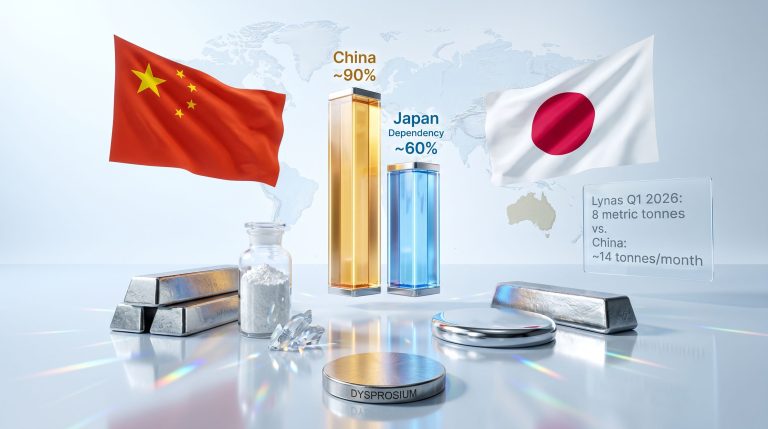
The Kangankunde-Eneabba supply chain represents a strategic component in Western efforts to reduce rare earth supply chain vulnerabilities. By connecting African mining operations with Australian processing capabilities, this partnership addresses critical weaknesses in current supply configurations where Chinese operations control approximately 85% of global refining capacity.
Consequently, this supply chain integration becomes increasingly important as governments prioritise critical material security and implement policies supporting alternative supply sources. The partnership structure provides both companies with competitive advantages in serving markets requiring non-Chinese supply sources, particularly considering US‑China trade implications for global supply chains.
Construction Progress and Operational Development
Current Development Milestones
Construction activities at Kangankunde have achieved significant milestones ahead of original scheduling. The project has completed over 100,000 Lost Time Injury (LTI) free hours, demonstrating strong safety performance during critical construction phases.
Construction Status Framework:
- Site establishment: 95% complete (ahead of schedule)
- Mining fleet deployment: Komatsu equipment mobilised
- Stockpile and plant preparation: 95% complete
- Power line installation: In progress
- First blast target: April 2026
- Grid power connection: July 2026
Workforce Development and Community Integration
The operational model prioritises local workforce development with over 70% of positions filled by Malawian nationals. This approach reduces operational costs whilst ensuring strong community integration and maintaining social licence for operations.
Moreover, local workforce development creates multiple strategic advantages including reduced labour costs, improved community relations, and enhanced operational sustainability. The emphasis on local hiring demonstrates commitment to sustainable development principles increasingly important to institutional investors and development finance institutions.
Expansion Potential and Long-Term Strategic Value
Stage 2 Development Framework
Preliminary planning for Stage 2 expansion targets 50,000 tonnes annual production capacity, representing more than triple the initial production rate. This expansion potential would position Kangankunde among the world's largest rare earth concentrate producers, potentially supplying approximately 20% of global concentrate demand at full scale operation.
However, the expansion framework demonstrates the project's scalability and long-term value creation potential. Staged development allows operational optimisation and market validation before major capacity increases whilst maintaining capital efficiency throughout the development process, reflecting broader mining industry innovation trends.
Resource Extension and Exploration Upside
The expanded 2,500-hectare mining lease provides substantial exploration opportunities beyond the current 900-hectare Stage 1 footprint. Additional drilling and resource definition work could potentially extend mine life and production capacity significantly beyond current projections.
In addition, exploration upside represents significant value creation potential for shareholders whilst providing additional security for long-term offtake agreements. The geological setting suggests potential for resource extensions that could support decades of additional production.
The next major ASX story will hit our subscribers first
Critical Materials Supply Security and Strategic Importance
NdPr Production and Permanent Magnet Applications
Kangankunde's 1.2 million tonnes of contained Neodymium-Praseodymium (NdPr) represents a strategic resource for permanent magnet manufacturing essential to modern technology applications. These critical elements enable wind turbine generators, electric vehicle motors, and defence systems, making secure supply access a national security priority for Western nations.
Furthermore, the concentration of NdPr within the deposit provides direct exposure to the most valuable components of the rare earth element suite. Permanent magnet applications drive the highest value markets within the rare earth sector, creating premium pricing opportunities for high-grade NdPr concentrates.
Geopolitical Supply Chain Considerations
Kangankunde's location in Malawi provides geopolitical stability advantages compared to other rare earth producing regions. Malawi's stable democratic governance, English-language business environment, and strong ties to Western nations create favourable conditions for long-term supply partnerships.
Consequently, political stability becomes increasingly important as rare earth elements gain strategic significance in technology and defence applications. Supply chain security considerations influence government policy and procurement decisions, creating preferential treatment for politically stable supply sources.
Regulatory Framework and Environmental Management
Permitting and Compliance Achievement
Kangankunde has secured all major regulatory approvals required for commercial operations, including environmental licensing (Q3 2021) and mining licence acquisition (Q2 2022). This comprehensive permitting foundation eliminates regulatory uncertainty that often delays mining project development timelines.
Moreover, the completed permitting process demonstrates successful navigation of Malawi's regulatory framework and establishes precedent for future expansion phases. Regulatory certainty reduces development risk and enables focus on operational execution rather than permit acquisition.
Environmental Management Strategy
The project's environmental management approach emphasises minimal ecological disruption through careful mine planning and progressive rehabilitation protocols. The low radioactivity levels in the ore body significantly reduce environmental management complexity compared to other rare earth operations requiring specialised radioactive waste handling.
Therefore, environmental advantages translate directly to operational cost savings and reduced regulatory compliance burden. Projects with low environmental impact profiles face fewer regulatory restrictions and community opposition whilst maintaining stronger social licence for operations.
Market Dynamics and Investment Timing
What Drives Rare Earth Market Demand?
Global rare earth demand continues expanding rapidly, driven by renewable energy infrastructure development, electric vehicle adoption, and defence modernisation programmes. Kangankunde's Q4 2026 production target aligns with projected supply deficits in Western-controlled concentrate supply chains.
However, market timing becomes critical for new production as demand growth accelerates and supply chain security gains priority in government policy. Projects achieving production during peak demand periods benefit from optimal pricing conditions and enhanced strategic value.
Investment Climate and Financial Security
The successful $91.5 million oversubscribed institutional placement demonstrates strong investor confidence in development prospects. This funding, combined with the $20 million construction loan facility, provides complete financial coverage for Stage 1 development without additional equity dilution requirements.
Consequently, financial security eliminates development risk associated with funding shortfalls whilst maintaining shareholder value through completion of initial production. The oversubscribed nature of the equity raising indicates strong institutional support for the project's strategic value proposition.
Technical Processing Advantages and Metallurgical Considerations
Monazite Processing Methodology
The monazite-dominant mineralisation at Kangankunde enables utilisation of conventional gravity separation techniques rather than complex flotation processes required for alternative rare earth mineral types. This processing advantage reduces both capital expenditure for plant construction and ongoing operational costs for chemical reagents.
Furthermore, gravity separation technology offers proven reliability and lower environmental impact compared to chemical processing methods. The technical simplicity reduces operational risk whilst maintaining high recovery rates for valuable rare earth elements.
Concentrate Quality and Downstream Processing
The target 55% TREO grade for monazite concentrate represents premium quality suitable for efficient downstream processing at refining facilities. High-grade concentrates command premium pricing whilst reducing transportation costs per contained unit of rare earth oxides.
In addition, premium concentrate quality becomes increasingly important as refining facilities optimise for efficiency and cost reduction. High-grade feedstock reduces processing complexity and improves recovery rates at downstream facilities.
Investment Risk Assessment and Mitigation Strategies
Operational Risk Factors
Construction and operational risks are mitigated through experienced contractor selection, proven technology deployment, and comprehensive safety protocols. The achievement of over 100,000 LTI-free hours demonstrates effective risk management implementation during critical development phases.
Moreover, risk mitigation strategies include diversified contractor engagement, proven equipment selection, and comprehensive insurance coverage. The straightforward mining and processing methodology reduces technical risk compared to projects requiring unproven technologies, as highlighted in recent mining industry developments.
Market and Financial Risk Management
The 15-year offtake agreement with Iluka Resources provides revenue certainty and market access security, substantially reducing marketing risk for initial production. Long-term contracts enable financial planning and debt service capability throughout the operational period.
However, financial risk management includes conservative capital estimates, comprehensive contingency provisions, and staged development approach enabling optimisation before major expansion commitments. Currency exposure is managed through natural hedging with USD-denominated revenue and local currency operational costs.
The Lindian Resources Kangankunde Rare Earths Project represents a compelling intersection of geological advantages, strategic positioning, and market timing that positions it as a significant player in the evolving global rare earth supply landscape. Through its carefully structured development approach, strong partnerships, and exceptional resource characteristics, the project demonstrates how modern mining operations can address both commercial objectives and strategic supply chain security requirements.
Disclaimer: This analysis is for informational purposes only and should not be considered investment advice. Mining investments carry significant risks including operational, financial, and market uncertainties. Potential investors should conduct independent research and seek professional financial advice before making investment decisions. Past performance does not guarantee future results, and forward-looking statements involve assumptions that may not materialise.
Searching for the Next Strategic Rare Earth Investment?
Discovery Alert's proprietary Discovery IQ model delivers real-time alerts on significant rare earth and critical mineral discoveries, instantly empowering subscribers to identify actionable opportunities ahead of the broader market. Begin your 14-day free trial today and secure your market-leading advantage in this rapidly evolving sector.