July 28, 2026
The lithium carbonate market faces unprecedented complexity as global energy infrastructure undergoes fundamental transformation. Understanding lithium carbonate prices 2026 requires examining multiple interconnected factors that extend far beyond traditional supply-demand calculations. Furthermore, as global energy infrastructure evolves, pricing patterns are being reshaped by technological shifts, geopolitical realignments, and emerging industrial applications that were barely recognised just years ago.
Understanding the Current Market Dynamics
The lithium carbonate market has entered a phase of structural rebalancing following extreme price cycles that saw valuations swing from approximately $50 per kilogram three years ago to lows of $7-8 per kilogram in 2025. Market participants are now navigating a normalised pricing environment that reflects more sustainable supply-demand fundamentals.
Supply-Demand Fundamentals Reshaping Price Trajectories
Current market conditions indicate a transition from oversupply scenarios toward increasingly balanced market structures. Several critical factors are driving this shift, including regulatory constraints on Chinese mining operations and export restrictions from key producing regions like Zimbabwe. In addition, these supply-side pressures coincide with accelerating demand from multiple industrial sectors.
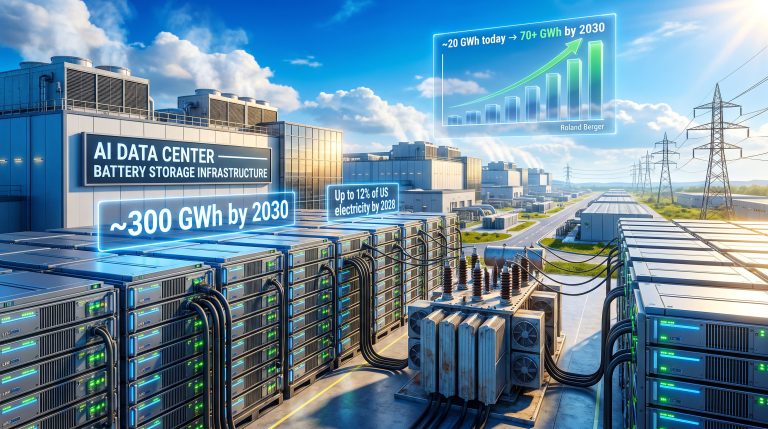
Energy storage system deployment has emerged as a significant demand catalyst, particularly as artificial intelligence infrastructure expands globally. Data centre proliferation requires substantial battery backup systems, creating a new consumption category that operates independently from traditional electric vehicle demand patterns. Consequently, this diversification of end-use applications provides greater stability to overall lithium consumption trends.
The Chinese market remains central to global lithium flows, with major producers like SQM directing approximately 70% of their output to Chinese customers. However, this geographic concentration creates both opportunities and vulnerabilities for market participants depending on regional economic conditions and trade relationships.
Key Price Drivers Creating Market Volatility
Geopolitical tensions have introduced new variables into lithium pricing psychology. Regional conflicts, particularly in the Middle East, are driving increased interest in electric vehicle adoption as consumers and governments seek reduced petroleum dependency. Furthermore, this phenomenon creates upward pressure on battery metal demand that extends beyond traditional environmental motivations.
Supply chain resilience concerns are prompting strategic stockpiling behaviour among industrial consumers. Companies across the battery manufacturing sector are evaluating inventory strategies that prioritise security of supply over just-in-time delivery models. As a result, this contributes to sustained demand at current price levels.
Infrastructure development requirements for grid-scale energy storage are creating long-term demand visibility that supports higher price floors. For instance, utility companies and independent power producers are committing to multi-year battery storage deployment programmes that provide predictable consumption patterns for lithium producers.
When big ASX news breaks, our subscribers know first
How Are Global Supply Constraints Affecting 2026 Pricing?
Supply-side constraints are manifesting through multiple channels simultaneously, creating compounding effects on available material for spot market transactions. Recent mine closures in China, combined with Zimbabwe's export restrictions, have removed significant production capacity from global markets just as demand acceleration is occurring.
Critical Supply Bottlenecks Emerging Worldwide
Chinese mining operations face increased regulatory scrutiny that has resulted in temporary and permanent facility closures. These restrictions reflect environmental protection priorities but create immediate supply gaps that cannot be easily replaced by alternative sources. Moreover, the processing capacity required to convert raw lithium ore into battery-grade carbonate represents an additional constraint layer.
Zimbabwe's decision to restrict lithium exports has eliminated a substantial supply source that previously served international markets. This policy shift reflects the country's desire to develop domestic value-added processing capabilities. However, it removes approximately 100,000 metric tons of annual production capacity from global availability in the near term.
Inventory levels across major storage and distribution hubs have declined significantly, with lithium carbonate stocks reaching multi-year lows. This depletion reflects both increased consumption and reduced production flexibility from operating mines.
Regional Production Capacity Analysis
Production capacity varies significantly across major lithium-producing regions, with each facing distinct operational challenges and expansion constraints:
South American operations benefit from large brine resources but face water availability limitations and complex environmental permitting processes. Production costs in the Atacama region remain among the world's lowest. Nevertheless, expansion timelines are extended due to regulatory requirements.
Australian hard rock mining provides higher-grade lithium ore but requires extensive processing infrastructure to reach battery-grade specifications. Transportation costs and energy requirements for conversion processing create higher operational expenses compared to brine-based production.
Chinese domestic production serves primarily local consumption, with limited export availability due to strong internal demand from battery manufacturers. Government policies prioritise strategic mineral security, reducing reliance on imported raw materials.
African mining operations offer significant resource potential but face infrastructure limitations and political stability concerns that complicate investment decisions and operational planning.
What Price Range Should Investors Expect in 2026?
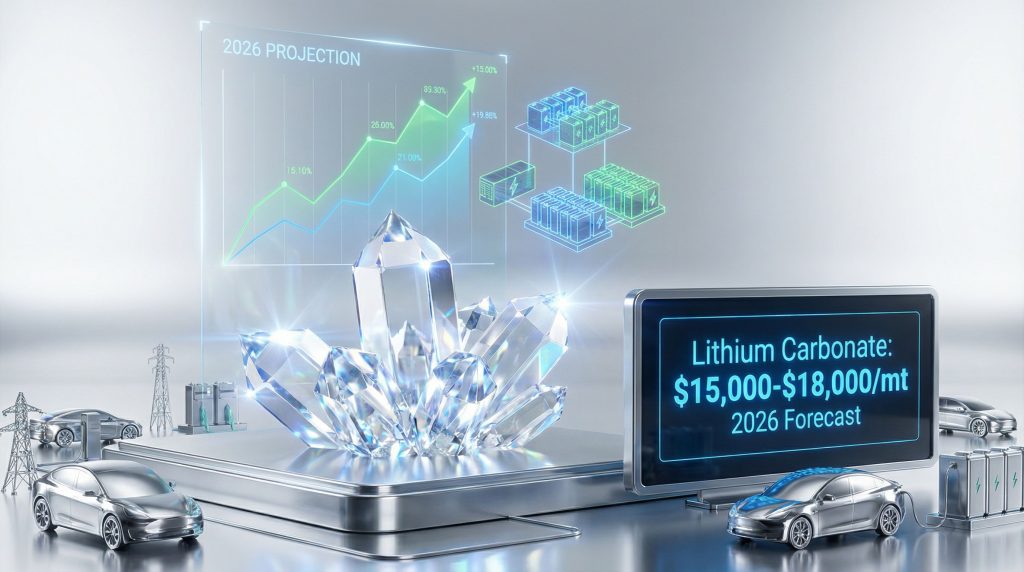
Industry executives anticipate lithium carbonate prices 2026 will stabilise within a range of $15,000-$18,000 per metric ton throughout 2026. This pricing band reflects current production cost structures while accounting for normal market volatility around supply disruptions and demand fluctuations.
Analyst Consensus and Market Forecasts
Carlos Diaz, Vice President of Lithium at SQM, has indicated expectations for prices to hover around $15-18 per kilogram, with periodic spikes potentially reaching $20 and temporary declines possibly approaching $12. This assessment explicitly rejects both the extreme highs of approximately $50 per kilogram experienced three years ago and the recent lows of $7-8 per kilogram seen in 2025.
SQM's pricing outlook carries significant weight given the company's position as the world's second-largest lithium supplier. Their continued optimism about demand recovery suggests confidence in the sustainability of current price levels based on fundamental supply-demand dynamics rather than speculative trading activity. Furthermore, current australia lithium tax breaks are supporting regional production expansion efforts.
The normalised price range reflects several underlying assumptions:
• Production cost floors that prevent sustained pricing below $12,000 per metric ton
• Supply-demand balance that supports premium pricing for battery-grade material
• Geopolitical factors that introduce periodic volatility without permanent price displacement
• Technology adoption rates that sustain industrial demand growth
Scenario-Based Price Modeling
Bullish scenarios ($20,000-$25,000 per metric ton) would likely result from accelerated energy storage deployment combined with major supply disruptions. Rapid artificial intelligence infrastructure buildout could drive battery demand beyond current forecasts. Additionally, simultaneous production interruptions in multiple regions would create acute supply shortages.
Base case expectations ($15,000-$18,000 per metric ton) assume continued demand growth matching current trajectories alongside gradual capacity expansion from existing producers. This scenario incorporates normal operational disruptions and seasonal demand variations without major systemic shocks.
Bearish outcomes ($12,000-$15,000 per metric ton) would require either significant demand destruction from economic recession or accelerated new production capacity coming online faster than consumption growth. Alternative battery chemistries that reduce lithium intensity could also contribute to downward price pressure in this scenario.
How Will Energy Storage Demand Transform the Market?
Energy storage systems are creating a distinct demand category that operates with different consumption patterns compared to electric vehicle applications. Grid-scale storage requires large volumes of lithium carbonate with extended operational lifespans. Consequently, this provides more predictable demand compared to automotive cycles.
ESS Growth Outpacing Traditional EV Demand
Artificial intelligence infrastructure development has accelerated energy storage system deployment beyond previous forecasts. Data centres require substantial battery backup capacity to ensure operational continuity. As a result, this creates baseline demand that remains independent of transportation sector trends.
Utility-scale storage projects are incorporating lithium-based battery systems for grid stabilisation and renewable energy integration. These installations typically involve multi-year procurement contracts that provide demand visibility for lithium producers while establishing price floors for long-term supply agreements.
The technical specifications for stationary energy storage applications often require battery-grade lithium carbonate with consistent purity levels. This quality requirement creates differentiated pricing for material meeting stringent specifications compared to lower-grade industrial applications.
Quality Premium Dynamics
Battery manufacturers implementing stricter quality control standards are driving increased demand for higher-purity lithium carbonate. Processing facilities capable of producing material meeting these specifications command premium pricing that reflects the additional refining costs and quality assurance requirements.
Long-term supply contracts are becoming more prevalent as battery manufacturers seek to secure reliable access to specification-grade material. These agreements typically include price adjustment mechanisms that provide partial protection against extreme volatility while ensuring supply continuity.
Industrial consumers are increasingly evaluating total cost of ownership rather than purely spot pricing when making procurement decisions. Quality consistency and delivery reliability often justify premium pricing for established suppliers with proven track records.
What Are the Investment Implications for 2026?
Investment positioning in the lithium sector requires careful analysis of operational cost structures and competitive advantages among different producers. Companies with low-cost operations and established customer relationships are positioned to benefit from sustained lithium carbonate prices 2026 within the expected $15,000-$18,000 per metric ton range.
Strategic Positioning for Price Volatility
Producers with integrated operations that control both mining and processing activities typically demonstrate greater margin stability across price cycles. Vertical integration provides operational flexibility and cost control advantages that become particularly valuable during periods of market volatility.
Companies with diversified customer bases across multiple geographic regions and end-use applications are better positioned to manage demand fluctuations. Single-customer dependencies or concentration in specific market segments create additional risk exposure during economic uncertainty.
Technology companies developing battery recycling breakthrough capabilities represent a growing value proposition as battery waste streams increase. Secondary supply from recycling operations could provide cost advantages and supply security benefits that become increasingly important as primary resources face development constraints.
Risk Factors Affecting Price Stability
Upside risk factors include accelerated energy storage deployment beyond current forecasts, major supply disruptions from geopolitical conflicts, and processing capacity bottlenecks that constrain conversion from raw ore to battery-grade carbonate.
Downside risk scenarios encompass alternative battery chemistry adoption that reduces lithium requirements, economic recession impacting industrial demand, and oversupply from delayed projects finally reaching production.
Currency fluctuations affecting major producing countries can significantly impact realised pricing for companies with operations in Chile, Australia, or Argentina. Exchange rate volatility introduces additional complexity for international investors evaluating sector exposure.
How Do Geopolitical Factors Influence Pricing?
Regional conflicts and trade tensions are creating new dynamics in lithium pricing that extend beyond traditional supply-demand calculations. Military conflicts in oil-producing regions are driving increased interest in electric vehicle adoption as consumers and governments seek energy independence.
Middle East Tensions and Energy Security
The ongoing conflict involving Iran has heightened awareness of petroleum supply vulnerability, leading to accelerated electric vehicle adoption in multiple regions. This geopolitical catalyst is creating demand growth that supplements environmental motivations for transportation electrification.
Oil price volatility resulting from supply disruption concerns makes electric vehicles more economically attractive relative to internal combustion alternatives. Higher petrol and diesel costs reduce the total cost of ownership gap for battery-powered vehicles. Therefore, this drives increased consumer adoption.
Strategic mineral security has become a national priority for multiple countries seeking to reduce import dependencies for critical materials. Domestic lithium production development and strategic stockpiling programmes are creating additional demand that operates independently of commercial market forces.
Trade Policy and Supply Chain Resilience
Export restrictions and trade barriers are creating regional price differentials that complicate global market dynamics. Countries implementing export controls on lithium materials are effectively segmenting international markets and creating arbitrage opportunities.
Supply chain diversification efforts by major consuming countries are driving investment in alternative sourcing arrangements. Long-term supply agreements with producers outside traditional dominant regions are creating new trade flows and pricing mechanisms. For instance, argentina lithium insights reveal significant potential for alternative supply sources.
Critical mineral classification and related policy frameworks are establishing preferential treatment for domestic production and allied country suppliers. These policies create competitive advantages for producers with appropriate geographic positioning and political relationships.
The next major ASX story will hit our subscribers first
What Should Market Participants Monitor in 2026?
Effective monitoring of lithium market conditions requires tracking multiple data streams that provide early warning signals for price direction changes. Supply-side metrics offer the most immediate indicators of potential disruptions or capacity additions.
Key Indicators for Price Direction
Supply-side monitoring priorities include:
• Monthly production data from major lithium operations in Chile, Australia, and China
• Inventory levels at key processing facilities and distribution hubs
• New project development timelines and permitting progress updates
• Regulatory changes affecting mining operations and export policies
Notable developments include the thacker pass lithium mine progress, which could significantly impact North American supply dynamics.
Demand-side tracking focuses on:
• Electric vehicle sales growth rates across major markets
• Energy storage system deployment statistics from utility companies
• Battery manufacturing capacity utilisation rates and expansion plans
• Technology development affecting lithium consumption per unit of energy storage
Early Warning Signals for Price Volatility
Changes in Chinese domestic consumption patterns provide critical insight into global market balance, given China's role as both a major producer and the largest consumer of lithium materials. Industrial policy shifts or economic conditions affecting Chinese battery manufacturers can quickly impact global pricing.
Regulatory developments affecting major mining operations often provide several months of advance notice before impacting actual production. Environmental assessments, permit renewals, and policy changes typically follow predictable timelines that allow market participants to anticipate supply effects.
Technology announcements regarding alternative battery chemistries or efficiency improvements can create immediate price reactions even before commercial implementation. Market psychology often responds to potential future scenarios rather than current operational realities. Meanwhile, direct lithium extraction technologies are revolutionising production efficiency.
Major customer inventory management decisions by battery manufacturers can significantly affect short-term demand patterns. Destocking or restocking cycles create temporary market imbalances that influence spot pricing.
Navigating the 2026 Lithium Market
The lithium carbonate market in 2026 presents a complex environment where traditional supply-demand analysis must incorporate geopolitical factors, technology developments, and evolving industrial applications. Lithium carbonate prices 2026 expectations within the $15,000-$18,000 per metric ton range reflect current market fundamentals while acknowledging continued volatility from multiple external factors.
Strategic Outlook for Market Participants
Energy storage system growth represents the most significant structural demand driver, creating baseline consumption that operates independently from electric vehicle cycles. This diversification provides greater market stability while introducing new technical requirements for battery-grade material specifications.
Supply constraints from regulatory changes, mine closures, and export restrictions are likely to persist throughout 2026, supporting price floors and creating periodic supply shortage premiums. Market participants must prepare for continued volatility while positioning for sustained pricing support from fundamental market conditions.
Success in navigating this environment requires understanding the interconnections between geopolitical developments, technology trends, and industrial demand patterns that continue reshaping global lithium markets. The integration of artificial intelligence infrastructure development, energy storage deployment, and transportation electrification creates multiple pathways for demand growth that support current pricing expectations.
According to lithium price forecasts, industry experts maintain optimistic outlooks based on strong fundamentals. Furthermore, comprehensive lithium market analysis suggests sustainable pricing dynamics across the supply chain.
Investment decisions involving lithium markets should consider the inherent volatility and multiple risk factors discussed above. This analysis is for informational purposes and does not constitute investment advice. Market conditions and forecasts are subject to rapid change based on technological, political, and economic developments.
Ready to Capitalise on the Next Lithium Discovery?
Discovery Alert's proprietary Discovery IQ model delivers real-time alerts on significant lithium and mineral discoveries across the ASX, instantly empowering subscribers to identify actionable opportunities ahead of the broader market. Begin your 14-day free trial today and secure your market-leading advantage as the lithium sector continues its structural transformation.