June 15, 2026
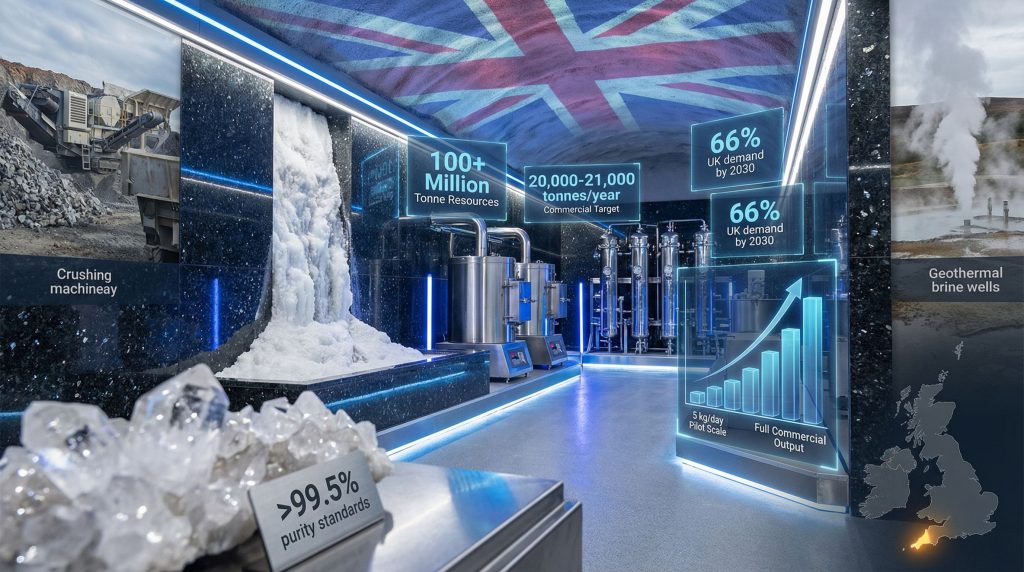
The geological formations beneath Cornwall contain some of Europe's most significant lithium deposits, fundamentally altering the UK's position in the global lithium market trends. These geological structures, formed millions of years ago through intense volcanic activity, have concentrated lithium-bearing minerals in accessible formations that mining companies are now exploiting through innovative extracting lithium carbonate in Cornwall operations.
Understanding Cornwall's Geological Lithium Advantage
Why Cornish Granite Contains Europe's Largest Lithium Reserves
Cornwall's unique geological history created ideal conditions for lithium concentration within micaceous granite formations. The region's complex igneous processes concentrated lithium-bearing mica minerals throughout extensive rock formations, creating deposits that span multiple sites across the county. These formations contain lithium concentrations significantly higher than many traditional hard rock sources found elsewhere in Europe.
The depth and accessibility of these formations provide distinct advantages over conventional spodumene deposits. Unlike many international lithium sources that require extensive open-pit operations, Cornwall's deposits can be accessed through more environmentally sensitive extraction approaches that minimise surface disruption while maintaining economic viability.
Comparing Micaceous Granite vs. Traditional Hard Rock Sources
Micaceous granite formations offer several technical advantages over conventional spodumene-based lithium extraction. The mica minerals within Cornwall's granite contain lithium in forms that respond well to lower-temperature processing methods, reducing energy requirements compared to traditional high-temperature calcination processes used for spodumene.
Key differences in mineral composition:
- Mica-based formations require less intensive chemical processing
- Lower energy requirements for liberation and concentration
- Reduced water consumption compared to traditional flotation circuits
- Enhanced selectivity during mineral separation processes
Traditional spodumene processing typically requires calcination at temperatures exceeding 1,000°C, while mica-based extraction can achieve similar results using electric heating systems operating at substantially lower temperatures. This fundamental difference impacts both operational costs and environmental footprint throughout the processing chain.
The Strategic Importance of 100+ Million Tonne Resources
The scale of Cornwall's lithium resources positions the region as a potential major supplier within European battery supply chains. Resource estimates exceeding 100 million tonnes across multiple sites provide the foundation for sustained production over decades, offering supply chain security that has become increasingly important following recent geopolitical disruptions.
This resource base could theoretically support annual production levels sufficient to supply significant portions of UK lithium demand, reducing dependence on imports from Australia, Chile, and other traditional suppliers. Furthermore, the strategic value extends beyond simple tonnage figures, encompassing location advantages that eliminate complex international logistics chains.
When big ASX news breaks, our subscribers know first
How Does Mica-Based Lithium Extraction Work in Practice?
The technical processes underlying mica-based lithium extraction in Cornwall involve sophisticated separation and purification systems that differ substantially from conventional hard rock lithium processing. These methods capitalise on the unique properties of mica minerals to achieve high recovery rates while maintaining environmental performance standards.
Li-Sep Technology: Chemical-Free Processing Explained
The Li-Sep methodology represents a significant departure from traditional chemical-intensive lithium processing. This approach utilises electric calcination systems that avoid the need for sulfuric acid additions typically required in spodumene processing, reducing both chemical costs and environmental risks associated with acid handling and neutralisation.
Electric calcination methodology operates through precise temperature control that targets the specific thermal properties of mica minerals. This process liberates lithium compounds without requiring the extreme temperatures needed for spodumene conversion, resulting in lower energy consumption per unit of lithium carbonate equivalent produced.
The process sequence involves:
- Controlled heating of mica concentrates using electric furnaces
- Ion-exchange purification to remove impurities
- Crystallisation to achieve battery-grade specifications
- Quality control testing to ensure >99.5% purity standards
Acid-free leaching protocols eliminate the need for large-scale acid neutralisation systems, simplifying waste management and reducing the environmental footprint of processing operations. In addition, ion-exchange purification systems provide selective removal of unwanted elements while concentrating lithium compounds to battery-grade lithium processing specifications.
From Granite to Battery Grade: Step-by-Step Processing
The transformation from raw granite to battery-grade lithium carbonate involves multiple precision-controlled stages. Initial crushing and ball milling operations reduce granite to optimal particle sizes for mica liberation, followed by froth flotation systems that separate mica concentrates from waste rock.
Processing stages and specifications:
| Processing Stage | Feed Rate | Recovery Efficiency | Product Grade |
|---|---|---|---|
| Primary crushing | Variable | >95% size reduction | <10mm fragments |
| Ball milling | Continuous | >90% liberation | 150-200 mesh |
| Froth flotation | 24/7 operation | >85% mica recovery | 40-60% mica concentrate |
| Calcination | Batch/continuous | >90% lithium extraction | Battery-grade precursor |
Quality control benchmarks throughout the process ensure consistent product specifications. Automated sampling systems monitor particle size distribution, mineral composition, and chemical purity at each stage, enabling real-time process optimisation and early detection of potential quality issues.
Production Capacity Analysis
Current pilot operations demonstrate the scalability potential of mica-based processing systems. Small-scale operations producing 5kg per day provide proof-of-concept data for commercial-scale facilities targeting 20,000-21,000 tonnes annually of lithium carbonate equivalent.
Scaling projections:
| Metric | Pilot Scale | Commercial Target | Industry Context |
|---|---|---|---|
| Daily production | 5kg LCE | 55-60 tonnes LCE | Comparable to major operations |
| Annual capacity | 1.8 tonnes | 20,000-21,000 tonnes | 500,000 EV batteries |
| Recovery rate | 85-90% | >90% target | Industry standard |
| Purity achievement | >99.5% | >99.5% | Battery-grade requirement |
The production capacity represents approximately 66% of projected UK lithium demand by 2030, assuming continued growth in electric vehicle adoption and energy storage deployment. Consequently, this scale positions Cornwall as a significant contributor to European lithium supply chain security.
What Role Do Geothermal Brines Play in Cornwall's Lithium Strategy?
Geothermal lithium extraction represents a complementary approach to hard rock processing, utilising the lithium-rich fluids naturally present in Cornwall's deep aquifer systems. These brines, accessed through geothermal energy projects, contain dissolved lithium that can be extracted using direct lithium extraction technologies.
Direct Lithium Extraction (DLE) from Deep Aquifers
The geothermal fluids extracted from depths exceeding 1,000 metres contain lithium concentrations suitable for commercial extraction. These brines represent a renewable lithium resource, as the fluids can be continuously circulated through extraction systems while maintaining geothermal energy generation capacity.
Brine characteristics at operational depths:
- Lithium concentrations: 150-400mg/L
- Temperature: 60-80°C at surface
- Total dissolved solids: Variable composition
- Flow rates: Sustainable for decades
Direct lithium extraction from these brines avoids many of the energy-intensive processes required for hard rock processing. The ambient temperature of geothermal fluids eliminates heating requirements, while the dissolved nature of lithium compounds simplifies separation and purification processes.
Reinjection protocols ensure complete return of processed brines to subsurface reservoirs, maintaining aquifer pressure and enabling carbon-neutral operations through integration with geothermal power generation systems.
Cross Lanes Project: Technical Specifications
The Cross Lanes demonstration facility showcases the integration of geothermal energy production with lithium extraction operations. This dual-purpose approach maximises the economic value of geothermal resources while providing renewable energy for processing operations.
Water cycle management systems ensure zero liquid discharge through complete reinjection of processed brines. Membrane separation technology selectively removes lithium while preserving the chemical balance of returned fluids, preventing long-term reservoir damage.
Technical specifications include:
- Membrane-based selective ion extraction
- Crystallisation systems for lithium carbonate production
- Automated water chemistry monitoring
- Real-time flow and pressure control systems
Environmental Advantages of Brine Processing
"Zero-waste operations through complete water reinjection and on-site renewable energy generation eliminate many environmental concerns associated with traditional lithium mining operations."
Brine-based extraction avoids the land disturbance associated with open-pit mining while eliminating solid waste generation. The closed-loop water system prevents contamination of surface water resources, while geothermal energy integration reduces carbon emissions from processing operations.
The minimal chemical additions required for brine processing further reduce environmental risks compared to acid-intensive hard rock processing. However, this approach aligns with increasingly stringent environmental regulations while maintaining commercial viability.
How Do Processing Costs Compare to Global Lithium Production?
Cost competitiveness remains crucial for Cornwall's lithium industry success in global markets dominated by established suppliers in Australia, Chile, and China. The unique processing advantages of Cornish deposits must translate into sustainable cost structures that can compete with conventional sources.
Energy Efficiency Gains from Low-Temperature Methods
The elimination of high-temperature calcination requirements provides significant energy cost advantages. Traditional spodumene processing requires sustained temperatures of 1,000°C, while mica-based processing achieves similar results at substantially lower energy inputs.
Energy consumption comparison:
| Process Component | Traditional Method | Cornish Innovation | Energy Savings |
|---|---|---|---|
| Calcination | 1,000°C gas/coal firing | <600°C electric heating | 30-40% reduction |
| Leaching | Acid addition/heating | Ambient temperature | 50-60% reduction |
| Purification | Multiple heating cycles | Ion-exchange ambient | 40-50% reduction |
Electric heating systems powered by renewable energy further enhance the cost competitiveness while reducing carbon emissions. The integration of on-site geothermal power generation provides reliable, low-cost electricity for processing operations.
Economic Viability Analysis
Processing cost structures for extracting lithium carbonate in Cornwall operations demonstrate competitive potential against established suppliers. The combination of lower energy requirements, reduced chemical inputs, and proximity to European markets creates favourable economics despite higher labour costs compared to international alternatives.
Cost structure breakdown:
| Cost Component | Traditional Spodumene | Cornish Mica | Cornish Brine |
|---|---|---|---|
| Energy costs | High (fossil fuels) | Medium (renewable) | Low (geothermal) |
| Chemical reagents | Significant acid usage | Minimal additions | Near-zero chemicals |
| Water management | High consumption | Moderate recycling | Closed-loop system |
| Transportation | International shipping | Local/regional | Local/regional |
| Labour costs | Variable by location | UK standards | UK standards |
The proximity to major European battery manufacturers reduces transportation costs and delivery times compared to traditional suppliers. For instance, this logistical advantage becomes increasingly important as automotive manufacturers prioritise supply chain resilience and reduced carbon footprints.
Which Companies Are Leading Cornwall's Lithium Revolution?
Several companies have positioned themselves at the forefront of Cornwall's lithium development, each pursuing distinct technological approaches and resource targets. These organisations combine established mining expertise with lithium industry innovations specifically adapted to Cornwall's unique geological conditions.
Imerys-British Lithium Partnership Model
The collaboration between Imerys and British Lithium represents a strategic combination of global mineral processing expertise with specialised local knowledge of Cornwall's geological formations. This partnership leverages Imerys's established ceramic minerals operations while developing lithium-specific processing capabilities.
Pilot plant operations at the Roche facility have demonstrated the viability of scaling from laboratory testing to continuous production systems. Current operations producing 5kg per day provide crucial data for engineering commercial-scale facilities capable of supplying significant portions of UK lithium demand.
Key achievements include:
- Successful pilot-scale processing validation
- Battery-grade lithium carbonate production
- Environmental compliance demonstration
- Process optimisation for commercial scaling
The integration with existing ceramic minerals operations provides infrastructure advantages and operational synergies that reduce capital requirements for commercial development.
Cornish Lithium's Dual-Track Approach
Cornish Lithium pursues both hard rock and brine extraction strategies, maximising the potential of Cornwall's diverse lithium resources. The Trelavour Hard Rock Project focuses on conventional mining approaches, while their brine extraction initiatives target geothermal fluid processing.
Their Demonstration Processing Plant has achieved consistent battery-grade lithium carbonate production from Cornish mica concentrates. This facility serves as a proving ground for scaled operations while generating valuable operational data for investment decisions.
The designation as a Nationally Significant Infrastructure Project reflects the strategic importance of domestic lithium production for UK energy security and industrial competitiveness.
University Collaborations Driving Innovation
Academic partnerships play crucial roles in advancing extraction technologies and optimising processing efficiency. University of Manchester collaborations with Watercycle Technologies focus on Direct Lithium Extraction Chemistry (DLEC) development specifically adapted to Cornwall's geothermal brines.
These research initiatives address fundamental challenges in selective lithium extraction while developing intellectual property that could be applied globally. Academic involvement ensures rigorous testing and validation of new technologies before commercial deployment.
Research focus areas:
- Advanced membrane technologies for brine processing
- Novel ion-exchange materials for lithium concentration
- Process optimisation using machine learning algorithms
- Environmental monitoring and impact assessment
What Are the Technical Challenges in Scaling Production?
Commercial-scale lithium production in Cornwall faces several technical hurdles that must be overcome to achieve sustainable operations. These challenges span process optimisation, infrastructure development, and regulatory compliance requirements unique to UK operating conditions.
Process Optimisation Requirements
Scaling from pilot operations to commercial production requires significant process refinements to maintain product quality while achieving target production rates. Mica liberation efficiency represents a critical bottleneck, as incomplete liberation reduces overall lithium recovery and affects downstream processing efficiency.
Key optimisation targets:
- Mica liberation: >90% efficiency target from current 85-88%
- Concentrate grade: Consistent 40-60% mica content
- Recovery rates: >90% lithium extraction from concentrates
- Product consistency: Minimising batch-to-batch variations
Automated quality control systems require development to handle the volume and frequency of testing needed for commercial operations. Current manual testing protocols adequate for pilot operations cannot scale to industrial production requirements.
Infrastructure Development Needs
Commercial lithium production requires substantial infrastructure investments beyond basic processing equipment. Power grid capacity represents a particular challenge, as electric calcination systems demand reliable high-voltage electricity supply not currently available at many potential sites.
Water treatment facility specifications must accommodate both process water requirements and environmental discharge standards. While closed-loop systems minimise water consumption, treatment capabilities for any process water discharged must meet stringent UK environmental regulations.
Infrastructure requirements:
- Electrical: 20-50MW capacity for commercial operations
- Water: Treatment capacity for 1,000-5,000 m³/day
- Transportation: Heavy vehicle access for equipment and products
- Storage: Intermediate and final product storage facilities
- Waste management: Tailings and by-product handling systems
Regulatory Compliance Framework
UK regulatory requirements for mineral extraction and processing operations involve multiple agencies and approval processes. Environmental impact assessments must demonstrate compliance with water quality, air emissions, and land use regulations while addressing community concerns about industrial development.
Planning permission complexities arise from Cornwall's designation as an Area of Outstanding Natural Beauty, requiring careful balance between industrial development and environmental protection. Health and safety protocols must meet UK standards while accommodating the specific risks associated with lithium processing operations.
The next major ASX story will hit our subscribers first
How Will Cornish Lithium Impact UK Supply Chain Security?
Domestic lithium production fundamentally alters the UK's strategic position in global battery supply chains. Current complete dependence on imports creates vulnerabilities to supply disruptions, price volatility, and geopolitical tensions affecting traditional supplier countries.
Import Dependency Reduction Strategy
The UK currently imports 100% of its lithium requirements, primarily from Australia, Chile, and processed materials from China. This dependency creates supply chain risks that domestic production could significantly mitigate through diversification and local sourcing capabilities.
Supply chain transformation projections:
| Timeframe | Domestic Production | Import Reduction | Strategic Impact |
|---|---|---|---|
| 2026-2028 | 5,000-10,000 tonnes LCE | 15-20% of demand | Initial diversification |
| 2029-2031 | 20,000-30,000 tonnes LCE | 40-50% of demand | Significant independence |
| 2032-2035 | 40,000+ tonnes LCE | 60-70% of demand | Strategic autonomy |
Domestic production targets by 2030 could supply 66% of projected UK lithium demand, assuming successful commercial development of multiple Cornish projects. This level of domestic supply would position the UK as one of Europe's most lithium-secure nations.
Regional Economic Development Projections
Cornwall's lithium industry development promises substantial regional economic benefits extending beyond direct mining and processing employment. Supply chain development, skills training, and related services create multiplier effects throughout the regional economy.
20-year economic impact projections:
| Economic Metric | Conservative Estimate | Optimistic Scenario | Regional Benefit |
|---|---|---|---|
| GVA Generation | £600 million | £1.2 billion | Direct economic value |
| Direct Employment | 800-1,200 jobs | 2,000-3,000 jobs | High-skill positions |
| Indirect Employment | 1,500-2,000 jobs | 3,500-5,000 jobs | Supply chain development |
| Skills Development | 500 annual trainees | 1,000 annual trainees | Technical expertise |
The establishment of specialised lithium processing expertise in Cornwall could attract related industries, including battery component manufacturing and research facilities, creating a regional cluster effect that extends economic benefits beyond primary extraction operations.
What Does the Future Hold for Cornwall's Lithium Industry?
Long-term prospects for Cornwall's lithium sector depend on successful navigation of scaling challenges, continued technological advancement, and favourable market conditions for domestic production. The industry's evolution will significantly influence the UK's position in global energy transition supply chains.
Technology Advancement Roadmap
Next-generation Direct Lithium Extraction improvements focus on increasing selective recovery while reducing energy consumption and chemical inputs. Advanced membrane technologies under development could achieve higher lithium concentrations while improving rejection of unwanted elements.
Innovation priorities include:
- Automated process control using artificial intelligence
- Advanced materials for improved ion selectivity
- Waste heat recovery from processing operations
- Integration with renewable energy systems
- Real-time environmental monitoring technologies
Automation integration represents a critical pathway for maintaining cost competitiveness against international suppliers with lower labour costs. Advanced control systems could optimise processing parameters in real-time while reducing operator requirements for routine operations.
Market Position in Global Context
Cornwall's lithium industry must establish competitive positioning against established suppliers in Australia, South America, and emerging African producers. Quality advantages, supply chain proximity, and environmental credentials provide differentiation opportunities in premium market segments.
European supply chain integration offers particular advantages as automotive manufacturers prioritise supply security and reduced transportation emissions. Battery-grade lithium carbonate with verified low-carbon processing could command premium pricing from environmentally conscious buyers.
Competition with traditional suppliers requires sustained focus on cost reduction through technological advancement and operational efficiency improvements. Nevertheless, the combination of lower processing temperatures, reduced chemical usage, and renewable energy integration provides pathways for competitive cost structures.
Expansion Potential Assessment
Resource exploration continues across Cornwall, with multiple sites showing lithium-bearing formations suitable for either hard rock or brine extraction. Additional site development could expand production capacity beyond current project targets while spreading industry benefits across wider geographical areas.
Expansion opportunities:
- Additional mica deposits in granite formations
- Geothermal brine sites beyond current developments
- Technology licensing to other regions with similar geology
- Integration with European lithium processing networks
- Joint venture development with battery manufacturers
Joint venture opportunities with major battery manufacturers or automotive companies could accelerate development while securing long-term offtake agreements. These partnerships might provide both capital and market access advantages crucial for commercial success.
Key Takeaways for Industry Stakeholders
Extracting lithium carbonate in Cornwall represents a significant opportunity for UK supply chain independence and regional economic development. Success requires careful balance of technological innovation, environmental stewardship, and commercial viability against established global competition.
Investment Considerations
Capital requirements for commercial lithium operations involve substantial upfront investments in processing facilities, infrastructure, and environmental compliance systems. Payback periods depend critically on sustained market demand and competitive pricing against international suppliers.
Investment framework analysis:
- Capital intensity: £50-100 million per commercial operation
- Payback periods: 8-12 years under current market conditions
- Risk factors: Market price volatility, regulatory changes, technical scaling
- Return drivers: Production efficiency, product quality, market positioning
Risk mitigation strategies should address both technical and market uncertainties through diversified approaches, strategic partnerships, and flexible operational designs that can adapt to changing market conditions.
Technical Success Factors
Process reliability represents the foundation for commercial viability, requiring consistent achievement of recovery rates, product quality, and operational efficiency targets. Environmental compliance standards must be met without compromising economic performance.
Critical success metrics:
- Lithium recovery: >90% from concentrates or brines
- Product purity: >99.5% lithium carbonate equivalent
- Environmental discharge: Below all regulatory limits
- Operational efficiency: >85% plant availability
- Cost competitiveness: Within 10% of international benchmarks
Quality consistency requirements demand robust process control and monitoring systems capable of detecting and correcting variations before they affect final product specifications. Battery manufacturers require guaranteed specifications with minimal batch-to-batch variation.
Furthermore, lithium brine market insights suggest that Cornwall's dual approach of hard rock and brine processing provides strategic flexibility in responding to evolving market demands and technological developments.
This analysis is provided for educational purposes and should not be considered as investment advice. Potential investors should conduct their own due diligence and consult with qualified financial advisors before making investment decisions. Forward-looking statements involve uncertainties and actual results may differ significantly from projections.
Ready to Capitalise on Cornwall's Lithium Revolution?
Discovery Alert's proprietary Discovery IQ model delivers instant notifications on significant lithium and mineral discoveries across the ASX, empowering investors to identify emerging opportunities before market awareness peaks. Explore historic examples of major discoveries that have generated substantial returns, then begin your 14-day free trial today to position yourself ahead of the next breakthrough in the evolving battery metals sector.