June 17, 2026
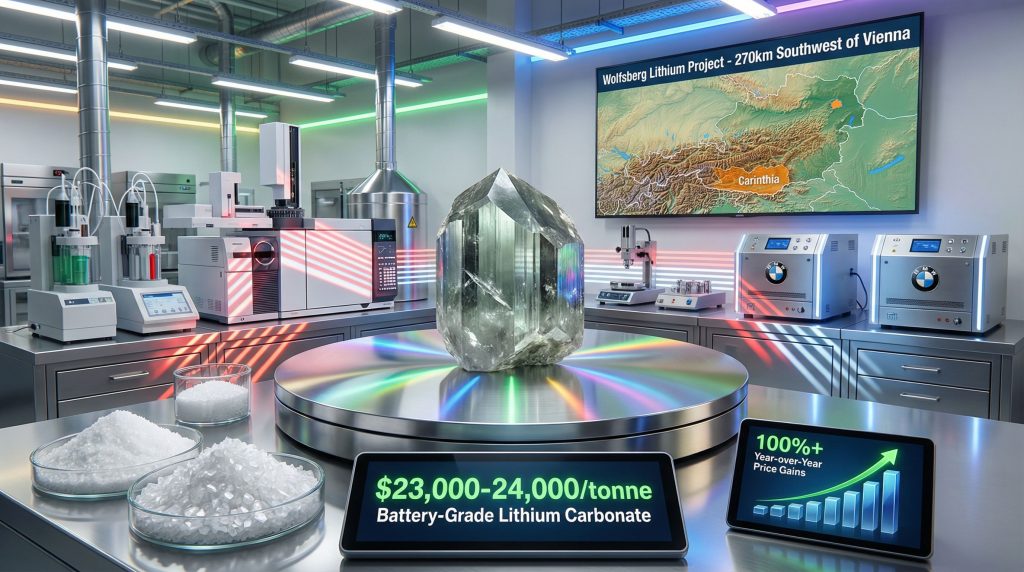
European lithium development faces a complex web of regulatory challenges that extend far beyond simple mining permit basics. The recent two-year extension of Critical Metals' Wolfsberg lithium mining licence renewal represents more than administrative continuity – it signals Austria's strategic commitment to reducing European dependence on external battery metal supply chains.
Current Regulatory Framework and Strategic Implications
The Austrian government's decision to extend the Wolfsberg project licence through February 2026 demonstrates institutional support for domestic critical mineral development within the EU's broader framework for supply chain resilience. Furthermore, this regulatory pathway differs significantly from the bureaucratic obstacles facing similar projects across Europe, where permitting timelines often extend beyond economic viability windows.
Austria's mining permit system operates under a framework that emphasises both technical feasibility and strategic national interest. The Wolfsberg lithium mining licence renewal encompasses multiple mining areas, including the Andreas and Barbara fields, following six additional mining licences secured in 2023 that effectively doubled the project's operational footprint.
This expansion reflects regulatory confidence in the project's long-term viability and alignment with European critical materials objectives. The regulatory framework supporting Wolfsberg aligns with the EU Critical Raw Materials Act, which prioritises European processing capacity for battery metals. Additionally, Austria has structured its permitting system to support projects that demonstrate clear integration with European supply chains and strategic partnerships with established industry participants.
When big ASX news breaks, our subscribers know first
Economic Viability Assessment Under Current Market Conditions
Battery metal pricing dynamics have shifted dramatically from the oversupply conditions that characterised 2023-2024 markets. Battery-grade lithium carbonate prices in Chinese markets now range between 168,000-170,000 yuan per tonne (approximately $23,000-$24,000 USD), representing gains exceeding 40% in recent months and 100% year-over-year improvement in key pricing benchmarks.
These price levels create fundamentally different economics for hard-rock lithium projects compared to the deflationary environment that previously challenged project financing. Consequently, spodumene concentrate, the primary intermediate product from hard-rock operations, now trades between $2,000-$2,168 per tonne, reflecting improved margins for mining operations feeding downstream processing facilities.
The transformation from intermediate spodumene concentrate to battery-grade lithium carbonate involves complex processing requiring specialised technical capabilities. The $20,000+ price differential between raw spodumene and finished battery-grade material reflects this processing complexity. However, it also demonstrates the value creation potential for integrated operations that can capture multiple stages of the supply chain.
Critical Metals' economic assessment framework explicitly requires sustained price robustness and financing availability before proceeding with full-scale mining operations. This conservative approach reflects management's understanding that lithium project economics depend on both commodity pricing and capital market conditions, particularly given the substantial infrastructure investments required for hard-rock extraction and processing.
| Product | Price Range (USD/tonne) | Processing Stage | Value Addition |
|---|---|---|---|
| Spodumene Concentrate | $2,000 – $2,168 | Mining + Flotation | Base Product |
| Battery-Grade Carbonate | $23,000 – $24,000 | Full Processing Chain | 10x+ Premium |
Supply-Demand Rebalancing Analysis
Global lithium markets are experiencing structural rebalancing driven by demand growth across multiple application sectors beyond traditional electric vehicle batteries. Battery Energy Storage Systems (BESS) represent the fastest-growing demand category, supported by grid modernisation investments and renewable energy integration requirements across developed economies.
Emerging applications in robotics and commercial drone operations create additional demand vectors that diversify lithium consumption beyond automotive constraints. For instance, these sectors require high energy density solutions where lithium-ion technology provides performance advantages over alternative chemistries, creating structural demand growth independent of vehicle electrification rates.
Supply constraints have emerged as mining companies delayed expansion projects during the 2023-2024 price downturn. Many projects that appeared economically marginal at previous pricing levels now represent viable development opportunities. However, production timelines typically require 2-4 years from development decision to commercial output.
The Chinese market, which establishes global pricing benchmarks for battery-grade lithium compounds, shows clear supply tightening with prices recovering from multi-year lows. Chinese battery-grade carbonate pricing at 168,000-170,000 yuan/tonne reflects domestic supply-demand balance improvements and reduced inventory overhang from previous oversupply periods.
Market observers anticipate potential supply deficit scenarios if current demand growth continues without corresponding production increases. This supply-demand rebalancing creates supportive conditions for new project development, particularly in jurisdictions offering stable regulatory frameworks and established infrastructure.
Investment Decision Framework for 2026
Critical Metals has established a structured decision framework requiring two fundamental conditions: sustained price robustness and accessible project financing. The company's partnership with Obeikan Investment Group, a Saudi Arabia-based hydroxide processing operator, creates potential vertical integration opportunities that could improve project economics through guaranteed offtake arrangements.
The end-2026 decision timeline provides sufficient market observation period to assess price sustainability and financing market conditions. This timeframe allows management to evaluate whether current pricing levels reflect structural market changes rather than temporary supply disruptions, particularly given evolving lithium market insights from global producers.
Partnership structures with established industry participants offer risk mitigation advantages compared to standalone development approaches. The Obeikan relationship provides access to downstream processing capabilities and potential customer relationships, reducing market exposure for intermediate products.
Furthermore, project financing for lithium developments typically requires demonstrated technical feasibility, proven reserves, and creditworthy offtake agreements. Current market conditions create more favourable lending environments compared to the challenging conditions that prevailed during 2023-2024 price declines.
Key Decision Framework Components:
• Price threshold maintenance: Sustained battery-grade pricing above economically viable levels
• Financing accessibility: Available capital markets for mining project development
• Partnership integration: Confirmed offtake and processing arrangements
• Regulatory stability: Continued permit validity and government support
Strategic Advantages Within European Critical Minerals Framework
Wolfsberg's location 270 kilometres southwest of Vienna in Austria's Carinthia region provides meaningful logistical advantages for European market access. The project benefits from established road and rail infrastructure connecting to Central European industrial centres and automotive manufacturing clusters.
Hard-rock lithium deposits offer operational advantages over brine operations, particularly in temperate climates where evaporation-based processing faces seasonal limitations. Spodumene extraction enables year-round operations without the 12-18 month production cycles characteristic of South American brine operations.
European automotive manufacturers increasingly prioritise supply chain localisation to reduce dependency on Asian processing capabilities and transportation risks. Wolfsberg's positioning within the European Union provides regulatory and logistical advantages for serving BMW Group and other European automotive original equipment manufacturers.
The project's integration potential with European battery manufacturing facilities creates strategic value beyond simple commodity pricing. As European gigafactory capacity expands, proximity to raw material sources becomes increasingly valuable for supply chain optimisation and inventory management. Additionally, this aligns with the broader energy transition in mining initiatives across the continent.
Geographic Advantages:
• Transportation infrastructure: Direct road/rail access to major European markets
• Climate suitability: Year-round operations in temperate conditions
• Market proximity: Reduced transportation costs to automotive centres
• Regulatory alignment: EU framework support for domestic mineral development
Competitive Landscape Analysis
European lithium development projects face varying regulatory timelines and technical challenges depending on jurisdiction and deposit characteristics. Wolfsberg competes primarily with other hard-rock developments rather than brine operations, given similar processing requirements and market positioning.
Finland's Keliber project represents the most advanced European lithium development, with construction phase activities targeting 2025-2026 production initiation. Nordic regulatory frameworks generally provide stable permitting environments, though climate conditions create seasonal operational constraints.
Wolfsberg's partnership approach with established processing partners differentiates the project from standalone development strategies. Many European lithium projects struggle with downstream processing integration, creating potential bottlenecks between mining operations and battery-grade lithium refinery facilities, particularly when considering global capacity constraints.
| Project | Location | Development Stage | Estimated Production |
|---|---|---|---|
| Wolfsberg | Austria | Licensed, Pre-Development | 2028-2030 (potential) |
| Keliber | Finland | Construction Phase | 2025-2026 |
| Cornish Lithium | UK | Exploration/Development | 2027-2029 (potential) |
Technical differentiation among hard-rock projects depends primarily on ore grade, processing complexity, and infrastructure access. Wolfsberg's established mining licences and partnership framework position the project favourably compared to earlier-stage European developments still working through permitting processes.
The next major ASX story will hit our subscribers first
Risk Assessment and Mitigation Strategies
Hard-rock lithium extraction involves technical complexities that differ significantly from brine operations. Processing spodumene ore to battery-grade specifications requires specialised equipment for crushing, flotation separation, roasting, and chemical conversion. These technical requirements create higher capital intensity but enable faster production ramp-up compared to evaporation-based methods.
Market price volatility remains a fundamental risk factor for all lithium developments. The sector's history of boom-bust cycles requires conservative financial planning and flexible operational strategies. However, current price recovery may not sustain through the 2026-2028 development timeline if supply additions exceed demand growth.
Regulatory risks in European jurisdictions generally focus on environmental compliance rather than fundamental mining rights. Austria's stable political framework reduces nationalisation risks, but environmental permitting requirements continue evolving as EU sustainability standards advance.
Currency exposure creates additional complexity for European projects selling into global markets. Euro-denominated costs versus USD-denominated revenues create natural hedging challenges that require financial management strategies. According to recent industry reports, regulatory extensions like the Wolfsberg lithium mining licence renewal provide greater certainty for long-term planning and risk mitigation.
Primary Risk Categories:
• Technical risks: Processing complexity and operational scaling challenges
• Market risks: Price volatility and demand uncertainty
• Regulatory risks: Environmental compliance and permitting delays
• Financial risks: Currency exposure and capital availability
Future Investment Scenarios and Market Impact
Multiple development pathways remain possible depending on market conditions and partnership evolution through 2026. Accelerated development scenarios assume sustained pricing above $20,000/tonne and successful financing completion, potentially enabling 2028-2029 production targets.
Conservative development approaches might emphasise additional technical studies and phased construction to minimise capital risk exposure. This pathway could extend production timelines to 2030-2031 but reduce financial risk during market uncertainty periods.
Strategic partnership expansion represents another scenario where additional offtake agreements or joint venture arrangements enable enhanced project financing. Major mining companies increasingly seek European exposure to serve automotive industry localisation requirements.
The broader European lithium development trend could accelerate if current supply constraints persist and additional projects receive regulatory approvals. Furthermore, Wolfsberg's success would likely encourage increased exploration investment across European jurisdictions with similar geological potential.
How Will European Critical Minerals Infrastructure Evolve?
Long-term market structure changes favour regional supply chain development over global commodity trading models. Environmental standards, transportation costs, and supply security concerns support European production development despite potentially higher operating costs compared to lower-cost international alternatives. Moreover, the development of a critical raw materials facility network across Europe could further enhance the economic viability of projects like Wolfsberg.
Industry analysts from The Assay suggest that regulatory approvals like the Wolfsberg lithium mining licence renewal signal broader European commitment to critical minerals independence. This policy alignment creates more favourable investment conditions for similar projects across the continent.
"Investment Outlook: European lithium projects benefit from regulatory support, infrastructure advantages, and market proximity, but must demonstrate economic viability across commodity price cycles while meeting increasingly stringent environmental standards."
The Wolfsberg lithium mining licence renewal exemplifies Europe's strategic approach to critical mineral development, balancing economic opportunity with supply chain security objectives. Success depends on sustained market conditions, effective partnership execution, and continued regulatory support through the development timeline.
Interested in Discovering the Next Major ASX Mineral Find?
Discovery Alert's proprietary Discovery IQ model delivers instant notifications on significant ASX mineral discoveries, transforming complex geological data into actionable investment opportunities before the broader market reacts. Start your 14-day free trial today to secure your market-leading advantage and position yourself ahead of the next breakthrough discovery.