August 13, 2026
Global demand for critical battery minerals continues to reshape investment landscapes across emerging markets, with Central Africa positioning itself as a pivotal force in lithium supply chains. The continent's vast mineral reserves, combined with technological advances in extraction and processing capabilities, are creating unprecedented opportunities for large-scale operations that could fundamentally alter global energy storage economics. Furthermore, Chinese mining expansion across the region demonstrates how strategic investment approaches are reshaping traditional mining paradigms.
Understanding Africa's Strategic Position in Battery Metal Markets
The Democratic Republic of Congo's emergence as a lithium powerhouse extends far beyond traditional mining paradigms. Central Africa's geological formations contain some of the world's most accessible lithium-bearing pegmatites, offering significant advantages in extraction costs and processing efficiency. Unlike brine-based operations that require extensive evaporation infrastructure, hard rock lithium deposits in the region can support year-round production cycles, providing greater supply reliability for battery manufacturers.
The DRC lithium project represents a paradigm shift in how international mining companies approach African mineral extraction. Rather than focusing solely on raw material export, this new generation of projects integrates downstream processing capabilities directly into mining operations. This vertical integration strategy reduces transportation costs, minimizes supply chain vulnerabilities, and creates additional value-adding opportunities within local economies.
Infrastructure development requirements for large-scale extraction operations demand sophisticated logistics networks connecting remote mining sites to international markets. The Manono region's strategic location offers access to multiple transportation corridors, including rail connections to Tanzania's Dar es Salaam port and potential river transport via the Congo River system. These logistical advantages significantly reduce the capital expenditure typically associated with developing world-class lithium operations.
Regional economic impact extends well beyond direct mining employment. Large-scale lithium operations create multiplier effects through service industries, equipment suppliers, and local procurement networks. The estimated $1.4 billion capital investment generates demand for construction services, specialized engineering expertise, and ongoing maintenance capabilities that can support broader industrial development across the region.
When big ASX news breaks, our subscribers know first
How Does the Manono Project Compare to Global Lithium Operations?
Production Scale Analysis
The scale of production planned for the Manono operation positions it among the world's most significant lithium projects. With targeted annual output of 130,000 tonnes of lithium carbonate equivalent, the facility would rank alongside Australia's major spodumene operations and South America's largest brine projects. However, permitting challenges continue to influence project timelines across the global lithium sector.
| Region | Annual Production (LCE) | Market Share % | Processing Type |
|---|---|---|---|
| Australia (Pilbara) | 180,000+ tonnes | 7-8% | Spodumene concentrate |
| Chile (Atacama) | 150,000+ tonnes | 6-7% | Brine evaporation |
| DRC (Manono) | 130,000 tonnes | 5% | Integrated processing |
| Argentina (Olaroz) | 42,500 tonnes | 2% | Brine evaporation |
| China (Greenberg) | 35,000 tonnes | 1.5% | Spodumene processing |
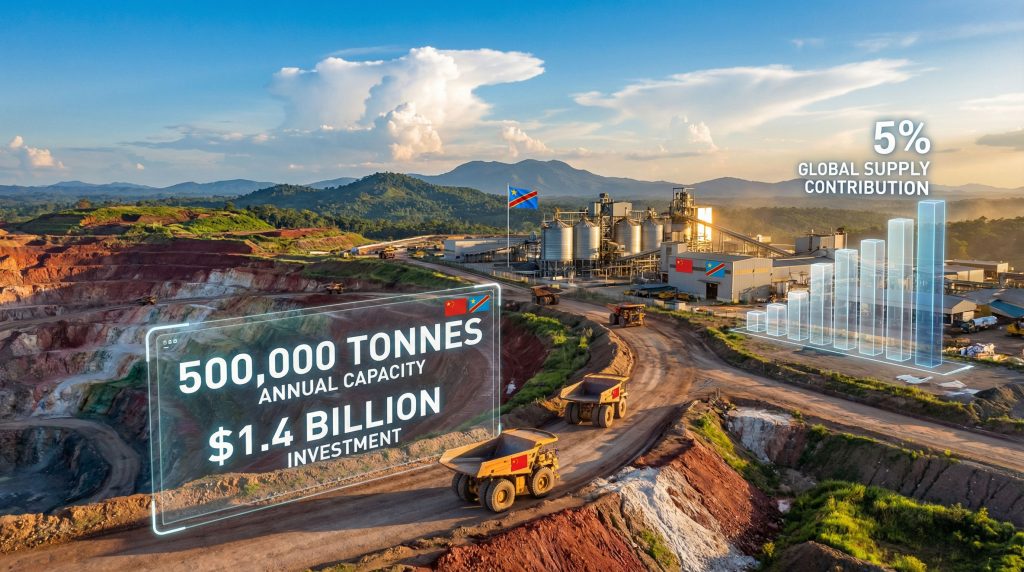
The project's integrated approach to mineral processing sets it apart from conventional operations. Rather than producing only spodumene concentrate for export, the facility plans to process approximately 500,000 tonnes of lithium concentrate annually into lithium sulphate, a higher-value intermediate product required for battery cathode manufacturing.
Economic Impact Metrics
Capital investment requirements for the project demonstrate the scale of commitment needed for world-class lithium operations. The $1.4 billion development budget encompasses mining infrastructure, processing facilities, power generation capabilities, and supporting logistics networks. This investment level reflects the project's ambition to establish end-to-end production capabilities rather than simple extraction operations.
Employment generation estimates indicate significant direct and indirect job creation across multiple skill levels. Mining operations typically require 800-1,200 direct employees, while processing facilities add another 300-500 positions. Including construction phases and ongoing service requirements, total employment impact could exceed 3,000 positions during peak operational periods.
Local versus international economic benefits present complex considerations for host governments. While international mining companies bring essential technical expertise and capital, maximizing local value capture requires careful structuring of revenue-sharing mechanisms, local content requirements, and skills transfer programs.
Why Are Chinese Mining Companies Dominating African Lithium Development?
Strategic Investment Patterns in Critical Minerals
Chinese mining companies have adopted systematic approaches to securing critical mineral resources across Africa, leveraging both financial capabilities and technical expertise to develop complex projects. Zijin Mining Group's portfolio expansion across the continent reflects broader strategic objectives to control upstream supply chains for China's dominant battery manufacturing sector. In addition, lithium industry innovations are driving technological advancement in processing methodologies.
Risk assessment methodologies employed by Chinese mining investors differ significantly from Western approaches. Rather than focusing primarily on financial returns, Chinese companies often evaluate projects within broader strategic frameworks that consider supply security, technological advancement opportunities, and long-term geopolitical positioning. This perspective enables investment in projects that might not meet traditional Western investment criteria but offer strategic value within integrated supply chains.
Technology transfer implications for local industries create additional layers of complexity in Chinese mining investments. While Chinese companies bring advanced processing technologies and operational expertise, questions remain about knowledge transfer to local workforce development and industrial capability building within host countries. Furthermore, battery tech advances continue to influence upstream investment strategies.
Ownership Structure Analysis
Joint Venture Breakdown: The ownership structure reflects evolving approaches to African mining investments, with Zijin Mining holding just under 55% equity while the Congolese government maintains significant participation to ensure local involvement in value creation.
Chinese majority stake implications extend beyond simple equity ownership. The 55% controlling interest provides operational decision-making authority while still accommodating government participation requirements. This structure allows international investors to maintain project control while demonstrating commitment to local partnership and benefit-sharing.
Government participation models in resource projects have evolved significantly from earlier concession-based approaches. Modern frameworks emphasize value-added processing, local employment requirements, and revenue-sharing mechanisms that extend benefits beyond simple royalty payments. These models reflect growing sophistication in how African governments structure mining partnerships to maximize development impact.
Revenue sharing mechanisms typically include multiple components: traditional royalties on extracted minerals, corporate income taxes on processing operations, and often equity dividends from government ownership stakes. This diversified approach to government revenue capture provides more stable income streams than royalty-only structures.
What Are the Technical Challenges of Large-Scale Lithium Processing?
From Concentrate to Battery-Grade Materials
Processing facility specifications for large-scale lithium operations require sophisticated chemical engineering capabilities. The planned facility's 500,000 tonnes annual capacity for concentrate processing demands precise control systems for temperature, pressure, and chemical composition throughout multiple processing stages. Converting spodumene concentrate to lithium sulphate involves high-temperature roasting, acid leaching, and multiple purification steps that must meet stringent quality standards.
Lithium sulphate production requirements exceed simple chemical conversion processes. Battery-grade materials demand extremely low impurity levels, particularly for metals like iron, aluminum, and magnesium that can compromise battery performance. Achieving these specifications requires advanced analytical capabilities, sophisticated quality control systems, and often multiple purification stages that significantly increase processing complexity and costs.
Quality control standards for battery manufacturing continue to evolve as energy storage applications become more demanding. Modern electric vehicle batteries require lithium compounds with purity levels exceeding 99.5%, while energy storage systems may accept slightly lower specifications. Meeting these varying quality requirements while maintaining production efficiency presents ongoing technical challenges for processing operations.
Infrastructure Development Requirements
Transportation logistics from Manono to export terminals present significant infrastructure challenges. The region's landlocked location requires either road transport to Tanzanian ports via the Great Lakes corridor or rail connections through existing networks. Each option involves different cost structures, transit times, and operational risks that significantly impact project economics.
Power supply solutions for energy-intensive processing operations require careful evaluation of available options. Lithium processing facilities consume substantial electricity for heating, chemical processing, and environmental control systems. The region's limited grid infrastructure may necessitate dedicated power generation capabilities, potentially including renewable energy systems to meet increasingly important sustainability requirements.
Water management systems for chemical processing operations must address both supply and treatment requirements. Lithium sulphate production consumes significant water quantities while generating process wastewater that requires treatment before discharge. Developing sustainable water management systems in regions with limited water infrastructure presents both technical and environmental challenges.
How Do Legal Disputes Impact Project Viability and Timeline?
Regulatory Risk Assessment Framework
License revocation precedents in the DRC mining sector highlight the importance of comprehensive legal due diligence. The revocation of AVZ Minerals' license three years prior to Zijin's acquisition demonstrates how regulatory decisions can dramatically alter project ownership structures. This precedent underscores the critical importance of maintaining compliance with evolving regulatory requirements and government policy objectives.
International arbitration processes for mining disputes provide important protection mechanisms for foreign investors, though resolution timelines can extend project development schedules significantly. The ongoing legal proceedings initiated by AVZ Minerals illustrate how license disputes can create uncertainty for subsequent investors, potentially affecting project financing and development timelines.
Due diligence requirements for foreign investors have become increasingly sophisticated as African governments develop more complex regulatory frameworks. Modern due diligence processes must evaluate not only geological and technical factors but also political risk, regulatory compliance history, and community engagement requirements that can significantly impact project viability.
Stakeholder Conflict Resolution
Frequently Asked Legal Issues:
• What happens when mining licenses are contested? License disputes typically involve lengthy legal proceedings through domestic courts and potentially international arbitration, creating uncertainty for all stakeholders involved in project development
• How do governments balance foreign investment with local interests? Modern approaches emphasize benefit-sharing mechanisms, local content requirements, and community development programs that distribute project benefits more broadly across society
• What protection exists for international mining investments? Bilateral investment treaties, international arbitration clauses, and political risk insurance provide layers of protection, though enforcement can be challenging in complex disputes
The emergence of KoBold Metals as an interested party in the southern portion of the Manono territory introduces additional complexity. The artificial intelligence-driven exploration company's backing by prominent technology investors like Bill Gates and Marc Andreessen represents new approaches to mineral exploration that could complement or compete with traditional mining operations.
What Does This Mean for Global Lithium Supply Security?
Market Impact Projections
The project's potential contribution of nearly 5% of global mined lithium output by 2028 represents a significant addition to worldwide supply capacity at a critical time for energy transition acceleration. This supply contribution could help alleviate projected shortfalls in lithium availability as electric vehicle adoption accelerates and energy storage deployment expands globally. Consequently, Argentinian lithium insights suggest similar supply expansion trends across South American operations.
Price stability implications for battery manufacturers extend beyond simple supply additions. The project's integrated processing capabilities could reduce dependency on Chinese lithium compound production, potentially creating more competitive pricing structures for battery manufacturers seeking supply chain diversification.
Supply chain diversification benefits become increasingly important as battery manufacturers evaluate supply security alongside cost considerations. African lithium production offers geographical diversification from dominant Australian and South American sources, potentially reducing supply chain concentration risks that have concerned battery manufacturers and automotive companies.
Geopolitical Considerations
| Scenario | Timeline | Production Impact | Market Implications |
|---|---|---|---|
| Best Case | Full production by 2028 | 130,000 tonnes LCE annually | Significant supply addition, price moderation |
| Moderate Case | Delayed 18-24 months | Gradual ramp-up through 2030 | Limited near-term impact, eventual supply growth |
| Worst Case | Project suspension | No production contribution | Continued supply constraints, price volatility |
Investment Risk-Reward Analysis considerations must evaluate multiple layers of potential returns and risks. Capital deployment timeline extends over several years, with significant upfront investments required before production revenue begins. Commodity price sensitivity analysis indicates that lithium prices above $20,000 per tonne provide attractive returns, while prices below $15,000 per tonne may challenge project economics.
Political risk insurance considerations have become increasingly important for large-scale African mining investments. Coverage typically includes expropriation protection, currency inconvertibility protection, and political violence coverage, though premium costs can significantly impact project economics.
The next major ASX story will hit our subscribers first
How Will This Project Transform DRC's Mining Economy?
Economic Diversification Strategy
Beyond traditional copper-cobalt operations that have dominated DRC's mining sector, lithium development represents economic diversification into higher-value battery metals. This diversification strategy reduces dependency on single commodity cycles while positioning the country within rapidly growing energy storage supply chains.
Value-added processing development marks a significant evolution from historical raw material export models. By establishing lithium sulphate production capabilities, the DRC lithium project creates higher-value export products while developing local technical capabilities that could support additional processing operations.
Skills development and technology transfer programs associated with large-scale lithium operations provide opportunities to build local technical expertise in chemical processing, quality control, and advanced manufacturing techniques. These capabilities could support broader industrial development initiatives beyond mining operations.
Regional Development Impact
Local employment creation estimates indicate substantial direct and indirect job opportunities across multiple skill levels. Direct mining and processing operations could employ 1,500-2,000 people, while construction phases and supporting services could generate additional temporary and permanent employment opportunities.
Infrastructure spillover benefits from large-scale mining operations often extend well beyond project boundaries. Road improvements, power generation capabilities, and telecommunications infrastructure developed for mining operations frequently benefit broader regional development initiatives.
Community development program requirements reflect evolving approaches to mining company social responsibilities. Modern mining operations typically invest 1-3% of revenue in community development programs covering education, healthcare, and economic development initiatives that create lasting benefits beyond mine life cycles.
What Are the Environmental and Social Governance Considerations?
Sustainability Framework Implementation
Environmental impact mitigation strategies for large-scale lithium operations must address multiple environmental concerns, including water usage, waste management, and ecosystem disruption. Modern mining operations employ sophisticated environmental management systems that monitor air and water quality, manage waste rock disposal, and restore disturbed areas throughout operational phases.
Community engagement protocols have evolved significantly from earlier mining development approaches. Contemporary frameworks emphasize early consultation, ongoing dialogue, and benefit-sharing mechanisms that provide communities with meaningful participation in project planning and ongoing operations.
International ESG compliance requirements increasingly influence mining project development and financing. Major institutional investors require comprehensive ESG reporting, third-party verification of environmental and social performance, and alignment with international standards such as the IFC Performance Standards or UN Global Compact principles.
Long-term Operational Planning
Mine life cycle management for the estimated 20+ year operational period requires comprehensive planning for resource extraction, environmental monitoring, and eventual site closure. Modern mining operations develop detailed closure plans during early project phases, including financial bonding for rehabilitation activities and long-term monitoring requirements.
Rehabilitation and closure planning encompasses not only physical site restoration but also economic transition planning for local communities and workers. Successful closure planning creates sustainable economic alternatives and environmental restoration that provide lasting benefits beyond mine operations.
Biodiversity conservation measures address both direct habitat impacts and broader ecosystem effects from mining operations. Contemporary approaches emphasize biodiversity offset programs, habitat restoration initiatives, and long-term conservation partnerships that create positive environmental outcomes alongside resource extraction.
Strategic Implications for Stakeholders
For Investors
Risk-adjusted return projections for large-scale African lithium projects must evaluate multiple risk factors alongside potential returns. While commodity price appreciation could generate substantial returns, political risks, regulatory changes, and operational challenges require comprehensive risk assessment and mitigation strategies.
Portfolio diversification benefits extend beyond simple geographic diversification. Lithium investments provide exposure to energy transition themes, battery technology advancement, and electric vehicle market growth that offer different risk-return characteristics than traditional mining investments.
Exit strategy considerations become particularly important for long-term mining investments. Potential exit mechanisms include strategic sales to battery manufacturers, financial sales to infrastructure investors, or public market listings that provide liquidity for institutional investors.
For Battery Manufacturers
Supply security improvements from additional African lithium production offer strategic advantages for battery manufacturers seeking supply chain resilience. Long-term offtake agreements with integrated mining operations can provide price stability and supply certainty that support manufacturing planning and investment decisions.
Cost structure implications vary depending on processing integration levels and transportation logistics. Integrated lithium sulphate production could reduce processing costs for battery manufacturers while creating more stable pricing structures than concentrate-based supply arrangements.
Long-term procurement strategies increasingly emphasize supply chain sustainability, supplier diversification, and ESG compliance. African lithium operations that meet international sustainability standards can provide valuable supply options for battery manufacturers facing increasing scrutiny of supply chain practices.
For DRC Economic Development
Revenue generation potential from large-scale lithium operations could provide substantial government income through multiple channels: corporate taxes, royalty payments, and dividend income from equity participation. These revenue streams could support broader economic development initiatives and infrastructure improvements.
Industrial capacity building associated with lithium processing operations creates opportunities to develop broader chemical processing capabilities. Technical expertise, equipment capabilities, and infrastructure developed for lithium operations could support additional value-added mineral processing initiatives.
Regional economic integration opportunities emerge as transportation infrastructure, power systems, and technical capabilities developed for mining operations create platforms for broader economic development across Central Africa. For instance, the DRC lithium project demonstrates how large-scale mineral developments can catalyse broader regional transformation.
This analysis is based on publicly available information and industry estimates. Mining investments carry substantial risks including commodity price volatility, political risks, and operational challenges. Potential investors should conduct comprehensive due diligence and seek professional advice before making investment decisions.
Ready to Capitalise on Africa's Critical Battery Minerals Boom?
Discovery Alert's proprietary Discovery IQ model delivers instant notifications on significant ASX mineral discoveries, including emerging opportunities in critical battery minerals and strategic mining developments. Explore historic examples of exceptional returns from major mineral discoveries and begin your 14-day free trial today to position yourself ahead of rapidly evolving global mining markets.