June 4, 2026
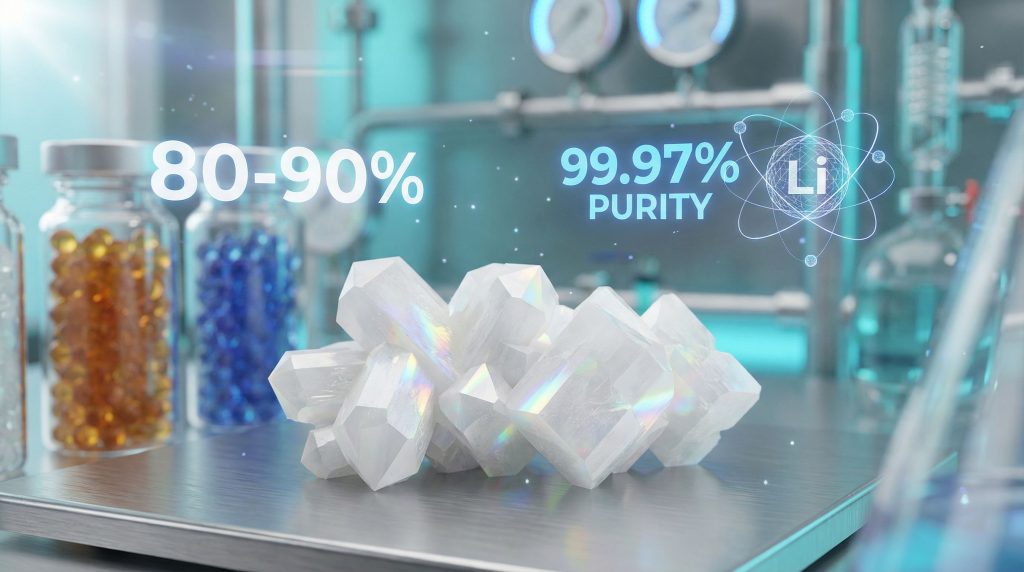
Lake Resources lithium extraction technology represents a transformative approach to addressing growing demand in global battery markets through innovative direct lithium extraction (DLE) methodology. Furthermore, this technology challenges conventional evaporation pond operations that have dominated the industry for decades. The company's ion exchange-based extraction process demonstrates superior recovery rates whilst significantly reducing environmental impact compared to traditional methods.
What Makes Lake Resources' Direct Lithium Extraction Technology Revolutionary?
The lithium extraction industry has operated on fundamentally unchanged principles for over half a century, relying on massive evaporation ponds that consume enormous quantities of water and require 12 to 18 months of processing time. Lake Resources lithium extraction technology breaks this paradigm through selective ion exchange methodology that achieves comparable or superior results in a fraction of the time and environmental footprint.
Ion Exchange Technology Fundamentals
Traditional brine processing pumps lithium-rich groundwater into expansive surface ponds where solar evaporation gradually concentrates the mineral content. This approach suffers from significant limitations including weather dependency, massive land requirements, and recovery rates that rarely exceed 50% of available lithium content.
Ion exchange technology operates on entirely different scientific principles. Specialised resin materials selectively capture lithium ions from brine solutions while rejecting other dissolved minerals. This selective binding occurs at the molecular level through engineered polymer matrices that demonstrate preferential affinity for lithium over sodium, potassium, magnesium, and calcium commonly found in natural brines.
The chemical process involves exposing lithium-bearing brine to proprietary resin beads in controlled reactor environments. Once saturated, the resins undergo elution with specific chemical solutions that release concentrated lithium chloride while regenerating the capture medium for continuous operation. This methodology enables processing cycles measured in hours rather than seasons.
Partnership with Lilac Solutions: A Game-Changing Alliance
Lake Resources has formed a strategic technology partnership that combines operational expertise with cutting-edge materials science. This collaboration focuses on optimising resin performance, extending operational lifecycles, and reducing processing costs through continuous innovation.
The partnership structure enables shared development costs whilst providing Lake Resources access to proprietary technologies that would require years of independent research to replicate. Joint pilot testing programmes have demonstrated the viability of scaling ion exchange processes from laboratory environments to commercial production facilities.
Intellectual property arrangements within this partnership protect both parties' innovations whilst ensuring Lake Resources maintains operational control over its project implementations. This balanced approach reduces technology risks whilst preserving competitive advantages in rapidly evolving market conditions.
When big ASX news breaks, our subscribers know first
How Does Lake Resources' DLE Process Actually Work?
Direct lithium extraction through ion exchange methodology involves three distinct processing stages, each optimised for specific chemical and engineering requirements. Understanding these stages reveals why Lake Resources lithium extraction technology achieves superior performance metrics compared to conventional approaches.
Stage 1: Brine Extraction and Pre-Treatment Systems
Underground lithium reservoirs require sophisticated pumping infrastructure designed to maintain optimal flow rates whilst preserving reservoir pressure characteristics. Production wells target specific geological formations where lithium concentrations reach commercially viable levels, typically exceeding 200 milligrams per litre.
Pre-treatment protocols remove suspended particles, organic compounds, and chemical precipitates that could interfere with downstream ion exchange processes. Filtration systems employ multiple barrier technologies including sand filtration, membrane separation, and chemical clarification to achieve the purity standards required for efficient resin performance.
Quality control measures continuously monitor lithium concentration, pH levels, dissolved solids content, and trace element composition. This real-time analysis enables process optimisation and early detection of reservoir changes that might affect production efficiency or product quality.
Stage 2: Ion Exchange Extraction Methodology
The core extraction process occurs within reactor vessels containing carefully engineered resin beds. Brine flows through these beds at controlled rates that maximise contact time between lithium ions and resin binding sites whilst maintaining optimal pressure conditions.
Selective resin deployment involves multiple reactor stages operating in parallel or series configurations depending on feed brine characteristics and target production rates. Each stage removes specific percentages of available lithium whilst preparing the brine for subsequent processing or environmental reinjection.
Concentrated lithium chloride eluate production begins when saturated resins undergo regeneration cycles using proprietary chemical solutions. These cycles strip captured lithium from resin matrices whilst producing highly concentrated streams containing 10,000 to 50,000 milligrams per litre of lithium content.
Environmental sustainability measures ensure that 99% of processed brine returns to underground reservoirs through reinjection systems. This approach minimises surface water consumption whilst maintaining aquifer pressure balance and reducing long-term environmental impact.
Stage 3: Refinement to Battery-Grade Standards
Chemical conversion processes transform lithium chloride concentrate into lithium carbonate through controlled precipitation reactions. These reactions require precise temperature, pH, and chemical addition protocols to achieve the purity specifications demanded by battery manufacturers.
Purity achievement protocols target 99.97% lithium carbonate equivalent (LCE) content whilst minimising trace elements including boron, iron, aluminium, and heavy metals. Advanced purification techniques including crystallisation, washing, and thermal treatment ensure consistent product quality across production batches.
Quality assurance testing involves comprehensive analytical procedures that verify chemical composition, particle size distribution, moisture content, and trace element concentrations. Independent laboratory validation confirms compliance with battery industry specifications established by major manufacturers.
What Are the Competitive Advantages of Lake Resources' Technology?
Comparative analysis reveals significant performance differentials between ion exchange extraction and conventional processing methods. These advantages extend beyond simple efficiency metrics to encompass environmental impact, capital requirements, and operational flexibility.
Recovery Rate Superiority Analysis
| Technology Type | Recovery Rate | Processing Time | Environmental Impact |
|---|---|---|---|
| Ion Exchange DLE | 80-90% | Hours to days | Minimal water usage |
| Traditional Evaporation | 45-55% | 12-18 months | High water consumption |
| Alternative DLE Methods | 60-75% | Days to weeks | Moderate impact |
Recovery rate superiority stems from the selective nature of ion exchange chemistry, which captures lithium that would otherwise remain dissolved in reject streams. Traditional evaporation loses significant lithium content through incomplete precipitation and wind-blown losses from surface ponds.
Processing time advantages enable rapid response to market demand fluctuations and reduce working capital requirements associated with inventory management. Companies using conventional methods must maintain extensive work-in-process inventories to buffer against seasonal weather variations and production interruptions.
Environmental and Sustainability Benefits
Water conservation through brine reinjection reduces freshwater consumption by over 95% compared to evaporation pond operations. This advantage becomes increasingly critical in arid regions where water resources face competing demands from agriculture, mining, and urban development.
Land footprint reduction represents another significant advantage, with ion exchange facilities requiring approximately 1 square kilometre compared to 170 square kilometres for equivalent evaporation pond operations. This reduction minimises habitat disruption and enables operations in areas where large-scale surface development faces regulatory or community opposition.
Energy efficiency improvements result from eliminating the need for extensive pumping systems required to fill and maintain evaporation ponds. Furthermore, the lithium brine extraction operations consume approximately 30% less energy per tonne of lithium carbonate equivalent produced, contributing to reduced carbon footprint and operating costs.
Economic Efficiency Metrics
Capital expenditure reductions through modular design enable phased development approaches that match investment timing with market conditions and cash flow generation. Traditional evaporation operations require substantial upfront investment in pond construction and supporting infrastructure before any production begins.
Operational cost advantages per tonne of lithium carbonate equivalent include reduced labour requirements, lower maintenance expenses, and decreased chemical consumption. Ion exchange systems operate with higher levels of automation and require fewer personnel for routine operations and monitoring.
Time-to-market acceleration provides competitive advantages in rapidly evolving battery materials markets. Ion exchange facilities can achieve commercial production within 2-3 years of construction commencement, compared to 4-6 years for traditional evaporation operations.
How Does the Kachi Project Demonstrate Technology Viability?
Argentina's Lithium Triangle region contains some of the world's highest-grade lithium brine resources, making it an ideal location for demonstrating advanced extraction technologies. The Kachi project leverages these geological advantages whilst addressing traditional operational challenges through innovative engineering solutions.
Project Scale and Production Targets
Production capacity planning targets 50,000 tonnes per annum of lithium carbonate equivalent through a two-phase development strategy. Phase one development focuses on 25,000 tonnes annual production to establish operational procedures and market relationships before expanding to full capacity.
Modular facility design enables incremental capacity additions based on market demand and operational experience. This approach reduces initial capital requirements whilst providing flexibility to optimise processes and incorporate technological improvements as they become available.
Infrastructure requirements include process facilities, power generation systems, water management infrastructure, and transportation connections to major export terminals. Comprehensive engineering studies have validated the technical feasibility and economic viability of required infrastructure development.
Resource Quality and Geographic Advantages
Argentina's Catamarca Province provides access to extensive lithium brine reservoirs containing 205-249 milligrams per litre of lithium content. These concentrations exceed global averages and enable efficient extraction through ion exchange processes whilst maintaining economic viability over extended operational periods. In addition, Argentina lithium opportunities continue to attract international investment and technological partnerships.
Geological characteristics include thick sedimentary sequences containing multiple aquifer systems with varying lithium concentrations and chemical compositions. Detailed hydrogeological studies have mapped these systems to optimise well placement and production strategies.
Long-term extraction sustainability relies on comprehensive reservoir management including controlled production rates, strategic well spacing, and continuous monitoring of aquifer pressure and chemistry. These practices ensure resource conservation whilst maximising economic recovery over multi-decade operational periods.
Pilot Testing Results and Validation
California and Argentina pilot facilities have demonstrated the technical viability of scaling ion exchange processes from laboratory to industrial scale. Test results confirm achievable recovery rates, product purity levels, and operational stability under varying feed conditions.
Independent testing confirmation validates that produced lithium carbonate meets battery-grade specifications required by major manufacturers. Third-party analytical results provide credible verification of product quality claims and processing consistency.
Scalability demonstrations show that pilot plant performance translates predictably to larger industrial facilities. Engineering scaling factors have been validated through computational modelling and comparative analysis with similar ion exchange applications in other industries.
What Technical Innovations Set Lake Resources Apart from Competitors?
Continuous technology development drives performance improvements and cost reductions that maintain competitive advantages in rapidly evolving markets. Lake Resources lithium extraction technology benefits from ongoing research and development programmes targeting operational optimisation and efficiency enhancement.
Advanced Ion Exchange Optimisation
Enhanced recovery rate improvements target 90% lithium capture efficiency through optimised resin formulations and process conditions. Advanced materials science enables resin designs with higher selectivity, faster kinetics, and extended operational lifespans.
Process integration optimisation reduces energy consumption from baseline levels through heat recovery, process intensification, and advanced control systems. These improvements contribute to operational cost reductions whilst enhancing environmental performance.
Automated control systems enable precise optimisation of operating parameters including flow rates, temperatures, chemical additions, and regeneration cycles. Machine learning algorithms analyse operational data to identify optimisation opportunities and predict maintenance requirements.
Modular Design Philosophy
Scalable facility construction approaches enable efficient expansion through standardised process modules that can be fabricated off-site and assembled rapidly at project locations. This modular strategy reduces construction time, improves quality control, and enables economies of scale in equipment procurement.
Reduced infrastructure complexity simplifies permitting, construction management, and operational training whilst minimising technical risks associated with complex integrated systems. Standardised modules also facilitate maintenance and spare parts management.
Maintenance and expansion flexibility enables rapid capacity adjustments in response to market conditions or operational experience. Individual modules can be taken offline for maintenance without disrupting overall production, improving operational reliability and reducing downtime costs.
Power Efficiency Optimisation
Energy consumption reduction strategies target significant decreases in power requirements through process optimisation and equipment selection. Advanced pump systems, motor controls, and heat integration reduce overall facility power demand whilst maintaining production rates.
Renewable energy integration potential enables operations powered by solar, wind, or hybrid renewable systems. Argentina's solar and wind resources provide excellent opportunities for sustainable power generation that reduces operational costs and environmental impact.
Long-term operational sustainability planning incorporates energy efficiency improvements, renewable power adoption, and process optimisation to maintain competitive operating costs as technology evolves and environmental regulations become more stringent.
How Does Lake Resources' Technology Address Global Lithium Demand?
Battery industry supply chains face unprecedented demand growth driven by electric vehicle adoption and energy storage deployment. Consequently, companies are exploring new approaches to securing lithium supply through reliable, high-quality production capabilities that meet evolving industry requirements.
Battery Industry Quality Requirements
Major battery manufacturers require lithium carbonate with specific purity standards, particle size distributions, and trace element compositions. Ion exchange processing enables precise control over product characteristics to meet these demanding specifications consistently.
Supply chain integration capabilities include logistics coordination, quality assurance protocols, and delivery scheduling that align with battery manufacturing requirements. Reliable supply relationships become increasingly critical as automotive production scales accelerate globally.
Technical support services help battery manufacturers optimise lithium carbonate utilisation in their specific processes whilst troubleshooting quality issues and developing new applications. These collaborative relationships strengthen market positioning and customer loyalty.
ESG Compliance and Regulatory Advantages
Environmental impact minimisation strategies address growing concerns about mining operations' effects on local communities and ecosystems. Ion exchange processing significantly reduces water consumption, land disturbance, and chemical waste generation compared to conventional methods.
Social licence to operate considerations include community engagement, local employment opportunities, and infrastructure development that benefits regional populations. Sustainable operations help maintain regulatory approval and public support for long-term project viability.
Regulatory approval streamlining potential results from reduced environmental impact and simpler facility designs that require less complex permitting processes. Faster approval timelines enable quicker project development and reduced pre-production costs.
Market Positioning in DLE Technology Landscape
Competitive analysis shows ion exchange technology advantages over alternative direct lithium extraction methods including adsorption and solvent extraction. Recovery rates, processing times, and environmental impact metrics favour ion exchange approaches for most brine compositions.
Industry trend alignment positions Lake Resources to benefit from increasing focus on sustainable production methods and supply chain resilience. Battery manufacturers and automotive companies increasingly prioritise suppliers with strong environmental credentials and reliable production capabilities. However, Thacker Pass lithium production in the United States demonstrates how different extraction approaches compete globally.
Future-proofing strategies include ongoing technology development, operational flexibility, and strategic partnerships that enable adaptation to changing market conditions and regulatory requirements over multi-decade operational periods.
The next major ASX story will hit our subscribers first
What Are the Investment Implications of Lake Resources' Technology?
Investment analysis must consider both the opportunities presented by advanced extraction technology and the inherent risks associated with pre-production resource development. Therefore, lithium industry innovations and technological advancements offer unique advantages whilst maintaining exposure to commodity markets and execution risks.
Risk Mitigation Through Technology Innovation
Proven pilot results provide evidence that ion exchange technology can achieve commercial viability under real-world conditions. California and Argentina testing programmes have validated key performance metrics and identified potential operational challenges before full-scale development.
Technology partnership risk sharing reduces Lake Resources' exposure to research and development costs whilst providing access to specialised expertise and intellectual property. Collaborative development approaches also accelerate technology advancement and reduce technical uncertainties.
According to recent market analysis, Lake Resources has experienced significant share price volatility with gains of 175% over the past year, though current trading shows the inherent volatility with 15% declines occurring within single trading sessions. This volatility reflects both the potential upside from successful technology deployment and the risks associated with pre-production development companies.
Expansion Potential Beyond Current Projects
Additional project opportunities exist throughout the Lithium Triangle region where high-grade brine resources could benefit from ion exchange extraction technology. Portfolio expansion through acquisition or partnership could multiply production capacity and resource base.
Technology licensing and partnership opportunities enable revenue generation through intellectual property whilst expanding market presence without direct capital investment. Other lithium developers may seek access to proven ion exchange technology for their own projects.
Market analysis indicates that lithium demand could tighten later this decade if new projects face delays, creating favourable conditions for companies with proven extraction technology and development-ready resources.
Long-Term Value Creation Drivers
Sustainable production cost advantages through ion exchange technology enable competitive positioning even during periods of lower lithium prices. Reduced operating costs and higher recovery rates provide margin protection and operational flexibility.
Environmental compliance premium positioning addresses growing demand from battery manufacturers and automotive companies for sustainably produced lithium. ESG credentials increasingly influence purchasing decisions and supply chain relationships.
Technology leadership in emerging direct lithium extraction markets could provide licensing revenue opportunities and strategic partnership possibilities as the industry adopts advanced processing methods to meet growing demand whilst addressing environmental concerns.
What Challenges and Opportunities Lie Ahead for Lake Resources?
Market dynamics in lithium development present both significant opportunities and substantial risks that require careful evaluation and strategic planning. Lake Resources lithium extraction technology provides competitive advantages whilst remaining exposed to broader industry challenges.
Technical Implementation Challenges
Scaling from pilot to commercial production involves engineering complexities that may not be fully apparent until full-scale operations begin. Equipment reliability, process optimisation, and quality control systems must perform consistently under continuous commercial operating conditions.
Technology integration requirements include coordination between multiple process stages, instrumentation systems, and control platforms. Complex integrated systems can experience unexpected interactions that require extensive commissioning and optimisation periods.
Quality consistency maintenance across varying feed conditions and production rates requires robust process control and analytical systems. Battery-grade lithium specifications demand extremely tight quality control that must be maintained throughout all operating conditions.
Market and Regulatory Considerations
Recent commodity price movements show lithium carbonate reaching multi-year highs in Chinese markets, creating favourable economic conditions for new production. However, these same price increases contribute to share price volatility as investors react to short-term market movements rather than long-term fundamentals.
Investment analysis from industry observers indicates that Lake Resources remains a high-risk pre-production investment generating no current revenue, with future outcomes dependent on successful execution, adequate funding, and favourable lithium market conditions.
Regulatory approval timelines in Argentina involve multiple agencies and environmental assessments that could experience delays. Permitting risks increase project development costs and delay revenue generation, affecting overall project economics and funding requirements.
Strategic Partnership and Funding Pathways
Capital raising requirements for commercial development likely exceed current company resources, necessitating debt financing, equity partnerships, or strategic investor participation. Funding availability and cost depend heavily on commodity market conditions and investor risk appetite.
Strategic investor attraction through technology differentiation could provide access to larger capital bases whilst establishing supply relationships with battery manufacturers or automotive companies. These partnerships reduce market risks whilst providing operational expertise.
The current investment environment reflects the challenge of managing expectations in pre-production resource stocks, where sentiment can shift rapidly based on commodity price movements, development progress, or broader market conditions affecting risk asset valuations.
Disclaimer: This article contains forward-looking statements and projections that involve significant risks and uncertainties. Lithium market conditions, technological performance, and regulatory approvals may differ materially from expectations. Investment in pre-production resource companies involves substantial risks including total loss of capital. This information is for educational purposes only and should not be considered investment advice.
Wondering How to Stay Ahead of the Next Major Lithium Discovery?
Discovery Alert's proprietary Discovery IQ model delivers instant notifications on significant ASX mineral discoveries, transforming complex geological announcements into actionable investment insights for both short-term traders and long-term investors. Understand why major mineral discoveries can lead to substantial market returns whilst positioning yourself ahead of the broader market with your 30-day free trial.