May 20, 2026
The lithium extraction landscape stands at a critical inflection point where technological innovation intersects with supply chain security concerns. Traditional evaporation pond methods, which have dominated South American production for decades, require vast land areas and multi-year processing cycles that struggle to meet the accelerating demands of battery manufacturing. This industrial reality has sparked intensive development of alternative extraction methodologies that promise faster processing times, reduced environmental impact, and greater operational flexibility. Furthermore, the E3 Lithium battery-grade lithium pilot plant represents a significant advancement in direct lithium extraction technology.
Understanding Direct Lithium Extraction Technology in Commercial Applications
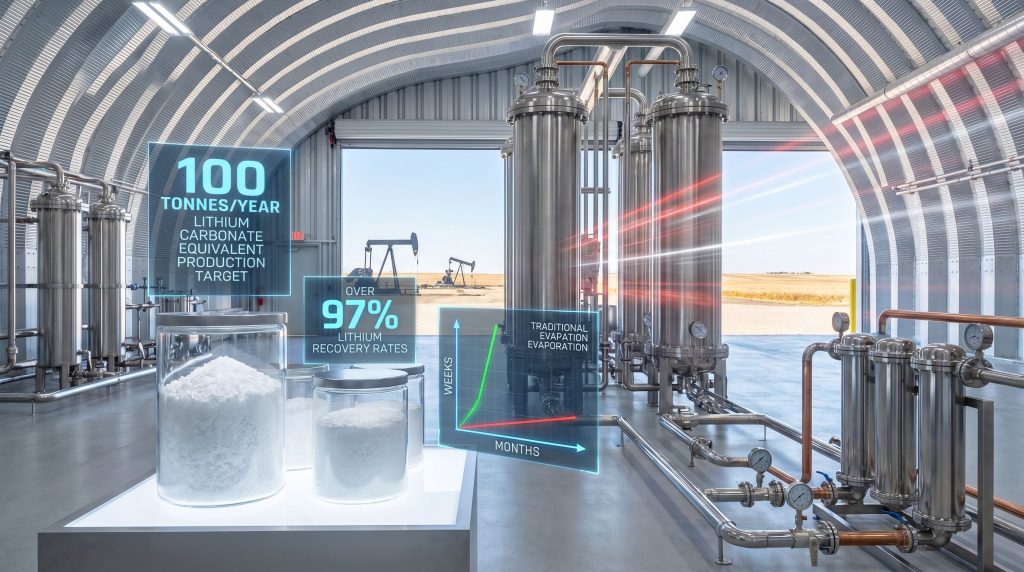
Direct Lithium Extraction represents a paradigm shift from conventional pond-based recovery systems to sophisticated chemical processing techniques. Unlike evaporation methods that rely on solar concentration over 12-24 months, DLE technologies utilise selective ion-exchange processes to separate lithium from brine solutions within weeks rather than seasons.
The fundamental advantage lies in the closed-loop water systems that minimise environmental disruption while maximising resource recovery. Traditional evaporation operations consume massive quantities of freshwater and create permanent landscape alterations, whereas DLE facilities can operate with significantly smaller physical footprints and reduced water consumption.
Ion-Exchange Column Methodology
The core mechanism involves specialised resin materials designed to selectively capture lithium ions while allowing other dissolved minerals to pass through the system. This selective capture enables processors to extract lithium from lower-grade brine sources that would be economically unviable using evaporation techniques.
Key Technical Advantages:
- Processing time reduced from 18-24 months to 2-3 weeks
- Water recycling efficiency exceeding 95% in optimised systems
- Ability to process variable brine chemistries with consistent output quality
- Modular design allowing incremental capacity expansion
The technology's flexibility becomes particularly valuable when processing oilfield brines, which often contain complex chemical compositions that challenge conventional extraction methods. However, the selective nature of ion-exchange systems enables operators to maintain consistent lithium recovery rates despite variations in input brine characteristics. These innovations align with broader lithium industry innovations emerging across the sector.
When big ASX news breaks, our subscribers know first
E3 Lithium's Three-Phase Demonstration Strategy: Technical Deep Dive
E3 Lithium has structured their technology validation through a comprehensive three-phase approach designed to progressively demonstrate commercial viability while collecting critical engineering data for full-scale operations. Consequently, this systematic approach ensures thorough validation of the E3 Lithium battery-grade lithium pilot plant at each development stage.
Phase 1: Technology Validation and Initial Production
The initial phase successfully demonstrated the fundamental technology through a 30-column DLE system paired with purification and carbonation equipment. This configuration produced battery-grade lithium carbonate, validating the core extraction and processing methodology under controlled conditions.
The commissioning process revealed key operational parameters that informed subsequent phase planning. Laboratory testing during this phase achieved lithium recovery rates exceeding industry benchmarks, though specific percentage figures remain proprietary.
Phase 2: Reservoir Engineering and Flow Optimisation
Following completion of well development and pump installation near Olds, Alberta, Phase 2 focuses on two critical objectives: completing reservoir production testing to delineate flow characteristics through the Leduc reservoir, and collecting comprehensive water and gas chemistry data.
The reservoir testing phase, expected to run eight to twelve weeks pending regulatory approval, will generate essential data for the Reservoir Development Plan currently under development. This plan will establish well and pipeline network designs that inform permitting requirements for commercial operations.
Phase 2 Technical Objectives:
| Parameter | Duration | Commercial Application |
|---|---|---|
| Flow Rate Testing | 8-12 weeks | Well network optimisation |
| Brine Chemistry Analysis | Continuous monitoring | Process parameter refinement |
| Gas Separation Design | Data collection phase | Commercial facility inlet design |
| Regulatory Compliance | Directive 51 application | Commercial permitting pathway |
The brine and gas data collection serves multiple engineering functions, providing inlet design specifications and gas separation requirements for eventual commercial facility construction. This information represents some of the final technical data required for the Clearwater project feasibility study.
Phase 3: Commercial-Scale Column Testing
Phase 3 encompasses dual operational components: continued operation of the existing 30-column system and construction of a full commercial-size single DLE column. This hybrid approach enables direct comparison between multi-column and single-column architectures while maintaining continuous production capabilities.
The single commercial-scale column will process live brine through the complete extraction and purification process, validating key operational parameters at 1:1 scale to commercial systems. This real-world validation proves critical for securing project financing and demonstrating technology readiness to financial institutions, strategic partners, and potential offtake customers.
Equipment procurement and construction for the commercial-scale column will occur during summer months, supported by conditional approval of funding from government partnership programmes. The combined Phase 3 operations target production of nearly 100 tonnes per year of lithium carbonate equivalent in lithium chloride form.
Phase 3 operations validate key parameters to financial institutions, strategic partners, and government stakeholders through real-world brine processing at commercial scale, forming a critical component for securing project financing.
Alberta's Strategic Advantage in North American Lithium Supply
Alberta's oilfield brine resources represent an underutilised strategic asset within North American critical mineral supply chains. The province's extensive petroleum infrastructure provides unique advantages for DLE development, including existing well networks, pipeline systems, and regulatory frameworks adapted to subsurface resource extraction.
Infrastructure Integration Opportunities
The existing oil and gas infrastructure creates immediate cost advantages for DLE operations. Well drilling, pipeline installation, and subsurface engineering expertise developed over decades of petroleum operations translate directly to brine extraction requirements. This established infrastructure reduces capital requirements compared to greenfield developments in regions without existing subsurface access.
Regulatory frameworks developed for petroleum operations provide established permitting pathways through Directive 51 applications, potentially accelerating project development timelines. In addition, this regulatory clarity supports strategies focused on securing lithium supply chain stability.
Geographic Positioning Benefits
The Clearwater project's location between Red Deer and Calgary positions production within proximity to major transportation networks and potential manufacturing centres. This geographic advantage reduces logistics costs and delivery timelines compared to South American operations serving North American markets.
Transportation infrastructure connecting Alberta to North American battery manufacturing facilities provides supply chain advantages that become increasingly valuable. Furthermore, as manufacturers prioritise supply security and ESG considerations in sourcing decisions, these regional benefits become even more significant.
Commercial Feasibility Analysis: From Pilot to Production
The progression from demonstration to commercial operations requires validation of both technical performance and economic viability at scale. E3 Lithium's approach systematically addresses key risk factors through incremental scale-up and comprehensive data collection, supporting the E3 Lithium battery-grade lithium pilot plant development pathway.
Financial Framework and Government Support Structure
Government support has provided critical funding for demonstration phase development:
- $5 million from Emissions Reduction Alberta supporting initial demonstration work
- $36.5 million conditionally approved from Global Partnerships Initiative for equipment procurement and Phase 3 development
- Total disclosed support: $41.5 million for demonstration phases
This funding structure demonstrates government recognition of the technology's strategic importance while requiring private investment for commercial-scale development. The conditional approval structure ensures government support aligns with technical milestone achievement.
Production Scaling Pathway
The scaling progression from demonstration to commercial operations represents a 120-fold increase in production capacity:
- Phase 3 demonstration: Nearly 100 tonnes per year lithium carbonate equivalent
- Clearwater Phase 1 target: 12,000 tonnes per year lithium carbonate
This scaling pathway requires validation that single-column commercial architecture can achieve the same efficiency and quality standards demonstrated in multi-column pilot configurations. The Phase 3 commercial-scale column serves as the critical bridge between pilot demonstration and full commercial viability.
Production Timeline Validation:
- Phase 1: Technology proof-of-concept (completed)
- Phase 2: Reservoir characterisation (8-12 weeks)
- Phase 3: Commercial-scale validation (summer construction)
- Clearwater Phase 1: Commercial operations (12,000 t/y target)
Technical Challenges and Solutions in DLE Implementation
Commercial-scale DLE operations face several technical challenges that require engineering solutions validated through pilot-scale testing. The complexity of brine processing at industrial scale demands robust process controls and quality assurance protocols.
Brine Chemistry Variability Management
Oilfield brines exhibit chemical composition variations that can impact extraction efficiency and product quality. The ion-exchange system must maintain consistent lithium recovery rates despite fluctuations in competing ion concentrations and total dissolved solids.
Advanced process monitoring enables real-time adjustment of extraction parameters to accommodate brine chemistry variations. Automated control systems reduce operational complexity while ensuring consistent output quality meeting battery-grade specifications, supporting broader battery-grade lithium advancements.
Scaling and Maintenance Protocols
Continuous operation requirements demand robust equipment designs and preventive maintenance protocols. Ion-exchange resins require periodic regeneration and eventual replacement, requiring operational flexibility to maintain production continuity.
Modular system architecture enables maintenance activities on individual components without complete system shutdown. This design philosophy proves essential for commercial operations where production interruptions impact revenue generation and customer commitments.
Market Implications and Supply Chain Integration
North American lithium supply security has emerged as a critical strategic consideration for battery manufacturers and government policymakers. Current supply chains rely heavily on international sources that introduce geopolitical risks and transportation complexities.
Supply Chain Localisation Benefits
Domestic lithium production offers several advantages over international sourcing:
- Reduced transportation costs and delivery timelines
- Enhanced supply security and reduced geopolitical risks
- Simplified quality assurance and regulatory compliance
- Improved ESG profile for end-use applications
Battery manufacturers increasingly prioritise supply chain transparency and security in sourcing decisions. Domestic production capabilities align with corporate sustainability goals while reducing supply chain complexity, contributing to broader energy transition security objectives.
Market Positioning Strategy
The planned production of lithium carbonate equivalent in lithium chloride form for offtake discussions demonstrates market-oriented product development. This approach enables direct engagement with potential customers during the demonstration phase, validating market demand before commercial-scale investment.
Quality specifications meeting battery-grade requirements position the output for premium applications in electric vehicle and energy storage systems. This market focus supports higher pricing realisation compared to industrial-grade applications and aligns with global lithium brine market insights.
The next major ASX story will hit our subscribers first
Future Development Roadmap and Expansion Potential
Successful demonstration of DLE technology in Alberta creates opportunities for broader regional development and technology transfer applications. The established operational model provides a framework for expansion to additional brine resources and partnership opportunities.
Regional Expansion Opportunities
Alberta's extensive oilfield infrastructure suggests numerous potential sites for additional DLE development. The demonstration project's success could catalyse broader industry adoption and create a regional lithium production hub.
Technology licensing opportunities enable monetisation of intellectual property while expanding the operational footprint through partnerships with other resource holders. This approach accelerates market penetration while reducing capital requirements for expansion.
Technology Transfer Applications
The validated DLE methodology has potential applications beyond Alberta's specific geological conditions. Other jurisdictions with suitable brine resources could benefit from technology transfer agreements, creating additional revenue streams and market expansion opportunities.
Workforce development and training programmes could support technology dissemination while creating specialised employment opportunities in regions with suitable resource bases.
Risk Assessment and Mitigation Strategies
Commercial DLE operations face technical, regulatory, and market risks that require comprehensive mitigation strategies. The systematic demonstration approach addresses key risk factors through validated operational experience.
Technical Risk Management
Equipment reliability and process optimisation represent primary technical risks for commercial operations. The pilot-scale validation provides operational experience that informs equipment selection and maintenance protocols for commercial facilities.
Quality assurance protocols developed during demonstration phases ensure consistent battery-grade output that meets customer specifications. These protocols become critical for maintaining market position and customer relationships.
Regulatory Compliance Framework
Environmental monitoring and reporting requirements demand robust compliance systems that protect operational licences while demonstrating environmental stewardship. Water management and recycling protocols minimise environmental impact while reducing operational costs.
Community engagement and stakeholder relations require ongoing attention to maintain social licence for operations. Transparent communication about environmental performance and economic benefits supports community acceptance and regulatory compliance.
Investment and Partnership Outlook
The demonstration project's progression toward commercial validation creates opportunities for strategic partnerships and investment attraction. The validated technology and government support provide foundations for commercial financing arrangements.
Strategic Partnership Development
Offtake agreement negotiations during Phase 3 operations enable early customer engagement and revenue security for commercial operations. These agreements provide financial institutions with revenue assurance that supports project financing.
Technology licensing opportunities create additional revenue streams while reducing expansion capital requirements. Partnership arrangements with energy companies leverage existing infrastructure and operational expertise.
Financial Institution Validation
The commercial-scale column operation provides financial institutions with technical validation and operational data required for project financing decisions. Real-world performance data reduces perceived technical risks and supports favourable financing terms.
Environmental compliance and sustainability metrics align with ESG investment criteria that increasingly influence financing availability and terms. The demonstrated environmental benefits of DLE technology support access to green financing programmes.
Disclaimer: This analysis is based on publicly available information and should not be construed as investment advice. Lithium extraction projects involve significant technical, regulatory, and market risks. Potential investors should conduct independent due diligence and consult qualified professionals before making investment decisions. Production targets, cost projections, and timeline estimates are forward-looking statements subject to material uncertainties and may not be achieved as projected.
Ready to Capitalise on the Next Lithium Breakthrough?
With DLE technology revolutionising lithium extraction and companies like E3 Lithium advancing towards commercial production, identifying emerging opportunities becomes crucial for investment success. Discovery Alert's proprietary Discovery IQ model delivers instant notifications on significant ASX mineral discoveries, including lithium projects, empowering subscribers to position themselves ahead of market movements. Begin your 14-day free trial today to gain immediate access to actionable insights and secure your competitive advantage in the rapidly evolving lithium sector.