May 9, 2026
Understanding Lithium Hydroxide Production Fundamentals
The transformation of raw spodumene concentrate into battery-grade lithium hydroxide through a Covalent lithium refinery represents one of the most technically demanding processes in the critical minerals sector. Modern lithium refining operations require precise control of chemical conversion pathways, temperature management, and impurity removal to achieve the stringent purity specifications demanded by electric vehicle battery manufacturers.
Battery-grade lithium hydroxide must meet exacting standards, typically requiring purity levels exceeding 99.5% with minimal trace elements such as iron, calcium, and magnesium. The chemical conversion process from spodumene concentrate follows a multi-stage pathway involving high-temperature roasting, acid leaching, and crystallization phases that transform lithium aluminium silicate into the refined hydroxide product.
Key Production Specifications:
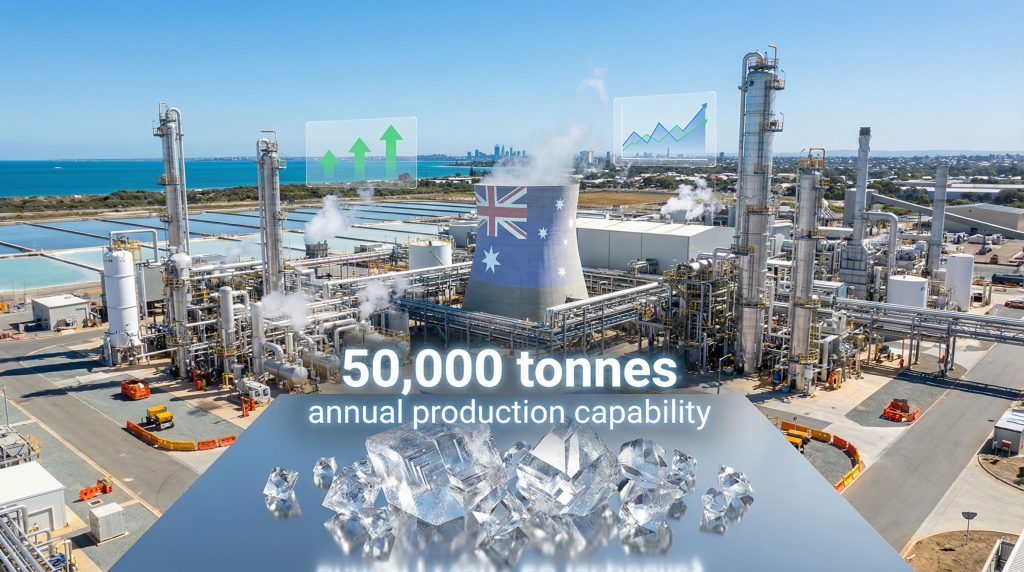
• Annual Capacity: 50,000 tonnes of battery-grade lithium hydroxide
• Feed Material: High-grade spodumene concentrate from integrated mine operations
• Product Purity: Battery-grade specifications for automotive applications
• Process Efficiency: Optimised recovery rates through advanced crystallisation systems
Quality control protocols throughout the refining process ensure consistent product specifications through continuous monitoring of chemical composition, particle size distribution, and moisture content. These parameters directly influence battery performance characteristics including energy density, cycling stability, and thermal management properties.
The industrial scale of lithium hydroxide production requires sophisticated equipment systems capable of handling corrosive chemicals, high temperatures, and precise process control. Furthermore, evaporation and crystallisation technologies play crucial roles in achieving the concentration levels and purity standards required for commercial battery applications.
Strategic Infrastructure Positioning at the Kwinana Processing Hub
Western Australia's Kwinana industrial precinct provides unique advantages for lithium refining operations through its established infrastructure, proximity to port facilities, and integration with existing chemical processing capabilities. The strategic location enables efficient logistics coordination between upstream mining operations and downstream battery supply chains.
The integrated mine-to-market structure eliminates traditional trading intermediaries and reduces concentrate transportation costs through direct supply chain control. This vertical integration model provides operational flexibility and cost optimisation opportunities that standalone refining operations cannot achieve.
Infrastructure Advantages:
| Component | Specification | Benefit |
|---|---|---|
| Annual Processing Capacity | 50,000 tonnes | Equivalent to ~1 million EV batteries |
| Transportation Access | Rail and road connectivity | Reduced logistics costs |
| Utility Infrastructure | Industrial-grade power and water | Operational reliability |
| Port Proximity | Fremantle export facilities | Market access efficiency |
The facility incorporates advanced processing equipment including Veolia evaporation systems designed for high-efficiency water recovery and crystallisation units optimised for lithium recovery rates. These technological components enable the facility to achieve competitive operating costs while maintaining product quality standards.
Processing efficiency gains result from the elimination of intermediate storage, handling, and quality verification steps typically required when sourcing concentrate from multiple suppliers. In addition, the integrated approach provides greater control over feed material specifications and processing schedules.
Waste management systems at the facility address process residues through engineered containment and potential future recovery applications. The environmental management framework includes monitoring protocols for air emissions, water usage, and solid waste generation to ensure regulatory compliance.
Joint Venture Partnership Structure and Value Creation
The 50:50 partnership between Wesfarmers and SQM combines complementary expertise from Australian mining operations and Chilean lithium processing experience. This structure distributes both capital requirements and operational risks while leveraging each partner's specialised knowledge and market positioning.
SQM's contribution extends beyond capital investment to include lithium extraction methodologies, process optimisation techniques, and established customer relationships in global battery supply chains. The Chilean company operates multiple lithium facilities and possesses deep technical knowledge of both brine-based and hard rock processing approaches.
Wesfarmers brings Australian operational capabilities, access to high-grade spodumene concentrate supply, and local workforce development expertise. The company's industrial project management experience provides valuable oversight during construction and commissioning phases.
Partnership Value Drivers:
• Risk Distribution: Capital investment and operational risks shared equally
• Technology Transfer: SQM's Chilean processing expertise applied to Australian operations
• Supply Chain Integration: Direct access to Mount Holland concentrate supply
• Market Access: Combined customer relationships and geographic reach
Engineering and construction partnerships with Fluor Corporation and Civmec provide specialised project management and construction capabilities. Fluor's global experience in lithium processing facilities ensures adherence to international best practices, while Civmec's Western Australian operations provide local construction expertise and workforce access.
The joint venture structure enables accelerated decision-making through shared governance while maintaining operational flexibility. However, this arrangement proved crucial during the facility's development phase, allowing rapid responses to technical challenges and market conditions.
Technology sharing agreements within the partnership facilitate continuous improvement opportunities and process optimisation initiatives. The combination of theoretical expertise and practical operational experience creates a foundation for sustained competitive advantages.
The partnership model demonstrates how international expertise can be successfully integrated with local operational capabilities to create world-class processing facilities in the Australian critical minerals sector.
Production Milestones and Operational Excellence Metrics
The commissioning timeline for the Covalent lithium refinery achieved its first major milestone with initial battery-grade lithium hydroxide production in July 2025. This achievement marked the successful completion of equipment installation, process validation, and initial product qualification phases.
The 18-month ramp-up schedule to full capacity operations follows industry standard practices for complex chemical processing facilities. This timeline allows for systematic optimisation of equipment performance, process parameters, and quality control procedures while building operational expertise.
Commissioning Phase Achievements:
- Equipment Validation (Months 1-6): Mechanical completion and performance testing
- Process Optimisation (Months 7-12): Throughput improvement and quality enhancement
- Full Capacity Achievement (Months 13-18): Sustained production at nameplate capacity
- Customer Qualification: Product approval from battery manufacturers
Current production rates reflect the systematic approach to capacity expansion, with each phase targeting specific operational improvements. Equipment reliability metrics demonstrate the effectiveness of preventive maintenance programmes and process control systems.
Quality specification achievement rates indicate successful product consistency across production batches. This consistency is crucial for battery manufacturer qualification processes, which require extensive testing and validation before supply contracts can be finalised.
Internal validation processes ensure that each production batch meets or exceeds customer specifications before shipping. These procedures include chemical analysis, physical property testing, and packaging verification to maintain product integrity throughout the supply chain.
Consequently, the facility's operational excellence framework incorporates continuous improvement methodologies focused on safety performance, environmental compliance, and production efficiency. Regular performance reviews identify optimisation opportunities and implement best practice enhancements.
Australia's Critical Minerals Strategy Integration
Domestic lithium refining capabilities address key objectives within Australia's critical minerals strategy by reducing reliance on overseas processing facilities and capturing higher value-added revenue streams. The transformation from raw concentrate exports to refined product sales significantly enhances economic returns per tonne of lithium produced.
The facility's contribution to supply chain security extends beyond revenue generation to include strategic stockpiling capabilities and alternative supply routes for global markets. This diversification reduces dependency on Asian processing centres and provides supply chain resilience for domestic battery manufacturing initiatives, particularly as Australia lithium industry innovations continue to evolve.
Economic Value Creation:
• Export Revenue Enhancement: Refined product pricing versus concentrate sales
• Employment Generation: Skilled positions in advanced manufacturing
• Technology Development: Process innovation and intellectual property creation
• Supply Chain Security: Reduced processing dependency on overseas facilities
Government policy frameworks supporting downstream processing include investment incentives, infrastructure development programmes, and research collaboration initiatives. These policies recognise the strategic importance of domestic refining capabilities for national economic security and supply chain resilience, which complements India's lithium supply strategy for securing resources.
The facility's operations contribute to Australia's position as a comprehensive lithium supplier capable of serving the complete value chain from mining through refined product delivery. This positioning enhances negotiating power with international customers and reduces exposure to concentrate price volatility.
Environmental compliance frameworks ensure that domestic processing meets or exceeds international environmental standards. Furthermore, the facility's environmental assessment processes address water usage optimisation, air emissions control, and waste management protocols to maintain social licence to operate.
Technology transfer benefits extend beyond the immediate facility to include knowledge development within Australia's broader chemical processing sector. Skills development programmes and research partnerships contribute to long-term competitive advantages in critical minerals processing.
Expansion Potential and Future Growth Scenarios
Site preparation and infrastructure capacity analysis indicate potential for significant expansion beyond the current 50,000 tonnes annual capacity. Preliminary assessments suggest feasibility for doubling production to 100,000 tonnes, subject to market demand validation and capital allocation decisions.
Utility infrastructure requirements for expansion include additional electrical capacity, water supply systems, and waste management capabilities. The existing industrial precinct provides favourable conditions for infrastructure upgrades through established service corridors and regulatory frameworks.
Expansion Requirements Analysis:
| Component | Current Capacity | Expansion Target | Infrastructure Needs |
|---|---|---|---|
| Processing Capacity | 50,000 t/year | 100,000 t/year | Additional crystallisation units |
| Electrical Supply | Industrial baseline | 2x current requirement | Substation upgrades |
| Water Systems | Process requirements | Enhanced recycling | Treatment capacity expansion |
| Workforce | Operational staff | Skilled technicians | Training programmes |
Market demand projections support expansion consideration through growing electric vehicle adoption rates and energy storage system deployment globally. However, the facility's proximity to Asian battery manufacturing centres positions it favourably to serve increasing lithium hydroxide demand in these markets, whilst avoiding lithium market challenges affecting other producers.
Equipment procurement timelines for expansion would require coordination with specialised manufacturers of crystallisation systems, evaporation equipment, and process control technologies. Lead times for major equipment components typically range from 12-18 months, influencing overall expansion schedules.
Workforce development requirements include recruitment of additional skilled technicians, process engineers, and quality control specialists. Training programmes would need to address both technical competencies and safety protocols specific to lithium processing operations.
The integrated supply chain structure provides advantages for expansion through established concentrate supply agreements and customer relationships. This foundation reduces market development risks typically associated with capacity expansion projects in commodity processing sectors.
Environmental Management and Regulatory Compliance Framework
Process waste management protocols address the handling and containment of process residues generated during lithium hydroxide production. Geochemical assessment procedures ensure that waste materials are properly characterised and managed according to environmental regulations and industry best practices.
Water usage optimisation systems incorporate recycling and recovery technologies to minimise freshwater consumption and reduce discharge volumes. These systems are particularly important for lithium processing operations, which typically require significant water inputs for chemical processing and equipment cooling, contrasting with alternative lithium extraction methods being developed globally.
Environmental Management Components:
• Water Management: Recycling systems and discharge monitoring
• Air Emissions: Stack monitoring and control technologies
• Waste Containment: Engineered storage and potential recovery systems
• Regulatory Compliance: Permit compliance and reporting protocols
Air emissions monitoring addresses potential impacts from processing operations through continuous measurement systems and control technologies. The facility operates under environmental permits that specify emission limits and monitoring requirements for various atmospheric constituents.
Community engagement programmes maintain social licence to operate through regular consultation, environmental monitoring results disclosure, and economic impact reporting. These initiatives demonstrate the facility's commitment to transparent operations and community benefit sharing.
Indigenous engagement protocols recognise cultural heritage considerations and provide opportunities for traditional owner participation in facility operations and monitoring activities. These partnerships contribute to sustainable development objectives and community relationship building.
Environmental compliance auditing ensures ongoing adherence to regulatory requirements through systematic review of operational practices, monitoring data, and improvement opportunities. Regular third-party assessments validate the effectiveness of environmental management systems.
Competitive Positioning and Market Dynamics Analysis
The facility's competitive advantages stem from technical differentiation factors including product consistency, processing cost structure, and geographic positioning relative to key battery manufacturing markets. These factors combine to create sustainable competitive positioning within global lithium hydroxide supply chains.
Product quality specifications consistently meet or exceed battery manufacturer requirements through rigorous process control and quality assurance protocols. This reliability is crucial for maintaining customer relationships and securing long-term supply contracts in competitive markets, especially when compared to Thacker Pass lithium production facilities facing operational challenges.
Market Positioning Advantages:
• Product Quality: Consistent purity specifications and chemical composition
• Cost Structure: Integrated operations and efficient processing methodologies
• Geographic Access: Proximity to Asian battery manufacturing centres
• Supply Security: Reliable concentrate supply from integrated mining operations
Comparison with suspended operations at other facilities highlights the importance of technical execution, partnership structure, and market timing in successful lithium refining operations. The Covalent lithium refinery's achievement of sustained production demonstrates effective project management and operational capabilities.
Customer diversification strategies reduce dependence on individual battery manufacturers while building relationships across automotive, energy storage, and industrial applications. This approach provides market resilience and pricing optimisation opportunities.
Technology development initiatives focus on process optimisation, efficiency improvements, and potential intellectual property creation. These activities support long-term competitive advantages and contribute to Australia's position in global lithium processing technology development.
For instance, the facility's market position benefits from growing recognition of supply chain security considerations among battery manufacturers and automotive companies. Diversification away from concentrated processing regions creates opportunities for reliable suppliers with proven operational capabilities.
Ready to Capitalise on Australia's Critical Minerals Boom?
Discovery Alert's proprietary Discovery IQ model delivers real-time notifications on significant ASX mineral discoveries, instantly empowering subscribers to identify actionable opportunities ahead of the broader market. Begin your 14-day free trial today and secure your market-leading advantage in Australia's rapidly evolving critical minerals sector.