June 10, 2026
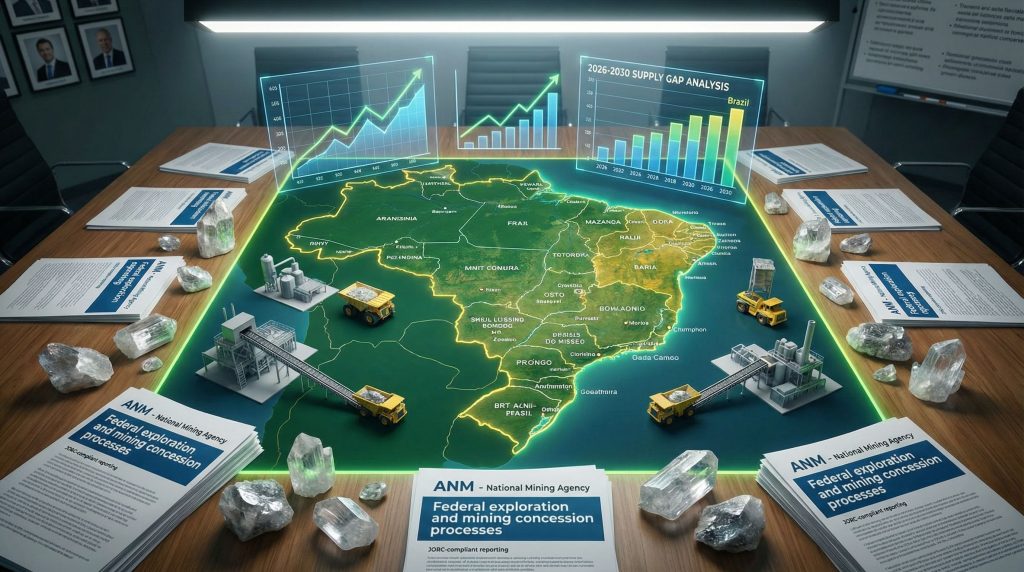
The surge in electric vehicle adoption and renewable energy storage systems has created unprecedented demand for lithium resources, prompting mining companies to explore new geographical territories beyond traditional producing regions. Lithium Ionic mining concessions in Brazil exemplify this strategic expansion, as companies seek to diversify supply chains and capitalise on emerging opportunities within South America's mineral-rich territories. Furthermore, the global transition towards clean energy technologies has intensified competition for secure lithium supply agreements, making geographic diversification increasingly critical for long-term market positioning.
Brazil's northeastern Lithium Valley represents a compelling example of this geographic diversification trend, featuring pegmatite-hosted deposits that present distinct operational advantages compared to traditional brine extraction methods. The region's proximity to Atlantic shipping routes and established industrial infrastructure creates unique logistical benefits for companies targeting North American and European battery manufacturing markets.
Strategic Positioning in Global Lithium Supply Chains
Brazil's emergence as a potential lithium producer occurs within a rapidly evolving global market structure. Current production remains dominated by Australia's hard-rock spodumene operations, which generated approximately 51,000 tonnes of lithium carbonate equivalent (LCE) in 2024, while Chile's Atacama region contributed roughly 31,000 tonnes LCE from brine extraction facilities. In addition, Australia lithium innovations continue to drive technological advancement in spodumene processing.
The Brazilian approach differs fundamentally from these established producers through its focus on pegmatite deposits containing spodumene mineralisation. These hard-rock formations require conventional mining and flotation processing, contrasting sharply with the evaporation pond systems utilised in South American brine operations. This technological distinction provides operational flexibility, as pegmatite processing typically achieves production timelines of 12-18 months compared to the 18-24 month evaporation cycles required for brine extraction.
Geographic advantages further distinguish Brazil's position within global supply chains. The country's Atlantic coastline enables direct maritime access to major battery manufacturing centres, potentially reducing transportation costs and delivery timelines compared to landlocked operations in Argentina or Chile's remote Atacama region. However, Argentina lithium brine insights reveal competitive advantages in that jurisdiction's established production infrastructure.
Comparative Production Capabilities
Brazil's Lithium Valley cluster demonstrates significant scale potential through multiple development projects advancing toward production phases. The Bandeira project, operated by Lithium Ionic mining concessions in Brazil, exemplifies this regional development trajectory with projected annual output of 177,000 tonnes of spodumene concentrate across an estimated 18.5-year mine life.
This production scale positions individual Brazilian projects competitively against established international operations. For context, global lithium demand reached approximately 750,000 tonnes LCE in 2025, with projections indicating growth to over 1.2 million tonnes LCE by 2030, driven primarily by electric vehicle adoption and energy storage deployment.
Regional clustering provides additional operational benefits through shared infrastructure development and technical expertise concentration. Companies including CBL (Centro de Tecnologia Estratégica) and Sigma Lithium Corporation maintain active projects within Brazil's Lithium Valley, creating economies of scale for transportation networks, processing facilities, and skilled workforce development.
When big ASX news breaks, our subscribers know first
Federal and State Regulatory Architecture
Brazil's mining concession framework operates through a complex multi-jurisdictional system involving federal oversight from the Agência Nacional de Mineração (ANM) and parallel state-level environmental licensing procedures. This dual-authority structure creates both opportunities for accelerated processing and potential coordination challenges that significantly impact project development timelines. Consequently, understanding the mining permitting guide becomes essential for successful project development.
The ANM maintains comprehensive federal jurisdiction over mineral rights allocation, operating under authorities established through Federal Law 12.685/2012 and Law 13,575/2017. Mining concession applications typically require 2-5 years for complete processing, depending on technical completeness and administrative efficiency within specific regional offices.
Environmental Licensing Integration
State environmental authorities conduct concurrent Licença Ambiental Concomitante (LAC) procedures parallel to federal mining concession review. In Minas Gerais, where Brazil's Lithium Valley is located, the Secretaria de Estado de Meio Ambiente e Desenvolvimento Sustentável (SEMAD) manages these environmental assessments with typical processing timelines of 12-24 months for mining projects meeting technical specifications.
This parallel processing mechanism theoretically accelerates development compared to sequential licensing approaches, though coordination between federal and state authorities remains administratively complex. Companies pursuing Brazilian lithium projects must simultaneously satisfy ANM technical requirements and SEMAD environmental standards, creating dual compliance obligations throughout the permitting process.
Recent regulatory developments have highlighted the importance of comprehensive due diligence procedures for mining concession validity. The Ontario Securities Commission's proceedings against executives associated with Emerita Resources regarding alleged irregularities in Brazilian mining rights transfers (2017-2023 period) underscore the critical nature of independent title verification protocols.
Title Verification Protocols
Independent legal verification requires comprehensive analysis of concession ownership chains, ANM registration accuracy, and absence of disputed claims. The ANM maintains a publicly accessible registry through its SIGMINE (Sistema de Informações Geográficas da Mineração) database, containing:
- Concession holder identification and contact information
- Geographic coordinates and precise area delineation
- Current concession status (exploration, feasibility, production phases)
- Registration dates and regulatory compliance records
- Transfer documentation and ownership change history
Companies must obtain independent legal opinions confirming title validity, typically involving analysis of chain-of-custody documentation from initial concession grant to current ownership status. These verification procedures have gained increased importance following regulatory scrutiny of mining rights transfers and ownership representations in capital market disclosures.
Transformation from Exploration to Production Assets
The progression from mining concessions to production-ready operations involves multiple technical and regulatory milestones that determine project viability and investment attractiveness. Brazilian lithium projects must navigate geological resource definition, metallurgical optimisation, infrastructure development, and environmental compliance within integrated development timelines.
Resource estimation protocols follow internationally recognised standards, typically utilising JORC Code compliance for mineral resource and ore reserve reporting. The JORC 2012 edition establishes minimum confidence thresholds categorising resources as Measured, Indicated, or Inferred based on drilling data density and geological understanding.
Technical Development Pathways
Spodumene concentrate production from Brazilian pegmatite deposits follows established metallurgical sequences:
- Open-pit mining operations extracting pegmatite ore at grades typically ranging 1.0-1.5% Li₂O
- Crushing and grinding circuits reducing ore to liberation particle sizes
- Flotation concentration producing spodumene concentrate at 5-8% Li₂O grades
- Dewatering and packaging for export to lithium conversion facilities
Recovery rates for optimised spodumene flotation operations typically achieve 70-85% of contained lithium, depending on ore mineralogy and processing circuit design. These technical parameters directly influence project economics and competitive positioning against alternative lithium sources.
The Bandeira project's completed feasibility study (September 2025) demonstrates the technical viability of Brazilian pegmatite processing, projecting 177,000 tonnes annual concentrate production with high-quality spodumene concentrate specifications meeting international battery industry standards.
Infrastructure and Logistics Optimisation
Brazilian lithium projects benefit from existing industrial infrastructure within Minas Gerais state, including established transportation networks connecting mining areas to export terminals. However, specialised facilities for lithium concentrate handling and export logistics require targeted investment and regulatory approval.
Processing facility development involves significant capital expenditure for crushing, grinding, and flotation equipment capable of handling projected throughput volumes. Industry benchmarks suggest capital costs ranging $15,000-25,000 per annual tonne of processing capacity for greenfield spodumene concentration plants, though economies of scale and regional clustering can reduce per-unit costs.
Workforce development represents both an opportunity and challenge for Brazil's emerging lithium sector. The concentration of multiple projects within the Lithium Valley region enables coordinated training programs and skills development initiatives, though competition for qualified personnel may intensify as projects advance toward simultaneous production phases.
Market Dynamics Influencing Asset Valuations
Lithium concession valuations respond to complex interactions between supply-demand fundamentals, technological developments, and macroeconomic conditions affecting battery mineral markets. Brazilian projects must demonstrate competitive advantages within increasingly sophisticated investor evaluation frameworks that consider geological quality, regulatory risk, and market access capabilities. Moreover, the broader critical minerals energy transition context influences investment decisions and strategic positioning.
Global lithium demand projections indicate a structural supply deficit emerging in the 2026-2030 period, with battery manufacturing requirements alone demanding 850,000-900,000 tonnes LCE annually by 2030. Current global production capacity approaches 750,000 tonnes LCE, creating an anticipated shortage of 100,000-150,000 tonnes LCE annually without significant capacity expansion.
Electric Vehicle Growth Impact
Electric vehicle adoption rates directly influence lithium demand projections and project valuation models. Global EV sales reached approximately 18 million units in 2024, representing 17-18% market penetration in developed markets while emerging economies achieved 5-15% adoption rates.
Battery demand growth rates of 15-20% compound annual growth rate (CAGR) through 2030 support long-term lithium price assumptions underlying project feasibility studies. Energy storage applications beyond automotive sectors, including grid stabilisation and renewable energy integration, contribute additional demand estimated at 200+ GWh deployed annually by 2030.
These demand drivers create favourable conditions for new lithium supply sources, though project valuations remain sensitive to commodity price volatility and competition from alternative battery chemistries or recycling technologies.
Investment Flow Patterns and Valuation Metrics
Foreign direct investment in Brazilian lithium projects reflects broader portfolio diversification strategies among battery mineral investors. Canadian, Chinese, and European capital sources have demonstrated interest in Brazilian assets, driven by supply chain security considerations and geographic risk distribution objectives.
Market capitalisation benchmarks for development-stage lithium assets typically incorporate the following valuation factors:
| Valuation Component | Industry Range | Brazilian Context |
|---|---|---|
| Resource Quality (Li₂O grade) | 1.0-1.5% competitive | Bandeira project specifications |
| Annual Production Scale | 100,000+ tonnes concentrate | 177,000 tonnes (Bandeira target) |
| Capital Intensity | $15,000-25,000/tonne capacity | Regional infrastructure benefits |
| Offtake Security | 70%+ pre-production sales | Long-term agreement requirements |
Strategic partnership structures increasingly influence project valuations, with joint ventures and technology transfer agreements providing both capital access and market credibility. Battery manufacturers and lithium converters demonstrate growing interest in upstream investment to secure supply chain integration.
Environmental and Social Governance Implementation
Environmental and social governance (ESG) standards have become fundamental requirements for lithium project development and financing, particularly for companies targeting international capital markets and battery manufacturer partnerships. Brazilian operations must demonstrate comprehensive sustainability frameworks addressing water management, community engagement, and biodiversity protection within semi-arid operating environments.
Water Management and Environmental Protection
Pegmatite lithium processing requires significant water resources for ore preparation, flotation circuits, and concentrate dewatering operations. Brazilian projects must implement water recycling systems and tailings management protocols that minimise environmental impact while ensuring operational efficiency.
Environmental impact assessments integrate baseline ecological surveys, water usage optimisation studies, and long-term monitoring programmes designed to satisfy both Brazilian environmental authorities and international ESG investment criteria. These requirements add both timeline and cost considerations to project development schedules.
Community engagement strategies focus on local stakeholder consultation, employment opportunities, and benefit-sharing arrangements with regional populations. The concentration of multiple lithium projects within Brazil's Lithium Valley requires coordinated approaches to community relations and infrastructure development that address cumulative impacts across regional operations.
Supply Chain Transparency Requirements
Battery manufacturers increasingly demand comprehensive supply chain traceability covering environmental impact, labour standards, and governance practices throughout lithium production processes. Brazilian projects must implement documentation systems tracking concentrate from mining operations through export delivery to international customers.
Furthermore, the Lithium Ionic mining concessions in Brazil represent part of Lithium Ionic's comprehensive portfolio, which demonstrates the company's commitment to sustainable lithium development across multiple jurisdictions.
Carbon footprint optimisation represents a growing competitive factor, with companies implementing renewable energy integration and processing efficiency improvements to reduce greenhouse gas emissions per unit of lithium production. Brazil's renewable energy resources provide opportunities for clean electricity integration, though capital investment and grid connection requirements must be incorporated into project development planning.
Geological Advantages and Resource Quality Factors
Brazil's Lithium Valley benefits from favourable geological conditions that differentiate regional deposits from alternative lithium sources globally. Pegmatite-hosted mineralisation typically occurs in concentrated zones with predictable ore continuity and processing characteristics that support consistent production planning and quality control.
Pegmatite Deposit Characteristics
Brazilian lithium pegmatites demonstrate several technical advantages:
- High-grade mineralisation zones with spodumene concentrations supporting efficient processing
- Predictable ore body geometry enabling conventional open-pit mining methods
- Favourable metallurgical properties achieving competitive recovery rates through flotation
- Minimal deleterious elements supporting premium concentrate specifications
Resource scalability across multiple deposit clusters within the Lithium Valley region provides expansion potential for established operations and development pipeline security for early-stage companies. This geographic concentration enables shared technical expertise and infrastructure optimisation across regional producers.
Spodumene concentrate specifications from Brazilian operations typically meet or exceed international standards for lithium conversion facilities, with 5-8% Li₂O grades and low impurity levels supporting premium pricing arrangements with end-users.
The next major ASX story will hit our subscribers first
Regulatory Risk Management and Compliance Monitoring
Recent regulatory investigations involving Brazilian lithium concessions have highlighted the importance of comprehensive compliance frameworks and proactive risk management strategies. Companies must implement ongoing monitoring systems covering title validity, regulatory reporting, and stakeholder communication to maintain operational security and investor confidence.
Crisis Management and Stakeholder Communication
The Ontario Securities Commission proceedings against Emerita Resources executives regarding alleged mining rights irregularities demonstrate the potential impact of regulatory scrutiny on sector confidence. While Lithium Ionic confirmed that it is not a defendant in these proceedings and maintains valid concessions backed by independent legal opinions and ANM public records, the situation illustrates the critical importance of transparent communication and comprehensive documentation.
Companies operating in Brazil's lithium sector must maintain:
- Independent legal verification of mining rights with regular title updates
- Transparent disclosure protocols for regulatory inquiries and investigations
- Stakeholder communication strategies addressing investor concerns and market volatility
- Documentation systems supporting regulatory compliance and due diligence requirements
Business continuity planning involves scenario analysis for potential regulatory challenges, operational disruptions, and market access limitations that could impact development timelines and financing arrangements.
What Does the Future Hold for Technology and Market Evolution?
Technological developments in lithium extraction and processing present both opportunities and challenges for Brazilian pegmatite operations. Direct lithium extraction (DLE) technologies under development for brine operations may not directly apply to hard-rock processing, though automation and digitalisation trends offer operational optimisation potential across all lithium production methods. Additionally, the broader mining industry evolution continues to reshape operational approaches and efficiency standards.
Processing Technology Advancement
Innovation in spodumene processing focuses on:
- Recovery rate optimisation through improved flotation chemistry and circuit design
- Energy efficiency improvements reducing processing costs and environmental impact
- Automation systems minimising labour requirements and enhancing operational consistency
- Quality control technologies ensuring consistent concentrate specifications
Battery chemistry evolution may influence lithium demand patterns and specification requirements, though current projections support continued growth in lithium-ion battery applications across transportation and energy storage sectors.
Policy and Trade Dynamics
International trade policies affecting critical mineral supply chains may create additional opportunities for Brazilian lithium producers. Supply chain diversification initiatives in North America and Europe support investment in alternative lithium sources outside traditional producing regions.
Climate policy integration includes carbon pricing mechanisms and renewable energy mandates that may favour low-carbon lithium production sources. Brazil's renewable energy resources position the country favourably for sustainable lithium production aligned with international ESG requirements.
According to S&P Global, Brazil is making significant strides to become a leading lithium supplier, with multiple projects advancing through development stages and attracting substantial international investment.
"Investment Outlook": Brazil's lithium sector presents compelling opportunities within the global supply diversification trend, though success requires careful navigation of regulatory frameworks, technical optimisation, and stakeholder management. Companies must demonstrate geological competence, operational capability, and ESG compliance to attract international investment and secure long-term market access.
The convergence of favourable geology, strategic location, and regulatory stability positions Brazil's Lithium Valley as a significant component of future global lithium supply chains, though individual project success depends on execution capability and market access strategies tailored to evolving battery industry requirements. Ultimately, Lithium Ionic mining concessions in Brazil represent a microcosm of this broader trend toward supply chain diversification and geographic expansion within the global lithium industry.
Are You Positioned to Capitalise on Brazil's Emerging Lithium Opportunities?
Discovery Alert's proprietary Discovery IQ model delivers instant notifications on significant lithium and critical mineral discoveries across the ASX, empowering subscribers to identify actionable opportunities as they emerge from Australia's dynamic mining sector. Explore how historic mineral discoveries have generated substantial market returns and begin your 14-day free trial today to secure your competitive advantage in the rapidly evolving battery minerals market.