May 21, 2026
The Global Lithium Mining Landscape: A Strategic Overview
The global lithium mining industry stands at a pivotal moment, with demand for this critical mineral reaching unprecedented levels. As electric vehicle adoption accelerates and renewable energy storage requirements expand, understanding the dynamics of lithium production has become essential for investors, policymakers, and industry stakeholders. Furthermore, the geopolitical implications of lithium supply chains are reshaping international trade relationships and strategic resource planning.
The complexity of lithium extraction varies significantly across different geological formations and geographic regions. Moreover, technological advancements are revolutionising how companies approach lithium recovery, particularly in challenging environments where traditional mining methods prove insufficient.
When big ASX news breaks, our subscribers know first
Current Production Leaders and Emerging Players
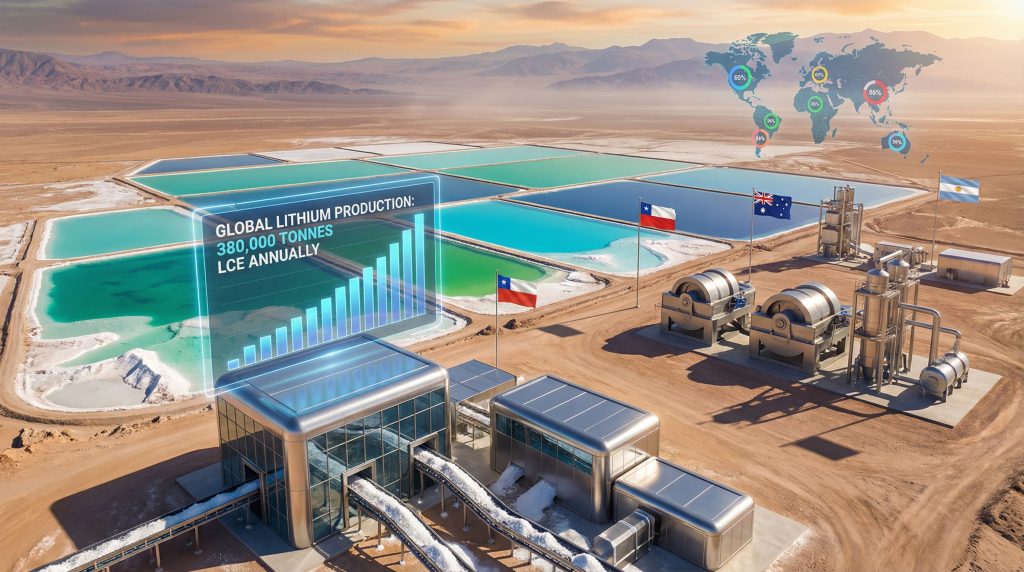
Australia currently dominates global lithium production, accounting for approximately 52% of worldwide output. The country's hard rock spodumene deposits have proven highly profitable, with major operations concentrated in Western Australia's lithium triangle. However, Australia lithium tax breaks are influencing the competitive landscape significantly.
Chile follows as the second-largest producer, leveraging its extensive brine resources in the Atacama Desert. The country's unique evaporation-based extraction methods offer lower operational costs compared to hard rock mining. Additionally, Argentina lithium brine insights reveal substantial untapped potential in South America's lithium triangle.
China maintains its position as a crucial player, not only through domestic production but also through strategic investments in overseas projects. The nation's comprehensive approach to the lithium value chain extends from mining operations to battery-grade lithium refining capabilities.
Technological Innovations in Extraction Methods
Traditional lithium extraction methods are evolving rapidly, driven by environmental concerns and efficiency improvements. Hard rock mining continues to dominate in Australia, where companies utilise sophisticated crushing and flotation processes to extract lithium from spodumene ore.
Brine extraction represents the most cost-effective method for lithium recovery. This process involves pumping lithium-rich brine from underground aquifers into large evaporation ponds. However, the method requires 12-18 months for complete processing, making it time-intensive despite its economic advantages.
Furthermore, geothermal lithium extraction is emerging as a promising alternative. This innovative approach combines renewable energy generation with lithium production, offering enhanced environmental sustainability.
Direct Lithium Extraction Technologies
Direct lithium extraction (DLE) technologies are revolutionising the industry by dramatically reducing processing times and environmental impact. These advanced systems can process brine in hours rather than months, significantly improving project economics.
DLE technologies include selective adsorption, ion exchange, and membrane separation methods. Consequently, these innovations are attracting substantial investment from both established mining companies and technology startups seeking to commercialise breakthrough solutions.
Major Projects Shaping the Industry
Several large-scale lithium projects are transforming the global supply landscape. The Thacker Pass lithium mine represents the largest known lithium resource in the United States, potentially revolutionising North American supply security.
In Australia, the Greenbushes mine continues to expand its production capacity, maintaining its status as the world's largest hard rock lithium operation. The facility produces over 1.3 million tonnes of spodumene concentrate annually, supplying multiple downstream processing facilities.
Meanwhile, Chile's Salar de Atacama remains the world's most productive brine operation. The facility's unique geological characteristics enable efficient lithium extraction at exceptionally low production costs, typically under $4,000 per tonne of lithium carbonate equivalent.
Emerging African Operations
Africa is emerging as a significant lithium producer, with several projects advancing through development stages. Zimbabwe's Bikita mine has operated since the 1950s, whilst new developments in the Democratic Republic of Congo are attracting international investment.
These African operations offer geographical diversification for the global lithium supply chain. However, infrastructure challenges and regulatory complexities require careful navigation by international investors and mining companies.
Market Dynamics and Supply Chain Considerations
The lithium market exhibits significant price volatility, influenced by supply constraints and evolving demand patterns. Battery manufacturers require consistent, high-quality lithium compounds, driving the need for robust supply chain management strategies.
Moreover, processing capacity represents a critical bottleneck in the lithium value chain. Raw lithium concentrates must undergo extensive refining to produce battery-grade materials suitable for electric vehicle applications. This processing requirement creates strategic advantages for vertically integrated operations.
Transportation costs significantly impact project economics, particularly for remote mining operations. Consequently, proximity to processing facilities and shipping infrastructure remains a crucial factor in project development decisions. According to industry analysis frameworks, comprehensive evaluation methodologies are essential for assessing project viability.
Quality Specifications and Processing Requirements
Battery-grade lithium requires exceptional purity levels, typically exceeding 99.5% lithium carbonate equivalent. This stringent requirement necessitates sophisticated purification processes and quality control systems throughout the production chain.
Furthermore, impurity management presents ongoing challenges for lithium producers. Trace elements such as iron, magnesium, and calcium must be minimised to meet battery manufacturer specifications. Effective technical documentation of these processes is crucial for maintaining quality standards.
Environmental and Social Considerations
Environmental stewardship has become increasingly important in lithium mining operations. Water usage represents a particular concern in brine extraction, where operations can consume substantial quantities of freshwater in arid regions.
Additionally, community engagement and social licence to operate are essential for project success. Mining companies must demonstrate meaningful benefits for local communities whilst minimising environmental impacts throughout the operational lifecycle.
Rehabilitation planning requires careful consideration from project inception. Progressive rehabilitation strategies help minimise long-term environmental liabilities whilst demonstrating responsible resource development practices.
Regulatory Compliance and Permitting
Environmental permitting processes vary significantly across jurisdictions, influencing project development timelines and capital requirements. Comprehensive environmental impact assessments are mandatory for most lithium mining projects, requiring extensive baseline studies and mitigation planning.
In addition, indigenous rights and heritage protection represent critical considerations in many lithium-rich regions. Meaningful consultation processes and benefit-sharing agreements are increasingly standard requirements for project approval.
The next major ASX story will hit our subscribers first
Future Outlook and Strategic Implications
The global lithium mining industry faces unprecedented growth opportunities alongside significant challenges. Demand projections suggest a ten-fold increase in lithium requirements by 2030, driven primarily by electric vehicle adoption and grid-scale energy storage deployment.
However, supply response remains constrained by long development timelines and substantial capital requirements. New lithium projects typically require 5-7 years from discovery to production, creating potential supply gaps during periods of accelerated demand growth.
Consequently, strategic resource planning and international cooperation are becoming increasingly important for ensuring adequate lithium supplies for the global energy transition. The industry's evolution will continue shaping geopolitical relationships and investment flows across multiple continents.
Ready to Capitalise on the Next Major Lithium Discovery?
Discovery Alert instantly alerts investors to significant ASX mineral discoveries using its proprietary Discovery IQ model, turning complex mineral data into actionable insights for commodities like lithium. Understand why major mineral discoveries can lead to substantial market returns by exploring Discovery Alert's dedicated discoveries page, showcasing historic examples of exceptional outcomes, or begin your 14-day free trial today to position yourself ahead of the market.