August 21, 2026
Looking at the global energy landscape in 2026, critical mineral dependencies and supply chain vulnerabilities have pushed trade negotiations beyond traditional economic considerations into national security territory. The lithium revolution underpinning electric vehicle adoption and renewable energy storage has created new geopolitical leverage points, with resource-rich nations reassessing their mineral extraction policies. Mexico's constitutional energy sector reforms and lithium nationalisation represent a strategic recalibration that directly challenges North American supply chain integration models developed over three decades of NAFTA and USMCA cooperation.
Understanding Regional Trade Framework Pressures and Energy Security Dynamics
The July 2026 USMCA joint review emerges against a backdrop of escalating US-Mexico tensions over constitutional energy reforms that fundamentally restrict foreign investment participation. Mexico's Legislative Observatory analysis of the 2026 National Trade Estimate Report reveals that United States targets Mexico's energy lithium monopolies through systematic identification of investment barriers across the mineral and energy sectors. Furthermore, these energy security dynamics extend beyond traditional trade considerations into strategic resource control.
Constitutional amendments enacted in late 2024 reclassified both PEMEX and CFE from autonomous state-owned enterprises to direct government-controlled "public enterprises," eliminating operational independence that previously facilitated foreign partnerships. This restructuring coincides with 2025 legislation mandating CFE maintain minimum 54% ownership stakes in all mixed-investment power generation projects, effectively blocking foreign majority control of Mexico's electricity infrastructure.
The timing proves particularly significant as global lithium demand accelerates. Energy storage installations are projected to reach 301GWh in 2026, while plug-in hybrid electric vehicle sales are expected to hit 22.77 million units, representing a 16.8% increase from 2025 levels. This demand surge occurs precisely as Mexico debates state control mechanisms that may limit its participation in North American battery supply chain development.
Strategic Implications of Permit Timeline Reductions
October 2025 hydrocarbons sector legislation implemented dramatic reductions in permit validity periods that fundamentally alter investment planning horizons. Import permits for hydrocarbons operations dropped from 20-year to 5-year validity periods, while commercialisation permits fell from 30 years to just 2 years. These changes represent a 75% reduction in planning certainty for capital-intensive energy infrastructure projects.
The permit timeline compression creates operational challenges beyond administrative burden. Energy sector investments typically require 15-20 year payback periods to justify initial capital deployment, yet Mexico's new framework forces renewal processes every 2-5 years. This mismatch between investment timelines and regulatory certainty explains why the Legislative Observatory concluded that US negotiators see no viable investment path under current legal structures. Moreover, these mining permit challenges are becoming increasingly complex across the broader resource extraction sector.
When big ASX news breaks, our subscribers know first
Identifying Systematic Market Access Restrictions in Energy and Mining
The 2026 National Trade Estimate Report, published March 31 by the US Trade Representative office, documents multiple barrier categories that collectively restrict market access across Mexico's energy and mining sectors. These obstacles function not as isolated policies but as integrated frameworks limiting foreign capital participation.
Constitutional Restructuring and Investment Limitations
Table: Key Energy Sector Ownership Requirements
| Entity | Previous Status | Current Classification | Foreign Investment Limit |
|---|---|---|---|
| PEMEX | State-owned Enterprise | Public Enterprise | 0% (State monopoly) |
| CFE | State-owned Enterprise | Public Enterprise | 46% maximum in mixed projects |
| LitioMx | – | State Entity | 0% (Constitutional prohibition) |
Mexico's constitutional reclassification creates operational constraints that extend beyond ownership percentages. Public enterprises operate under different procurement rules, employment frameworks, and financial oversight mechanisms compared to state-owned enterprises. These structural changes affect technology transfer agreements, joint venture formations, and operational decision-making processes that previously facilitated US-Mexico energy cooperation.
PEMEX's outstanding supplier debt exceeding US$2.5 billion as of December 31, 2025, demonstrates the financial constraints affecting Mexico's energy sector. This debt accumulation occurs alongside reduced operational flexibility and investment capacity, creating systemic challenges for maintaining current production levels while developing new extraction capabilities.
Administrative and Customs Barrier Implementation
December 27, 2025 customs reforms introduced comprehensive changes affecting trade logistics and market access mechanisms. The new framework includes:
• Enhanced transaction documentation requirements increasing administrative burden per shipment
• Strict liability standards for customs agents with elevated penalty structures
• Expanded detention and seizure powers allowing broader goods confiscation
• Agent suspension programmes affecting operational continuity for established importers
• Port-specific restrictions limiting entry points for certain commodity categories
• Authorised port limitations capping the number of ports individual customs agents may utilise
The cumulative impact creates operational uncertainty for US exporters while increasing transaction costs and processing delays. Combined with energy sector restrictions, these measures establish systematic barriers to bilateral trade integration across multiple sectors simultaneously. Additionally, tariff impacts on cross-border investment flows continue to complicate bilateral negotiations.
Analysing Mexico's Lithium Strategy and Supply Chain Positioning
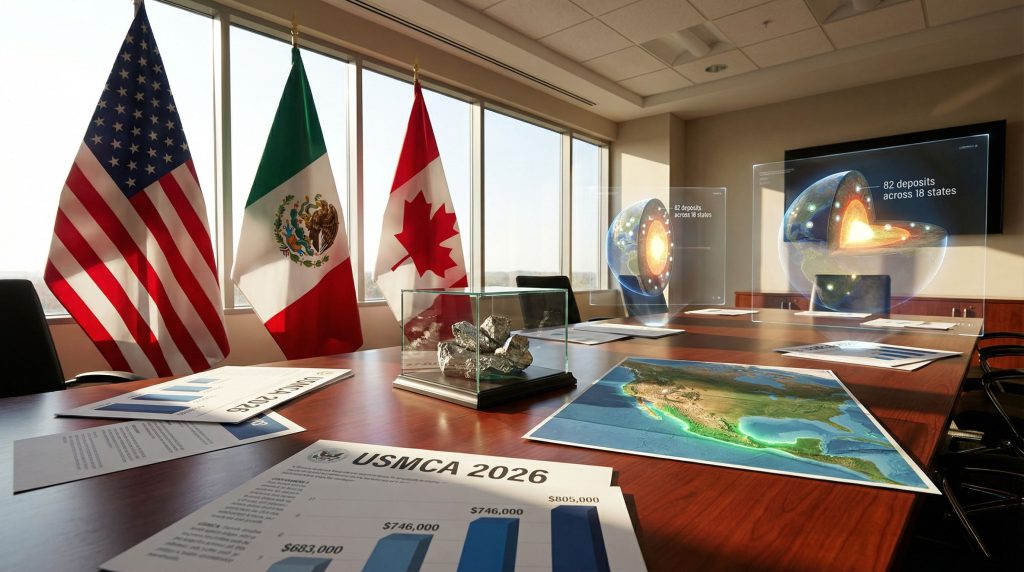
Mexico's lithium nationalisation policy creates a state monopoly structure through LitioMx while simultaneously facing significant technical and financial constraints that limit extraction capacity development. The country holds approximately 1.7 million tonnes of lithium reserves distributed across 82 identified deposits in 18 states, with concentration in Sonora (13 deposits), Puebla (12 deposits), and Oaxaca (9 deposits).
Budgetary Constraints and Operational Reality
LitioMx Budget Analysis 2024-2026:
| Year | Budget (MX$ Million) | Budget (US$ Million) | Operational Scope |
|---|---|---|---|
| 2024 | 11.8 | 683,000 | Operational costs only |
| 2025 | 12.9 | 746,000 | Operational costs only |
| 2026 | 13.9 | 805,000 | Operational costs only |
For the third consecutive year, LitioMx's federal budget allocation covers only operational expenses rather than exploration or development capital. The 2026 budget of US$805,000 represents annual operational funding for managing 82 deposits across 18 states, highlighting the gap between state control ambitions and financial resources required for lithium development.
Rubén del Pozo, President of Mexico's Mining Association (AIMMGM), emphasised the technical complexity challenge facing state-led development. According to his assessment, lithium extraction requires comprehensive geological analysis, substantial investment capital, and specialised extraction technologies before commercial production becomes viable. The current budget allocation cannot support the multi-million-dollar investments and extended timelines typically required for lithium deposit development.
Clay Lithium Extraction Complexity and PEMEX Alternative Pathways
President Claudia Sheinbaum has publicly acknowledged that Mexico's lithium predominantly exists in clay form, which significantly complicates extraction processes and increases operational costs compared to South American brine deposits. Clay lithium requires direct lithium extraction (DLE) technologies involving complex chemical processes including solvent extraction, precipitation, and ion exchange systems.
PEMEX presents an alternative extraction pathway through oilfield brine exploration across five states. CEO Victor Rodríguez disclosed that lithium concentrations comparable to Bolivian levels have been identified at petroleum drilling sites, with potential establishment of a "PEMEX Lithium" subsidiary to produce "petrolithium" from petroleum brines. This approach could leverage existing PEMEX infrastructure and expertise while providing collaboration opportunities with LitioMx.
The Supreme Court validation of the 2022 Mining Law reform in March 2026 solidified the legal framework for state lithium control. The court rejected constitutional challenges including alleged violations of mining frameworks, legal certainty principles, and indigenous consultation requirements. Justices ruled that prior indigenous consultation was not required because lithium nationalisation did not generate direct impacts on indigenous and Afro-Mexican community rights.
Examining Global Market Dynamics and Competitive Positioning
Global lithium market concentration creates challenges for Mexico's integration into international supply chains. China, Australia, and Chile currently control approximately 94% of global battery-grade lithium supply, with China dominating processed lithium and lithium chemical production. This market structure positions Mexico as a potentially significant resource holder but currently underutilised relative to global supply chain integration. Consequently, lithium market insights from other Latin American nations provide valuable benchmarks for potential development strategies.
Market Demand Projections and Supply-Demand Balance
Critical Market Indicators for 2026:
Lithium carbonate surplus: Projected to decrease to 109,000 tonnes from 141,000 tonnes in 2025
Global consumption growth: 13.5% increase reaching 1.48Mt lithium carbonate equivalent
Energy storage market: 301GWh of new battery installations expected
Electric vehicle sales: 22.77 million plug-in hybrid units (+16.8% year-over-year)
The shrinking surplus indicates tightening supply-demand balance precisely when Mexico debates state control policies. Armando Alatorre, Vice President of the Chamber of the Mexican Mining Industry (CIMMGM), observed that while Mexico focuses on governance debates, the global automotive industry secures alternative supply contracts, potentially excluding Mexico from battery and electric vehicle investment opportunities.
Technology Transfer and Investment Migration Risks
Mexico's lithium policy debate occurs as international automotive manufacturers accelerate supply chain diversification away from Chinese dependencies. Tesla, General Motors, Ford, and other major automakers are establishing long-term lithium supply agreements with Australian, Chilean, and Argentine producers to secure battery material access through 2030 and beyond.
The timing mismatch between Mexico's policy development and global supply chain formation creates opportunity costs. While LitioMx operates on US$805,000 annual budgets, competing nations attract billions in private investment for extraction facility development, processing plant construction, and transportation infrastructure. Furthermore, the mining industry evolution demonstrates how technological advancement continues to reshape competitive positioning globally.
Evaluating USMCA Renegotiation Scenarios and Critical Minerals Access
The July 2026 USMCA review provides opportunities to address critical minerals access through innovative partnership frameworks that respect Mexican sovereignty while facilitating North American supply chain integration. Several negotiation pathways could emerge from current trade tensions, particularly as United States targets Mexico's energy lithium monopolies through systematic trade policy reforms.
Bilateral Investment Framework Development
Scenario Analysis: Joint Development Partnerships
• Technology transfer agreements allowing US expertise in clay lithium extraction while maintaining Mexican ownership
• Infrastructure co-investment in transportation and processing facilities serving trilateral supply chains
• Revenue-sharing models providing US companies profit participation without ownership transfer
• Research collaboration frameworks combining US innovation capabilities with Mexican resource access
• Workforce development programmes training Mexican technicians in advanced extraction methodologies
Alternative scenarios include modified state monopoly structures permitting foreign technical partnerships under Mexican operational control. This approach could address US investment access concerns while preserving Mexico's constitutional energy sovereignty principles.
Supply Chain Integration Incentives and Regional Competitiveness
Potential USMCA Enhancement Mechanisms:
-
Preferential trade treatment for trilateral critical minerals projects meeting North American content requirements
-
Coordinated market responses to Chinese lithium processing dominance through regional capacity development
-
Infrastructure investment vehicles financing cross-border transportation and processing facilities
-
Regulatory harmonisation streamlining environmental and operational approval processes
-
Joint research initiatives developing clay lithium extraction technologies suited to Mexican geological conditions
These mechanisms could create competitive advantages for North American battery manufacturing while addressing each nation's strategic objectives. Mexico gains access to advanced extraction technologies and infrastructure investment, while the US secures diversified critical minerals access within the trade bloc.
Assessing Broader Energy Independence and Geopolitical Implications
Mexico's energy reforms and lithium nationalisation reflect broader trends toward resource sovereignty amid intensifying US-China strategic competition. The policies position Mexico's energy sector as a strategic asset rather than purely economic resource, aligning with global movements toward critical mineral security and supply chain regionalisation. According to comprehensive analysis from the Wilson Center, these constitutional changes represent the most significant energy sector restructuring in Mexico since the 1938 oil nationalisation.
Regional Manufacturing Hub Development Potential
North American lithium integration could support battery and electric vehicle manufacturing cluster development across the USMCA region. Mexico's automotive manufacturing expertise, combined with US technology capabilities and Canadian raw materials, creates potential for integrated supply chains reducing Asian dependencies.
Strategic Resource Security Benefits:
• Diversification from Chinese processing reducing dependency on Asian lithium chemical production
• Regional manufacturing capacity supporting North American battery and EV production expansion
• Energy transition acceleration providing domestic renewable energy storage infrastructure
• Geopolitical risk mitigation securing critical minerals within established trade partnerships
The economic multiplier effects extend across mining, manufacturing, and technology sectors. Successful integration could create employment opportunities while building technological capabilities that position North America competitively in global energy transition markets.
Infrastructure Investment and Technology Development Opportunities
PEMEX's "petrolithium" exploration programme demonstrates potential for innovative extraction approaches leveraging existing petroleum industry infrastructure. This pathway could reduce development timelines and capital requirements compared to greenfield lithium mining projects while utilising established operational expertise.
Cross-border research collaboration could accelerate clay lithium extraction technology development. US universities and research institutions possess advanced direct lithium extraction capabilities that could be adapted to Mexican geological conditions through joint programmes. Such partnerships could advance both nations' technological capabilities while respecting sovereignty requirements.
The next major ASX story will hit our subscribers first
Analysing Regulatory Evolution and International Cooperation Frameworks
Mexico's judicial reforms and administrative changes create new frameworks for international business operations that extend beyond energy sector impacts. The establishment of an elected judiciary system affects international arbitration processes and investment dispute resolution mechanisms established under USMCA Chapter 14. However, prospects for effective cooperation remain dependent on constitutional reform and energy sector governance alignment with international investment frameworks.
Legal Framework Adaptation and Investment Protection
The Supreme Court's March 2026 validation of lithium nationalisation establishes constitutional precedent for state resource control while defining parameters for international partnership development. The court's ruling that prior indigenous consultation was not required provides operational clarity for future lithium development projects.
Key Regulatory Considerations:
• Environmental compliance frameworks governing mining operations in indigenous territories
• Permit standardisation processes streamlining approval timelines for joint venture projects
• Intellectual property protection ensuring technology transfer agreement enforcement
• Arbitration mechanism preservation maintaining investment dispute resolution capabilities
The regulatory evolution creates opportunities for structured partnerships that address US investment concerns while maintaining Mexican constitutional requirements. Success depends on developing frameworks that provide operational certainty for international partners while preserving national sovereignty over strategic resources.
Public-Private Partnership Innovation Models
Mexico's experience with energy sector public-private partnerships under previous administrations provides templates for lithium development cooperation. Hybrid ownership structures could allocate technical operations to international partners while maintaining state ownership and strategic control.
Potential Partnership Structures:
| Model | Mexican Control | Foreign Participation | Key Benefits |
|---|---|---|---|
| Technical Services | 100% ownership | Operations & technology | Preserves sovereignty, gains expertise |
| Revenue Sharing | State ownership | Profit participation | Investment incentives, shared risk |
| Infrastructure Joint Ventures | Resource control | Facility co-investment | Leverages private capital, maintains oversight |
| Research Partnerships | Strategic control | Technology development | Innovation access, capability building |
These models could address constitutional constraints while providing investment incentives necessary for large-scale lithium development. The approach requires careful legal structuring to ensure compliance with Mexico's nationalisation framework while offering sufficient returns to attract international capital.
Strategic Pathways and Implementation Considerations
The 2026 USMCA review represents a critical juncture for North American energy cooperation and critical minerals integration. Success requires balancing Mexico's constitutional energy sovereignty with regional supply chain security objectives while addressing competitive pressures from Asian lithium producers. As the United States targets Mexico's energy lithium monopolies, innovative partnership models must emerge that respect sovereignty principles while achieving strategic integration.
Implementation Timeline Considerations:
• Short-term (2026-2027): Establish legal frameworks for technical cooperation within existing constitutional constraints
• Medium-term (2027-2030): Develop infrastructure and processing capacity through joint investment vehicles
• Long-term (2030+): Achieve competitive North American lithium production supporting regional battery manufacturing
The pathway forward depends on innovative partnership models that leverage Mexico's substantial lithium reserves, US technological capabilities, and shared objectives for supply chain independence from Chinese dominance. Successful implementation could establish North America as a competitive alternative to Asian battery supply chains while respecting national sovereignty principles.
Furthermore, as the United States targets Mexico's energy lithium monopolies through systematic trade policy measures, the ultimate outcome will depend on negotiators' ability to develop frameworks that address strategic interests while providing operational certainty for long-term investment and development programmes.
Disclaimer: This analysis is based on publicly available information as of April 2026 and includes forward-looking projections that may not materialise as described. Investment and policy decisions should consider additional factors beyond those discussed in this article.
Looking to Capitalise on Critical Mineral Discoveries?
Discovery Alert's proprietary Discovery IQ model delivers immediate notifications when significant mineral discoveries are announced on the ASX, transforming complex geological data into actionable investment insights. Explore why historic critical mineral discoveries have generated exceptional returns for early investors, then begin your 14-day free trial today to secure your competitive advantage in Australia's dynamic mining sector.