June 5, 2026
The global lithium market stands at a critical inflection point, where traditional resource extraction frameworks collide with unprecedented demand dynamics from electric vehicle proliferation and energy storage requirements. Within this transformation, Chile's lithium sector represents a fascinating case study in regulatory innovation, balancing state sovereignty over strategic minerals with private capital deployment needs. The emergence of specialized contracting mechanisms reflects broader shifts in how resource-rich nations approach critical mineral governance in an era of energy transition, with lithium operating contract in Chile arrangements pioneering new approaches to resource development.
What Are Special Lithium Operating Contracts (CEOLs) in Chile?
Regulatory Framework and Legal Structure
Chile's lithium operating contracts represent a fundamental departure from conventional mining concession models that have dominated South American mineral extraction for decades. Under this framework, the Chilean state maintains ownership of lithium resources while granting operational rights to private entities through time-bounded contractual arrangements.
The CEOL (Contrato Especial de Operación de Litio) structure emerged from Chile's recognition of lithium as a strategic resource requiring enhanced state oversight. Unlike traditional mining concessions that grant indefinite rights, these lithium operating contract in Chile arrangements typically span 30 to 40 years, with the recent CleanTech Lithium agreement for the Laguna Verde project establishing a 40-year operational term.
Key regulatory distinctions include:
- State resource ownership retention throughout the contract duration
- Fixed-term operational rights rather than perpetual concessions
- Enhanced environmental compliance standards beyond standard mining code requirements
- Mandatory indigenous community consultation protocols integrated into approval processes
- Negotiated revenue-sharing mechanisms replacing standard royalty structures
Key Contract Components and Terms
The contractual architecture of CEOLs incorporates multiple layers of regulatory oversight designed to balance private investment incentives with national strategic objectives. Geographic boundaries within these contracts encompass not only extraction zones but also associated infrastructure corridors and processing facility locations.
Environmental compliance requirements under the CEOL framework exceed traditional mining standards, incorporating water usage monitoring systems, biodiversity impact assessments, and carbon footprint reduction targets. These provisions reflect Chile's positioning within global ESG investment frameworks and recognition of Atacama Desert ecosystem sensitivity.
Furthermore, indigenous consultation mandates require operators to engage with local communities throughout project lifecycles, establishing benefit-sharing agreements and cultural heritage protection protocols. This represents a significant evolution from historical mining practices in the region.
Revenue-sharing structures under CEOLs involve negotiated percentages rather than fixed royalty rates, allowing the state to capture greater value from lithium price volatility while providing operators with predictable cost frameworks over extended contract periods.
When big ASX news breaks, our subscribers know first
Why Is Chile Restructuring Its Lithium Contracting System?
National Strategy Objectives
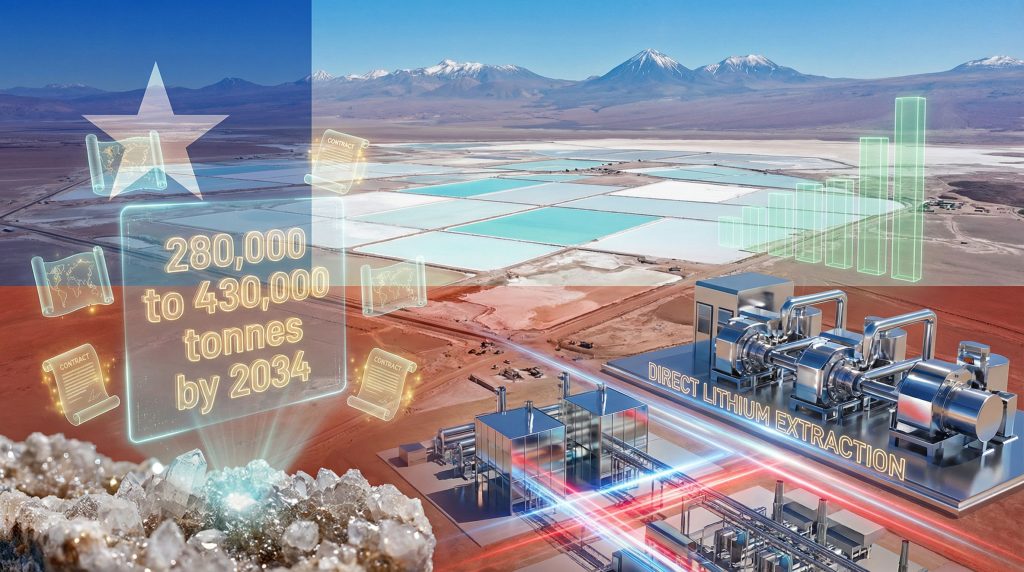
Chile's lithium contracting restructure reflects a strategic recalibration driven by global energy transition dynamics and competitive positioning concerns within international critical mineral supply chains. The nation aims to expand production capacity significantly, targeting growth from current levels toward 430,000 tonnes annually by 2034, though this figure requires verification through official government sources.
This production expansion strategy balances state control imperatives with private capital mobilisation needs. The 30-year gap between new lithium project approvals, broken by the CleanTech Lithium Laguna Verde contract announcement in March 2026, suggests previous regulatory frameworks created barriers to development that CEOLs aim to address.
In addition, strategic resource sovereignty considerations drive much of this policy evolution. Chile recognises lithium's critical role in global decarbonisation efforts and seeks to maintain influence over supply chain dynamics rather than simply extracting raw materials for export. This approach mirrors strategies employed by other resource-rich nations seeking to capture greater value from critical mineral endowments.
The CEOL framework positions Chile to leverage its geological advantages while maintaining regulatory flexibility to adapt to evolving market conditions and technological developments in lithium processing and application.
Market Drivers Behind Contract Reform
Global lithium demand projections indicate exponential growth driven by electric vehicle adoption, stationary energy storage deployment, and consumer electronics expansion. These demand dynamics create opportunities for resource-holding nations to implement more sophisticated contracting mechanisms that capture greater economic value.
Competition from Argentina lithium brine insights developments and Australia lithium innovations pressures Chile to optimise its regulatory framework for investor attractiveness while maintaining strategic oversight. The emergence of direct lithium extraction (DLE) technologies creates additional competitive pressures, as these innovations can potentially unlock previously uneconomical deposits worldwide.
Technology advancement requirements embedded within CEOL structures incentivise operators to deploy cutting-edge extraction and processing technologies. This technology-forcing approach aims to position Chilean lithium production at the forefront of environmental performance while maximising recovery rates from brine resources.
Consequently, ESG compliance pressures from international investors and downstream consumers create additional drivers for regulatory framework sophistication. CEOLs incorporate environmental and social governance standards that align with global sustainability reporting requirements and investor screening criteria.
How Do CEOLs Differ from Traditional Mining Concessions?
Legal and Operational Distinctions
The fundamental architecture of lithium operating contract in Chile structures diverges significantly from conventional mining concession frameworks that have governed mineral extraction throughout South America for generations.
| Aspect | Traditional Concessions | CEOLs |
|---|---|---|
| Resource Ownership | Rights holder ownership | State retained ownership |
| Contract Duration | Indefinite/perpetual | Fixed term (30-40 years) |
| Regulatory Oversight | Standard mining code | Enhanced state involvement |
| Revenue Model | Royalties and taxes | Negotiated revenue sharing |
| Environmental Standards | Basic compliance | Advanced ESG integration |
| Technology Requirements | Market-driven | State-incentivised innovation |
Under traditional concession systems, mineral rights holders acquire quasi-ownership privileges over subsurface resources, creating long-term asset positions that can be traded, leveraged, or developed according to market timing preferences. CEOLs fundamentally alter this relationship by maintaining state ownership while granting operational privileges through contractual arrangements.
However, the fixed-term nature of CEOLs creates different investment calculus considerations for operators. While 40-year terms provide sufficient duration for project development and capital recovery, the finite nature of these agreements influences technology deployment decisions, infrastructure investment strategies, and operational optimisation approaches.
Enhanced state involvement under the CEOL framework manifests through multiple oversight mechanisms, including production monitoring, technology deployment verification, environmental compliance auditing, and community engagement assessment. This represents a more hands-on approach compared to traditional regulatory frameworks.
Approval and Ratification Process
The CEOL approval process involves multiple governmental entities and oversight mechanisms designed to ensure alignment with national strategic objectives while maintaining investment attractiveness for private operators.
Mining Ministry Negotiation: Initial contract terms emerge through direct negotiations between the Chilean Mining Ministry and prospective operators. These discussions encompass technical capabilities, financial commitments, environmental protection measures, and community engagement protocols.
Comptroller General Review: Chile's Comptroller General's Office (Contraloría General de la República) conducts comprehensive legal and procedural reviews of negotiated CEOL terms. This oversight mechanism ensures constitutional compliance and procedural adherence throughout the contracting process.
Congressional Oversight: Parliamentary review mechanisms provide additional scrutiny of CEOL agreements, particularly for projects involving significant resource commitments or novel contractual structures.
Timeline expectations for CEOL approvals vary based on project complexity, environmental impact scope, and community consultation requirements. The CleanTech Lithium Laguna Verde contract represents a successful navigation of this approval framework, though specific procedural details and timeline documentation require verification through official government sources.
What Are the Current CEOL Projects in Development?
Active Contract Portfolio Analysis
Chile's CEOL project portfolio remains in early development stages, with the CleanTech Lithium Laguna Verde project representing the first confirmed agreement under this new regulatory framework. This 40-year contract, announced in March 2026 under CEO Ignacio Mehech's leadership, breaks a 30-year gap in new lithium project approvals in Chile.
Confirmed CEOL Projects:
- CleanTech Lithium – Laguna Verde: 40-year operational contract covering exploration, development, and production phases
- Geographic Location: Atacama Desert region with access to existing infrastructure corridors
- Technology Focus: Expected integration of direct lithium extraction technologies
- Development Timeline: Multi-phase approach spanning exploration through production ramp-up
The absence of additional confirmed CEOL projects highlights the nascent nature of this contracting framework. While industry speculation suggests potential pipeline projects involving established operators like Rio Tinto, Albemarle, and SQM, verification of these developments requires confirmation through official Mining Ministry records or company announcements.
Pipeline Assessment Considerations:
- Salar de Ascotán development potential requires environmental impact assessment completion
- Quillagua Sur resource evaluation studies ongoing without confirmed CEOL application status
- Regional distribution patterns suggest focus on proven geological basins within established mining corridors
Joint Venture Structures and Partnerships
The CleanTech Lithium Laguna Verde project structure provides initial insights into how international partnerships may operate within the CEOL framework. However, detailed joint venture arrangements, equity participation structures, and technology transfer agreements require verification through company disclosures and regulatory filings.
International regulatory approval requirements for CEOL projects involving foreign operators encompass investment screening procedures, technology transfer protocols, and cross-border financial compliance mechanisms. These requirements vary based on operator nationality and technology deployment scope.
The emergence of specialised lithium development entities, such as Nova Andino Litio SpA mentioned in outline materials, suggests potential evolution toward dedicated project vehicles designed specifically for CEOL operations. However, verification of these entities' legal status and operational scope requires confirmation through Chilean corporate registry documentation.
How Do Operating Contracts Impact Lithium Production Economics?
Cost Structure Implications
Lithium operating contract in Chile structures create distinct economic frameworks that diverge from traditional mining cost structures in several critical dimensions. The finite 40-year contract duration influences capital expenditure strategies, as operators must amortise investments within defined timeframes rather than across indefinite operational periods.
Capital Expenditure Considerations:
- Infrastructure Development: Enhanced requirements for processing facility construction and environmental protection systems
- Technology Deployment: Incentives for advanced extraction technologies, particularly direct lithium extraction (DLE) systems
- Community Infrastructure: Obligations for local development projects and social investment programmes
- Environmental Systems: Advanced monitoring and mitigation technology implementation requirements
Operational cost implications under CEOL frameworks reflect several unique factors compared to traditional mining operations. Revenue-sharing arrangements with the Chilean state create variable cost structures tied to lithium price performance, potentially providing operators with downside protection during price declines while enabling state participation in price upswings.
Technology adoption incentives embedded within CEOLs encourage deployment of cutting-edge extraction and processing technologies. For instance, geothermal brine extraction innovations demonstrate how these systems typically require higher upfront capital investments but often deliver superior environmental performance and recovery rates that justify premium costs over project lifecycles.
Revenue and Profitability Analysis
The negotiated revenue-sharing model fundamental to CEOLs creates different profitability dynamics compared to fixed royalty structures prevalent in traditional mining operations. This approach allows both operators and the Chilean state to participate in lithium price volatility, creating aligned incentives for production optimisation and market development.
Revenue Framework Components:
- Base Production Payments: Fixed fees per tonne produced regardless of market prices
- Variable Price Participation: Percentage-based sharing of revenues above defined price thresholds
- Technology Deployment Incentives: Reduced sharing rates for operators utilising advanced extraction technologies
- Environmental Performance Bonuses: Additional revenue retention for operators exceeding environmental targets
Long-term contract value assessment requires consideration of lithium price forecasting uncertainty over 40-year operational periods. While current market conditions suggest strong demand fundamentals, technological disruption in battery chemistry or alternative lithium sources could impact long-term project economics.
Risk mitigation through extended contract terms provides operators with regulatory certainty that enables long-term planning and investment commitments. This stability particularly benefits capital-intensive projects requiring significant infrastructure development and technology deployment.
What Are the Environmental and Social Requirements?
Sustainability Compliance Framework
Environmental requirements within Chile's lithium operating contracts exceed traditional mining standards, reflecting both domestic environmental priorities and international ESG investment criteria. These frameworks address the unique environmental sensitivities of Atacama Desert ecosystems and high-altitude brine operations, aligning with broader mining sustainability transformation initiatives.
Water Management Protocols:
- Usage Restrictions: Quantified limits on freshwater consumption with mandatory brine recycling systems
- Monitoring Systems: Real-time water level monitoring in associated wetland areas
- Impact Mitigation: Compensation mechanisms for water usage affecting local ecosystems
- Technology Requirements: Incentives for water-efficient extraction technologies like DLE systems
Biodiversity protection mandates recognise the Atacama Desert's unique ecological characteristics and presence of protected species. Operators must implement comprehensive biological monitoring programmes and demonstrate net positive biodiversity impacts through restoration and conservation activities.
Carbon footprint reduction targets align with Chile's national climate commitments and international buyer expectations for low-carbon lithium production. These requirements incentivise renewable energy deployment, electric vehicle utilisation, and carbon capture technologies where applicable.
Indigenous Community Engagement
Consultation requirements with indigenous communities represent a fundamental component of CEOL frameworks, reflecting Chile's recognition of indigenous rights and international best practices for extractive industry operations.
Engagement Process Requirements:
- Free, Prior, and Informed Consent: Comprehensive consultation protocols before project initiation
- Ongoing Dialogue: Regular community meetings throughout operational phases
- Benefit-Sharing Agreements: Direct economic participation for affected communities
- Cultural Heritage Protection: Archaeological site preservation and cultural practice accommodation
Implementation of these requirements involves collaboration with CONADI (National Indigenous Development Corporation) and adherence to international standards such as ILO Convention 169. Operators must demonstrate genuine community partnership rather than mere compliance with consultation minimums.
Monitoring mechanisms ensure ongoing compliance with community agreements throughout contract durations. Regular third-party assessments and community feedback systems provide accountability frameworks that extend beyond initial approval processes.
The next major ASX story will hit our subscribers first
How Do CEOLs Position Chile in Global Lithium Markets?
Competitive Advantage Analysis
Chile's lithium operating contracts aim to leverage the nation's geological advantages while addressing competitive pressures from Argentina's expanding production capacity and Australia's established spodumene operations. The Atacama Desert's high-grade brine deposits provide inherent cost advantages that CEOLs seek to maximise through enhanced operational frameworks.
Geological Competitive Factors:
- Resource Quality: Atacama brines typically contain higher lithium concentrations than Argentine deposits
- Evaporation Rates: Superior climatic conditions enable faster brine concentration compared to other salt flats
- Infrastructure Access: Existing mining infrastructure and port facilities reduce development costs
- Political Stability: Established regulatory frameworks and property rights protection
Geographic proximity to major lithium-consuming markets provides logistical advantages, particularly for North American and European battery manufacturers seeking supply chain diversification. Chile's Pacific Coast location enables efficient shipping to Asian markets while supporting overland transport to North American destinations.
Furthermore, the CEOL framework's technology incentives position Chilean lithium production to adopt advanced extraction methods that may provide cost and environmental advantages over traditional pond evaporation systems. Direct lithium extraction deployment could enable year-round production and reduced water consumption compared to conventional approaches.
Supply Chain Integration Opportunities
Chile's lithium strategy extends beyond raw material extraction toward downstream processing and battery manufacturing integration. CEOLs incorporate provisions encouraging value-added processing within Chilean territory, supporting industrial development objectives alongside resource extraction.
Integration Development Areas:
- Lithium Hydroxide Production: On-shore refining facilities to supply battery-grade materials directly
- Battery Component Manufacturing: Potential partnerships with international battery manufacturers
- Recycling Infrastructure: Closed-loop lithium recovery systems for end-of-life battery processing
- Research and Development: Technology development partnerships with universities and research institutions
Export infrastructure optimisation through port capacity expansion and transportation network development supports increased production volumes while maintaining cost competitiveness. These investments benefit from both private operator contributions and state infrastructure programmes.
Regional trade agreements, including potential benefits from USMCA provisions and bilateral trade arrangements, create preferential market access opportunities that enhance Chilean lithium competitiveness relative to other suppliers outside these frameworks.
What Challenges Face CEOL Implementation?
Regulatory and Legal Hurdles
The implementation of Chile's lithium operating contract framework faces several institutional and procedural challenges that could impact deployment timelines and investment attractiveness. The Comptroller General's Office review process requires comprehensive legal and procedural compliance verification that may extend approval timeframes beyond initial expectations.
Approval Process Complexities:
- Constitutional Compliance: Verification that CEOL frameworks align with Chilean constitutional provisions regarding state resource ownership
- Legal Precedent Establishment: Development of jurisprudential frameworks for contract interpretation and dispute resolution
- Inter-Agency Coordination: Alignment between Mining Ministry, Environmental Ministry, and indigenous affairs agencies
- Congressional Oversight: Parliamentary review processes for significant contract agreements
The novel nature of CEOLs means limited legal precedent exists for contract interpretation, dispute resolution, or modification procedures. This uncertainty could impact investor confidence and require additional legal risk mitigation measures.
Contract renegotiation possibilities over 40-year terms create additional uncertainty, particularly regarding revenue-sharing mechanisms, environmental standards evolution, and technology deployment requirements. While contracts provide operational certainty, changing political priorities could influence implementation approaches.
Operational and Technical Challenges
Technology deployment requirements within CEOL frameworks create both opportunities and challenges for operators seeking to maximise production efficiency while meeting enhanced environmental standards. These challenges reflect broader mining industry evolution trends affecting resource extraction globally.
Technical Implementation Challenges:
- DLE Technology Scaling: Limited operational experience with direct lithium extraction at commercial scale in Chilean conditions
- Skilled Workforce Development: Training requirements for advanced extraction and processing technologies
- Infrastructure Coordination: Integration of new projects with existing mining infrastructure and transportation networks
- Environmental Compliance Complexity: Simultaneous management of water usage, biodiversity protection, and carbon reduction requirements
Infrastructure development cost allocation between private operators and state entities requires clarification to ensure predictable investment frameworks. While CEOLs provide operational rights, infrastructure ownership and maintenance responsibilities need clear definition to avoid disputes.
The integration of advanced environmental monitoring systems with commercial-scale lithium production operations presents technical challenges that may require iterative development and refinement based on operational experience.
What Does the Future Hold for Chile's Lithium Contracting?
Pipeline Project Assessment
Chile's future lithium development depends significantly on the successful implementation of initial CEOL projects and the subsequent attraction of additional investment through demonstrated framework effectiveness. The CleanTech Lithium Laguna Verde project serves as a critical proof-of-concept for the CEOL approach, with its performance likely influencing future project approvals and investor interest.
Development Trajectory Factors:
- Resource Exploration Priorities: Focus on proven geological basins with existing infrastructure access
- Technology Advancement Integration: Continued incentivisation of DLE and other advanced extraction methods
- Market Demand Alignment: Project timing coordination with global lithium demand growth projections
- Environmental Capacity Constraints: Balance between production expansion and ecosystem protection requirements
Future CEOL tenders may incorporate lessons learned from initial implementations, potentially refining contract terms, approval processes, and performance requirements based on operational experience. This iterative approach could enhance framework effectiveness while maintaining investment attractiveness.
The potential for additional major mining companies to pursue CEOL agreements depends partly on the successful demonstration of framework benefits through pioneering projects like Laguna Verde.
Strategic Implications for Global Markets
Chile's lithium contracting evolution occurs within broader geopolitical dynamics surrounding critical mineral supply chains and energy transition technologies. The success of CEOLs could influence other resource-rich nations to develop similar frameworks balancing state oversight with private investment mobilisation.
Global Market Impact Considerations:
- Supply Security: Enhanced regulatory certainty supporting long-term supply agreements with downstream consumers
- Price Stability: Revenue-sharing mechanisms potentially moderating extreme price volatility
- Investment Patterns: Demonstration effects influencing capital allocation across global lithium development projects
- Technology Deployment: Acceleration of advanced extraction technology adoption through policy incentives
The positioning of Chilean lithium within U.S.-China supply chain competition creates additional strategic implications. Furthermore, a comprehensive review of the evolving lithium contract framework demonstrates how CEOLs may enable Chile to serve multiple market destinations while maintaining strategic autonomy and avoiding excessive dependence on single buyer markets.
Disclaimer: This analysis incorporates information from limited sources and industry reporting. Market projections, production targets, and competitive assessments require verification through official government sources, company disclosures, and independent market research. Lithium market dynamics remain subject to significant uncertainty, technological disruption, and geopolitical factors that could materially impact project economics and strategic positioning. Readers should conduct independent due diligence before making investment decisions based on this information.
Ready to Capitalise on Chile's Lithium Revolution?
Discovery Alert's proprietary Discovery IQ model delivers instant notifications on significant lithium discoveries across the ASX, helping subscribers identify actionable opportunities as Chile's CEOL framework transforms global supply chains. Explore how major mineral discoveries can generate substantial returns, then begin your 14-day free trial to position yourself ahead of the market in this rapidly evolving sector.