August 6, 2026
The Quiet Architecture of a Lithium Price Recovery
Commodity cycles rarely announce themselves cleanly. They build through overlapping forces, supply dislocations, demand pivots, and policy adjustments, until the market suddenly appears to have moved sharply in a direction that was, in hindsight, entirely predictable. The current trajectory of lithium prices in China fits this pattern precisely.
After one of the most dramatic collapses in modern commodity history, with lithium carbonate prices in China shedding roughly 90% from their 2022 peak, the market has entered a recovery phase in 2026 that looks structurally different from anything seen in prior cycles. This is not a speculative re-rating. It is a fundamental repricing driven by two independent and durable demand pillars: electric vehicle manufacturing and grid-scale battery energy storage systems (BESS). Understanding how these forces interact, where supply gaps exist, and what analysts are forecasting requires moving beyond headline price numbers to examine the underlying market architecture.
Disclaimer: This article contains forward-looking forecasts and analyst projections. These do not constitute financial advice. Commodity markets are inherently volatile and actual outcomes may differ materially from projections cited.
When big ASX news breaks, our subscribers know first
Lithium Prices in China: Where the Market Stands Right Now
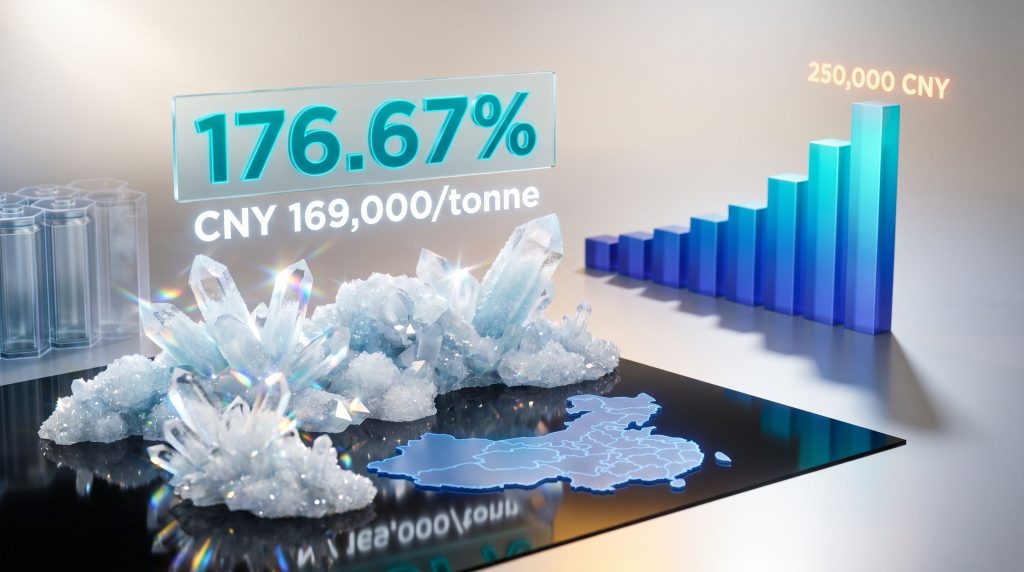
As of mid-June 2026, lithium carbonate in China is trading at approximately CNY 169,000 per tonne, equivalent to roughly $24,937/tonne in USD terms. This represents a recovery from a near two-month low of CNY 163,000 reached in early June, and sits well below the CNY 200,500 two-year high recorded in mid-May 2026.
The short-term pullback has caused some market participants to question whether the rally has run its course. However, the data tells a more nuanced story. For those tracking lithium carbonate supply dynamics in detail, the divergence between near-term noise and structural trends is particularly instructive.
| Date | Lithium Carbonate Price (CNY/tonne) |
|---|---|
| June 1, 2026 | 177,000 |
| June 5, 2026 | 160,000 |
| June 16, 2026 | 169,000 |
| June 17, 2026 | 169,503 |
| June 18, 2026 | 169,000 |
Despite a 10.32% decline over the trailing month, lithium carbonate remains 176.67% above year-ago levels. That divergence between short-term noise and medium-term trend is arguably the most important number in the current market. Short-term pullbacks driven by inventory accumulation and mine restart signals should be assessed against a backdrop of year-on-year appreciation that is anything but speculative.
Two Demand Pillars, Not One: Why This Cycle Is Structurally Different
The 2022 lithium price boom was primarily an EV story. Surging electric vehicle adoption in China created extraordinary demand expectations, producers expanded supply aggressively, and when EV growth moderated relative to those elevated expectations, the market collapsed with equally dramatic force.
The 2026 recovery rests on a fundamentally different foundation. EV demand remains significant, but battery energy storage systems have emerged as an independent and arguably more structurally reliable demand driver. Unlike consumer EV purchasing, which responds to sentiment, subsidy cycles, and macroeconomic conditions, BESS procurement in China is largely driven by grid infrastructure mandates. These are institutional purchasing decisions, not discretionary ones.
BloombergNEF projects China's grid-scale storage capacity to expand at an 8% annual growth rate through 2036, a forecast that, if realised, creates a durable demand floor for lithium that extends well beyond any single policy cycle. Major lithium producer Albemarle Corporation noted a sharp acceleration in demand from energy storage markets in 2026, reinforcing the view that this is not a transient demand spike. Furthermore, the broader battery raw materials update landscape confirms that this structural shift is being felt across the entire supply chain.
The significance of BESS as a demand driver lies not just in its size, but in its predictability. Grid operators and state-owned utilities procure storage capacity through multi-year planning processes, insulating lithium demand from the volatility that characterises EV-related consumption.
China's Seasonal Demand Cycle and the Q3 Price Catalyst
China's battery manufacturing sector operates on a well-established seasonal rhythm. Consumption typically accelerates through Q3 and reaches its highest point in Q4, coinciding with the end of the calendar year production push. Upstream buyers, anticipating this surge, typically begin rebuilding inventories during the summer months in a process the industry refers to as pre-season restocking.
This seasonal dynamic is one of the most reliable and least-discussed drivers of lithium price behaviour. The mid-June recovery from CNY 163,000 back toward CNY 169,000 is consistent with early signs of this restocking cycle beginning to exert upward pressure on spot prices.
Citigroup analysts have identified August to September 2026 as the most probable window for prices to test the 250,000 yuan ($36,976/tonne) level, precisely because this period sits at the intersection of peak seasonal demand and the current supply constraints discussed below. CRU Group's base case models lithium carbonate averaging $33,900/tonne in Q3 2026, up from $22,800/tonne in Q2, representing a ~49% quarter-on-quarter increase that would exceed historical seasonal norms by a significant margin.
The Export Front-Loading Factor: A Hidden Demand Amplifier
One of the least widely discussed dynamics currently influencing lithium demand in China is the structural incentive facing Chinese battery manufacturers to accelerate export volumes ahead of the scheduled cancellation of a tax rebate in 2027. This policy-driven front-loading compresses what would ordinarily be distributed export activity over 12 to 18 months into a much shorter window.
The demand multiplication effect is meaningful. Analysts tracking trade flows believe this dynamic is not yet fully reflected in spot market pricing, suggesting that as battery manufacturers accelerate export programmes through the second half of 2026, an additional demand layer will emerge on top of the seasonal restocking cycle already underway. In addition, direct lithium extraction technologies may further alter supply-side dynamics in ways that are not yet priced into the market.
What Analysts Are Forecasting: A Comparison of Price Targets
Three of the most closely followed research organisations monitoring lithium markets have each independently arrived at bullish near-term price forecasts, though the magnitude and timing of their projections differ.
| Research House | Price Target | Timeframe |
|---|---|---|
| CRU Group | Q3 2026 average | |
| Benchmark Mineral Intelligence | ~$30,000/tonne | End of 2026 |
| Citigroup | 250,000 yuan (~$36,976/tonne) | Aug-Sep 2026 |
| Trading Economics Model | CNY 171,401 | End of Q2 2026 |
| Trading Economics Model | CNY 190,414 | 12-month horizon |
Martin Jackson, Head of Battery Materials Markets at CRU Group, has publicly stated that the tightest point in the market has not yet arrived, a view that sits at odds with the bearish narrative that has gained traction following the May-to-June price pullback. CRU's own modelling anticipates a Q4 softening following the Q3 peak, suggesting a narrow but potentially sharp window of maximum tightness concentrated in the July-to-September period.
Benchmark Mineral Intelligence takes a slightly more conservative position on the upside but shares the fundamental view that 2026 represents a structurally tight year. Adam Megginson, the firm's principal lithium price analyst, has characterised Q4 2026 as particularly well-supported given peak consumption dynamics, while simultaneously flagging that 2027 is likely to see the market shift to a surplus as new supply comes online. This 2027 surplus forecast represents one of the most significant medium-term risk factors for investors with extended lithium price exposure. Consequently, real-time data from sources such as au.investing.com remains a valuable tool for monitoring intraday and weekly price movements.
The Supply Side: Why New Production Cannot Cap the Rally Quickly
Australian Mine Restarts: Signal Without Immediate Substance
The restart of two Australian lithium operations, Finniss and Bald Hill, following extended care-and-maintenance periods, has been interpreted by some market participants as a bearish signal. The interpretation overstates the near-term supply impact. Mine restarts are inherently lagging indicators of price recovery.
The typical lead time between a restart decision and meaningful spodumene concentrate volumes entering the seaborne market spans three to six months, accounting for ramp-up periods, logistics, and processing. Even if both operations reach full nameplate capacity without disruption, the volume contribution in Q3 2026 will be modest relative to the demand acceleration underway. Zimbabwe's partial reversal of lithium export restrictions adds incremental supply optionality but represents incremental rather than structural relief.
The Jianxiawo Mine: The Variable That Matters Most
No single supply-side factor carries more weight in the current lithium market than the continued closure of China's Jianxiawo mine, operated by Contemporary Amperex Technology Co. (CATL), the world's largest battery manufacturer. The mine has remained offline following permitting issues that forced its closure near the bottom of the market cycle last year.
Jianxiawo's significance extends beyond its raw production volume. As a domestically operated Chinese lithium asset controlled by the dominant player in the global battery supply chain, its closure removes supply that is uniquely difficult to replace through imports. Any resolution of the permitting dispute would represent a material bearish catalyst for near-term prices, and market participants should monitor regulatory developments around this asset closely.
Guangzhou Futures Exchange Inventories: The Moderating Overhang
Warehouse stocks at the Guangzhou Futures Exchange reached approximately 56,000 tonnes in early June 2026, near the highest level recorded since the exchange launched lithium futures trading. This inventory build has revealed a deeper supply chain stockpile than most market participants had assumed prior to the data becoming visible.
The inventory dynamic at the Guangzhou Futures Exchange introduces a complicating factor for near-term price bulls. Higher futures prices relative to spot have incentivised physical delivery onto the exchange, creating an overhang that could suppress spot price momentum even as forward prices remain elevated. Analyst Su Jinyi at Chinese consultancy Fubao has noted that while the inventory build could moderate the pace of price appreciation, underlying demand remains solid and prevailing prices remain acceptable for downstream buyers.
The next major ASX story will hit our subscribers first
China's Policy Architecture and Its Role in Price Dynamics
China's influence over the global lithium market extends well beyond its role as the largest consumer. The country controls approximately 60% of global lithium processing capacity, a concentration that gives Beijing outsized influence over both physical commodity pricing and the downstream battery supply chain.
China's new Mineral Resources Law, which came into effect in mid-2026, provides a formal legal framework for government management of critical mineral supply chains. This legislative development has introduced a layer of institutional supply-side management that did not exist in previous cycles. Government-mandated reserve reporting requirements, combined with the precedent of coordinated production rationalisation following the 2022-2024 price collapse, suggest that the Chinese state has both the tools and the incentive to prevent prices from falling back to the distressed levels seen at the market trough.
This regulatory architecture creates a price floor dynamic that is structurally distinct from purely market-driven commodity behaviour, and represents a factor that is frequently underweighted in Western analyst frameworks. However, understanding the broader context of the lithium market downturn that preceded this recovery is equally important when assessing how durable the current policy-supported floor may prove to be.
Scenario Analysis: Three Pathways for Lithium Carbonate Through End-2026
| Scenario | Price Range (CNY/tonne) | Key Driver |
|---|---|---|
| Bull Case | 230,000 – 250,000 | BESS demand acceleration + Jianxiawo stays offline + export front-loading |
| Base Case | 180,000 – 210,000 | Seasonal demand + moderate supply response + inventory normalisation |
| Bear Case | 150,000 – 165,000 | Jianxiawo restart + Australian supply surge + BESS demand disappointment |
The base case remains well above current spot prices and is consistent with the structural demand arguments underpinning the 2026 recovery. The bear case would require a confluence of negative supply and demand surprises that most analysts currently consider unlikely within the 2026 timeframe.
Key Indicators to Monitor
Investors and procurement professionals tracking lithium prices in China should focus on the following leading indicators:
- Guangzhou Futures Exchange inventory levels: A sustained decline below 40,000 tonnes would signal material tightening in the physical market
- Jianxiawo mine permitting status: Any restart announcement from CATL would be the single most significant near-term bearish catalyst
- Chinese BESS procurement data: Monthly grid-scale storage installation figures provide the most reliable forward-looking demand signal
- Australian spodumene concentrate shipment volumes: Rising shipments indicate new supply is genuinely entering the market rather than remaining in the restart pipeline
- Chinese battery manufacturer export schedules: Acceleration ahead of the 2027 tax rebate cancellation would amplify near-term demand
Frequently Asked Questions: Lithium Prices in China
What is the current lithium carbonate price in China?
As of June 18, 2026, lithium carbonate is trading at approximately CNY 169,000 per tonne (~$24,937/tonne USD equivalent), recovering from a near two-month low of CNY 163,000 reached in early June 2026.
Why did lithium prices pull back after reaching CNY 200,000 in May 2026?
The pullback from the CNY 200,500 two-year high in mid-May was driven by rising inventory levels at the Guangzhou Futures Exchange (reaching approximately 56,000 tonnes), early mine restart signals in Australia, and Zimbabwe's partial relaxation of lithium export restrictions.
What is the most aggressive analyst price forecast for 2026?
Citigroup has issued the most aggressive near-term target, projecting prices could reach 250,000 yuan (~$36,976/tonne), most likely during August to September 2026. For further context on how these forecasts compare to historical benchmarks, S&P Global's coverage of China's lithium price movements provides useful additional perspective.
When does the lithium market cycle turn bearish?
Benchmark Mineral Intelligence forecasts a market surplus in 2027, driven by a combination of Australian mine restarts, new African supply, and an eventual moderation in BESS demand growth. The 2027 surplus scenario is the primary medium-term risk factor for holders of lithium price exposure.
Why does the Jianxiawo mine closure matter so much?
The Jianxiawo mine, operated by CATL, represents a disproportionate share of China's domestic lithium production capacity. Its ongoing closure due to unresolved permitting issues has removed a volume of supply that is difficult to substitute through imports, making it a central variable in the current tightness that analysts expect to intensify through mid-2026.
Want to Capitalise on the Next Major Lithium Discovery Before the Market Does?
Discovery Alert's proprietary Discovery IQ model delivers real-time ASX alerts the moment significant lithium and battery materials discoveries are announced, transforming complex mineral data into clear, actionable investment insights for traders and long-term investors alike. With lithium carbonate already trading 176% above year-ago levels and analysts forecasting further price acceleration through Q3 2026, explore Discovery Alert's discoveries page to see how historic mineral discoveries have generated substantial returns — then begin your 14-day free trial to position yourself ahead of the next major move.