June 11, 2026
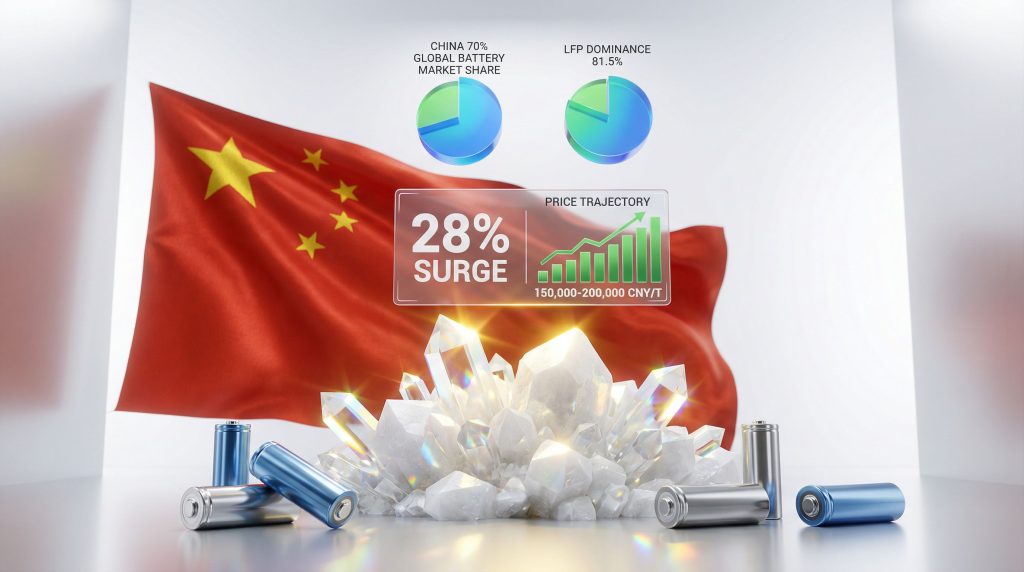
Global battery supply chains operate within increasingly complex market dynamics, where commodity price volatility intersects with technological advancement and geopolitical strategy. The lithium prices surge China phenomenon exemplifies how interconnected processing networks create cascading effects that ripple across international markets. Understanding these relationships requires examining the fundamental forces that drive price discovery in critical mineral markets, particularly when supply chain concentration reaches levels that amplify regional market signals into global phenomena.
Market Psychology Drives Lithium Prices Beyond Fundamental Supply Metrics
Chinese lithium carbonate futures experienced dramatic price movements following regulatory announcements from Jiangxi province authorities. The most-active lithium carbonate contract on the Guangzhou Futures Exchange reached 109,860 yuan ($15,592.27) per metric ton, marking its highest level since June 2024. This represented a single-day gain of 7.61% to 108,620 yuan, demonstrating how market psychology can override immediate supply fundamentals.
The price surge originated from announcements by the Bureau of Natural Resources of Yichun, a major lithium centre in Jiangxi province, regarding plans to revoke 27 mining permits following a public consultation period ending January 22. However, analysts at Galaxy Futures noted that these licence cancellations would have minimal impact on actual supply, as none of the revoked permits covered operating mines. This disconnect between market reaction and supply reality illustrates the powerful role of investor sentiment in commodity price discovery.
Furthermore, the lithium miners rise as prices surge following these announcements, highlighting the immediate market response to regulatory developments. The psychological impact extends beyond Chinese borders, affecting global lithium investment patterns.
Understanding Regulatory Cleanup Effects on Market Sentiment
The targeted mining permits had already expired, with some having lapsed more than a decade prior. Most permits were registered for ceramic clay or limestone mining rather than primary lithium extraction. Only one permit specifically identified as a lithium-bearing ceramic stone mine was held by Jiangxi Special Electric Motor (002176.SZ), which formally objected to the revocation through official channels.
This pattern of expired licence cleanup represents part of a broader regulatory consolidation effort that began in September. Previous revocations included six mining permits cancelled on November 27, establishing a precedent for systematic licence management. The psychological impact on investors stems from uncertainty about future regulatory actions and their potential effects on operational mines.
In addition, global lithium prices spike despite remaining below 2024 averages, indicating that market volatility extends beyond immediate supply concerns. This demonstrates how regulatory psychology influences price discovery mechanisms across international markets.
Energy Storage Sector Demand Creates Price Support
Beyond regulatory announcements, fundamental demand drivers contributed to lithium price strength. The energy storage sector generated significant support for lithium carbonate pricing, representing diversification beyond traditional electric vehicle battery applications. This demand broadening creates more resilient price floors as multiple end-use segments compete for limited supply.
The suspension of mining operations at the Jianxiawo mine, held by CATL, following licence expiry in August 2024 provided concrete supply reduction. This operational disruption, combined with growing energy storage deployment, created tangible supply-demand tightening that supported price appreciation independent of regulatory psychology.
When big ASX news breaks, our subscribers know first
Supply Chain Concentration Amplifies Regional Price Signals
China's dominance across lithium processing and battery manufacturing creates a mechanism where domestic market developments transmit rapidly to international markets. The concentration of processing capacity within Chinese facilities means that regional regulatory actions or operational disruptions can influence global lithium availability and pricing structures.
This market structure creates strategic vulnerabilities for battery-dependent industries worldwide. When regulatory announcements in a single Chinese province can trigger significant price movements, it demonstrates the systemic risks associated with supply chain concentration. International buyers face limited alternatives for battery-grade lithium processing, making them price-takers in Chinese-dominated markets.
However, developments in australian lithium innovations offer potential diversification opportunities. These innovations could help reduce global dependence on Chinese processing capacity whilst creating alternative supply chains for international markets.
Processing Bottlenecks Create Value Chain Stress
The lithium value chain extends beyond primary mining to include complex processing stages required for battery-grade materials. Specialised compounds used in battery electrolytes and cathode materials often require dedicated processing infrastructure concentrated in specific regions. This creates potential bottlenecks where operational disruptions at key facilities can cascade through the entire battery supply chain.
Quality specifications for battery applications impose additional constraints on processing capacity. Not all lithium processing facilities can produce battery-grade materials meeting stringent purity requirements. This technical limitation further concentrates effective supply capacity and increases price volatility when facilities face operational challenges or regulatory pressures.
For instance, the battery-grade lithium refinery developments in India represent efforts to establish alternative processing capabilities. These initiatives aim to reduce dependence on Chinese processing infrastructure whilst meeting growing regional demand for high-quality lithium compounds.
Currency and Cost Dynamics Influence Pricing Mechanisms
Chinese yuan-denominated commodity pricing creates additional complexity for international market participants. Exchange rate fluctuations between the yuan and major trading currencies can amplify or dampen the impact of domestic Chinese price movements on international buyers. This currency layer adds volatility to an already complex pricing environment.
Processing cost inflation represents another factor supporting higher lithium prices. Energy-intensive lithium processing operations face rising input costs, particularly electricity and specialised chemicals required for purification processes. These cost pressures translate into higher floor prices for processed lithium products, supporting price levels even during periods of weak demand.
Moreover, the lithium prices surge China pattern reflects broader inflationary pressures across the processing sector. Energy costs, labour expenses, and environmental compliance requirements continue rising, creating structural support for higher lithium derivative pricing.
Regional Arbitrage Opportunities Emerge
Price differentials between Chinese domestic markets and international markets create potential arbitrage opportunities for traders with appropriate export capabilities. However, export restrictions on certain lithium processing technologies limit the ability to exploit these differentials. Strategic resource policies in China prioritise domestic supply security whilst controlling technology transfer to international competitors.
The complexity of lithium compound specifications creates market segmentation where price movements vary significantly between different lithium derivatives. Battery-grade lithium carbonate commands premium pricing compared to industrial-grade materials, whilst specialised compounds like lithium hexafluorophosphate operate in separate market dynamics entirely.
Consequently, chinese battery recycling breakthroughs could influence these arbitrage dynamics. Advanced recycling technologies may create new sources of battery-grade materials, potentially reducing price premiums for virgin lithium compounds.
Investment Strategies for Volatile Commodity Cycles
Navigating lithium price volatility requires sophisticated understanding of both fundamental supply-demand drivers and the psychological factors that influence short-term price discovery. Investors must distinguish between structural supply constraints and temporary regulatory disruptions that create sentiment-driven price movements without lasting supply impact.
Long-term offtake agreements provide some price stability for battery manufacturers, but these contracts often include price adjustment mechanisms tied to spot market developments. This creates exposure to short-term volatility even within supposedly stable supply arrangements. Companies must balance price certainty with flexibility to respond to market opportunities.
Risk Management Through Market Structure Understanding
The concentration of lithium processing in China creates both risks and opportunities for market participants. Companies with diversified supply sources gain competitive advantages during periods of Chinese market disruption, whilst those heavily dependent on Chinese suppliers face greater exposure to regulatory and operational risks.
Inventory management becomes crucial during periods of high price volatility. Battery manufacturers must balance carrying costs against the risk of supply disruption or price spikes. The timing of inventory builds and drawdowns can significantly impact profitability in volatile commodity environments.
Furthermore, india's lithium strategy demonstrates how countries develop comprehensive approaches to supply security. These strategic initiatives create new market dynamics that investors must consider when evaluating lithium price trajectories.
Technology Integration with Commodity Markets
Battery technology advancement creates complex relationships with lithium pricing. Improvements in battery energy density reduce the lithium content per unit of energy storage, potentially dampening long-term demand growth. However, the rapid expansion of battery applications across transportation, grid storage, and consumer electronics continues to drive overall consumption higher.
The development of lithium recycling technologies represents a potential source of secondary supply that could moderate price volatility over time. However, current recycling capacity remains limited relative to primary production, particularly for newer battery installations that have not yet reached end-of-life status.
Alternative Chemistry Development Implications
Research into alternative battery chemistries creates uncertainty about long-term lithium demand projections. Sodium-ion and other lithium-free technologies could potentially reduce dependence on lithium for certain applications. However, the performance characteristics and cost structures of these alternatives currently limit their applicability to specific market segments.
The lithium iron phosphate (LFP) chemistry gaining popularity in electric vehicles uses more lithium per unit of energy storage than alternative chemistries, creating different demand dynamics. The shift toward LFP in cost-sensitive applications increases lithium intensity whilst reducing dependence on other critical materials like cobalt and nickel.
Additionally, developments at thacker pass lithium mine highlight how new production capacity responds to technology-driven demand patterns. These projects must adapt to changing battery chemistry requirements whilst maintaining economic viability.
The next major ASX story will hit our subscribers first
Geopolitical Dimensions of Critical Mineral Markets
Lithium's classification as a critical mineral in multiple jurisdictions reflects its strategic importance for energy transition goals. Government policies supporting domestic battery manufacturing create demand concentrations that can overwhelm regional supply capabilities. This dynamic drives international competition for lithium resources and processing capacity.
Trade relationships between major lithium-producing countries and battery-manufacturing nations influence market access and pricing structures. Export restrictions, tariffs, and other trade policies can fragment global markets and create price disparities between regions.
The strategic nature of lithium supply chains encourages government intervention through subsidies, stockpiling programmes, and diplomatic initiatives. These policy tools can dampen or amplify market signals depending on their implementation and timing relative to private market dynamics.
In conclusion, the lithium prices surge China phenomenon demonstrates the complex interplay between regulatory psychology, supply chain concentration, and strategic resource management. Understanding these dynamics becomes essential for navigating volatile commodity markets whilst positioning for long-term energy transition opportunities.
Disclaimer: This analysis contains forward-looking statements and market projections that involve inherent risks and uncertainties. Commodity markets are subject to rapid changes based on supply disruptions, regulatory actions, technological developments, and macroeconomic factors. Past performance does not guarantee future results, and investors should conduct independent research before making investment decisions in volatile commodity markets.
Looking to Capitalise on Critical Mineral Market Volatility?
Discovery Alert's proprietary Discovery IQ model delivers instant notifications on significant ASX mineral discoveries, including lithium and battery metals, empowering subscribers to identify actionable opportunities ahead of market movements. Understand why historic mineral discoveries can generate substantial returns and begin your 30-day free trial today to position yourself ahead of the market.