July 22, 2026
Technological Foundations Behind Battery-Grade Mineral Transformation
The global transition toward sustainable energy systems has catalysed unprecedented innovation in lithium production with renewable energy, fundamentally reshaping how critical battery materials reach manufacturing facilities. Traditional extraction methodologies, developed over decades for fossil fuel-powered operations, face mounting pressure from environmental regulations and supply chain decarbonisation mandates. This technological convergence creates new operational frameworks where geothermal resources, solar arrays, and advanced electrochemical processing unite to deliver battery-grade lithium compounds through entirely carbon-neutral pathways.
Modern lithium extraction facilities increasingly demonstrate how renewable energy integration addresses both environmental imperatives and economic optimisation. The Upper Rhine Valley's geothermal resources exemplify this transformation, where subsurface thermal energy simultaneously powers Direct Lithium Extraction (DLE) technologies while generating surplus electricity for grid export. These integrated operations represent a paradigm shift from energy-intensive traditional methods toward self-sustaining production systems that enhance rather than burden electrical infrastructure.
When big ASX news breaks, our subscribers know first
What Makes Renewable-Powered Lithium Extraction Revolutionary?
The Energy-Intensive Reality of Traditional Lithium Processing
Conventional lithium extraction through evaporation pond systems requires extensive fossil fuel consumption across multiple processing stages. Hard-rock lithium mining operations typically consume 20-35 kWh per kilogram of lithium hydroxide equivalent, with additional energy demands for concentrate transportation, acid leaching, and purification processes. These operations rely heavily on coal-fired or natural gas power generation, creating carbon footprints exceeding 15 tonnes of CO2 per tonne of lithium hydroxide monohydrate.
The shift toward renewable-powered extraction technologies addresses these environmental challenges while delivering operational advantages. Modern facilities integrating solar, wind, or geothermal power sources achieve energy intensities below 15 kWh per kilogram of lithium, representing efficiency gains of 30-50% compared to conventional methods. This improvement stems from optimised process design, heat recovery systems, and elimination of energy losses associated with fossil fuel transportation and combustion.
Furthermore, advancements in australia lithium innovations demonstrate how renewable integration supports technological development across the supply chain.
Three Core Integration Pathways for Clean Energy Systems
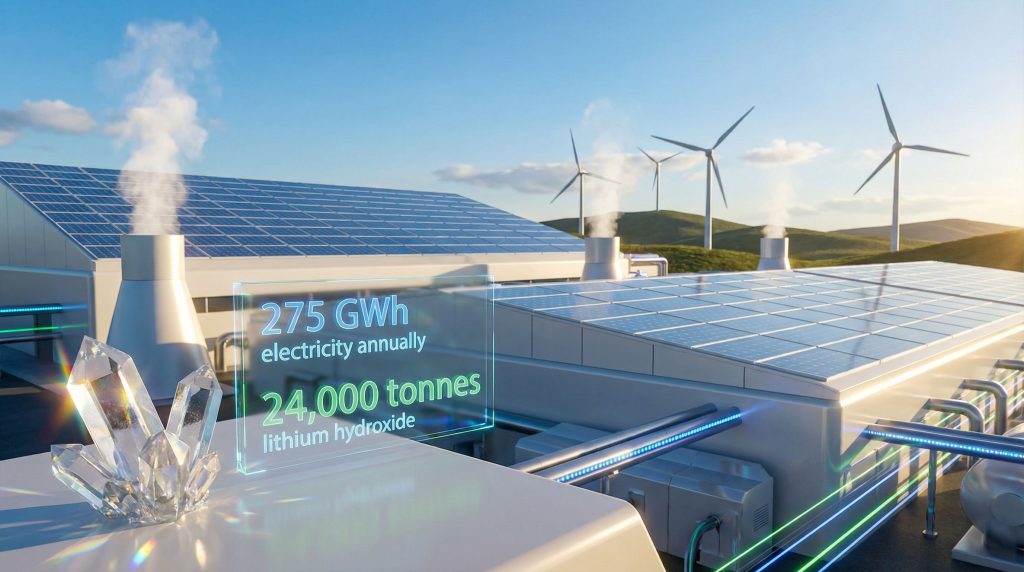
Renewable lithium production with renewable energy facilities employ distinct integration approaches depending on geographic resources and project scale. Geothermal co-production systems extract lithium from naturally heated brines while simultaneously generating electricity through binary cycle power plants. Vulcan Energy's Lionheart Project demonstrates this approach, targeting 24,000 tonnes of lithium hydroxide monohydrate annually alongside 275 gigawatt-hours of electricity generation.
Solar-powered Direct Lithium Extraction utilises photovoltaic arrays coupled with battery storage systems to maintain continuous processing operations. These facilities employ advanced energy management systems that optimise extraction processes during peak solar generation periods while maintaining operations through stored energy during nighttime hours. Grid-tie capabilities enable surplus power sales, creating additional revenue streams that improve project economics.
Wind-integrated processing facilities leverage predictable wind patterns in lithium-rich regions, particularly in South American salt flats where consistent wind resources complement brine extraction operations. These systems incorporate sophisticated load balancing technologies that synchronise extraction processes with variable wind generation, maximising renewable energy utilisation while maintaining production consistency.
Quantifying the Environmental Impact Reduction
Lifecycle assessment studies demonstrate significant environmental advantages for renewable-powered lithium extraction. Water consumption decreases dramatically through advanced processing technologies, with modern DLE systems requiring 0.5-2.0 million litres per tonne compared to 2.2 million litres per tonne for traditional evaporation methods. This 77% reduction in freshwater usage proves critical in arid regions where lithium resources coincide with water scarcity.
Carbon emissions improvements exceed 70-85% per tonne of lithium hydroxide when renewable energy replaces fossil fuel-powered operations. These reductions encompass direct energy consumption, transportation logistics, and embedded emissions from equipment manufacturing. Processing timeline advantages further enhance environmental benefits, with renewable-powered DLE operations completing lithium recovery in 2-6 months versus 18-24 months for evaporation pond systems.
Moreover, innovations in argentinian lithium brines showcase how renewable technologies adapt to regional resource characteristics whilst maximising environmental benefits.
Which Direct Lithium Extraction Technologies Work Best with Renewable Power?
Electrochemical Membrane Systems and Grid Integration
Electrochemical membrane technologies demonstrate exceptional compatibility with renewable energy sources due to their modular design and flexible power requirements. These systems employ selectively permeable membranes that separate lithium ions through applied electrical fields, enabling precise control over extraction rates based on available renewable energy supply. Power demands typically range 15-25 kWh per kilogram of lithium, with excellent scaling characteristics for grid-integrated operations.
Advanced membrane electrodialysis systems incorporate intelligent control algorithms that optimise extraction processes during peak renewable generation periods. Battery storage integration enables continuous operations while maximising utilisation of variable renewable resources. Processing efficiency remains consistent across different power input levels, maintaining lithium recovery rates above 85% regardless of renewable energy fluctuations.
Ion-Exchange Adsorption Methods Powered by Solar Arrays
Ion-exchange adsorption represents the most energy-efficient DLE approach, requiring only 8-15 kWh per kilogram of lithium while achieving excellent selectivity for lithium ions in complex brine chemistries. Solar photovoltaic systems provide ideal power profiles for these operations, with energy requirements aligning well with daylight generation patterns. Processing cycles accommodate overnight operations through thermal energy storage and minimal power requirements for circulation pumps.
Selective ion-exchange materials, including lithium aluminium hydroxide and manganese oxide compounds, demonstrate stable performance across temperature variations typical of solar-powered systems. Regeneration cycles optimise energy utilisation by scheduling high-temperature treatments during peak solar generation, minimising grid power requirements while maintaining processing efficiency above 90%.
Selective Extraction Technologies for Variable Energy Supply
Solvent extraction systems, while requiring higher energy inputs of 20-35 kWh per kilogram of lithium, offer advantages in processing flexibility that align with variable renewable energy generation. These systems accommodate power fluctuations through staged processing approaches, enabling operators to adjust extraction rates based on renewable energy availability without compromising product quality.
DLE Technology Comparison – Energy Requirements and Renewable Compatibility
| Method | Power Demand (kWh/kg Li) | Renewable Suitability | Processing Time |
|---|---|---|---|
| Membrane Electrodialysis | 15-25 | Excellent | 6-12 hours |
| Ion Exchange | 8-15 | Good | 12-24 hours |
| Solvent Extraction | 20-35 | Moderate | 24-48 hours |
Advanced process control systems enable dynamic adjustment of extraction parameters, maintaining optimal separation efficiency while maximising renewable energy utilisation. Heat integration opportunities in solvent extraction systems complement renewable thermal sources, particularly geothermal applications where waste heat enhances processing efficiency.
In addition, the emergence of battery‐grade lithium refinery facilities demonstrates how downstream processing increasingly integrates renewable energy systems to meet purity specifications.
How Do Geothermal Operations Generate Both Lithium and Clean Electricity?
Co-Production Models in High-Temperature Brine Systems
Geothermal lithium extraction leverages naturally heated subsurface brines that contain dissolved lithium compounds alongside thermal energy suitable for electricity generation. The Upper Rhine Valley demonstrates optimal conditions for co-production, with geothermal reservoirs reaching temperatures sufficient for binary cycle power generation while maintaining lithium concentrations enabling commercial extraction rates.
Co-production systems extract geothermal brines at temperatures 150-180°C, passing them through heat exchangers that generate electricity via organic Rankine cycle turbines. Cooled brines subsequently undergo lithium extraction through DLE technologies, maximising resource utilisation from single well systems. This integrated approach achieves energy self-sufficiency while creating marketable electricity surplus for grid export.
The Lionheart Project exemplifies commercial-scale co-production, targeting 275 gigawatt-hours of electricity annually alongside 560 gigawatt-hours of thermal energy for facility operations and district heating applications. This dual output supports approximately 500,000 electric vehicle battery manufacturing requirements while generating renewable electricity equivalent to powering residential communities.
Energy Balance Analysis: Power Generation vs. Extraction Needs
Thermodynamic analysis reveals favourable energy balances in geothermal lithium operations, with electricity generation typically exceeding extraction energy requirements by 3-5 times. Binary cycle power plants achieve thermal-to-electric conversion efficiencies of 10-15%, while lithium extraction processes consume 8-25 kWh per kilogram depending on technology selection and brine chemistry.
"Geothermal lithium operations can achieve energy self-sufficiency while producing 275 GWh of electricity annually alongside 24,000 tonnes of lithium hydroxide, equivalent to powering 500,000 electric vehicles."
Heat cascade utilisation optimises overall energy efficiency, with extraction processes utilising lower-temperature thermal energy after electricity generation. Process integration studies demonstrate overall thermal utilisation rates exceeding 75%, significantly surpassing conventional geothermal power applications that achieve 10-15% thermal utilisation.
Case Study Framework: Integrated Geothermal-Lithium Facilities
The Lionheart Project represents Europe's pioneering integrated geothermal-lithium facility, scheduled for 2.5-year construction timeline with commissioning expected by 2028. Financial backing totalling $2.56 billion includes contributions from 13 financial institutions, encompassing the European Investment Bank, export credit agencies, and commercial lenders, demonstrating institutional confidence in co-production viability.
Long-term offtake agreements with Stellantis, LG Corp, Umicore, and Glencore provide 10-year supply contracts commencing in 2028, establishing revenue certainty that supports project financing. German government grants totalling $122 million reflect policy support for domestic lithium production and renewable energy integration, reducing import dependence on critical battery materials.
However, successful deployment requires strategic approaches like those outlined in india's lithium supply strategy, which emphasises international partnerships and technology transfer.
What Are the Economic Benefits of Electrified Lithium Processing?
Capital Cost Analysis: Renewable Integration vs. Traditional Methods
Renewable-powered lithium extraction facilities demonstrate favourable capital cost structures despite higher initial technology investments. Modern DLE systems integrated with renewable energy infrastructure require $150-250 million per 10,000 tonnes annual capacity, compared to $200-350 million for equivalent traditional processing facilities including evaporation pond construction and fossil fuel infrastructure.
Equipment standardisation and modular design approaches reduce engineering costs while enabling phased capacity expansion aligned with market demand growth. Solar photovoltaic systems achieve $0.50-0.80 per watt installed capacity, while geothermal binary cycle plants require $4-6 million per megawatt including well field development and power conversion equipment.
Operational Expense Reduction Through Grid-Scale Clean Energy
Renewable energy integration delivers substantial operational cost advantages through reduced energy expenses and elimination of fossil fuel price volatility. Grid-scale renewable power procurement achieves $0.03-0.06 per kWh in optimal locations, compared to $0.08-0.15 per kWh for conventional utility power in lithium-producing regions.
Economic Impact Comparison
| Cost Factor | Traditional Method | Renewable-Powered | Savings Potential |
|---|---|---|---|
| Energy Costs | $2,500/tonne | $800/tonne | 68% reduction |
| Water Usage | 2.2M L/tonne | 0.5M L/tonne | 77% reduction |
| Processing Time | 18-24 months | 2-6 months | 85% faster |
Processing timeline advantages translate to improved capital efficiency and faster revenue generation. Reduced working capital requirements from shorter processing cycles improve project internal rates of return by 2-4 percentage points, enhancing project attractiveness for institutional investors and development financing.
Long-Term Contract Advantages for Renewable-Powered Operations
Renewable-powered lithium facilities demonstrate enhanced ability to secure long-term supply contracts due to environmental credentials valued by automotive and battery manufacturers. Carbon-neutral lithium compounds command premium pricing of 5-15% above conventional products, reflecting downstream manufacturers' sustainability commitments and regulatory compliance requirements.
Supply chain transparency and environmental certification enable access to sustainability-focused procurement programmes implemented by major automotive manufacturers. These relationships provide volume certainty and price stability that support project financing while reducing market risk exposure throughout commodity price cycles.
Which Electrochemical Methods Show the Most Promise for Scale-Up?
Solid-State Electrolyte Membrane Performance Metrics
Advanced solid-state electrolyte membranes demonstrate exceptional selectivity for lithium ions while maintaining stable performance in high-salinity brine environments. Ceramic-based lithium-conducting membranes achieve lithium selectivity ratios exceeding 100:1 versus sodium and potassium ions, enabling efficient separation from complex geothermal brines containing multiple dissolved minerals.
Operating temperature ranges of 60-120°C align well with geothermal resource characteristics and solar thermal systems, enabling direct thermal integration without additional heating requirements. Membrane longevity exceeds 5,000 operating hours under continuous operation, with degradation rates below 2% annually, supporting commercial-scale deployment economics.
Electrochemical Leaching of Spodumene Concentrates
Electrochemical processing of hard-rock lithium concentrates offers alternatives to traditional roasting and acid leaching methods, enabling integration with renewable energy sources. Electrochemical leaching achieves lithium recovery rates above 90% from spodumene concentrates while eliminating high-temperature roasting requirements that typically consume 2-3 GJ per tonne of concentrate.
Process electrification enables precise control over reaction conditions, improving product purity while reducing chemical consumption. Renewable electricity integration eliminates fossil fuel combustion for process heating, achieving carbon neutrality in hard-rock lithium production with renewable energy when coupled with renewable-powered mining operations.
Selective Ion Transport Systems for Brine Processing
Next-generation ion transport systems employ engineered membrane materials that selectively transport lithium ions while rejecting impurities common in natural brines. These systems achieve energy consumption below 10 kWh per kilogram of lithium while maintaining processing rates suitable for commercial production scales.
Modular system designs enable capacity scaling through parallel membrane stack deployment, accommodating project development phases and production expansion requirements. Integration with renewable energy storage systems enables continuous operations while maximising utilisation of variable renewable generation, improving overall system economics.
Furthermore, advances in direct lithium extraction collaboration highlight how partnerships between technology developers accelerate commercial deployment of innovative extraction methods.
The next major ASX story will hit our subscribers first
How Do Solar and Wind Power Address Lithium Production Challenges?
Load Balancing Strategies for Variable Renewable Generation
Advanced energy management systems synchronise lithium extraction processes with renewable energy generation patterns, maximising clean energy utilisation while maintaining production consistency. Smart grid integration enables dynamic load adjustment based on real-time renewable generation forecasts, optimising energy costs while reducing grid stress during peak demand periods.
Process flexibility in DLE systems accommodates renewable energy variability through staged operations and selective processing schedules. Ion-exchange systems demonstrate particular compatibility with solar generation patterns, enabling intensive processing during peak daylight hours while maintaining basic operations through stored energy during nighttime periods.
Battery Storage Integration for Continuous Processing Operations
Lithium-ion battery storage systems enable 24/7 processing operations while maximising renewable energy utilisation. Storage capacity sizing typically ranges 4-8 hours of full processing load, enabling continuous operations while accommodating typical renewable energy generation patterns. Battery storage costs below $200 per kWh for grid-scale systems support favourable project economics.
Advanced battery management systems optimise charging cycles to coincide with peak renewable generation while maintaining processing continuity during extended periods of low renewable output. Grid interconnection capabilities enable participation in ancillary services markets, creating additional revenue streams that improve overall project returns.
Grid-Scale Renewable Procurement for Mining Operations
Large-scale lithium production facilities increasingly secure renewable energy through direct procurement from wind and solar developers, achieving long-term price certainty while supporting renewable energy deployment. Virtual power purchase agreements enable geographic flexibility while ensuring renewable energy attributes align with production operations.
Corporate renewable energy procurement volumes for major lithium projects typically range 100-500 MW of renewable capacity, creating substantial demand that supports utility-scale renewable development. These arrangements provide 15-25 year price certainty while eliminating fossil fuel price volatility from operational cost structures.
What Environmental Advantages Does Clean Energy Bring to Lithium Mining?
Carbon Footprint Reduction Across the Supply Chain
Renewable-powered lithium extraction achieves dramatic reductions in greenhouse gas emissions across the entire supply chain. Lifecycle assessment studies demonstrate 70-85% lower CO2 intensity per tonne of lithium compared to conventional extraction methods, with emissions reductions extending beyond direct energy consumption to include transportation, chemical processing, and facility construction impacts.
Scope 3 emissions reductions prove particularly significant for downstream battery manufacturers pursuing carbon neutrality commitments. Clean lithium production enables automotive manufacturers to achieve supply chain decarbonisation targets while meeting increasingly stringent regulatory requirements for product carbon footprints.
Research from the International Energy Agency emphasises how critical minerals like lithium play a central role in clean energy transitions, making renewable-powered production essential for achieving climate goals.
Water Conservation Through Advanced Processing Methods
Modern DLE technologies coupled with renewable energy systems achieve remarkable water efficiency improvements compared to traditional evaporation pond methods. Advanced processing systems require 60-80% less freshwater consumption, addressing critical resource constraints in arid regions where lithium deposits typically occur.
Environmental Benefits
-
Emissions Reduction: 70-85% lower CO2 intensity per tonne of lithium
-
Water Efficiency: 60-80% reduction in freshwater consumption
-
Land Preservation: 90% smaller surface footprint than evaporation ponds
-
Ecosystem Protection: Minimal disruption to sensitive desert environments
Closed-loop water systems enable recycling and reuse of process water, minimising environmental discharge while reducing freshwater intake requirements. These systems prove essential for obtaining environmental permits in water-stressed regions and demonstrate sustainability credentials valued by downstream customers.
Land Use Minimisation via Compact Extraction Systems
Renewable-powered DLE facilities require 90% smaller surface footprints compared to traditional evaporation pond operations, preserving sensitive desert ecosystems while reducing land acquisition costs. Vertical processing equipment and modular system designs enable high production rates within compact facility layouts.
Underground injection systems for processed brines eliminate surface contamination risks while maintaining subsurface pressure balance in geothermal reservoirs. These approaches demonstrate environmental stewardship that supports regulatory approval processes and community acceptance in lithium-producing regions.
Studies on sustainable lithium mining practices reveal how renewable energy integration supports broader sustainability objectives across mining operations.
Which Regions Lead in Renewable Lithium Production Development?
European Geothermal Lithium Projects and Policy Support
The Upper Rhine Valley represents Europe's most advanced geothermal lithium development corridor, with multiple projects advancing toward commercial production. Germany's strategic raw materials policy provides $122 million in government grants for domestic lithium production while reducing critical mineral import dependence through European supply chain development.
France and Austria pursue similar geothermal lithium initiatives, leveraging abundant thermal resources while accessing European Union funding for critical mineral independence. Regional policy coordination supports technology development, environmental standards, and infrastructure investment required for commercial-scale renewable lithium production.
North American DLE Pilot Programs and Grid Integration
United States DLE development accelerates through Department of Energy funding and private investment, with pilot projects demonstrating technical feasibility and economic viability. California's Salton Sea region offers exceptional co-production opportunities, combining geothermal electricity generation with lithium extraction from high-concentration brines.
Canadian lithium projects integrate hydroelectric power resources with hard-rock lithium processing, achieving carbon-neutral operations while supporting domestic battery supply chain development. Provincial government support through mining tax incentives and infrastructure investment creates favourable development environments for renewable lithium projects.
South American Renewable Energy Adoption in Salt Flat Operations
Chile and Argentina increasingly integrate solar power systems with traditional salt flat operations, reducing fossil fuel consumption while maintaining cost competitiveness. High-altitude desert locations provide exceptional solar resources exceeding 2,500 kWh per square metre annually, enabling efficient renewable energy integration.
Progressive mining regulations in both countries incentivise renewable energy adoption through tax benefits and expedited permitting for sustainable operations. These policies support gradual transition from conventional evaporation methods toward renewable-powered extraction technologies.
How Do Financing Models Support Renewable-Powered Lithium Projects?
Multi-Billion Dollar Investment Structures for Clean Technology
Renewable lithium projects access diverse financing sources that value environmental credentials and long-term sustainability. The Lionheart Project's $2.56 billion financing package demonstrates institutional investor appetite for large-scale clean technology deployment, combining equity investment, debt financing, and government grants within integrated funding structures.
Equity components typically represent 25-35% of total project costs, with institutional placements targeting sustainability-focused investment funds and strategic investors seeking battery supply chain exposure. Debt financing through export credit agencies and commercial banks provides 65-75% of capital requirements at favourable terms reflecting reduced operational risks from renewable energy integration.
Government Incentives and Export Credit Agency Backing
Export credit agencies increasingly support renewable lithium projects as strategic investments in clean energy infrastructure and domestic manufacturing capabilities. Five export credit agencies participate in Lionheart Project financing, reflecting international recognition of renewable lithium production as critical infrastructure for energy transition.
Tax incentives, grants, and loan guarantees reduce project risk while improving returns for private investors. These public sector interventions address market failures in early-stage technology deployment while building domestic capabilities in critical mineral processing and renewable energy integration.
Long-Term Offtake Agreements Driving Project Viability
"Recent projects demonstrate $2.5+ billion financing packages combining equity raises, government grants, and commercial debt to fund renewable lithium facilities with 10-year supply agreements to major automotive and battery manufacturers."
Long-term supply contracts with automotive manufacturers and battery producers provide revenue certainty that supports debt financing and reduces market risk. 10-year offtake agreements with Stellantis, LG Corp, Umicore, and Glencore demonstrate downstream customer commitment to sustainable lithium supply chains, creating bankable revenue streams for project financing.
Take-or-pay contract structures provide minimum revenue guarantees while enabling participation in lithium price appreciation during periods of strong market demand. These arrangements balance downside protection with upside participation, optimising risk-return profiles for both suppliers and customers.
What Technical Challenges Must Be Overcome for Widespread Adoption?
Equipment Durability in High-Salinity Brine Environments
Geothermal brines contain corrosive chemical compounds that challenge equipment longevity and maintenance requirements in renewable lithium facilities. High-salinity environments with dissolved sulfides, chlorides, and trace metals require specialised materials engineering to achieve commercial operating lifespans exceeding 20 years.
Advanced corrosion-resistant alloys and ceramic-lined equipment address these challenges while maintaining processing efficiency. Regular maintenance protocols and predictive monitoring systems enable proactive component replacement, minimising unplanned downtime while optimising equipment utilisation rates.
Process Optimisation for Variable Renewable Energy Supply
Variable renewable energy generation requires sophisticated process control systems that maintain product quality while accommodating power fluctuations. Advanced automation systems adjust extraction parameters in real-time based on renewable energy availability, maintaining battery-grade lithium purity specifications regardless of power input variations.
Process flexibility through modular design enables partial operations during periods of reduced renewable generation while maintaining essential system functions through battery storage. These capabilities ensure production consistency while maximising renewable energy utilisation across seasonal generation patterns.
Quality Control Standards for Battery-Grade Lithium Production
Battery manufacturers require stringent purity specifications for lithium compounds, with impurity levels below 50 parts per million for most trace metals and moisture content below 0.1%. Renewable-powered processing systems must demonstrate consistent achievement of these specifications regardless of energy source variability.
Advanced analytical instrumentation and automated quality control systems monitor product purity throughout processing operations, enabling real-time adjustments to maintain specifications. ISO certification and automotive quality standards provide framework for quality management systems that satisfy downstream customer requirements.
How Will Renewable-Powered Lithium Production Scale by 2030?
Projected Capacity Increases and Technology Maturation
Industry analysis projects dramatic scaling of renewable lithium production with renewable energy capacity through 2030, driven by electric vehicle demand growth and supply chain decarbonisation requirements. Technology maturation and cost reduction in both renewable energy systems and DLE equipment support rapid capacity expansion across multiple geographic regions.
2030 Production Forecasts
| Technology Type | Current Capacity | 2030 Projection | Growth Factor |
|---|---|---|---|
| Renewable DLE | 15,000 tonnes/year | 180,000 tonnes/year | 12x |
| Geothermal Co-production | 8,000 tonnes/year | 95,000 tonnes/year | 12x |
| Solar-Powered Processing | 5,000 tonnes/year | 75,000 tonnes/year | 15x |
Commercial-scale deployment of proven technologies enables standardised facility designs and reduced engineering costs, accelerating project development timelines while improving economic returns. Equipment manufacturers invest in production capacity expansion to meet growing demand for renewable lithium processing systems.
Supply Chain Integration with Electric Vehicle Manufacturing
Automotive manufacturers increasingly integrate renewable lithium supply chains within broader sustainability strategies, creating demand premiums for clean lithium compounds. Supply chain transparency requirements and environmental regulatory compliance drive preference for renewable-powered lithium production, supporting market development for clean technologies.
Regional supply chain development reduces transportation emissions while providing supply security for domestic automotive production. European, North American, and Asian automotive manufacturers invest in regional lithium supply capacity to reduce import dependence while meeting environmental commitments.
Cost Parity Timelines with Conventional Extraction Methods
Renewable lithium production approaches cost parity with conventional methods through technology learning curves, economies of scale, and carbon pricing mechanisms. Production costs below $8,000 per tonne of lithium hydroxide become achievable through optimised facility designs and mature renewable energy integration.
Carbon pricing and environmental regulations improve competitive positioning of renewable lithium production while creating cost disadvantages for high-emission conventional methods. These policy trends accelerate market adoption of clean lithium technologies while supporting investment in commercial-scale deployment.
Disclaimer: Production forecasts and cost projections presented in this analysis represent industry estimates based on current technology development and market trends. Actual outcomes may vary significantly due to technological challenges, regulatory changes, commodity price fluctuations, and market demand variations. Readers should conduct independent due diligence before making investment or commercial decisions based on this information.
Looking to Capitalise on Next-Generation Lithium Technologies?
As renewable-powered lithium extraction transforms into a multi-billion dollar market opportunity by 2030, staying ahead of breakthrough discoveries becomes crucial for investors. Discovery Alert's proprietary Discovery IQ model delivers instant notifications when ASX-listed companies announce significant lithium developments, helping subscribers identify actionable opportunities in Australia's rapidly evolving critical minerals sector before they reach mainstream attention.