June 12, 2026
The global shift toward electric vehicle adoption has created unprecedented pressure on critical material supply chains, particularly lithium. European policymakers now recognise that securing domestic lithium production capabilities represents more than an economic opportunity — it constitutes a fundamental requirement for energy transition security and technological sovereignty in the twenty-first century.
Traditional lithium supply routes depend heavily on Australian and South American raw materials processed through Chinese facilities, creating multiple vulnerability points that could disrupt European manufacturing capabilities. Furthermore, this dependency becomes increasingly problematic as electric vehicle production scales exponentially and battery storage requirements expand across renewable energy infrastructure.
The strategic imperative extends beyond simple supply diversification. European industrial competitiveness in electric vehicle manufacturing hinges on stable, cost-effective access to battery-grade lithium compounds. However, current market dynamics demonstrate the risks of external dependency, with spodumene concentrate pricing experiencing significant volatility based on geopolitical tensions and trade relationships.
Portugal's Barroso Project: A Strategic Asset for European Lithium Security
The Savannah Portugal lithium project at Barroso represents a cornerstone development in Europe's quest for lithium independence. Located in northern Portugal, this deposit has evolved from regional mining prospect to continental strategic asset through systematic resource expansion and technological optimisation.
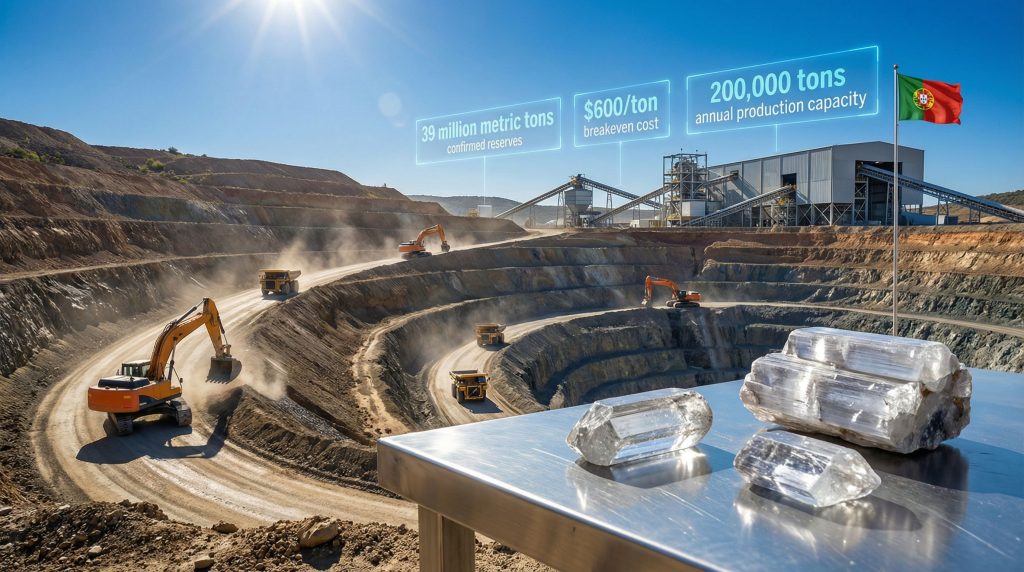
Recent resource assessments have elevated the confirmed spodumene reserves to over 39 million metric tons, establishing Barroso as Europe's largest lithium resource base. Nevertheless, the strategic significance extends well beyond current measurements, with exploration potential suggesting total resources could exceed 100 million metric tons.
The project's geographic positioning provides substantial logistical advantages over traditional supply chains. Portugal's Atlantic coastline offers direct shipping access to major European ports, reducing transportation costs and delivery timelines compared to intercontinental lithium shipments. Consequently, this proximity to end-user markets creates competitive advantages that compound over the project's operational lifetime.
Resource Quality and Production Capabilities
The Barroso deposit's lithium oxide content averaging 1.05% compares favourably with global producing mines, ensuring competitive extraction economics. Industry analysis indicates this grade supports efficient processing whilst maintaining low waste-to-ore ratios, critical factors for long-term operational sustainability.
Production targets anticipate annual output of approximately 200,000 tons of spodumene concentrate, sufficient to support battery manufacturing for 500,000 to 1 million electric vehicles annually. This production capacity positions Portugal as a meaningful contributor to European lithium supply, potentially satisfying 3-5% of projected continental demand by 2030.
The extended mine life projection exceeding 50 years provides long-term supply security that few global lithium projects can match. This longevity supports strategic planning for European battery manufacturers whilst justifying substantial infrastructure investments in downstream processing capabilities, similar to developments in battery-grade lithium refining seen globally.
When big ASX news breaks, our subscribers know first
Economic Competitiveness and Market Positioning
Financial modelling indicates the Savannah Portugal lithium project could achieve breakeven production at approximately $600 per ton of spodumene concentrate, significantly below current market pricing exceeding $2,000 per ton. This cost structure provides substantial buffer against market volatility whilst ensuring competitive positioning against global producers.
The economic advantages stem from multiple operational factors:
• Lower transportation costs due to proximity to European refineries and battery manufacturers
• Reduced regulatory complexity operating within established EU frameworks
• Streamlined environmental compliance through consistent European standards
• Stable political environment minimising sovereign risk premiums
• Access to skilled European workforce reducing training and operational risks
Financial Support Structure
The Portuguese government has committed €110 million in direct project support, demonstrating national strategic priority for domestic lithium development. This funding reduces project risk whilst accelerating development timelines, critical factors for attracting additional private investment, according to recent reports.
Additional financing mechanisms under consideration include potential German export credit facilities and EU strategic project designations. These funding sources reflect broader European recognition that lithium security requires coordinated continental investment rather than purely market-driven development, particularly given the European CRM facility developments.
The financial structure positions the project for construction commencement in 2027, with first production targeted for 2028. This timeline aligns with projected peak demand growth in European electric vehicle manufacturing, optimising market entry timing.
Global Competitive Analysis and Strategic Positioning
Comparative analysis against major global lithium producers reveals several competitive advantages for the Barroso project. Traditional lithium supply chains face increasing complexity as demand growth outpaces production expansion, creating opportunities for strategically positioned new entrants. For instance, whilst Australia lithium innovations continue to advance, geographical proximity remains crucial.
| Metric | Barroso Project | Australian Average | South American Average |
|---|---|---|---|
| Distance to EU markets | <500 km | >15,000 km | >10,000 km |
| Transportation mode | Road/rail to ports | Ocean freight only | Ocean freight only |
| Regulatory environment | EU standards | Variable state laws | Mixed national frameworks |
| Political stability | High (EU member) | High | Medium to high |
| Environmental standards | EU regulations | State-dependent | Country-dependent |
The proximity advantage becomes particularly significant when considering total supply chain costs rather than purely extraction expenses. European lithium consumers currently absorb substantial transportation and intermediary costs that domestic production eliminates.
Supply Chain Integration Opportunities
The Barroso project's location enables potential vertical integration with European battery manufacturers and electric vehicle producers. This integration possibility contrasts sharply with distant overseas suppliers, where such coordination remains logistically challenging and economically complex.
Strategic partnerships between Portuguese lithium production and European manufacturing could create competitive advantages through:
• Synchronised production planning reducing inventory requirements
• Quality control integration ensuring battery-grade specifications
• Technology development collaboration optimising processing methods
• Risk sharing arrangements stabilising supply and pricing
What Are the Regulatory Framework and Strategic Classification Requirements?
The European Union's Critical Raw Materials Act provides regulatory framework recognising lithium's strategic importance for continental energy transition goals. This classification potentially streamlines permitting processes whilst prioritising European lithium projects for policy support.
However, the Savannah Portugal lithium project must navigate complex environmental and community considerations inherent in modern mining development. The Barroso region's designation as a World Heritage agricultural site requires careful balance between industrial development and heritage preservation.
Local engagement strategies emphasise employment creation and community investment to build stakeholder support. The project's commitment to hiring local workforce and supporting regional development addresses traditional mining industry concerns whilst demonstrating sustainable development principles.
Environmental and Social Considerations
Modern lithium extraction methods employed at Barroso incorporate environmental protection measures that exceed historical mining standards. Water usage optimisation, biodiversity protection, and land rehabilitation planning address primary community concerns whilst ensuring regulatory compliance.
The project's environmental impact assessment process reflects broader evolution in mining industry practices, where social licence to operate requires demonstrated environmental stewardship. This approach, whilst extending development timelines, builds long-term operational sustainability and community acceptance.
How Do Market Dynamics Shape Demand Projections?
European lithium demand growth trajectories suggest substantial market opportunity for domestic production capabilities. Electric vehicle adoption rates continue exceeding initial projections, whilst stationary energy storage requirements expand rapidly across renewable energy infrastructure.
Current market analysis indicates European lithium consumption could increase five-fold by 2030, driven primarily by battery manufacturing expansion. This demand growth substantially exceeds planned supply increases from traditional sources, creating market opportunity for new European producers. Similarly, Argentinian lithium insights reveal comparable supply-demand imbalances globally.
The timing advantage for the Savannah Portugal lithium project reflects careful market analysis and development planning. Entry during peak demand growth periods optimises pricing power whilst establishing market relationships that support long-term competitiveness.
Technology and Processing Innovation
European lithium processing capabilities remain underdeveloped compared to Chinese facilities, creating opportunity for integrated development combining extraction and refining. The Barroso project's success could catalyse broader European lithium processing industry development.
Technology transfer from established global producers combined with European innovation capabilities could create processing efficiency advantages. This technological development potential extends the strategic value beyond raw material supply to include industrial capability building.
Investment Risk Assessment and Strategic Outlook
The Savannah Portugal lithium project presents balanced risk-return profile reflecting established resource base, government support, and strategic market positioning. Primary risks centre on construction execution, environmental compliance, and market timing rather than fundamental resource or demand uncertainties.
Key Risk Factors:
• Regulatory approval timelines potentially affecting construction schedules
• Community relations management requiring ongoing stakeholder engagement
• Construction cost inflation impacting project economics
• Market price volatility affecting revenue projections
• Technology development risks in processing optimisation
Strategic Advantages:
• Confirmed resource base reducing geological uncertainty
• Government financial support minimising funding risks
• Market proximity providing competitive positioning
• Political stability ensuring operational continuity
• Strategic designation supporting regulatory processes
The investment thesis rests on European lithium demand growth exceeding supply development, creating sustained market opportunity for competitively positioned producers. The project's strategic value extends beyond pure financial returns to include European energy security and industrial competitiveness considerations.
The next major ASX story will hit our subscribers first
Long-term Strategic Implications
Success of the Barroso project could establish Portugal as a critical link in European battery supply chains whilst demonstrating viability of domestic lithium development. This demonstration effect might catalyse additional European exploration and development investment.
The broader implications extend to European industrial policy and strategic autonomy objectives. Domestic lithium production capability supports continental goals for reduced dependence on critical material imports whilst strengthening negotiating positions in international trade relationships.
Future expansion possibilities within Portugal and broader European lithium development could create integrated supply chain clusters serving continental battery manufacturing. This clustering effect would provide sustained competitive advantages through economies of scale and specialised expertise development.
The Savannah Portugal lithium project represents more than individual mining development — it constitutes foundational investment in European energy independence and industrial competitiveness for the electric vehicle era. Strategic success requires balancing commercial objectives with environmental stewardship and community engagement, establishing sustainable development models for future European critical mineral projects.
Disclaimer: This analysis contains forward-looking statements and projections based on current market conditions and available information. Actual results may vary due to market volatility, regulatory changes, construction delays, or other unforeseen factors. Readers should conduct independent research and consult qualified professionals before making investment decisions.
Looking to Capitalise on Europe's Critical Mineral Independence?
Discovery Alert's proprietary Discovery IQ model delivers real-time notifications on significant ASX mineral discoveries, including critical battery metals essential for the global energy transition. Subscribers gain immediate access to actionable trading opportunities and major discoveries that could reshape supply chains, positioning themselves ahead of broader market movements through Discovery Alert's proven track record of identifying transformative mineral finds.