May 23, 2026
The global battery metal ecosystem faces unprecedented challenges that extend far beyond traditional commodity cycles. Modern electrification initiatives depend heavily on lithium availability, yet systematic underinvestment across extraction facilities has created fundamental supply constraints that could reshape energy market dynamics through 2035. Unlike previous resource scarcities driven by sudden demand surges, the emerging lithium supply deficit stems from prolonged capital deployment freezes following significant price volatility between 2022 and 2025.
Economic modelling suggests this lithium supply deficit will manifest across multiple scenarios, each presenting distinct implications for battery manufacturers, automotive producers, and energy storage developers. Understanding these scenarios becomes critical as global renewable energy deployment accelerates while traditional lithium production regions experience policy-driven export restrictions and operational suspensions.
Understanding the Emerging Lithium Supply Crisis
Contemporary lithium markets demonstrate characteristics fundamentally different from historical commodity patterns. The sector experienced dramatic price corrections exceeding 80% between 2022 and mid-2025, creating disincentives for new capital deployment precisely when expanding electrification programmes required enhanced production capacity. This price collapse reflected temporary oversupply conditions rather than structural demand weakness, yet mining operators responded by curtailing expansion plans and suspending active operations.
Market participants initially expected comfortable supply growth supported by investment capital attracted to electrification trends. However, actual investment flows failed to materialise at projected levels, particularly following profit margin compression across major producing regions. Furthermore, Australia lithium innovations were impacted as operators suspended multiple projects during this period, while Chinese producers including Contemporary Amperex Technology Co. Limited (CATL) suspended production at significant deposits to address overcapacity concerns.
The disconnect between supply projections and actual investment behaviour highlights structural challenges within lithium market economics. Mining operators require sustained price signals above operational thresholds before recommitting capital to expansion projects, yet battery manufacturers simultaneously demand cost stability for long-term planning purposes. This misalignment creates systematic underinvestment during critical transition periods.
Current market conditions suggest that investment drought effects will begin manifesting as physical shortages by 2026, according to analysis from Canaccord. Their projections indicate potential deficits extending through 2035, representing a decade of constrained supply availability during accelerated electrification deployment.
When big ASX news breaks, our subscribers know first
What Factors Are Creating the Lithium Supply Deficit?
Investment Drought Across Mining Operations
Lithium mining investment has experienced unprecedented contraction following the 80-90% price decline from 2022 peaks through 2025. This magnitude of price correction forced mining companies to fundamentally reassess project economics, leading to widespread suspension of expansion plans and temporary production halts across major producing regions.
Key Investment Contraction Indicators:
- Australian production suspensions affecting multiple mining projects during the price collapse period
- CATL's strategic suspension of lithium production at one of China's largest deposits in 2025
- Comprehensive revision of expansion plans downward across major producers
- Capital expenditure reductions implemented without clear restart timelines
Mining operators demonstrate extreme caution about recommitting capital, suggesting they require substantially more reassurance about long-term demand prospects before risking investment. The investment freeze operates through direct margin compression and reduced return-on-investment calculations that make project economics unviable at recent price levels.
CATL's largest deposit suspension represents a deliberate overcapacity management approach, temporarily reducing production to support prices rather than expanding capacity. This strategic response by the world's leading battery manufacturer demonstrates how even downstream consumers are responding to supply-demand imbalances through production adjustments.
Project restart timelines remain uncertain, as mining operations typically require 18-24 months for full capacity restoration following suspension periods. This temporal lag means that even immediate investment decisions would not translate into available supply until 2027-2028 at the earliest.
Geographic Concentration Amplifies Supply Risk
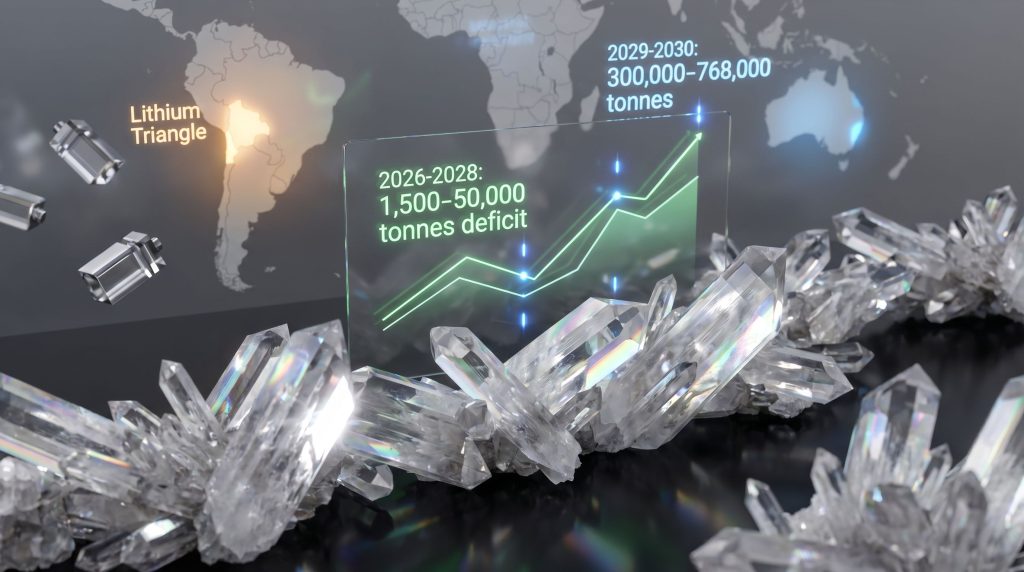
Global lithium production remains concentrated within the "Lithium Triangle" spanning Argentina, Bolivia, and Chile, alongside Australian hard-rock operations. This geographic clustering creates systemic vulnerability to policy changes, infrastructure constraints, and geopolitical tensions that can rapidly tighten global supply availability.
Geographic Production Distribution:
| Region | Production Method | Key Risk Factors |
|---|---|---|
| Lithium Triangle (Argentina, Bolivia, Chile) | Brine extraction from salars | Water availability, political stability, export policies |
| Australia | Hard-rock mining | Infrastructure capacity, processing limitations |
| China | Integrated processing | Domestic demand priorities, environmental regulations |
| Other regions | Various | Limited scale, development timeline constraints |
Lithium deposits, while described as relatively abundant globally, concentrate in specific geologic formations with distinct extraction requirements. The Lithium Triangle features the most abundant brine-based deposits, while Australia operates hard-rock mining facilities representing different extraction methodologies with unique geographic and infrastructure dependencies.
This concentration pattern means isolated disruptions in any major producing region disproportionately impact global availability. Infrastructure dependencies include water availability for brine processing in South America, port access for Australian exports, and specialised processing capabilities for different lithium chemical forms.
Supply chain risk mapping reveals specific vulnerability points including processing facilities, transportation corridors, and export terminals that could constrain availability even when mining operations remain functional. Each major region faces distinct policy risks including resource nationalism, taxation changes, and export restrictions that have materialised in other jurisdictions.
Policy Disruptions Accelerate Supply Tightening
Zimbabwe's ban on raw lithium exports in early 2026 exemplifies emerging resource nationalism trends that could spread across other producing regions. As the largest lithium producer on the African continent with significant proven reserves, Zimbabwe's policy shift represents a new paradigm of export restrictions designed to force domestic value-added processing.
The ban took industry participants by surprise, prompting temporary increases in mining activity before implementation but ultimately failing to stimulate consistent global production expansion. Zimbabwe implemented this restriction to build local refining capacity and boost revenues from natural resource extraction, demonstrating economic motivations behind resource nationalism policies.
Policy Risk Indicators Across Producing Regions:
- Export quota implementations targeting value-added processing requirements
- Taxation increases on raw material exports versus processed products
- Local content requirements for foreign investment approvals
- Strategic resource classifications affecting export licensing procedures
Export restrictions directly reduce feedstock availability for battery manufacturers dependent on global sourcing, forcing alternative sourcing strategies or production adjustments. These policy shifts often occur with minimal advance warning, creating sudden supply constraints that cascade through integrated supply chains.
Similar resource nationalist movements could emerge in Argentina, Bolivia, or Chile based on political trends and economic pressures to capture additional value from lithium extraction activities. Additionally, India's lithium strategy demonstrates how consuming nations are developing alternative sourcing approaches. Battery manufacturers and automotive producers increasingly must evaluate political risk alongside traditional commercial considerations when developing sourcing strategies.
How Severe Will the Lithium Supply Deficit Become?
Quantifying the Supply Gap Through 2035
Multiple analytical frameworks converge on significant lithium supply deficit projections, though timing varies based on electrification velocity and supply response effectiveness. These projections incorporate different scenarios for demand growth, supply recovery timelines, and policy intervention effects.
Projected Lithium Supply Deficit Scenarios (LCE):
| Timeframe | Conservative Scenario | Moderate Scenario | Accelerated Scenario |
|---|---|---|---|
| 2026-2028 | 15,000 tonnes | 35,000 tonnes | 50,000 tonnes |
| 2029-2030 | 450,000 tonnes | 600,000 tonnes | 768,000 tonnes |
| 2031-2035 | 650,000+ tonnes | 800,000+ tonnes | 1,000,000+ tonnes |
Scenario Assumptions:
- Conservative: Current project delays persist, moderate EV adoption rates
- Moderate: Partial supply recovery, steady electrification progress
- Accelerated: Extended delays, rapid net-zero transition implementation
Canaccord's analysis projects deficits extending until 2035, representing a decade-long supply tightness period that would fundamentally alter battery metal market dynamics. The wide range in projected deficits reflects substantial uncertainty about supply recovery pace and demand growth acceleration.
Deficit severity depends critically on three primary variables: project delay persistence, EV adoption acceleration rates, and net-zero transition policy implementation speed. Sensitivity analysis suggests that ±20% variations in EV adoption rates could alter deficit projections by 100,000-150,000 tonnes annually during peak shortage periods.
Demand Growth Outpacing Historical Patterns
Lithium consumption has tripled since 2017, with annual growth increments of 250,000-300,000 tonnes representing approximately 50% of total 2021 global production. This exponential expansion trajectory reflects electric vehicle adoption alongside expanding grid-scale energy storage deployment across renewable energy infrastructure.
Demand Growth Drivers:
- Electric vehicle production scaling across major automotive markets
- Grid-scale battery storage supporting renewable energy integration
- Consumer electronics maintaining steady baseline demand
- Industrial applications expanding into new lithium-dependent technologies
Recent policy reversals demonstrate that lithium demand remains highly sensitive to government subsidy and mandate policies. China experienced a 32% decline in new electric car and hybrid registrations in February 2026, following tax incentive phase-outs and trade-in programme cancellations.
The Trump administration's phase-out of EV subsidies substantially impacted demand in the United States, while Chinese EV markets showed adoption rate sensitivity to policy changes. However, the oil price shock from U.S.-Israel tensions with Iran subsequently drove Chinese EV exports up 140% as consumers sought alternatives to petroleum-based transportation.
Grid storage deployment creates demand independent of automotive sales, providing secondary demand drivers less sensitive to transportation subsidy policies. Furthermore, the critical minerals transition requires battery storage for grid stability, creating structural lithium demand that persists regardless of vehicle market fluctuations.
Which Market Scenarios Could Emerge from Supply Constraints?
Scenario 1: Managed Scarcity (2026-2028)
Moderate supply tightness drives lithium prices toward $25,000-35,000 per tonne, incentivising selective restart of suspended operations and acceleration of approved projects. Battery manufacturers implement efficiency improvements and recycling programmes to optimise available supply utilisation.
Managed Scarcity Characteristics:
- Selective mine restarts in Australia and China as prices recover
- Enhanced investment in direct lithium extraction technologies
- Accelerated recycling infrastructure development to supplement primary supply
- Moderate EV price increases absorbed by manufacturer margin compression
This scenario assumes rational market responses where higher prices successfully attract sufficient investment to prevent acute shortages. Mining operators restart suspended facilities when profitability thresholds are exceeded, whilst technology investments improve extraction efficiency from existing deposits.
Battery manufacturers adapt through improved lithium utilisation rates, alternative chemistry development for specific applications, and enhanced recycling programmes targeting end-of-life batteries. Automotive producers maintain EV deployment schedules through supply chain diversification and strategic inventory management.
Scenario 2: Acute Shortage Crisis (2029-2032)
Severe supply-demand imbalances drive lithium prices above $50,000 per tonne, triggering emergency policy responses and fundamental shifts in battery chemistry research priorities. Supply chain disruptions cascade through the entire electrification ecosystem, forcing structural adaptations.
Acute Shortage Crisis Features:
- Government strategic reserve releases to stabilise critical supply chains
- Accelerated sodium-ion battery development for large-scale applications
- EV production bottlenecks creating delivery delays and market consolidation
- Geopolitical competition intensification for lithium resource access rights
Emergency measures include coordinated strategic stockpile releases, similar to petroleum reserve mechanisms during oil crises. Governments implement lithium allocation systems prioritising strategic applications over consumer electronics and luxury vehicles.
Research investment accelerates into alternative battery technologies including sodium-ion, magnesium-based, and solid-state systems that reduce lithium dependency. Manufacturing capacity shifts toward applications where lithium alternatives demonstrate commercial viability.
In addition, the development of battery-grade lithium refinery projects becomes more critical as supply constraints intensify. These advanced processing facilities could help maximise the value extracted from available lithium resources.
Scenario 3: Structural Transformation (2033-2035)
Long-term supply constraints force permanent changes in battery technology landscapes, recycling economics, and resource extraction methodologies. The lithium supply deficit market evolves from a growth commodity toward strategically managed resource allocation with enhanced circular economy integration.
Structural Transformation Elements:
- Breakthrough recycling technologies achieving 95%+ lithium recovery rates
- Alternative battery chemistries capturing 30-40% of total market share
- Direct lithium extraction becoming cost-competitive with traditional methods globally
- International coordination mechanisms for lithium resource management
Advanced recycling systems transform end-of-life batteries into primary lithium sources, reducing dependence on virgin material extraction. Urban mining operations recover lithium from consumer electronics, automotive batteries, and industrial applications at scale.
Technology diversification creates multiple battery chemistry pathways optimised for specific applications, reducing universal lithium dependency. Sodium-ion batteries serve grid storage applications, whilst lithium reserves focus on high-performance automotive and aerospace applications requiring superior energy density.
Moreover, the battery recycling breakthrough demonstrates how advanced technologies can significantly improve material recovery rates, helping to address supply constraints through circular economy approaches.
What Investment Implications Emerge from Supply Deficit Projections?
Mining Sector Consolidation Opportunities
Supply constraints typically accelerate industry consolidation as larger players acquire distressed assets and development projects during shortage periods. Companies with permitted projects, established infrastructure, and strong balance sheets position themselves to capture disproportionate value creation.
Consolidation Value Drivers:
- Distressed asset acquisition at significant discounts to replacement cost
- Infrastructure optimisation through facility integration and shared processing
- Technology deployment across expanded production platforms
- Supply contract premiums during shortage periods
Major mining companies evaluate acquisition targets including suspended Australian operations, underdeveloped Chilean brine projects, and advanced exploration properties with proven resources. Vertical integration opportunities emerge as battery manufacturers consider backward integration into mining operations.
Strategic partnerships between miners and end-users create supply security for manufacturers whilst providing mining companies with financing for expansion projects. These relationships typically involve long-term purchase agreements with price floor provisions that reduce investment risk.
Technology Innovation Acceleration
Sustained high lithium prices accelerate investment in extraction technologies, recycling capabilities, and alternative battery chemistries. Innovation priorities shift toward efficiency improvements, resource recovery optimisation, and lithium substitution research.
Technology Investment Priorities:
- Direct lithium extraction systems reducing processing time and environmental impact
- Advanced battery recycling with higher recovery rates and lower processing costs
- Alternative chemistry development including sodium-ion and solid-state technologies
- Lithium substitution research across industrial and consumer applications
Direct lithium extraction technologies become economically competitive as traditional brine processing faces resource constraints. Enhanced recycling methods transform waste streams into valuable feedstock, creating new business models around circular material flows.
Battery chemistry research accelerates toward formulations requiring reduced lithium content whilst maintaining performance characteristics. Solid-state battery development receives increased funding due to potential lithium efficiency improvements compared to liquid electrolyte systems.
Geopolitical Strategy Shifts
Nations dependent on lithium imports implement strategic stockpiling programmes similar to petroleum reserves, whilst producing countries establish export quotas or processing requirements to capture value-added manufacturing activities.
Strategic Response Mechanisms:
- National lithium reserves providing supply security buffers
- Bilateral supply agreements securing long-term access rights
- Domestic processing requirements capturing additional economic value
- Trade policy coordination preventing export restriction escalation
Strategic stockpiling provides market stability mechanisms but reduces immediately available commercial supply. International frameworks may emerge to coordinate lithium trade policies and prevent resource hoarding during shortage periods.
Producing countries leverage resource positions to attract downstream manufacturing investments, requiring foreign companies to establish local processing facilities for export market access. These policies create regional battery manufacturing hubs whilst reducing raw material availability for external processors.
How Might Policy Responses Shape Market Evolution?
Strategic Reserve Development
Governments establish lithium strategic reserves providing supply security during shortage periods whilst creating additional demand during reserve accumulation phases. These mechanisms operate similarly to petroleum stockpiles, offering market intervention capabilities during acute supply disruptions.
Reserve Programme Structures:
- Government-owned stockpiles with planned release mechanisms during shortages
- Private sector obligations requiring minimum inventory levels
- International coordination for synchronised reserve releases
- Emergency allocation systems prioritising critical applications
Strategic reserves require careful management to avoid market destabilisation during accumulation periods. Reserve size calculations must balance supply security objectives against market impact considerations, typically targeting 60-90 days of national consumption.
Release triggers include predetermined shortage thresholds, price ceiling breaches, or supply disruption events affecting major producing regions. International coordination prevents simultaneous reserve building that could exacerbate shortage conditions.
Trade Policy Coordination
International frameworks for lithium trade prevent export restrictions and ensure equitable access to critical battery materials. These mechanisms include minimum export quotas, coordinated stockpile releases, and technology sharing agreements.
Coordination Mechanisms:
- Multilateral trade agreements preventing unilateral export restrictions
- Minimum export quota systems ensuring global market access
- Technology transfer requirements for market access privileges
- Dispute resolution procedures addressing resource trade conflicts
Trade coordination requires balancing producing country sovereignty with consumer nation supply security needs. Incentive structures compensate producing countries for maintaining export levels whilst providing consumer nations with predictable access.
Producer countries may accept export obligations in exchange for technology transfer, infrastructure investment, or preferential access to downstream markets. These agreements create mutual dependency relationships reducing unilateral policy risk.
Recycling Infrastructure Investment
Policy support for battery recycling infrastructure development significantly impacts long-term supply-demand balance calculations. Enhanced recycling rates could provide 20-30% of lithium demand by 2035 under aggressive policy scenarios.
Infrastructure Development Priorities:
- Collection system establishment for end-of-life battery recovery
- Processing facility construction with advanced separation technologies
- Quality standard development ensuring recycled material performance
- Economic incentive programmes making recycling commercially viable
Recycling infrastructure requires substantial upfront investment with returns dependent on future material prices and processing volumes. Government support mechanisms include tax incentives, loan guarantees, and procurement preferences for recycled materials.
Advanced recycling technologies target 95%+ lithium recovery rates compared to current levels of 70-80%, substantially improving recycled material economics. Urban mining programmes systematically recover lithium from consumer electronics and automotive batteries approaching end-of-life status.
The next major ASX story will hit our subscribers first
What Risk Mitigation Strategies Should Stakeholders Consider?
Supply Chain Diversification
Battery manufacturers and automotive producers prioritise geographic diversification of lithium sourcing, including investment in North American and European production capacity to reduce dependence on traditional producing regions.
Diversification Approaches:
- Multi-region sourcing contracts spreading supply risk across geographic areas
- Alternative extraction technologies reducing dependence on specific deposit types
- Strategic partnership development with emerging producers outside traditional regions
- Vertical integration evaluation including direct mining investment participation
Geographic diversification extends beyond sourcing contracts toward investment in alternative production regions. North American lithium projects receive enhanced attention despite higher extraction costs due to supply security considerations.
European battery manufacturers evaluate domestic lithium resources including geothermal brines and hard-rock deposits that provide supply independence despite economic disadvantages. These investments represent supply security premiums rather than cost optimisation strategies.
Technology Hedging
Investment in multiple battery technology pathways provides insurance against lithium supply constraints. Alternative chemistries including sodium-ion, lithium iron phosphate, and solid-state technologies offer different supply chain risk profiles.
Technology Portfolio Strategies:
- Multi-chemistry development programmes reducing dependence on single technologies
- Application-specific optimisation matching battery chemistry to use case requirements
- Manufacturing flexibility enabling rapid production shifts between technologies
- Research collaboration sharing development costs across industry participants
Sodium-ion batteries demonstrate commercial viability for grid storage applications where weight considerations are less critical than automotive uses. These systems utilise abundant sodium resources, providing supply chain independence from lithium markets.
Solid-state battery development could reduce lithium requirements per unit of energy storage whilst improving safety characteristics. Manufacturing investment in flexible production platforms enables rapid technology transitions as market conditions change.
Vertical Integration Analysis
Companies evaluate backward integration into lithium production or long-term supply agreements to secure access during shortage periods. These strategies require careful evaluation of capital requirements versus supply security benefits.
Integration Decision Factors:
- Capital investment requirements for mining operations versus supply contract costs
- Operational expertise development in mining and processing activities
- Risk transfer from supply disruption to operational execution
- Return on investment comparison between integration and financial market alternatives
Vertical integration provides supply security but requires significant capital deployment and operational expertise development outside core competencies. Partnership structures with established mining operators offer middle-ground approaches sharing risks and capital requirements.
Long-term supply agreements with floor price provisions provide supply security whilst maintaining operational focus on core business activities. These contracts typically include volume commitments over 5-10 year periods with inflation adjustment mechanisms.
Conclusion: Navigating the Lithium Supply Transition
The emerging lithium supply deficit represents a fundamental transition in how critical battery materials are sourced, processed, and allocated across the global economy rather than a traditional commodity cycle. This structural shift requires sophisticated supply chain strategies, technology diversification, and proactive risk management approaches accounting for both market dynamics and geopolitical realities.
Success factors in this challenging environment include:
- Geographic diversification of supply sources beyond traditional producing regions
- Technology portfolio management reducing dependence on lithium-intensive chemistries
- Strategic partnership development with mining operators and alternative producers
- Policy engagement supporting recycling infrastructure and trade coordination mechanisms
Organisations recognising these structural shifts early and implementing appropriate mitigation strategies will be better positioned to navigate the challenging supply environment expected through 2035. The lithium supply deficit may ultimately accelerate transition toward a more diverse, resilient, and sustainable battery materials ecosystem.
Market participants must balance immediate supply security needs against long-term technology development investments. Enhanced recycling capabilities, alternative battery chemistries, and improved extraction technologies offer pathways through the shortage period whilst building foundation for sustainable growth.
For additional insights on lithium market dynamics and industry perspectives, readers may reference the analysis by Irina Slav published on OilPrice.com regarding lithium supply tightening and project delays, which provides supplementary context on current market conditions.
Disclaimer: This analysis contains forward-looking projections and scenario modelling that involve inherent uncertainties. Actual market developments may differ significantly from projected scenarios due to technological breakthroughs, policy changes, or unforeseen market dynamics. Investment and strategic decisions should incorporate additional analysis and professional consultation appropriate to specific circumstances.
Ready to Capitalise on Critical Mineral Market Movements?
The lithium supply deficit represents unprecedented opportunities for astute investors monitoring critical mineral discoveries across the ASX. Discovery Alert's proprietary Discovery IQ model delivers real-time alerts on significant mineral discoveries, empowering subscribers to identify actionable opportunities in lithium and battery metals before the broader market responds. Begin your 14-day free trial today and position yourself ahead of the market as supply constraints reshape the entire battery materials landscape.