June 20, 2026
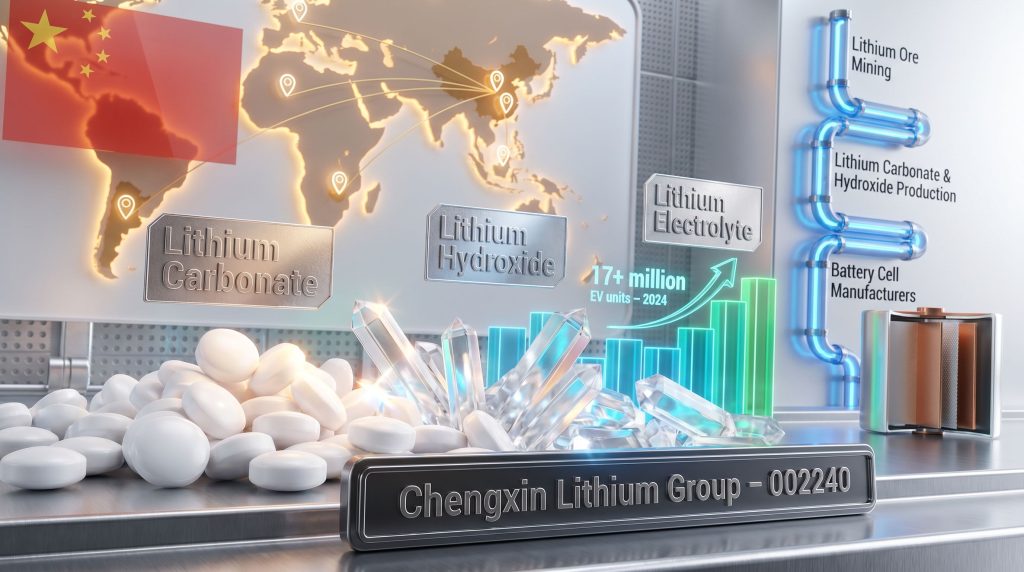
Understanding Shenzhen Chengxin Lithium Group Co. Ltd. Inside the World's Most Critical Battery Supply Chain
The global race to electrify transportation and stabilise power grids has quietly transformed a relatively obscure industrial chemical into one of the most strategically significant commodities on earth. Lithium, once confined to ceramics, pharmaceuticals, and niche metallurgical uses, now sits at the centre of a multi-trillion-dollar energy transition. Within this landscape, the producers and processors who control lithium compound output hold disproportionate influence over the pace and cost of electrification worldwide. Shenzhen Chengxin Lithium Group Co. Ltd. is one such operator, and understanding its structure, strategy, and market position reveals a great deal about how the modern battery supply chain actually functions.
When big ASX news breaks, our subscribers know first
From Domestic Processor to Global Resource Holder
Founded in 1997, Shenzhen Chengxin Lithium Group Co. Ltd. predates the mass commercialisation of lithium-ion batteries in consumer electronics and long predates their adoption in electric vehicles. This timeline matters. The company spent its formative years building chemical processing expertise during a period when lithium demand was modest and price cycles were far less violent than those witnessed between 2020 and 2024.
Headquartered in Shenzhen's Futian District with a secondary operational base in Chengdu's Wuhou District, Chengxin Lithium is listed on the Shenzhen Stock Exchange under ticker code 002240. The dual-city footprint is strategically deliberate. Shenzhen connects the company to China's financial infrastructure and export-oriented industrial economy, while Chengdu anchors it within Sichuan Province, a region with significant lithium spodumene resources and a growing new energy manufacturing base.
Beyond its lithium operations, the company maintains a secondary timber products business within China. While this segment represents a minor portion of overall activity, it reflects the company's origins as a diversified industrial operator before lithium demand transformed its strategic priorities.
What Chengxin Lithium Actually Produces
The company's core value proposition lies in its ability to convert lithium feedstock into battery-grade chemical compounds across multiple product categories. This breadth of output is commercially significant because different battery architectures require different lithium input forms.
| Product | Primary Application | Battery Chemistry Relevance |
|---|---|---|
| Lithium Carbonate | Cathode material precursor | LFP (lithium iron phosphate) cells |
| Lithium Hydroxide | High-nickel cathode production | NMC and NCA battery architectures |
| Lithium Electrolyte | Electrolyte solution component | All lithium-ion cell types |
| Basic Lithium Salts | Industrial chemical use | Broad industrial applications |
| Metal Lithium Products | Specialty and next-gen research | Solid-state and lithium-metal cells |
A detail that is often overlooked in general coverage of lithium producers is the price premium that lithium hydroxide commands over lithium carbonate in high-performance EV battery markets. Hydroxide-based cathode production enables the manufacture of high-nickel NMC (nickel-manganese-cobalt) batteries that deliver greater energy density per kilogram. This makes hydroxide output a more lucrative revenue line than carbonate production during periods of strong premium EV demand.
Conversely, the accelerating global adoption of LFP (lithium iron phosphate) chemistry in standard-range EVs and stationary storage applications has strengthened demand for lithium carbonate specifically. LFP cells have gained favour due to their lower cost, improved thermal stability, and longer cycle life, particularly in markets where driving range per charge is less critical than total cost of ownership. Chengxin Lithium's ability to produce both compound types positions it to capture demand across the full spectrum of battery chemistry preferences, rather than being exposed to a single technology cycle.
The International Resource Security Architecture
One of the most analytically interesting dimensions of Shenzhen Chengxin Lithium Group Co. Ltd. is the deliberate construction of a multi-continental upstream resource base. Chinese lithium processors face a structural vulnerability: domestic lithium resources, while substantial, are insufficient to satisfy China's long-term battery manufacturing ambitions at competitive cost. The strategic response has been outward investment across multiple geographies and geological deposit types.
| Country | Operational Role | Deposit Type |
|---|---|---|
| China | Core processing and domestic sales | Mixed (spodumene and brine) |
| Argentina | Latin American resource development | Lithium brine (Puna region) |
| Zimbabwe | African hard-rock ore sourcing | Spodumene pegmatite |
| Indonesia | Regional processing expansion | Nickel-adjacent battery materials |
Argentina and the Lithium Triangle Advantage
Argentina occupies a unique position in global lithium geology. The country sits within the so-called Lithium Triangle, a high-altitude geological formation spanning Argentina, Bolivia, and Chile that collectively hosts an estimated 60% or more of the world's identified lithium reserves. The Argentina lithium brines concentrated in the Puna plateau region, particularly in Salta, Jujuy, and Catamarca provinces, are characterised by exceptionally high lithium concentrations relative to competing brine operations elsewhere.
What makes Argentine brine deposits particularly attractive to processors like Chengxin Lithium is their cost extraction profile. Solar evaporation, the primary extraction method for brine operations, has very low ongoing energy costs relative to hard-rock spodumene mining, which requires drilling, blasting, crushing, and high-temperature processing. Furthermore, lithium brine extraction methods continue to evolve, offering improved recovery rates. For a Chinese company seeking to reduce feedstock costs while improving margin resilience during price downturns, low-cost Argentine brine assets represent a meaningful structural advantage.
Argentina's evolving investment framework, including the RIGI (Regimen de Incentivo para Grandes Inversiones) large investment incentive regime introduced in 2024, has materially altered the economics of long-term mining project development for foreign operators, offering tax and customs stability provisions over extended periods.
Zimbabwe's Spodumene Pegmatites
Zimbabwe's lithium geology is fundamentally different from Argentina's brine environment. The country hosts spodumene pegmatite deposits, hard-rock formations in which lithium is chemically bound within aluminosilicate mineral structures. Converting spodumene ore into battery-grade lithium compounds requires a multi-stage chemical processing pathway. Spodumene extraction begins with calcination to convert alpha-spodumene into the more reactive beta-spodumene phase, followed by acid leaching and purification.
Chinese investment in Zimbabwean lithium accelerated significantly after 2021, when Zimbabwe moved to restrict raw spodumene ore exports in favour of in-country beneficiation, a policy shift that incentivised foreign miners to establish local processing capacity. Chengxin Lithium's Zimbabwean presence reflects this trend and provides the company with a hard-rock feedstock source that is geologically complementary to its brine-based Argentine operations.
The Four Market Forces That Govern Chengxin Lithium's Performance
Understanding the financial performance of Shenzhen Chengxin Lithium Group Co. Ltd. requires understanding the macro variables that drive lithium compound pricing and volume demand. These forces are largely external to the company's control but can be partially mitigated through strategic asset positioning.
1. Lithium Price Volatility
Lithium carbonate prices moved from under US$10,000 per tonne in early 2020 to a peak exceeding US$80,000 per tonne in late 2022, before correcting sharply through 2023 and into 2024. This price compression created widespread margin pressure across the processing sector. The lithium market downturn has consequently weighed heavily on producers at all stages of the supply chain. For integrated producers who own both upstream mining assets and downstream processing capacity, the impact is partially buffered. For pure processors dependent on spot feedstock purchases, the compression can be severe.
2. EV and Storage Demand Trajectory
Global electric vehicle sales grew from approximately 3 million units in 2020 to an estimated 17 million or more in 2024, with China consistently accounting for roughly 60% of global EV volume according to industry tracking data. Each EV requires between 8 and 15 kilograms of lithium carbonate equivalent (LCE) depending on battery size, chemistry, and pack architecture. Grid-scale energy storage systems (ESS) represent a growing secondary demand category that is increasingly independent of automotive cycles.
3. Global Supply Expansion
New lithium supply additions from Australian spodumene operations, Chilean brine expansions, and Argentine project developments have meaningfully increased global production capacity since 2022. This supply growth has been a primary contributor to the price correction experienced through 2023–2024. The lithium market is characterised by long development lead times for new projects (typically 5 to 10 years from discovery to first production), creating the conditions for boom-bust cycles as demand surges trigger investment waves that arrive after the demand gap has already begun to close.
4. China's Domestic Policy Framework
China's New Energy Vehicle mandate framework requires automakers to meet minimum NEV sales ratios or purchase compliance credits, creating a structural demand floor for battery materials that does not depend on consumer sentiment alone. The country's broader Dual Carbon policy targets (carbon peak by 2030, carbon neutrality by 2060) underpin long-term electrification demand across transportation, industrial, and power sectors.
Competitive Landscape: Where Chengxin Lithium Sits Among Its Peers
| Company | Headquarters | Key Strength | Geographic Reach |
|---|---|---|---|
| Chengxin Lithium Group | Shenzhen / Chengdu | Integrated lithium salt production | China, Argentina, Zimbabwe, Indonesia |
| Tianqi Lithium | Chengdu | World-scale spodumene processing | Australia, Chile, China |
| Ganfeng Lithium | Xinyu, Jiangxi | Diversified products and recycling | 30+ countries globally |
| Arcadium Lithium | Philadelphia (US-listed) | High-purity lithium hydroxide | Argentina, US, UK |
| Pilbara Minerals (ASX: PLS) | Perth, Australia | Hard-rock spodumene mining | Australia |
Among Chinese mid-tier lithium producers, Chengxin Lithium occupies a distinct commercial niche. It lacks the sheer scale of Ganfeng Lithium's globally diversified platform, but its focused product portfolio and growing international resource base differentiate it from purely domestic processors who remain entirely exposed to Chinese feedstock pricing and availability.
The next major ASX story will hit our subscribers first
Risk Factors Investors and Industry Observers Should Monitor
| Risk Category | Specific Exposure | Severity |
|---|---|---|
| Commodity Price | Lithium carbonate and hydroxide price compression | High |
| Geopolitical | China-US trade tensions affecting battery supply chains | Medium-High |
| Regulatory | Argentina policy shifts on mining royalties and FX controls | Medium |
| Operational | Processing underutilisation during demand troughs | Medium |
| Environmental and ESG | Scrutiny on mining practices in Zimbabwe and Argentina | Medium |
| Competitive | Ongoing oversupply from new Australian and Chilean production | High |
A less commonly discussed risk is the lithium carbonate equivalent grade variability in brine deposits. Argentine brine operations can experience seasonal fluctuations in brine concentration and impurity levels (particularly high magnesium-to-lithium ratios in some Puna deposits), which can meaningfully affect processing yields and per-tonne production costs. In addition, direct lithium extraction technologies are increasingly being evaluated as a means to address impurity challenges and improve recovery efficiency. Companies operating brine assets must invest in impurity management technology, particularly for deposits with elevated magnesium or sulphate concentrations, to consistently produce battery-grade output at commercially viable cost.
The 2027–2029 Rebalancing Window
Global lithium demand is projected to reach approximately 2 to 3 million tonnes of LCE by 2030, compared to roughly 800,000 tonnes LCE in 2023, according to IEA Critical Minerals Market Review data. This near-tripling of market volume within seven years represents one of the fastest demand ramp-ups ever observed for an industrial mineral commodity.
The lithium market is widely anticipated to shift from structural oversupply toward a tighter supply-demand balance between 2027 and 2029, as the combination of accelerating EV adoption, grid storage deployment, and the deterrent effect of low prices on new project investment begins to compress available surplus capacity.
For integrated producers with established low-cost upstream assets, this anticipated rebalancing period could represent a significant earnings recovery cycle. Companies that have survived the 2023–2024 price compression while maintaining operational continuity and resource development progress are likely to be better positioned for the upturn than those who curtailed investment or deferred resource acquisition during the downturn.
The energy storage sector deserves particular attention in this context. Some analyst scenarios project that grid-scale battery storage will overtake automotive applications as the dominant source of lithium demand by the early 2030s, driven by the economics of pairing large-scale solar and wind generation with multi-hour storage. If this trajectory materialises, it adds a demand dimension that is structurally independent of EV sales cycles, potentially smoothing the volatility that has historically characterised lithium market dynamics. The Lithium Supply & Markets conference community, of which Chengxin Lithium is a member, continues to track these shifting dynamics closely.
Frequently Asked Questions About Chengxin Lithium Group
What does Shenzhen Chengxin Lithium Group Co. Ltd. do?
Chengxin Lithium Group is a Chinese producer engaged in lithium ore mining and the manufacture of battery-grade lithium compounds, including lithium carbonate, lithium hydroxide, and lithium electrolyte solutions, alongside metal lithium products and basic lithium salts. A secondary timber products business operates within China.
Where does Chengxin Lithium operate internationally?
The company has established operations across China, Argentina, Zimbabwe, and Indonesia, pursuing a deliberate strategy to secure lithium feedstock from both brine and hard-rock deposit types across multiple continents.
What stock exchange is Chengxin Lithium listed on?
Chengxin Lithium is listed on the Shenzhen Stock Exchange under ticker code 002240.
How does lithium price volatility affect the company?
Revenue and margin performance track closely with prevailing lithium carbonate and hydroxide spot prices. The company's vertically integrated model, combining upstream resource ownership with downstream processing, provides a partial natural hedge against feedstock cost inflation during price downturns, though it does not eliminate exposure to commodity price cycles.
Disclaimer: This article is intended for informational and educational purposes only and does not constitute financial advice, an investment recommendation, or a solicitation to buy or sell any securities. Forecast data, demand projections, and price outlook references are drawn from publicly available industry research and are subject to material uncertainty. Readers should conduct their own due diligence and consult qualified financial advisers before making investment decisions.
Want to Track the Next Major Lithium Discovery Before the Market Does?
Discovery Alert's proprietary Discovery IQ model scans ASX announcements in real time, instantly alerting subscribers to significant mineral discoveries — including lithium — and translating complex data into actionable investment insights. Start your 14-day free trial at Discovery Alert today, or explore how historic mineral discoveries have generated substantial returns to understand what's possible when you're positioned ahead of the market.