June 15, 2026
Europe's Green Steel Ambitions Are Being Tested by Cold Industrial Reality
The global steel industry accounts for roughly 8% of total annual CO₂ emissions, making it one of the most stubborn decarbonisation challenges in the industrial economy. For years, the roadmap has been clear in theory: replace coking coal with green hydrogen, swap blast furnaces for electric arc furnaces, and source iron ore from producers willing to invest in the upstream transition. In practice, however, the gap between blueprint and operational reality has widened considerably across most of Europe. Financing has stalled. Hydrogen costs have remained elevated. And the demand-side signals that would justify billion-euro commitments have been too weak to move the needle.
Against this backdrop, the regulatory clearance granted to Swedish state-owned miner LKAB for its LKAB fossil-free sponge iron plant permit at Malmberget carries weight that extends well beyond one project in northern Sweden. It demonstrates that industrial-scale permitting for hydrogen-based ironmaking is achievable within existing European regulatory frameworks, and it crystallises Sweden's structural advantages at a time when the rest of the continent is struggling to make progress.
When big ASX news breaks, our subscribers know first
What the Malmberget Environmental Permit Actually Authorises
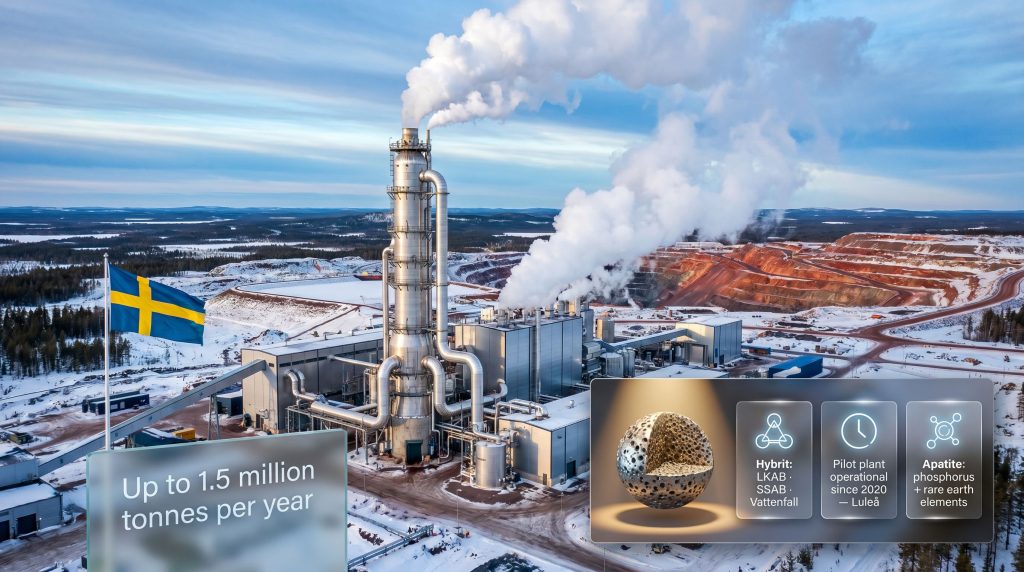
On June 15, 2026, Sweden's Land and Environment Court in Umeå issued a ruling covering multiple interconnected industrial activities at LKAB's Malmberget site in Gällivare. The decision was not a narrow single-facility approval. It encompassed four distinct operational components within a single ruling.
| Approval Component | Key Detail |
|---|---|
| Fossil-free sponge iron demonstration plant | Up to 1.5 million tonnes per year of hydrogen-reduced iron |
| Continued mining operations | Ongoing ore extraction at the Malmberget site |
| Tailings dam expansion | Enlarged waste management infrastructure |
| Apatite processing facility | Recovery of phosphorus and rare earth elements from production waste |
The court confirmed that approval was appropriate because it is technically feasible to limit the environmental impact of these activities through clearly defined operational conditions. This framing matters: it is a conditional approval, not a blanket green light. The ruling remains subject to appeal, meaning the permit does not yet carry the force of legal finality.
Permitting context: Sweden's Environmental Code requires project proponents to demonstrate that harm mitigation is both technically achievable and commercially practical. The Malmberget ruling reflects a court assessment that LKAB met this threshold across all four activity categories simultaneously.
Understanding Fossil-Free Sponge Iron: The Chemistry Behind the Transition
How Hydrogen-Based Direct Reduced Iron Works
Conventional blast furnace steelmaking uses coking coal as both a fuel and a chemical reducing agent. When coal combusts inside a blast furnace, it generates carbon monoxide, which then strips oxygen from iron ore to produce pig iron. The inevitable byproduct is large volumes of carbon dioxide, typically in the range of 1.8 to 2.1 tonnes of CO₂ per tonne of steel produced.
The hydrogen iron ore reduction pathway replaces this carbon chemistry entirely. The process follows a straightforward sequence:
- High-quality iron ore pellets are loaded into a shaft furnace or reactor vessel.
- Green hydrogen gas (H₂) is introduced as the reducing agent.
- Hydrogen reacts with iron oxide (Fe₂O₃), chemically removing the oxygen atoms bonded to the iron.
- The reaction produces metallic iron with a porous, cellular structure, alongside water vapour as the only gaseous byproduct.
- This porous metallic product, known as sponge iron or direct reduced iron, is then charged into an electric arc furnace to produce crude steel.
The term sponge iron is literal rather than metaphorical. The reduction process preserves the pellet's original form while hollowing out its internal structure, leaving a material that is visually porous and texturally reminiscent of a sponge. This physical characteristic also makes it more reactive in downstream electric arc furnace processing.
A Direct Process Comparison
| Attribute | Blast Furnace Route | Hydrogen DRI Route |
|---|---|---|
| Primary reducing agent | Coking coal | Green hydrogen |
| CO₂ intensity | ~1.8 to 2.1 t CO₂ per tonne of steel | Near-zero with green H₂ |
| Output product | Liquid pig iron | Solid sponge iron |
| Secondary processing | Basic oxygen furnace | Electric arc furnace |
| Energy dependency | Coal and coke ovens | Renewable electricity and electrolysis |
| Emissions profile | High | Minimal when fully decarbonised |
One aspect that receives less attention in mainstream coverage is the pellet quality requirement for hydrogen DRI. Unlike blast furnaces, which can tolerate a relatively wide range of iron ore feed grades and compositions, shaft furnaces used in DRI processes require pellets with very high iron content, typically above 67% Fe, and tightly controlled levels of gangue minerals. LKAB's Malmberget and Kiruna ore bodies are among the highest-grade iron ore deposits in the world, which is precisely why LKAB is structurally positioned to supply the DRI transition rather than simply observe it.
The Hybrit Architecture: Ownership, Structure, and Strategic Logic
Three Partners, One Integrated Value Chain
The Hybrit joint venture is built around an unusual ownership structure that deliberately integrates every segment of the green steel value chain under coordinated state-linked control.
| Partner | Primary Role | Core Industrial Asset |
|---|---|---|
| LKAB | Iron ore supply and sponge iron production | Mines and pelletisation plants |
| SSAB | Steelmaking and finished product manufacturing | Rolling mills and steel plants |
| Vattenfall | Renewable energy supply | Hydropower and wind generation assets |
This arrangement is not incidental. Most green steel development projects elsewhere in Europe involve independent parties negotiating across commercial boundaries, creating friction in hydrogen supply agreements, power purchase contracts, and offtake structures. Hybrit collapses these negotiations into a single coordinated entity, significantly reducing transaction costs and counterparty risk.
A pilot plant in Luleå has been operational since 2020, providing six years of production data ahead of any decision to proceed with the Malmberget demonstration facility. This is a meaningful de-risking step. Scale-up failures in DRI technology have historically occurred when projects moved from laboratory conditions to commercial scale without an intermediate demonstration phase. The existence of Luleå pilot data reduces, though does not eliminate, the technical uncertainty associated with Malmberget.
Importantly, an investment decision for the Malmberget demonstration plant remains outstanding as of the permit date. The environmental approval is a necessary precondition, not a construction commencement notice.
Why Sweden's Energy Geography Changes the Economic Equation
The Electricity Cost Advantage Is Not Marginal, It Is Structural
Green hydrogen economics are almost entirely driven by electricity costs. Electrolysis, the process that splits water into hydrogen and oxygen using electrical current, is highly energy-intensive. Industry analysis consistently shows that electricity accounts for 60 to 70% of the total cost of green hydrogen production. This means that access to cheap, low-carbon electricity is not merely advantageous for hydrogen DRI projects; it is the primary determinant of whether a project can achieve anything approaching commercial viability.
Sweden's northern electricity grid is dominated by hydropower generation with a growing wind contribution. Furthermore, the result is a region where:
- Electricity prices are among the lowest in Europe on a sustained basis.
- The carbon intensity of grid power is minimal, satisfying the additionality requirements for green hydrogen certification.
- Energy infrastructure is geographically proximate to LKAB's mining operations, reducing transmission losses and logistics costs.
- The integration of Vattenfall within the Hybrit structure provides direct energy supply arrangements rather than exposure to spot market volatility.
A point worth noting for investors: The structural electricity advantage that northern Sweden possesses is not easily replicable. It is the product of decades of hydropower investment and geographic circumstance. Continental European green steel projects that depend on procuring renewable electricity through open markets face fundamentally different cost structures, and most current green hydrogen cost estimates for central European locations remain two to three times higher than what is achievable in Nordic markets.
Sweden's Two Major Green Steel Projects Side by Side
| Project | Operator | Location | Technology Pathway | Status as of June 2026 |
|---|---|---|---|---|
| Hybrit Demonstration Plant | LKAB, SSAB, Vattenfall | Malmberget, Gällivare | H₂ DRI plus EAF | Environmental permit granted; investment decision pending |
| Stegra Steel Factory | Stegra | Boden, Sweden | Hydrogen-based steelmaking | Raised €1.4 billion (~$1.6 billion USD) in additional funding in April 2026 |
Both projects are concentrated in northern Sweden for the same underlying reason: the energy economics work there in ways they do not in most other European jurisdictions. Broader developments in green iron production continue to reflect this regional advantage as the continent attempts to scale its decarbonisation ambitions.
Why European Green Steel Is Falling Behind: A Systemic Analysis
Structural Barriers Are Compounding Across the Continent
The broader European green steel transition has been losing momentum. Multiple projects have been delayed, rescaled, or quietly shelved as the gap between policy ambition and financial reality has widened. Understanding why requires looking at several compounding structural problems simultaneously.
The core barriers are not policy failures, they are economic architecture problems:
- Capital thresholds are prohibitive. Replacing or converting a single integrated steelworks to hydrogen DRI and electric arc furnace technology requires investment of several billion euros. At that scale, commercial financing requires bankable offtake agreements, which in turn require steel buyers willing to commit to green premiums, which most are not yet prepared to do.
- Green hydrogen remains expensive outside Nordic markets. Without the electricity cost advantage that Sweden enjoys, hydrogen produced from renewable sources carries a cost penalty that makes DRI-based steelmaking uncompetitive against conventionally produced steel, particularly from lower-cost jurisdictions.
- Power market volatility is an operational risk. Electric arc furnaces are large electricity consumers. In markets where power prices have been elevated and unpredictable since 2021, the operating cost model for EAF-based steelmaking has become difficult to underwrite.
- Demand signals from steel buyers are inadequate. Industrial buyers of steel, from automakers to construction firms, have been slow to formalise long-term purchasing commitments for green steel at a price premium. Without these commitments, project developers face revenue uncertainty that lenders cannot accept.
- Permitting timelines create planning risk. Environmental approval processes for large industrial facilities across Europe frequently extend to five or more years. This timeline uncertainty discourages capital commitment.
The LKAB permit as a signal: The June 2026 Malmberget ruling is notable precisely because it demonstrates the Swedish regulatory system can deliver outcomes on a timeline that is investable. For project developers in other European markets who cite permitting uncertainty as a primary obstacle, this ruling provides at least a reference point, if not a direct template.
These dynamics are closely intertwined with shifts in global steel and iron ore markets, where pricing pressures and overcapacity concerns continue to complicate the investment case for green alternatives.
The next major ASX story will hit our subscribers first
The Apatite Facility: A Critical Minerals Story Embedded Within a Steel Story
Why Phosphate Waste Recovery Matters Strategically
The environmental court's authorisation of an apatite processing facility at Malmberget deserves significantly more attention than it typically receives in coverage focused on green steel. The apatite unit will extract value from waste streams generated by iron ore production rather than requiring any new mining disturbance, which means it captures strategic mineral output at a marginal incremental cost.
What apatite contains and why it is valuable:
- Apatite is a calcium phosphate mineral that occurs naturally within certain iron ore bodies, including those at Malmberget.
- Processing apatite yields phosphorus, which is an essential nutrient for global agricultural production. Phosphorus cannot be synthesised or substituted in fertiliser applications, and Europe currently relies heavily on imports for its phosphate supply.
- Crucially, apatite deposits associated with Kiruna-type iron ore formations also carry concentrations of rare earth elements (REEs), including light rare earths such as lanthanum, cerium, and neodymium, the latter being critical for permanent magnets used in electric motors and wind turbines.
LKAB has previously indicated, in relation to its Per Geijer deposit, that its rare earth supply chains could potentially supply approximately 18% of Europe's rare earth requirements. The Malmberget apatite facility represents a complementary pathway to rare earth recovery that operates from existing production waste rather than requiring the development of a separate mining operation.
The lesser-known dimension: Kiruna-type iron ore deposits, known geologically as iron oxide apatite (IOA) deposits, have historically been mined exclusively for their iron content. The apatite fraction was treated as gangue and disposed of in tailings. The recognition that this discarded material contains economically recoverable rare earths and phosphorus represents a genuine shift in how these deposits are valued, and LKAB is among the first major producers globally to attempt systematic recovery at scale.
In addition, the growing critical minerals demand driven by the energy transition means the apatite facility's output could carry strategic importance well beyond its contribution to the steel decarbonisation story.
From Permit to Production: What Must Still Happen
Outstanding Decision Points and Residual Risks
The LKAB fossil-free sponge iron plant permit is a significant milestone, but a methodical assessment of what remains outstanding reveals that the gap between regulatory approval and operational production is still substantial.
Key decision points that must be resolved:
- Appeal period resolution. The June 15 ruling is legally challengeable. Any successful appeal could modify permit conditions or require additional proceedings, introducing timeline risk.
- Formal investment decision. LKAB and its Hybrit partners must commit capital before construction begins. Given the scale of investment required, this decision is likely to involve detailed project financing arrangements and may require clarity on hydrogen supply costs.
- Hydrogen infrastructure development. Supplying green hydrogen at a rate sufficient to sustain 1.5 million tonnes per year of sponge iron production requires substantial upstream electrolysis capacity and associated infrastructure that does not yet exist at this scale.
- Commercial offtake agreements. The long-term revenue case for the plant depends on securing buyers for fossil-free iron or steel at prices that justify the cost premium over conventionally produced material.
- Financing structure finalisation. Projects of this capital intensity typically require blended financing structures combining equity, project debt, and potentially sovereign or multilateral financial instruments.
Risk Assessment Overview
| Risk Category | Specific Factor | Assessment |
|---|---|---|
| Regulatory | Permit appeal modifies or overturns approval | Moderate risk; Swedish courts have a history of upholding major industrial permits |
| Financial | Investment decision delayed by cost escalation | Moderate; state ownership of all three Hybrit partners provides institutional backstop |
| Energy supply | Green hydrogen availability and delivered cost | Lower in Sweden than elsewhere in Europe; structural advantage is durable |
| Market demand | Insufficient green steel price premium from buyers | Improving incrementally; EU Carbon Border Adjustment Mechanism creates price signal |
| Technical | Scale-up risk from pilot to demonstration plant | Reduced but not eliminated by six years of Luleå pilot operations |
However, it is worth noting that LKAB's carbon-free processes represent a comprehensive transformation strategy that extends well beyond any single permit decision, underlining the long-term institutional commitment behind the Malmberget project.
Key Takeaways for Industry Observers and Investors
The Malmberget environmental permit is meaningful precisely because it represents a convergence of factors that rarely align in European industrial development: high-grade ore, integrated ownership across the value chain, structural electricity cost advantages, and a regulatory system that has now demonstrated it can process complex multi-activity industrial applications within a workable timeframe.
Several dimensions of this story are worth holding in mind:
- The LKAB fossil-free sponge iron plant permit covers four separate industrial activities within a single ruling, a structural complexity that makes the approval more significant than a standard single-facility clearance.
- Sweden's electricity grid advantage for green hydrogen production is structural, not cyclical, rooted in physical geography and decades of hydropower investment that most European competitors cannot replicate.
- The apatite facility approval embeds a critical minerals recovery dimension into what is primarily framed as a decarbonisation project, potentially altering the long-term economics of the Malmberget operation independently of green steel pricing.
- The investment decision remains outstanding, and the distance between having a permit and operating a plant producing 1.5 million tonnes of fossil-free iron per year is measured in years and billions of euros, not months.
- The broader European green steel transition faces systemic demand-side and financing-side challenges that individual project approvals, however significant, cannot resolve on their own.
This article contains forward-looking analysis regarding industrial projects, energy economics, and market conditions. Such projections involve inherent uncertainty and should not be construed as investment advice. Actual outcomes may differ materially from those discussed. Readers should conduct independent research and consult qualified advisers before making investment decisions.
Want to Track the Next Major Critical Minerals Discovery Before the Market Catches On?
The Malmberget project highlights how rare earth elements and strategic minerals embedded in overlooked deposits can reshape investment theses overnight — Discovery Alert's proprietary Discovery IQ model scans ASX announcements in real time, instantly alerting subscribers to significant mineral discoveries across critical minerals, rare earths, and beyond, turning complex geological data into actionable opportunities. Start your 14-day free trial at Discovery Alert and position yourself ahead of the broader market.