
August 6, 2026
What's Behind the Recent LME Aluminium Price Volatility?
The global aluminium market experienced significant turbulence in February 2026, with the LME aluminium price drop reflecting broader shifts in industrial metal valuations and speculative positioning. This volatility stems from a complex interplay of inventory dynamics, forward contract pricing mechanisms, and evolving demand expectations across key sectors including infrastructure development and emerging technology applications.
Understanding the February 2026 Market Correction
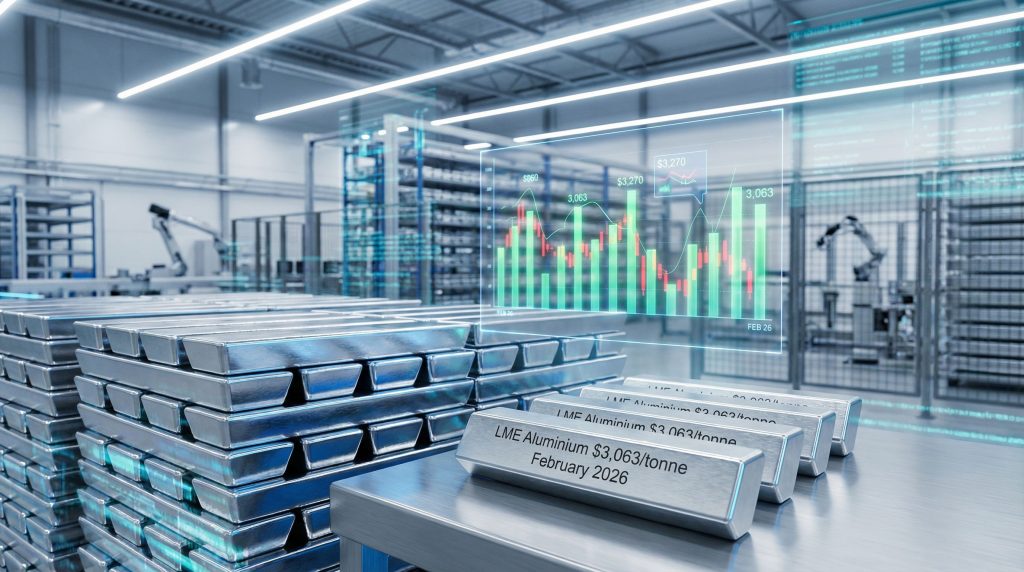
LME aluminium prices underwent a notable correction during the February 10, 2026 trading session, with cash offer prices declining 0.66 percent to USD 3,063 per tonne from the previous day's USD 3,083.5 per tonne level. This downward movement represented part of a broader reassessment of base metal valuations following elevated price levels earlier in the year.
The cash bid price similarly fell to USD 3,062.5 per tonne, marking a 0.66 percent decrease from USD 3,083 per tonne recorded on February 9. These movements occurred alongside corresponding declines in forward contract pricing, suggesting systematic rather than isolated price pressure across the aluminium complex.
Furthermore, the tariffs impact on markets has created additional uncertainty for industrial metals pricing. However, the specific US steel tariffs analysis suggests differentiated policy approaches across base metals sectors.
From Three-Year Highs to Reality Check: The $200+ Price Swing
The February price action represented a significant retreat from elevated levels, with market participants reassessing fundamental value propositions that had driven earlier gains. The correction highlighted the sensitivity of industrial metals to changing expectations around both supply constraints and demand growth projections.
Technical analysts noted that the USD 3,063 per tonne level represented a critical juncture for near-term price direction, with inventory data providing additional context for market sentiment shifts. The synchronisation of price declines across cash and forward contracts indicated broad-based repositioning rather than isolated profit-taking activity.
When big ASX news breaks, our subscribers know first
How Do Global Supply Chain Dynamics Drive Aluminium Price Movements?
Supply chain fundamentals play a crucial role in aluminium price formation, with warehouse inventory levels serving as real-time indicators of supply-demand balance. The London Metal Exchange warehouse system provides transparency into global stock movements, offering market participants critical data for position assessment and risk management decisions.
Inventory Levels as Market Sentiment Indicators
LME warehouse data revealed systematic inventory declines during early February 2026, with opening stock falling consistently across multiple trading sessions. This pattern suggested either increased physical demand from end-users or strategic destocking by warehouse operators and commercial participants.
LME Aluminium Inventory Trends (February 2026)
| Date | Opening Stock (tonnes) | Live Warrants (tonnes) | Cancelled Warrants (tonnes) | Daily Change (%) |
|---|---|---|---|---|
| Feb 5 | 492,975 | 445,650 | 47,325 | – |
| Feb 6 | 490,975 | 442,650 | 48,325 | -0.41% |
| Feb 9 | 488,975 | 440,650 | 48,325 | -0.41% |
| Feb 10 | 486,975 | 440,650 | 46,325 | -0.41% |
The cumulative 6,000-tonne decline in opening stock over this five-day period represented steady outflows from the LME system, while the stability of live warrants at 440,650 tonnes suggested maintained availability for immediate delivery despite overall stock reductions.
The Role of Warehouse Stock Fluctuations in Price Discovery
Cancelled warrants experienced more volatile movements, declining 4.14 percent between February 9 and February 10 from 48,325 tonnes to 46,325 tonnes. This category represents metal held in LME warehouses but not immediately available for delivery, often indicating commercial inventory management or logistical processing.
The distinction between live and cancelled warrants provides insight into market structure dynamics. When cancelled warrants decline while live warrants remain stable, it typically signals either commercial users taking delivery of previously held stock or warehouse operational adjustments rather than fundamental supply tightening.
Market participants closely monitor the 480,000-tonne threshold in total LME inventory as a psychological support level. The February 10 reading of 486,975 tonnes positioned the market just above this closely watched benchmark, contributing to heightened sensitivity around further inventory movements.
Why Are Speculative Positions Unwinding in Base Metals Markets?
The aluminium market's recent volatility reflects broader recalibration across industrial metals, with speculative capital reassessing positioning based on evolving macroeconomic conditions and sector-specific demand projections. This unwinding process involves multiple participant categories, from commodity trading advisors to institutional investors with diversified natural resource exposure.
Dollar Debasement Concerns vs. Reality-Based Valuations
Earlier positioning in base metals reflected expectations of continued monetary accommodation and potential currency debasement effects on commodity valuations. However, evolving central bank communication and economic data releases prompted reassessment of these themes throughout early 2026.
The USD 3,063 per tonne price level represented a recalibration point where fundamental supply-demand analysis began weighing more heavily than macroeconomic positioning themes. This shift reflected maturation of market sentiment from crisis-driven monetary policy expectations toward growth-based demand projections.
The Impact of Datacenter Demand Reassessment on Industrial Metals
Initial enthusiasm around artificial intelligence infrastructure development had elevated expectations for industrial metal consumption, particularly in specialised applications requiring high-conductivity materials. However, more detailed analysis of deployment timelines and material intensity coefficients led to tempered near-term demand projections.
In addition, mining industry trends suggest that technological advancement in extraction and processing may affect supply capacity. Furthermore, data‐driven operations are reshaping production efficiency across the sector.
"The aluminium market's recent pullback from elevated levels reflects broader recalibration of speculative positions across base metals, as traders reassess fundamental demand drivers beyond initial AI infrastructure euphoria."
Datacenter construction timelines proved longer than initially anticipated, with permitting, power grid connections, and specialised equipment procurement creating extended lead times. This reality check contributed to position unwinding among participants who had accumulated exposure based on accelerated deployment scenarios.
What Economic Factors Influence Aluminium Forward Contract Pricing?
Forward contract pricing in aluminium markets reflects complex interactions between storage costs, financing rates, supply expectations, and demand seasonality. The structure of the forward curve provides valuable insight into market expectations and participant positioning across different time horizons.
Contango vs. Backwardation Signals in Current Market Structure
February 2026 forward pricing revealed a near-flat to slightly backwardated structure, with December contracts trading at minimal premiums to spot prices. The December 27 bid price of USD 3,067 per tonne represented only a USD 4.50 premium to the February 10 cash bid of USD 3,062.5 per tonne.
This compressed forward curve structure suggested balanced supply-demand expectations throughout 2026, with limited premium for future delivery reflecting adequate availability projections. The 0.20 percent decline in December bid pricing to USD 3,067 from USD 3,073 per tonne indicated synchronised selling pressure across the curve rather than isolated near-term weakness.
Asian Reference Price Dynamics and Regional Premium Variations
The LME aluminium 3-month Asian Reference Price stood at USD 3,093 per tonne on February 10, providing insight into regional supply-demand dynamics and logistics premiums. This pricing mechanism reflects physical delivery costs and regional market conditions affecting Asian aluminium consumers.
Regional premiums in Asian markets fluctuate based on factors including:
- Shanghai Futures Exchange inventory levels and delivery logistics
- Regional smelting capacity utilisation rates
- Import duty structures and trade policy developments
- Local currency exchange rate movements affecting purchase power
The alignment between Asian Reference Pricing and LME 3-month futures at USD 3,093 per tonne suggested balanced regional conditions without significant supply constraints or excess demand pressures affecting Asian physical markets.
How Do Production Capacity Constraints Shape Long-Term Price Expectations?
Global aluminium production capacity faces ongoing constraints related to energy availability, environmental regulations, and capital allocation priorities among major producers. These structural factors influence long-term price expectations and investment decision-making across the aluminium value chain.
Global Smelting Capacity Utilisation Rates and Bottlenecks
Primary aluminium smelting requires continuous high-temperature electrolytic processes consuming substantial electrical power, typically accounting for 30-40 percent of total production costs. Capacity constraints emerge when energy supply becomes limited or prohibitively expensive, forcing production curtailments at marginal facilities.
Recent capacity additions have concentrated in regions with abundant renewable energy resources or favourable industrial electricity pricing structures. However, permitting delays and environmental impact assessments create extended lead times between capacity announcements and actual production capability.
Key production bottlenecks include:
- Limited availability of skilled technical personnel for smelting operations
- Environmental permitting requirements in developed markets
- Grid infrastructure capacity in regions with new smelting projects
- Access to reliable alumina feedstock from qualified suppliers
Energy Cost Pressures on Primary Aluminium Production Economics
Energy cost inflation directly impacts aluminium production economics, with electricity typically representing the largest variable cost component. Producers must continuously evaluate facility-level profitability based on prevailing power prices and forward contract opportunities.
European smelting capacity faces particular pressure from elevated electricity costs, while operations in regions with hydroelectric or natural gas-based power generation maintain more favourable cost structures. This geographic disparity influences global supply patterns and regional price premiums.
Consequently, the sustainability transformation in mining operations is becoming increasingly critical for maintaining competitive cost structures.
What Role Does China Play in Global Aluminium Price Formation?
China's position as both the largest global aluminium producer and consumer creates significant influence over international price formation mechanisms. Chinese policy decisions, production capacity changes, and demand patterns directly impact global market balance and price discovery processes.
Export Policy Changes and Domestic Consumption Patterns
Chinese aluminium export policies significantly influence global supply availability, with quota systems and tax structures affecting international market access. Domestic consumption growth rates determine how much Chinese production capacity serves internal versus export markets.
Industrial policy priorities emphasising high-value manufacturing development affect aluminium intensity coefficients across Chinese economic sectors. Transportation electrification, renewable energy infrastructure, and construction activity levels all influence domestic aluminium consumption patterns.
Environmental Regulations Impact on Chinese Production Capacity
Environmental compliance requirements increasingly constrain Chinese aluminium production capacity, with emissions standards and energy efficiency mandates affecting operational economics. Winter heating season production limitations and regional air quality targets create seasonal supply variations.
Carbon intensity reduction goals influence smelting facility investment decisions, with older, less efficient capacity facing potential closure while new facilities incorporate advanced environmental technologies. These transitions create temporary supply disruptions affecting global price formation.
The next major ASX story will hit our subscribers first
Are Current Aluminium Prices Sustainable in 2026's Economic Environment?
Aluminium price sustainability depends on complex interactions between macroeconomic conditions, industrial demand growth, and supply-side capacity utilisation rates. Current pricing levels require evaluation against fundamental cost structures and demand elasticity across major end-use sectors.
Demand Elasticity Analysis Across Key End-Use Sectors
The LME aluminium price drop affects different sectors with varying degrees of sensitivity. Aluminium demand elasticity varies significantly across end-use applications, with transportation and packaging sectors showing different price sensitivity characteristics than construction and electrical applications.
Key End-Use Sector Demand Elasticity:
- Aerospace Applications: Low elasticity due to material specifications and safety requirements
- Automotive Manufacturing: Moderate elasticity with substitution possibilities for steel in specific applications
- Construction Extrusions: Higher elasticity particularly in residential applications with material alternatives
- Packaging Applications: Moderate elasticity influenced by recycling economics and consumer preferences
Infrastructure Spending vs. Manufacturing Demand Balance
Government infrastructure spending programmes influence aluminium demand through transportation projects, power grid modernisation, and renewable energy installations. These demand sources typically show lower price elasticity than private sector manufacturing applications.
2026 Aluminium Price Forecasting Scenarios
| Scenario | Price Range (USD/tonne) | Key Assumptions |
|---|---|---|
| Supply Deficit | 2,900-3,200 | Energy constraints limit production capacity |
| Balanced Market | 2,700-3,000 | Normal capacity utilisation with steady demand |
| Surplus Conditions | 2,400-2,700 | New capacity additions exceed demand growth |
| Current Trading | 3,063 | February 10, 2026 spot price level |
Manufacturing demand recovery patterns influence pricing sustainability, with automotive production schedules and consumer durables manufacturing affecting consumption patterns. Supply chain restocking cycles create additional demand variability affecting price stability.
How Should Investors Interpret Short-Term Aluminium Market Volatility?
Investment decision-making in aluminium markets requires distinguishing between temporary price volatility and fundamental value shifts. Market participants must evaluate multiple timeframes and risk factors when assessing position sizing and portfolio allocation decisions.
Distinguishing Between Technical Corrections and Fundamental Shifts
The February 2026 LME aluminium price drop represented technical correction rather than fundamental deterioration, with inventory data supporting continued underlying demand. Trading volume patterns and participant positioning changes provided additional context for volatility assessment.
Technical indicators suggesting temporary correction included:
- Synchronised declines across forward contracts maintaining curve structure
- Stable live warrant levels despite overall inventory reductions
- Absence of significant negative news affecting demand projections
- Regional premium stability indicating balanced physical market conditions
Risk Management Strategies for Commodity Exposure
Effective risk management in aluminium markets involves diversification across time horizons, contract types, and exposure mechanisms. Direct futures positioning carries different risk characteristics than equity exposure through mining company shares or industrial users.
Portfolio Risk Management Considerations:
- Currency hedging for international aluminium exposure
- Seasonal demand patterns affecting optimal entry and exit timing
- Correlation analysis with broader commodity indices and equity markets
- Position sizing relative to volatility expectations and capital allocation limits
What Are the Broader Implications for Industrial Metal Markets?
Aluminium price movements often correlate with broader industrial metal trends, reflecting shared demand drivers and macroeconomic influences. Understanding these relationships helps assess whether aluminium-specific factors or systemic forces drive price changes.
Cross-Commodity Correlation Analysis and Portfolio Effects
Industrial metals exhibit varying correlation coefficients depending on shared end-use applications and supply chain relationships. Copper and aluminium show moderate correlation through electrical applications, while steel relationships depend on construction sector demand patterns.
Key Market Signals to Monitor:
- Inventory trend persistence beyond established threshold levels
- Forward curve shape changes indicating supply-demand balance shifts
- Regional premium convergence or divergence patterns across major markets
- Energy cost inflation impact on production economics and facility utilisation
- Policy announcements from major producing nations affecting capacity planning
Macroeconomic Policy Transmission Through Commodity Channels
Monetary policy decisions influence commodity prices through multiple transmission mechanisms including currency effects, real interest rate changes, and inflation expectations. Understanding these relationships helps anticipate policy-driven price movements.
Central bank communication regarding inflation targets and growth expectations affects commodity investor positioning and speculative demand. Furthermore, detailed aluminium pricing data provides crucial context for understanding market fundamentals and price formation mechanisms.
Disclaimer: This analysis is for informational purposes only and does not constitute investment advice. Commodity markets involve substantial risk, and past performance does not guarantee future results. Readers should conduct their own research and consult qualified financial advisors before making investment decisions.
Looking to Capitalise on Industrial Metals Market Volatility?
Discovery Alert's proprietary Discovery IQ model delivers instant notifications on significant ASX mineral discoveries, helping investors identify actionable opportunities across base metals and other commodities before broader market recognition. With aluminium and other industrial metals showing continued volatility, subscribers gain rapid insights into emerging mining opportunities that could benefit from shifting market dynamics, ensuring informed positioning ahead of major price movements.