
August 6, 2026
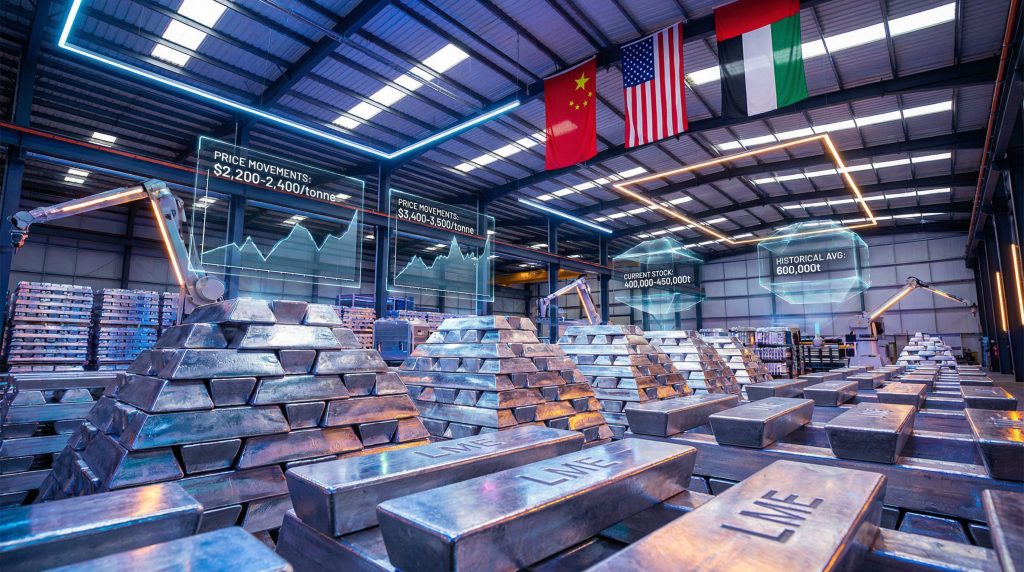
Global metal exchanges operate as complex ecosystems where multiple forces converge to drive pricing volatility. Traditional economic theory suggests that commodity prices reflect fundamental supply and demand equilibrium, yet the reality of modern aluminium markets reveals a far more intricate web of interconnected variables. Financial market dynamics, inventory psychology, and regional trade patterns create feedback loops that amplify price movements beyond what basic fundamentals might suggest. Understanding these mechanisms becomes essential for market participants navigating an environment where the rise and fall in LME aluminium prices can exceed 4% in either direction during single-day trading sessions.
Understanding LME Aluminium Market Fundamentals
The London Metal Exchange operates through sophisticated price discovery mechanisms that extend far beyond simple auction processes. Cash and futures contracts serve distinct market functions, with cash prices reflecting immediate delivery obligations whilst futures contracts enable risk management across extended timeframes. Recent market data demonstrates the interconnected nature of these instruments, with cash bid prices advancing from USD 3,198 per tonne to USD 3,328.5 per tonne in a single session, representing a substantial 4.08% daily increase. Simultaneously, offer prices climbed from USD 3,200 to USD 3,329 per tonne, marking a 4.03% day-on-day movement that illustrates the synchronised nature of bid-ask spreads during volatile periods.
Three-month contract performance provides insights into market expectations and forward-looking sentiment. The three-month bid price escalated from USD 3,154.5 to USD 3,287 per tonne, whilst offer prices rose from USD 3,155 to USD 3,287.5 per tonne, both recording gains of 4.2%. This parallel movement between spot and forward contracts suggests consistent price discovery across different delivery timeframes, indicating that market participants view current pricing pressures as having sustained rather than temporary characteristics.
The Asian Reference Price methodology represents a critical component of regional market integration, though its calculation can diverge from underlying cash market movements. On March 20, the Asian Reference Price stood at USD 3,215 per tonne, declining 1.14% from the previous day's USD 3,252 level, even as cash prices surged. This divergence highlights the complexity of regional pricing mechanisms and their relationship to global benchmark establishment.
Key Market Metrics Comparison:
| Contract Type | March 19 Price | March 20 Price | Daily Change |
|---|---|---|---|
| Cash Bid | $3,198/t | $3,328.5/t | +4.08% |
| Cash Offer | $3,200/t | $3,329/t | +4.03% |
| 3-Month Bid | $3,154.5/t | $3,287/t | +4.2% |
| 3-Month Offer | $3,155/t | $3,287.5/t | +4.2% |
| Asian Reference | $3,252/t | $3,215/t | -1.14% |
Inventory levels serve as crucial indicators of market tightness, with warrant activity providing sophisticated signals about supply chain positioning. Live warrants experienced dramatic expansion, increasing 71% to reach 273,050 tonnes from the previous day's 159,675 tonnes. Simultaneously, cancelled warrants contracted 74.33% to 156,625 tonnes from 273,050 tonnes. These opposing movements in warrant categories suggest active inventory repositioning by market participants, potentially indicating changing expectations about near-term supply availability or strategic stockpiling decisions.
When big ASX news breaks, our subscribers know first
How Do Supply Chain Disruptions Impact Aluminium Pricing?
Contemporary aluminium markets exhibit heightened sensitivity to inventory fluctuations, with even modest changes in stock levels triggering disproportionate price responses. LME opening stock declined 0.89% from 436,625 tonnes to 432,725 tonnes, representing a relatively small absolute change that nonetheless contributed to upward pricing pressure. This relationship between inventory levels and price sensitivity reflects the critical role of available metal in maintaining market liquidity and meeting immediate delivery obligations.
Current Inventory Status Analysis:
- Opening Stock: 432,725 tonnes (down 0.89%)
- Live Warrants: 273,050 tonnes (up 71%)
- Cancelled Warrants: 156,625 tonnes (down 74.33%)
- Total Warrant Activity: Significant redistribution patterns
The warrant system functions as a sophisticated inventory management mechanism, where live warrants represent metal readily available for delivery, whilst cancelled warrants indicate metal being withdrawn from immediate availability. The dramatic swing between these categories suggests strategic positioning by large inventory holders, potentially reflecting expectations about future supply constraints or demand acceleration.
Regional supply chain vulnerabilities create cascading effects throughout global pricing structures. Middle Eastern production facilities, representing significant portions of global capacity, face ongoing geopolitical uncertainties that contribute to supply risk premiums. In addition, Chinese post-holiday manufacturing ramp-up periods historically generate demand surges that stress available inventory levels, whilst transportation bottlenecks between major producing and consuming regions can create temporary supply-demand imbalances that amplify pricing volatility.
Supply Chain Risk Factors:
- Geopolitical tensions affecting major production regions
- Seasonal manufacturing cycles in key consuming markets
- Transportation capacity constraints during peak demand periods
- Energy supply reliability for power-intensive smelting operations
Historical analysis reveals that inventory-to-consumption ratios below certain threshold levels tend to trigger accelerated price appreciation, as market participants compete for limited available metal. Furthermore, understanding the commodities market volatility requires contextualising current stock positions within longer-term consumption patterns to assess whether current levels represent adequate or constrained supply conditions.
What Economic Indicators Predict Aluminium Pricing Movements?
Macroeconomic correlation analysis reveals complex relationships between industrial activity indicators and aluminium price movements. Construction sector demand represents approximately 25% of global aluminium consumption, making housing starts, commercial construction permits, and infrastructure spending allocation critical leading indicators for price forecasting. Automotive industry aluminium content per vehicle has increased substantially over recent decades as manufacturers pursue weight reduction for fuel efficiency improvements, creating sustained demand growth that supports price floors during economic downturns.
Primary Demand Drivers by Sector:
| Industry Sector | Global Consumption % | Price Sensitivity | Demand Elasticity |
|---|---|---|---|
| Construction | 25% | High | Moderate |
| Transportation | 23% | Medium | Low |
| Packaging | 17% | Low | High |
| Electrical | 12% | Medium | Medium |
| Machinery | 8% | High | High |
| Consumer Durables | 7% | Medium | Medium |
| Other Applications | 8% | Variable | Variable |
Currency dynamics significantly influence aluminium pricing through multiple transmission mechanisms. Dollar strength creates affordability challenges for non-USD currency users, potentially reducing demand from emerging market consumers. Simultaneously, production costs for non-USD currency producers may become more competitive during dollar appreciation periods, creating complex arbitrage opportunities that sophisticated market participants exploit through regional price differentials.
Industrial production indices across major consuming economies provide forward-looking demand signals, though lag times between economic activity changes and aluminium consumption typically extend 3-6 months. Manufacturing purchasing manager indices offer more immediate demand signals, particularly for countries with significant downstream aluminium processing industries.
Economic Indicator Relationships:
- Industrial Production Index: 3-6 month lead time for demand impact
- Construction Spending: 6-12 month correlation with consumption
- Automotive Production: 2-4 month demand translation period
- Currency Exchange Rates: Immediate price impact through purchasing power
However, US-China trade impacts demonstrate how inflation-adjusted price analysis reveals long-term secular trends that help distinguish between cyclical price movements and structural market shifts. Real interest rate changes affect commodity investment attractiveness, with negative real rates historically supporting commodity price appreciation as investors seek inflation protection vehicles.
How Do Market Participants Navigate Aluminium Price Cycles?
Producer strategy frameworks vary significantly based on operational characteristics, geographic positioning, and cost curve placement within the global industry structure. Low-cost producers typically maintain production through price downturns whilst higher-cost operators implement temporary capacity curtailments to preserve margins. Strategic inventory management becomes crucial during volatile periods, with producers balancing working capital requirements against potential price appreciation opportunities.
Producer Strategic Response Matrix:
| Price Environment | Primary Strategy | Implementation Time | Risk Management |
|---|---|---|---|
| Rising Demand Cycles | Capacity Expansion | 18-36 months | Phased Development |
| Price Compression | Cost Optimisation | 6-12 months | Energy Hedging |
| High Volatility | Inventory Management | 1-3 months | Contract Flexibility |
| Market Uncertainty | Geographic Diversification | 12-24 months | Regional Hedging |
Consumer hedging mechanisms reflect the sophisticated risk management approaches employed by major aluminium users. Automotive manufacturers typically employ forward contract strategies extending 12-18 months to provide cost certainty for vehicle pricing decisions. Packaging companies often utilise shorter-term hedging horizons due to faster inventory turnover and more immediate pricing pass-through capabilities to end customers.
Advanced Hedging Strategies:
- Forward Contracts: Fixed price certainty for specific delivery periods
- Option Strategies: Price ceiling protection whilst maintaining upside participation
- Collar Strategies: Defined price ranges through combined option positions
- Average Price Contracts: Smoothed pricing over extended periods
Alternative material evaluation becomes critical during extended price elevation periods. Steel substitution in construction applications, composite materials in automotive uses, and plastic alternatives in packaging represent competitive threats that establish effective demand ceilings for aluminium pricing. Understanding these substitution thresholds helps market participants assess sustainable price level limits.
Consequently, inventory timing optimisation requires sophisticated forecasting capabilities, with successful practitioners developing proprietary models incorporating seasonal patterns, economic indicators, and technical analysis elements. Major consumers often maintain strategic inventory buffers sized to weather typical supply disruption periods whilst avoiding excessive carrying costs during normal market conditions.
What Technical Analysis Reveals About Aluminium Price Patterns?
Support and resistance level analysis provides crucial insights into market participant psychology and historical price memory effects. Current pricing near USD 3,329 per tonne positions the market within the upper portion of established trading ranges, suggesting potential resistance in the USD 3,400-3,500 level zone. Historical price action indicates that sustained breaks above USD 3,500 per tonne typically require significant fundamental catalysts rather than purely technical momentum.
Critical Technical Levels:
- Current Price Zone: USD 3,325-3,330 per tonne
- Near-term Resistance: USD 3,400-3,450 per tonne
- Major Resistance: USD 3,500-3,550 per tonne
- Support Levels: USD 3,200-3,250 per tonne
- Major Support: USD 2,800-3,000 per tonne
Volume analysis during breakout periods provides validation signals for sustained price movements. High-volume breakouts above established resistance levels typically indicate broader market participation and higher probability of continued directional movement. Conversely, low-volume price advances often lack sustainability and result in rapid reversals to previous trading ranges.
Seasonal demand patterns create predictable price cycles that sophisticated market participants incorporate into strategic positioning decisions. First quarter post-holiday demand recovery in major consuming regions typically supports price appreciation through March and April. In addition, third quarter construction season activity in Northern Hemisphere markets historically creates sustained demand pressure during July through September periods.
Seasonal Price Tendencies:
- Q1: Post-holiday demand recovery (January-March)
- Q2: Moderate activity, inventory building (April-June)
- Q3: Construction season peak (July-September)
- Q4: Year-end inventory adjustments (October-December)
Momentum indicators specifically calibrated for commodity markets help identify potential turning points and trend continuation signals. Relative strength index readings above 70 typically indicate overbought conditions, whilst readings below 30 suggest oversold scenarios. However, during strong fundamental trends, momentum indicators can remain in extreme territories for extended periods.
Furthermore, moving average convergence-divergence patterns provide insights into underlying trend strength and potential reversal signals. Bullish crossovers during uptrends suggest continued momentum, whilst bearish divergences between price and momentum indicators often precede significant corrections.
How Do Regional Markets Influence Global Aluminium Pricing?
Regional market dynamics create complex arbitrage relationships that sophisticated traders exploit for profit whilst simultaneously contributing to global price equilibration. Chinese domestic market conditions significantly influence global pricing through export availability and internal consumption patterns. During periods of strong domestic Chinese demand, reduced export availability creates tightness in international markets, supporting higher global prices.
Regional Market Characteristics:
| Region | Production Share | Consumption Pattern | Price Relationship |
|---|---|---|---|
| China | ~55% | Domestic Focus | Export Dependent |
| Middle East | ~20% | Export Oriented | Global Benchmark |
| North America | ~10% | Balanced | Premium to LME |
| Europe | ~8% | Import Dependent | Delivery Premium |
| Other Regions | ~7% | Variable | Regional Factors |
North American markets typically trade at premiums to LME aluminium pricing due to transportation costs and regional supply-demand imbalances. Midwest Premium calculations incorporate delivery costs, financing charges, and local market conditions to establish regional price benchmarks. European delivery premiums reflect similar transportation and handling costs whilst also incorporating regional regulatory compliance expenses.
Related materials pricing, such as alumina, provides crucial input cost signals that influence regional competitiveness. Recent alumina pricing at USD 305.23 per tonne, representing a 1.7% increase, indicates input cost pressure that affects regional smelter profitability calculations. Energy costs, typically representing 25-35% of total smelting expenses, create significant regional competitive advantages for producers with access to low-cost power sources.
Regional Cost Structure Variations:
- Energy Costs: 25-35% of total production expenses
- Alumina Input: 15-20% of production costs
- Labour and Overhead: 10-15% of expenses
- Transportation: 5-10% for export markets
- Regulatory Compliance: 2-5% varying by region
Emerging market demand growth creates new consumption centres that alter traditional trade flow patterns. Southeast Asian construction booms, African infrastructure development, and Latin American industrial expansion represent demand growth frontiers that could reshape regional pricing relationships over coming decades.
For instance, currency hedging strategies employed by regional producers create additional complexity in pricing relationships. Producers operating in non-USD currencies often implement sophisticated hedging programmes that can temporarily disconnect their local economics from global USD-denominated pricing movements.
The next major ASX story will hit our subscribers first
What Future Scenarios Could Reshape Aluminium Markets?
Electric vehicle adoption trajectories represent potentially transformative demand drivers that could fundamentally alter aluminium consumption patterns. Current electric vehicle aluminium content averages 30-40% higher than traditional internal combustion vehicles, with some luxury electric models incorporating aluminium content exceeding 500 kilograms per vehicle. Projected electric vehicle production growth could add 2-3 million tonnes of annual aluminium demand by 2030.
Technology Disruption Impact Assessment:
| Technology Trend | Timeframe | Demand Impact | Market Disruption Level |
|---|---|---|---|
| EV Adoption | 2025-2035 | +15-25% | High |
| Advanced Recycling | 2025-2030 | -5-10% | Medium |
| Alternative Materials | 2030-2040 | -10-15% | High |
| Manufacturing Automation | 2025-2030 | +5-8% | Low |
Recycling technology improvements could significantly alter primary metal demand growth trajectories. Advanced sorting technologies, improved melting efficiency, and enhanced alloy separation capabilities are increasing secondary aluminium recovery rates whilst reducing quality degradation through multiple recycling cycles. If recycling rates increase from current global averages of 75% to potential levels exceeding 90%, primary metal demand growth could slow substantially.
Carbon pricing implementation across major aluminium-producing regions introduces new cost structure variables that could reshape regional competitiveness. European Union Emissions Trading System expansion, potential U.S. carbon pricing mechanisms, and Chinese carbon market development create regulatory uncertainties that could advantage producers with access to renewable energy sources.
Climate Policy Scenario Analysis:
- Carbon Pricing: Potential $50-200 per tonne CO2 by 2030
- Renewable Energy Transition: 30-50% cost advantage potential
- Green Aluminium Premiums: Projected 5-15% price differential
- Regulatory Compliance: Increasing operational complexity
Alternative materials development in key application areas represents long-term structural threats to aluminium demand. Advanced carbon fibre composites in aerospace applications, high-strength steel alternatives in automotive uses, and bio-based packaging materials could capture market share during extended price elevation periods.
However, the mining industry evolution shows that geopolitical scenario planning becomes increasingly important as trade policy uncertainties and resource nationalism trends potentially reshape global supply chains. Strategic stockpiling by major consuming nations, export restrictions by producing countries, and trade agreement modifications could create new market dynamics that traditional forecasting models struggle to predict.
How Should Investors Approach Aluminium Market Exposure?
Portfolio construction strategies for aluminium exposure must balance return potential against volatility characteristics whilst considering correlation relationships with broader investment portfolios. Direct commodity exposure through futures contracts or exchange-traded products provides pure price exposure but requires active management due to contango/backwardation effects and rolling costs. Equity exposure through aluminium producer stocks offers leveraged price sensitivity but introduces company-specific operational and financial risks.
Investment Vehicle Comparison Matrix:
| Exposure Type | Return Leverage | Volatility Level | Management Requirement | Liquidity |
|---|---|---|---|---|
| Physical Metal | 1x | Moderate | Low | Limited |
| Futures Contracts | 1x | High | Active | High |
| ETF/ETN Products | 1x | Moderate | Passive | High |
| Producer Equities | 2-4x | Very High | Moderate | High |
| Streaming Companies | 1.5-2.5x | High | Moderate | Medium |
Risk management frameworks must account for aluminium's unique volatility characteristics and correlation patterns with other asset classes. Historical analysis indicates that aluminium prices exhibit moderate correlation with broader commodity indices but can experience extended periods of divergent performance based on aluminium-specific supply and demand factors.
The recent 4.08% single-day price movement demonstrates the significant volatility potential that characterises aluminium markets. Annual volatility typically ranges between 20-35%, substantially higher than many traditional asset classes but consistent with other base metals. Furthermore, portfolio allocation decisions must reflect these risk characteristics whilst considering the potential for sustained directional trends during multi-year commodity cycles.
Volatility and Risk Characteristics:
- Daily Volatility Range: 1-5% typical, 5-10% during stress periods
- Annual Price Volatility: 20-35% standard range
- Maximum Drawdown Potential: 30-50% during bear markets
- Correlation with Equities: 0.3-0.7 varying by economic cycle
- Correlation with Bonds: -0.1 to 0.2 typically low
Geographic diversification within aluminium investments helps mitigate regional regulatory and operational risks whilst providing exposure to different cost curve positions. Investors might consider exposure across low-cost Middle Eastern producers, established North American operators, and emerging market expansion projects to balance risk and return characteristics.
Consequently, the commodity prices impact demonstrates that exit strategy planning becomes crucial given the cyclical nature of commodity markets and the potential for rapid sentiment shifts. Successful aluminium investors typically establish predetermined profit-taking levels and stop-loss positions whilst maintaining flexibility to adjust strategies based on evolving fundamental conditions.
Key Market Metrics Dashboard
Understanding current market positioning relative to historical ranges provides essential context for investment and operational decisions. The following dashboard synthesises critical metrics that market participants monitor for strategic positioning guidance within their comprehensive investment strategy components:
| Metric Category | Current Level | Historical Range | Market Signal |
|---|---|---|---|
| Cash Price | $3,329/t | $2,200-3,500/t | Upper Range |
| Stock Levels | 432,725t | 300,000-800,000t | Below Average |
| Price Volatility | 4%+ daily | 1-8% range | Elevated |
| Warrant Activity | High Turnover | Variable | Active |
| Regional Premiums | Moderate | $50-200/t | Stable |
Forward-Looking Indicators:
- Contango Structure: Limited forward price discount
- Open Interest: Elevated across contract months
- Speculative Positioning: Net long bias prevalent
- Physical Premiums: Stable to slightly firm
- Inventory Trends: Gradual decline pattern
The current market environment reflects elevated price levels accompanied by declining inventory trends and increased warrant activity, suggesting market participants are positioning for continued supply tightness. However, prices near historical resistance levels indicate limited upside potential without significant fundamental catalysts.
For instance, according to recent trading economics data, global aluminium consumption patterns continue evolving as emerging economies drive demand growth whilst developed markets focus on efficiency improvements and recycling initiatives.
Investment Advisory Disclaimer: Commodity investments involve substantial risk of loss and are not suitable for all investors. Past performance does not guarantee future results. Market participants should conduct thorough due diligence and consider professional advice before making investment decisions. The rise and fall in LME aluminium prices can result in significant gains or losses that exceed initial investment amounts.
Strategic Insight: Successful navigation of aluminium price volatility requires integrated analysis of technical patterns, fundamental supply-demand dynamics, and macroeconomic trends rather than relying solely on historical price relationships or single-factor analysis approaches.
Ready to Navigate Commodity Market Volatility?
Discovery Alert's proprietary Discovery IQ model delivers real-time alerts on significant ASX mineral discoveries, instantly empowering subscribers to identify actionable opportunities ahead of the broader market. Understand why major mineral discoveries can lead to substantial returns whilst gaining access to sophisticated trading insights that complement your commodity exposure strategies.