July 9, 2026
When Geography Becomes Destiny: Aluminium's Middle East Vulnerability
Commodity markets have always been shaped by geography, but few industrial metals illustrate this principle as starkly as aluminium in 2026. The concentration of primary smelting capacity in a politically volatile corridor has transformed what was once considered a peripheral supply risk into a central pricing mechanism. Understanding why LME aluminium prices Middle East crisis dynamics have become inseparable requires looking beyond the headlines and into the structural architecture of global aluminium supply.
The broader aluminium market had already absorbed one significant supply shock when Western sanctions progressively removed Russian metal from accessible trade flows into Europe and Japan. What followed was a quiet but consequential repositioning of Gulf-region producers as the marginal suppliers filling that void. When the geopolitical fault lines in the Middle East cracked open again in mid-2026, the market discovered just how exposed it had become to a second, simultaneous disruption.
When big ASX news breaks, our subscribers know first
The Gulf's Underappreciated Role in Global Aluminium Supply
The Middle East is not commonly cited alongside powerhouses like China or Russia when analysts discuss global aluminium production, yet the region contributes approximately 9% of global primary aluminium output. This figure, modest in isolation, carries outsized market significance for a specific reason: Gulf producers are not merely volume contributors. They function as the swing suppliers to multiple import markets simultaneously.
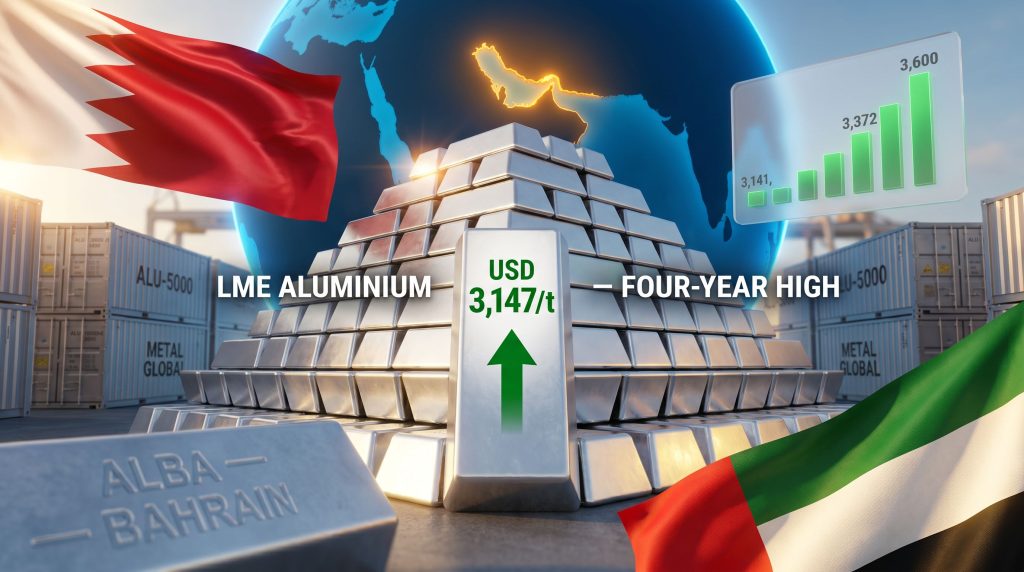
Bahrain and the UAE anchor this production base. Bahrain's Alba (Aluminium Bahrain) ranks among the largest single-site aluminium smelters anywhere in the world, while the UAE's industrial aluminium sector has grown considerably over the past two decades, underpinned by access to low-cost energy and proximity to key Asian shipping lanes. Furthermore, the top aluminium companies globally have been closely monitoring the Gulf's growing share of marginal supply.
Why the Strait of Hormuz Is Irreplaceable
The Strait of Hormuz functions as the singular maritime gateway connecting Gulf aluminium production to its primary consumer markets in Asia, Europe, and North America. Unlike crude oil, which can be partially rerouted through overland pipelines in certain scenarios, primary aluminium is a bulk physical commodity. It travels by sea, in containers and bulk carriers, and the Strait represents the only viable exit route from the Gulf production corridor.
A disruption to this chokepoint does not merely slow delivery timelines. It effectively severs an estimated 2.5 million tonnes of metal from its intended destinations. For context, global primary aluminium production runs at approximately 70 million tonnes annually, meaning a Hormuz blockade cuts off roughly 3.5% of annual global supply in a single chokepoint event, concentrated across the buyers who are already structurally short on alternative supply options.
There is an additional, less frequently discussed dimension to Hormuz disruptions: shipping insurance. Even when vessels can technically pass through contested waters, underwriters sharply increase war-risk premiums on Hormuz-routed cargo. According to analysis of aluminium supply risk, this cost is absorbed by buyers or passed through as price surcharges, adding an invisible layer of inflation to delivered aluminium costs that does not always appear in LME benchmark prices but is very real for manufacturers paying delivered-duty costs.
LME Aluminium Price Performance on July 8, 2026
Against this geopolitical backdrop, LME aluminium prices moved consistently higher across the forward curve on July 8, 2026. The following table captures the session's key price movements.
LME Aluminium Price Summary Table, July 8, 2026
| Contract | Previous Price (USD/t) | Current Price (USD/t) | Change (%) |
|---|---|---|---|
| Cash Bid | 3,118.00 | 3,140.50 | +0.72% |
| Cash Offer | 3,119.00 | 3,141.00 | +0.71% |
| 3-Month Bid | 3,126.50 | 3,145.00 | +0.59% |
| 3-Month Offer | 3,127.50 | 3,147.00 | +0.62% |
| Dec 2027 Bid | 3,065.00 | 3,072.00 | +0.23% |
| Dec 2027 Offer | 3,070.00 | 3,077.00 | +0.23% |
| Asian Reference Price | — | 3,132.00 | — |
The LME aluminium cash offer price settled at USD 3,141 per tonne, a 0.71% gain from the prior session's USD 3,119 per tonne. The cash bid rose in parallel to USD 3,140.50 per tonne, up 0.72% from USD 3,118 per tonne.
The three-month contracts mirrored this upward movement, with the bid advancing 0.59% to USD 3,145 per tonne and the offer climbing 0.62% to USD 3,147 per tonne. The LME aluminium three-month Asian Reference Price was recorded at USD 3,132 per tonne on the same date.
Structural Signal: The compression between near-term cash prices and longer-dated December 2027 contracts is analytically significant. When the forward curve flattens or moves into backwardation during a supply shock, it signals that traders are pricing in sustained tightness rather than a temporary spike. This curve structure tends to attract physical buyers eager to lock in forward supply, further reinforcing upward price momentum.
Physical Supply Damage: What the Conflict Has Actually Disrupted
Beyond shipping disruption, the current episode has caused direct physical damage to Gulf smelting infrastructure. Iranian military operations reportedly targeted aluminium production facilities in both Bahrain and the UAE, with the consequences being both immediate and structurally complex.
Alba, Bahrain's flagship smelter, reportedly reduced output by approximately 19% as a direct consequence of conflict-related damage and operational disruption. This matters enormously because smelter curtailments are not reversible at the flick of a switch. In addition, disruptions to the aluminum and alumina markets have compounded upstream feedstock pressures across the entire supply chain.
Why Smelter Restarts Are Technically Difficult
A fact poorly understood outside the industry is that primary aluminium smelters use a continuous electrolytic process. The Hall-Heroult process, which reduces alumina to aluminium metal through electrolysis, requires the carbon cathode pot lining to remain at operating temperature continuously. When a potline is shut down in an uncontrolled manner due to a conflict event, the molten metal and electrolyte solidify inside the pot shells. Restarting these cells requires:
- Physical inspection and often full relining of damaged pot shells.
- Sourcing replacement carbon cathode materials, which have their own supply lead times.
- A staged preheating and restart sequence lasting weeks to months per potline.
- Full workforce reinstatement and safety certification processes.
This is why analysts consistently estimate 12 to 18 months for meaningful production recovery following a major smelter disruption, rather than weeks. The technical barriers to rapid restart mean that even a ceasefire tomorrow would not immediately restore lost supply volumes.
Key Supply Disruption Factors at a Glance
| Disruption Factor | Estimated Market Impact |
|---|---|
| Alba (Bahrain) output reduction | ~19% production cut at one of the world's largest smelters |
| UAE smelting facility damage | Partial capacity loss across regional production base |
| Strait of Hormuz blockade | ~2.5 million tonnes of metal blocked from Asian markets |
| Russian supply previously sanctioned | Removes key alternative supply buffer for EU and Japanese buyers |
| War-risk shipping insurance surcharges | Elevates delivered cost even for metal reaching buyers successfully |
Analyst Price Forecasts: How High Can LME Aluminium Go?
The broader context extends beyond the single session on July 8. In recent trading, LME three-month aluminium has already reached USD 3,372 per tonne, representing a four-year high for the contract. Consequently, institutional forecasters have moved quickly to revise price scenarios upward, reflecting the severity of the ongoing disruption.
Analyst Forecast Scenario Framework
| Scenario | Price Target | Trigger Condition |
|---|---|---|
| Base Case (current market) | USD 3,141–3,372/t | Ongoing Hormuz disruption with partial production losses |
| Goldman Sachs Bull Case | USD 3,600/t | Full one-month production loss across the Middle East region |
| Citi / Argus Media Extreme Bull | Above USD 4,000/t | Extended supply disruption lasting 6–12 months or longer |
| Bearish Reversal Threshold | Below USD 2,700/t | Full ceasefire, Strait reopening, and confirmed smelter restarts |
Goldman Sachs has modelled that a full one-month production loss from the Middle East region alone justifies a fair-value price of USD 3,600 per tonne. Citi and Argus Media's price forecasts have each outlined scenarios in which prices breach USD 4,000 per tonne, which would constitute an all-time record high for LME aluminium. The LME alumina Platts price stands at USD 330.20 per tonne, reflecting upstream feedstock tightness that adds further cost pressure to smelters globally, regardless of geography.
Important Disclaimer: Price forecasts from institutional analysts involve significant assumptions and uncertainty. Geopolitical situations are inherently unpredictable, and actual price outcomes may differ materially from any modelled scenario. This article does not constitute financial advice, and investors should conduct independent research before making any decisions based on commodity price forecasts.
Regional Premiums: The Hidden Cost Multiplier
One dimension of the crisis that receives less attention than LME headline prices is the impact on regional delivery premiums. These premiums represent the additional cost buyers pay above the LME benchmark to receive physical metal at a specific location, and they respond to supply disruption with an intensity that often exceeds LME price movements themselves.
European aluminium premiums are forecast to reach USD 400 to 420 per tonne as the region faces a dual squeeze: the prior removal of Russian metal from accessible supply chains combined with the current disruption of Gulf-region marginal supply. For European automotive manufacturers, packaging producers, and construction material suppliers, this means the true all-in cost of aluminium is substantially higher than LME prices suggest.
Real-World Cost Calculation: At a USD 3,372/t LME price combined with a USD 420/t European delivery premium, European manufacturers face an effective aluminium cost of approximately USD 3,792 per tonne. This level has historically been associated with demand-side substitution pressure, where buyers begin evaluating alternative materials or accelerating scrap and secondary aluminium usage to reduce exposure to primary metal costs.
A lesser-known characteristic of regional premiums is their stickiness. Unlike LME prices, which can correct sharply once a geopolitical catalyst resolves, physical delivery premiums tend to remain elevated for extended periods after the underlying supply shock subsides. This occurs because traders who locked in premium-priced physical supply contracts during the crisis hold pricing power over spot buyers well into the recovery period.
The next major ASX story will hit our subscribers first
LME Inventory Data: Reading the Physical Tightness Signals
Warehouse stock movements on the LME provide a secondary confirmation of the physical tightness narrative playing out across the market.
LME Aluminium Inventory Summary, July 7–8, 2026
| Inventory Metric | July 7, 2026 | July 8, 2026 | Change |
|---|---|---|---|
| Opening Stocks (tonnes) | 295,550 | 292,425 | -1.06% |
| Live Warrants (tonnes) | 246,600 | 246,400 | -0.08% |
| Cancelled Warrants (tonnes) | 45,825 | 44,425 | -3.06% |
Total LME aluminium opening stocks fell 1.06% to 292,425 tonnes on July 8, continuing a gradual depletion trend. Live warrants, representing metal immediately available for delivery, edged down to 246,400 tonnes. Cancelled warrants declined 3.06% to 44,425 tonnes, suggesting slightly reduced physical withdrawal orders from warehouses on that specific session.
While the cancelled warrant decline might superficially appear to signal easing demand, the more meaningful signal is the continued erosion of total exchange-held inventory. LME aluminium stocks at sub-300,000 tonne levels represent a structurally thin physical buffer, and any acceleration of withdrawals driven by downstream buyers securing supply ahead of further disruption could rapidly push exchange stocks to critically low levels.
The Demand Destruction Threshold and Market Psychology
There is a price level at which aluminium's industrial consumers begin to meaningfully change behaviour, often referred to informally as the demand destruction threshold. At effective delivered costs approaching USD 3,800 per tonne in Europe, several historically observable patterns tend to emerge:
- Automotive manufacturers accelerate substitution of aluminium components with high-strength steel in non-structural applications.
- Packaging producers begin blending higher proportions of recycled content to reduce primary metal dependency.
- Construction project developers pause specification of aluminium-intensive facade systems pending price clarity.
- Downstream traders build inventory aggressively in anticipation of even higher prices, paradoxically tightening near-term spot availability further.
This last point reflects a market psychology dynamic that amplifies supply shocks. When buyers believe the price trajectory is upward, restocking behaviour removes additional metal from the market, creating a self-reinforcing tightening cycle that can push prices beyond what fundamental supply-demand models would suggest as justified.
Supply Chain Diversification: The Long-Term Strategic Response
The current crisis is accelerating a strategic conversation that had already begun in the wake of Russian sanctions: the need for geographic diversification of aluminium supply chains. Producers in Canada, Norway, Australia, and India are increasingly positioned as long-term beneficiaries of buyer demand for non-geopolitically-exposed supply sources.
Canada's position in this realignment is particularly notable. Canadian aluminium exports have already demonstrated significant growth in 2026, with a trade surplus reaching multi-year highs as North American and European buyers redirect procurement strategies. However, the pressures created by US aluminium tariffs continue to complicate trade flow adjustments for North American buyers seeking stable supply alternatives.
Norwegian hydropower-based smelters offer a stable, low-carbon supply source for European buyers looking to reduce both geopolitical and environmental risk simultaneously. For instance, Rio Tinto's Gladstone aluminium operations in Australia have also attracted renewed attention from Asian buyers seeking to diversify away from Gulf-region exposure. For investors and industry participants, the strategic takeaway from the current episode extends well beyond near-term price movements.
Short-Term Versus Long-Term Price Outlook
Near-Term (0–6 Months)
- Physical spot markets remain tight, with traders competing aggressively for available units.
- The combination of production losses, Hormuz blockade, and depleted LME stocks creates compounding tightness.
- Any further escalation in US-Iran tensions accelerates price discovery toward the USD 3,600–4,000/t range.
- A diplomatic resolution remains the primary downside risk to current price levels.
Medium to Long-Term (12–18 Months and Beyond)
- Smelter restart timelines and infrastructure repair create an extended recovery horizon regardless of conflict resolution timing.
- Regional premium compression will be gradual rather than sudden, given the structural nature of supply diversification constraints.
- Buyers across automotive, packaging, and construction sectors will accelerate supply chain audits and diversification strategies.
- The crisis reinforces the strategic case for aluminium stockpiling policy in energy-intensive manufacturing economies.
- Broader China metals demand patterns will remain a critical variable in determining how quickly global aluminium markets rebalance over the medium term.
Analyst Consensus Warning: A decisive shift to bearish market conditions for LME aluminium would most likely require a confirmed monthly close below USD 2,700 per tonne, a level that appears structurally distant given the current layering of supply disruptions, depleted inventory buffers, and institutional forecast consensus pointing firmly upward.
Frequently Asked Questions: LME Aluminium Prices and the Middle East Crisis
What caused LME aluminium prices to rise in July 2026?
Renewed military conflict in the Middle East, involving heightened tensions between the US and Iran, disrupted physical aluminium production in Bahrain and the UAE while simultaneously blocking shipping through the Strait of Hormuz. These concurrent events removed approximately 2.5 million tonnes of metal from accessible markets and damaged smelting capacity at major Gulf facilities.
How high could LME aluminium prices go?
Institutional forecasters have modelled scenarios ranging from USD 3,600 per tonne under a full one-month production loss to above USD 4,000 per tonne in an extended disruption scenario. The latter would represent an all-time high for the metal. These remain scenario projections and are subject to considerable uncertainty.
What share of global aluminium production comes from the Middle East?
The Middle East accounts for approximately 9% of global primary aluminium production, a share that has grown in strategic importance following the removal of Russian metal from accessible Western supply chains through sanctions.
Why are smelter restarts so slow?
The Hall-Heroult electrolytic smelting process is continuous by design. Unplanned shutdowns cause molten metal and electrolyte to solidify inside pot shells, requiring physical relining, replacement materials procurement, and staged restart sequences that typically take weeks to months per potline. This is why full production recovery following conflict-related damage takes 12 to 18 months.
What would trigger a sharp price reversal?
A full ceasefire, confirmed reopening of the Strait of Hormuz, and verifiable evidence of rapid smelter restarts in the Gulf would be the prerequisites. Technically, a monthly LME close below USD 2,700 per tonne is widely referenced as the structural threshold for a sustained bearish reversal.
Readers seeking ongoing LME aluminium price data, market analysis, and global supply chain coverage can explore further industry reporting at AL Circle, which provides continuous pricing updates and in-depth aluminium ecosystem coverage.
Want to Position Ahead of the Next Major Commodity Discovery?
Discovery Alert's proprietary Discovery IQ model delivers real-time alerts on significant ASX mineral discoveries — turning complex market data into actionable insights across aluminium, base metals, and beyond, so subscribers can act before the broader market catches on. Explore historic discoveries and their exceptional returns, then begin a 14-day free trial to secure a genuine market-leading edge.