July 9, 2026
When the World's Most Critical Waterway Becomes a Weapon
Energy markets have spent decades operating on a comforting assumption: that the Strait of Hormuz, despite its recurring tensions, would ultimately remain open. Tankers would pass. Oil would flow. Diplomatic pressure, mutual economic interest, or U.S. naval presence would ensure that any disruption remained brief, manageable, and priceable as a short-term spike rather than a structural condition.
That assumption is now being systematically dismantled. The Trump Iran Strait of Hormuz oil instability that has defined the post-June 17 environment is not simply another chapter in a long history of Persian Gulf brinkmanship. It represents a qualitative shift in the risk architecture underpinning global energy supply, and markets have not yet priced it accordingly.
When big ASX news breaks, our subscribers know first
Why the Strait of Hormuz Remains Irreplaceable
The Geography That Makes This Passage So Dangerous
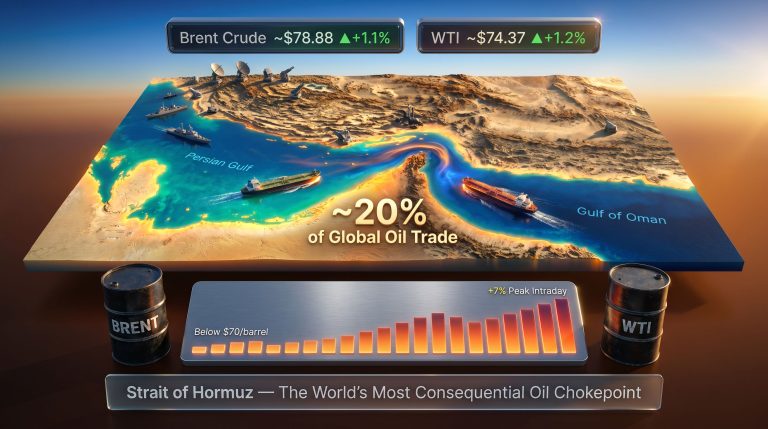
The strait connecting the Persian Gulf to the Gulf of Oman spans roughly 33 kilometres at its narrowest navigable point. That physical constraint alone would make it strategically sensitive. But the volume flowing through it transforms sensitivity into systemic risk.
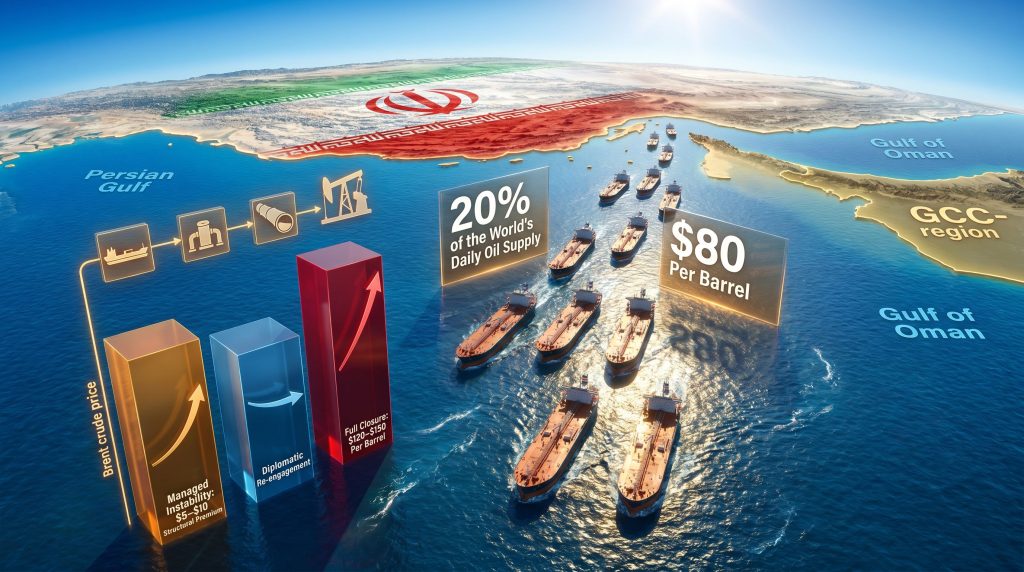
Before the current cycle of hostilities intensified, approximately one-fifth of the world's total daily oil supply transited this single waterway. No comparable volume of hydrocarbons moves through any other maritime chokepoint on earth. The Suez Canal, the Malacca Strait, and the Bab el-Mandeb are all significant. None approaches Hormuz in terms of raw throughput consequence, as the Brookings Institution has noted in its analysis of why Iranian disruption of this passage matters so profoundly.
Critically, the bypass options for most Gulf producers range from limited to nonexistent:
- Saudi Arabia can route some volumes through the East-West Pipeline to Yanbu on the Red Sea, but capacity constraints cap this significantly below total export potential
- The UAE operates the Abu Dhabi Crude Oil Pipeline (ADCOP), which can route Emirati barrels around the strait to Fujairah, providing a partial alternative
- Kuwait and Qatar have effectively no large-scale alternative export infrastructure, meaning their entire hydrocarbon revenue base is structurally exposed to strait conditions
This asymmetry of vulnerability is one of the least-discussed dimensions of the current crisis. When analysts talk about Gulf oil risk, the conversation typically centres on price. The more consequential question is which producers face existential export constraints if Hormuz becomes genuinely unreliable. Understanding the geopolitical oil price factors at play here is essential to assessing that risk properly.
Competing Legal Frameworks and the Root Condition of Instability
Beneath the tactical confrontations lies a deeper structural contradiction that no single diplomatic agreement can resolve. Iran has long maintained a doctrine asserting meaningful influence over navigation through the strait, drawing on its geographic position along the northern shore. Washington and GCC member states operate under an entirely different legal framework: freedom of navigation as a non-negotiable principle of customary international maritime law.
These positions are not merely different. They are mutually exclusive. Every tanker that transits without Iranian consent, and every Iranian intercept or harassment operation, is simultaneously an assertion of incompatible sovereign claims. The June 17 memorandum of understanding between Tehran and Washington attempted to paper over this contradiction with a 30-day reopening framework and a 14-point draft agreement. The attempt, as subsequent events have demonstrated, was insufficient to resolve the underlying tension.
The Escalation Sequence That Unravelled the MOU
The collapse of the ceasefire framework followed a pattern that will be familiar to students of managed deterrence breakdown. Each action was calibrated not simply as retaliation but as strategic communication, designed to signal resolve to the opposing party and to global energy markets simultaneously.
| Event | Actor | Strategic Signal |
|---|---|---|
| Strikes on Gulf state fuel tankers in the strait | Iran | Assert navigational authority; demonstrate deterrence capacity |
| Airstrikes on dozens of Iranian targets | United States | Enforce MOU compliance; demonstrate military reach |
| Attacks on U.S. military facilities in Bahrain and Kuwait | Iran | Impose costs; signal willingness to escalate |
| Declaration that the MOU is effectively terminated | U.S. President Trump | Domestic political management; maximum pressure signalling |
What distinguishes this escalation cycle from previous Hormuz confrontations is not its intensity but its context. Both parties are now operating with severely degraded institutional trust, weakened diplomatic architecture, and domestic political constraints that limit their flexibility. Iran's military infrastructure has been significantly damaged through sustained bombardment.
The U.S., furthermore, faces the political sensitivity of rising energy prices ahead of November midterm elections. Neither side possesses the combination of capability and political freedom required to end the confrontation decisively. The oil market trade war impact compounds these pressures, adding further complexity to an already volatile environment.
The result is what analysts increasingly describe as a managed confrontation equilibrium: not full war, not genuine peace, but a persistent state of irregular hostility that is arguably more corrosive to global energy markets than either extreme. Full war would trigger a defined crisis response. Genuine peace would restore predictability. Chronic managed instability denies markets both resolution and certainty.
The era of treating Hormuz incidents as temporary deviations from a stable baseline has ended. The baseline itself has changed. Pricing models, procurement frameworks, and infrastructure strategies that do not reflect this structural shift are built on an outdated foundation.
How Hormuz Instability Translates Into Crude Oil Price Risk
The Geopolitical Risk Premium Problem
The immediate market response to the latest escalation was a crude oil price surge of approximately 6% in a single trading session, pushing Brent to close to $80 per barrel, its highest level in two weeks. The reaction was significant. The question energy analysts are increasingly asking is whether it was sufficient.
A geopolitical risk premium is the additional price margin that crude markets embed to account for the probability-weighted cost of supply disruption. The core analytical problem with current pricing is that markets continue to treat Hormuz disruption as episodic rather than systemic. Episodic risk is short-duration, incident-specific, and mean-reverting. Systemic risk persists regardless of individual incidents because it reflects a structural change in the reliability of a supply source.
The historical precedent is instructive. During the 1980s Tanker War, sustained Hormuz tension embedded a multi-dollar structural premium into Brent crude pricing that persisted for years, not days. That premium reflected the market's eventual recognition that disruption was not an outlier event but a recurring operating condition. A comparable repricing process may now be re-emerging, but the current crude oil market behaviour suggests it has not yet fully materialised.
Three Scenarios for Oil Markets: Probability and Price Impact
The range of possible outcomes from here spans a wide spectrum of price and supply consequences:
Scenario 1: Managed Instability (Base Case)
Irregular tit-for-tat incidents continue; no full-scale war; tanker traffic operates on a disrupted, stop-start basis. Under this scenario, Brent crude would likely sustain a structural premium of $5 to $10 per barrel above pre-conflict baseline levels. Asian buyers would accelerate supply diversification programmes. This scenario carries the highest probability given mutual deterrence constraints on both sides.
Scenario 2: Diplomatic Re-engagement
A revised multilateral framework, potentially facilitated by Oman acting as a mediating party, restores partial MOU functionality. This pathway would produce a near-term relief rally followed by gradual premium compression as supply predictability returns. It remains possible but requires substantial political will and concession from both Washington and Tehran, conditions that are difficult to achieve simultaneously.
Scenario 3: Full Strait Closure
A major miscalculation — such as an accidental strike on a civilian vessel or a third-party provocation that neither side can de-escalate — triggers a sustained closure. Analysis of historical supply shock scenarios suggests a complete Hormuz closure could drive Brent crude toward $120 to $150 per barrel within weeks, with material downstream effects on global inflation, industrial output, and economic growth. This scenario carries low but non-negligible probability. The critical risk pathway is miscalculation rather than deliberate all-out war.
Who Pays the Greatest Economic Cost
Gulf Producers: Revenue Shock at the Worst Moment
The financial context in which Gulf producers are navigating this renewed instability is particularly unfavourable. State finances across the GCC have been strained by the direct and indirect costs of the conflict period preceding the MOU. The attempted restart of approximately 11 million barrels per day of production that was shut in during the strait blockade phase represented a critical economic lifeline. Renewed transit uncertainty now threatens to interrupt that recovery before it can be consolidated.
For Kuwait and Qatar specifically, the situation presents an asymmetric vulnerability. With no meaningful bypass infrastructure, their entire export capacity is a direct function of strait conditions. A sustained period of irregular tanker traffic does not merely reduce revenue; it undermines the credibility of supply commitments to long-term buyers, with relationship consequences that extend well beyond the immediate conflict period. The broader oil price shock dynamics amplify these pressures considerably for producers with limited financial buffers.
The Asian Buyer Recalibration
The demand-side implications of this instability deserve particular attention, given that Asian economies historically absorbed approximately 80% of all oil and gas exports flowing from the Gulf region. That concentration creates both a structural dependency and a powerful incentive for diversification.
The procurement calculus for Asian refiners, utilities, and fuel retailers is undergoing a fundamental shift. Where price competitiveness was previously the dominant criterion for Gulf supply selection, supply reliability has now become an equally weighted variable. For many buyers, paying a delivered cost premium for non-Gulf crude is increasingly preferable to accepting delivery uncertainty from Gulf sources.
The alternative supply sources attracting the most active evaluation include:
- United States: Gulf of Mexico and Permian Basin producers, with well-established export infrastructure and strong volume growth trajectory
- Brazil: Pre-salt deepwater production from the Santos Basin, offering long-duration supply contracts with improving logistics
- West Africa: Nigerian, Angolan, and emerging producer volumes, with voyage distances shorter than U.S. supply but longer than Gulf alternatives
Each of these alternatives involves higher delivered costs due to longer voyage distances. The strategic implication is that Hormuz instability is effectively functioning as a supply cost inflation mechanism for Asian energy consumers, even in scenarios where physical disruption remains partial rather than complete.
The Supply Chain Cascade: From Terminal to Oilfield
One of the most underappreciated dimensions of Hormuz disruption is how rapidly port-level delays propagate upstream through integrated energy supply chains. The cascade mechanism operates as follows:
- Tanker loading delays at Gulf export terminals create immediate storage congestion in onshore tank farms
- Tank farm congestion generates backpressure through connecting pipeline systems
- Pipeline backpressure forces operators to reduce throughput at processing facilities and gathering stations
- Production curtailments follow at wellheads and upstream facilities, sometimes located hundreds of kilometres inland from the coast
- Curtailed upstream production reduces the volume available for the next loading cycle, amplifying the original disruption
This integrated cascade means that a disruption at the maritime interface can disable production assets with no direct connection to the strait itself. It also means that the economic cost of tanker delays is systematically larger than the cost of the delayed cargoes alone.
The Deterrence Doctrine Keeping Hormuz Volatile
Iran's strategic calculus on Hormuz reflects a doctrine with long historical roots: control over the strait is Tehran's most effective asymmetric deterrent against superior conventional military power. By demonstrating the capacity and willingness to disrupt tanker traffic, Iran ensures that the cost of military action against it is borne not only by Iran but by global energy consumers and the economies that depend on them.
This doctrine creates a self-reinforcing instability loop. The more Iran faces military threat, the more it activates Hormuz leverage as a deterrent signal. The more it activates Hormuz leverage, the more it invites countermeasures from the U.S. and Gulf states. The more it invites countermeasures, the more it perceives existential threat and intensifies Hormuz leverage. CNBC's reporting on how U.S. strikes revived Strait of Hormuz turmoil fears illustrates precisely how quickly this cycle can accelerate.
Breaking this loop requires addressing Iran's core security guarantee deficit, something no trade or nuclear framework alone can achieve. Without a durable architecture that reduces Tehran's perceived need for the Hormuz deterrent, episodes of escalation will recur with a frequency and intensity that makes genuine supply stabilisation impossible. The geopolitical crude dynamics driving this loop are deeply structural and will not resolve through short-term diplomacy alone.
The next major ASX story will hit our subscribers first
The Market Adjustment That Has Not Yet Happened
The structural shift underway in global energy risk has not yet been reflected in the pricing, procurement, and infrastructure decisions of most market participants. The following table summarises the gap between historical assumptions and the emerging operational reality:
| Risk Dimension | Pre-Conflict Assumption | Current Reality |
|---|---|---|
| Strait access | Open by default; disruptions temporary | Structurally contested; disruptions recurring |
| Geopolitical risk premium | Low; absorbed within normal price range | Elevated but not yet fully embedded in pricing |
| Buyer diversification urgency | Moderate; Gulf pricing competitive | High; reliability now co-equal with price |
| Gulf producer fiscal buffer | Intact; sovereign wealth funds available | Strained by multi-month conflict costs |
| Diplomatic framework | Functional legacy framework | Collapsed; replacement architecture absent |
The analytical implication is direct. For energy market participants, embedding a durable geopolitical risk premium into Brent pricing models is no longer a conservative adjustment but an empirically required one. For Asian energy buyers, supply diversification programmes that were previously aspirational have become operationally necessary.
For Gulf producers with bypass infrastructure options, accelerating that investment is a strategic priority. For those without such options, multilateral diplomatic engagement to stabilise the strait is not merely desirable but existentially important. The Trump Iran Strait of Hormuz oil instability has, consequently, redrawn the boundaries of what energy planners must treat as baseline operating conditions.
What the global energy system ultimately requires from the Gulf is not temporary export surges, however welcome they may be when they occur. It requires predictable, sustained, and uninterrupted supply flows from a region whose infrastructure, reserves, and production capacity remain among the most significant on earth. On current trajectory, that requirement is not being met, and the institutions capable of changing that trajectory have yet to demonstrate the coherence of purpose needed to do so.
Disclaimer: This article contains forward-looking analysis, scenario projections, and price estimates that are inherently speculative. They should not be construed as financial advice or investment recommendations. Energy markets are subject to rapid change based on geopolitical, macroeconomic, and operational developments. Readers should conduct independent research before making any investment or procurement decisions.
Want to Stay Ahead of Commodity Market Shifts Driven by Global Instability?
When geopolitical disruptions reshape energy and resource markets this rapidly, identifying actionable investment opportunities requires real-time intelligence. Discovery Alert's proprietary Discovery IQ model instantly scans ASX announcements across more than 30 commodities, alerting subscribers to significant mineral discoveries the moment they emerge — begin your 14-day free trial today, or explore how historic discoveries have generated substantial returns for investors who acted decisively.