July 20, 2026
When Feedstock Costs Rise and Metal Prices Fall: Reading the Aluminium Market's Mixed Signals
Commodity markets rarely move in a single, unified direction. The aluminium supply chain is a compelling illustration of this complexity, where the price of a refined metal and the cost of its primary input can diverge sharply within a single trading session, sending very different signals to different parts of the value chain. This kind of bifurcation demands a more nuanced analytical lens than simply tracking headline LME prices.
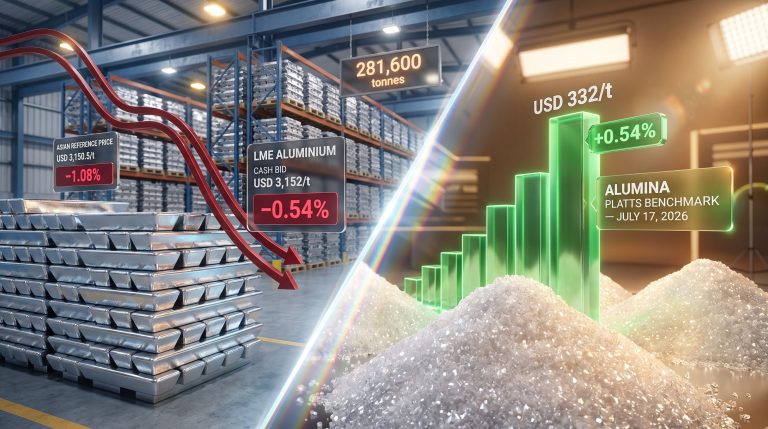
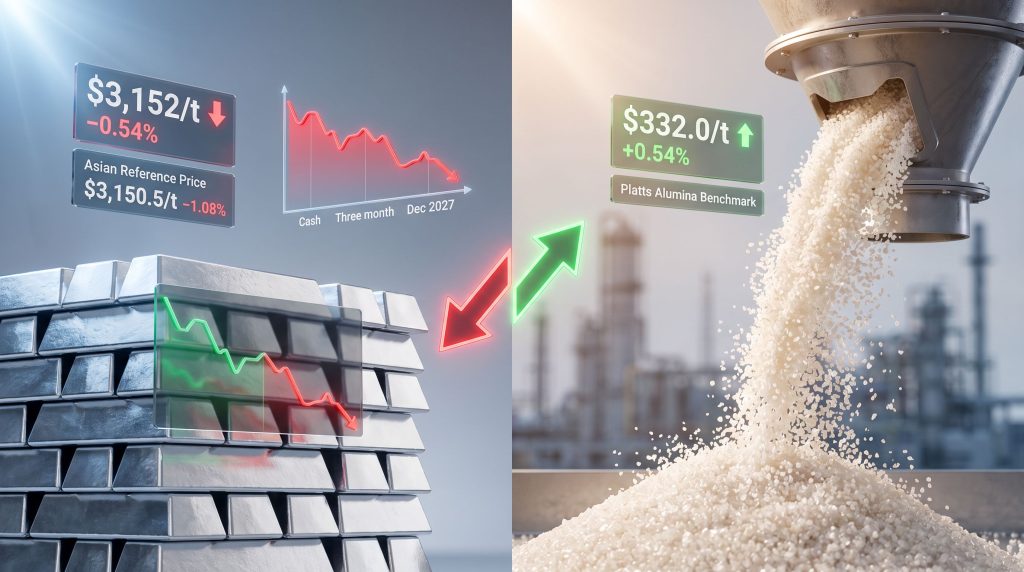
The session recorded on July 17, 2026 offered precisely this kind of split-screen moment: LME aluminium prices slip and alumina Platts price rises simultaneously, compressing margins across the smelting industry and creating a challenging operating environment for producers without vertical integration.
When big ASX news breaks, our subscribers know first
What the July 17, 2026 LME Session Revealed
Across every tenor on the London Metal Exchange, aluminium contracts closed lower on July 17. The declines were not dramatic in isolation, but their uniformity across the curve tells a more meaningful story than any single data point. For context on how aluminum and alumina markets have been behaving more broadly, recent structural shifts have been reshaping the entire supply chain.
| Contract Type | Previous Price (USD/t) | July 17 Price (USD/t) | Change (%) |
|---|---|---|---|
| Cash Bid | $3,169 | $3,152 | -0.54% |
| Cash Offer | $3,170 | $3,154 | -0.50% |
| 3-Month Bid | $3,166 | $3,146 | -0.63% |
| 3-Month Offer | $3,166.5 | $3,146 | -0.65% |
| Dec 2027 Bid | $3,100 | $3,077 | -0.74% |
| Dec 2027 Offer | $3,105 | $3,082 | -0.74% |
| Asian Reference Price | $3,185 | $3,150.5 | -1.08% |
The steepest single-session loss was recorded in the LME Asian Reference Price, which fell 1.08% to USD 3,150.5 per tonne from USD 3,185 per tonne the prior day. The Asian Reference Price is a daily benchmark assessed during Asian trading hours and is widely used for physical contract settlements across the Asia-Pacific region. Its outsized decline relative to the main LME cash price suggests that regional demand dynamics or currency-related adjustments were amplifying selling pressure beyond what was visible in the London session alone.
The December 2027 forward contracts also fell by 0.74%, matching their near-term equivalents in terms of percentage loss. This uniformity across the forward curve is analytically significant. When only spot prices weaken, it can indicate a short-term supply imbalance or a localised buying pause. When longer-dated contracts fall by the same magnitude, it suggests the market is not pricing in a recovery catalyst on any foreseeable horizon. You can track live aluminium pricing directly on the LME to monitor these movements in real time.
Inventory Data: A Subtler Bearish Signal
LME warehouse data from the same session added another layer of complexity to an already nuanced picture.
| Inventory Metric | July 16, 2026 | July 17, 2026 | Change |
|---|---|---|---|
| Opening Stocks (tonnes) | 283,100 | 281,600 | -0.53% |
| Live Warrants (tonnes) | 245,900 | 245,900 | Unchanged |
| Cancelled Warrants (tonnes) | 35,700 | 34,200 | -4.20% |
The 4.20% decline in cancelled warrants is the figure most worth examining. Cancelled warrants represent metal that has been formally earmarked for physical withdrawal from LME-registered warehouses. A rising cancelled warrant figure typically signals strengthening physical demand, as buyers are actively pulling metal out of exchange storage for immediate use. A falling figure implies the opposite: that previously planned withdrawals are being reversed, deferred, or cancelled entirely.
When cancelled warrants decline at the same time as prices, the inventory drawdown does not reflect urgency from downstream consumers. Instead, it may reflect logistical repositioning, earlier commitments being wound back, or buyers reassessing near-term requirements. This is a nuanced bearish reading for physical demand that can precede more visible price softness by several sessions.
Live warrants, which represent metal available for trading and delivery without a cancellation notice, remained unchanged at 245,900 tonnes. This stability in live warrants, alongside a modest overall stock decline, suggests the drawdown was not driven by fresh commercial demand.
The Alumina Countertrend: Why LME Aluminium Prices Slip and Alumina Platts Price Rises
While the primary metal market softened, the upstream feedstock market moved in the opposite direction. The Platts alumina benchmark price rose from USD 330.2 per tonne to USD 332 per tonne, a gain of 0.54% in a single session.
| Benchmark | Previous Price (USD/t) | July 17 Price (USD/t) | Change (%) |
|---|---|---|---|
| Platts Alumina Price | $330.2 | $332.0 | +0.54% |
| LME Aluminium Cash Bid | $3,169 | $3,152 | -0.54% |
The symmetry of these two movements — +0.54% for alumina and -0.54% for aluminium — in a single session is striking. The S&P Global Platts alumina price is an independently assessed benchmark reflecting the spot market value of aluminium oxide, the refined intermediate product derived from bauxite ore and the essential feedstock for primary aluminium smelting. It is assessed daily and forms the pricing basis for a significant volume of long-term supply contracts globally. Furthermore, understanding bauxite supply fundamentals is essential for appreciating why alumina pricing can diverge so sharply from primary metal markets.
Understanding why these two prices can move in opposite directions requires appreciating that they operate under fundamentally separate supply-demand frameworks:
- Refinery-level dynamics versus smelter-level dynamics – Alumina is produced at refineries that convert bauxite ore through the Bayer process. Smelting capacity can be unaffected by refinery disruptions, and vice versa.
- Distinct geographic production hubs – Alumina pricing is heavily influenced by output from Australia, Brazil, and Guinea-based refining operations, whereas LME aluminium prices aggregate global smelting production sentiment.
- Contract structure differences – A significant portion of alumina is traded on index-linked long-term contracts, which can delay or dampen the price transmission effect from the primary metal market downward.
- Bauxite grade variability – The alumina-to-metal conversion efficiency depends on bauxite ore quality. Deposits with higher gibbsite content refine more efficiently than those with boehmite or diaspore mineralogy, which require higher processing temperatures and energy inputs. Supply shifts tied to ore quality changes can affect alumina costs independently of aluminium demand.
Smelting Margins Under the Microscope
The simultaneous rise in alumina costs and fall in aluminium prices creates a direct squeeze on primary production economics. Alumina typically accounts for 15 to 20% of the total cash cost of producing a tonne of primary aluminium, making it the single largest variable input after energy.
Consider the margin impact across a single session for a mid-tier smelter consuming the industry-standard approximate ratio of two tonnes of alumina per tonne of aluminium produced:
- Alumina cost per tonne of aluminium at USD 330.2/t: USD 660.40
- Alumina cost per tonne of aluminium at USD 332.0/t: USD 664.00
- Aluminium revenue per tonne declined from USD 3,169 to USD 3,152
- Combined net margin impact per tonne: approximately -USD 19.60
A single session shift of roughly USD 20 per tonne in net economics may appear small in isolation, but compounded across a smelter producing hundreds of thousands of tonnes annually, this kind of divergence can translate into tens of millions of dollars in annualised margin erosion. High-cost, non-integrated smelters are most exposed.
Producers with captive alumina refining capacity, meaning those who own and operate their own refineries upstream of their smelters, are structurally insulated from this dynamic. This vertical integration advantage has historically been a key differentiator between profitable and marginal producers during periods of feedstock price volatility. In addition, top aluminium producers with fully integrated operations are best positioned to weather these margin compression episodes.
The Less-Discussed Structural Pressures Shaping These Moves
Bauxite Quality and Refinery Efficiency Constraints
One factor that receives comparatively little attention in daily price commentary is the quality profile of bauxite feedstock entering alumina refineries. Not all bauxite is equal. The aluminium trihydrate mineral gibbsite is the most easily processed form, requiring lower digestion temperatures and less caustic soda. Boehmite and diaspore-type deposits, by contrast, demand higher energy intensity and more aggressive processing conditions.
As higher-quality gibbsite reserves in established mining regions face depletion pressure, refineries processing lower-grade or more mineralogically complex ores may face higher per-tonne production costs, contributing structurally to alumina price inflation over time, independent of demand conditions. Consequently, bauxite production trends at key supply hubs are becoming increasingly important indicators for forecasting alumina cost trajectories.
The Hidden Cost of Smelter Curtailments
When margins compress, smelter curtailments become an industry response mechanism. However, restarting an aluminium smelter after curtailment is neither quick nor cheap. Electrolytic cells, known as pots, must be maintained at operating temperatures during extended curtailments, and a full cold restart can take six to twelve months and require significant capital expenditure. This asymmetry means producers are often reluctant to curtail even at marginal profitability, which in turn delays the supply-side response that would otherwise help stabilise prices.
Regional Arbitrage and the Asian Reference Price Premium
The gap between the LME cash price and the Asian Reference Price is a dimension of aluminium trading that is frequently underappreciated by non-specialist market observers. When the Asian Reference Price declines more sharply than the main LME settlement, it can open regional arbitrage windows where physical metal flows from surplus Asian markets toward higher-priced Western regions. The 1.08% decline in the Asian Reference Price against a 0.54% decline in the cash bid on July 17 is the kind of divergence that professional traders actively monitor for exactly this reason.
However, it is worth noting that aluminium tariff impacts are also reshaping these regional trade flows, adding another layer of complexity to traditional arbitrage calculations. You can also track broader aluminium price trends across multiple timeframes to contextualise these regional movements.
The next major ASX story will hit our subscribers first
A Framework for Acting on These Signals
Different participants in the aluminium value chain will interpret this data through very different lenses.
For downstream manufacturers and industrial buyers:
- Falling LME cash prices may represent a near-term procurement window, but the rising alumina cost is an upstream signal that input cost pressures have not resolved
- Tracking cancelled warrants provides a forward-looking demand indicator that often leads the headline price data by several sessions
- Asian Reference Price movements are worth monitoring even for non-Asian buyers, as they can signal where global demand sentiment is shifting first
For smelters and primary producers:
- Rising alumina costs against declining output prices is a classic margin compression environment, and vertical integration into alumina refining is the most durable structural hedge
- Smelters operating in high-energy-cost regions face a compounded disadvantage: energy is the other dominant cash cost variable, and rising alumina costs add to an already pressured cost structure
- Inventory drawdown at the LME level, if sustained over multiple sessions, may eventually provide a price floor as visible supply tightens
For traders and financial market participants:
- Uniform declines across all tenors with bearish forward curve momentum warrant examination of spread trading opportunities between near-term and longer-dated contracts
- The alumina-to-aluminium ratio is a real-time profitability proxy that can anticipate producer behaviour, including curtailment decisions, before they become public announcements
Frequently Asked Questions
What is the LME aluminium cash price?
The LME aluminium cash price is the benchmark spot rate for immediate delivery of primary aluminium on the London Metal Exchange, quoted in USD per tonne. It is the most widely referenced pricing standard for physical aluminium transactions globally.
What is the Platts alumina price?
The S&P Global Platts alumina price is an independently assessed daily benchmark reflecting the spot market value of aluminium oxide, the intermediate feedstock produced from bauxite ore before it enters the aluminium smelting process.
Why do LME aluminium prices slip and alumina Platts prices rise at the same time?
The two commodities respond to different supply-demand variables. Aluminium pricing is driven by exchange inventory levels, global fabrication demand, and macroeconomic sentiment. Alumina pricing responds to refinery operating rates, bauxite ore quality and availability, and regional production capacity — factors that can move independently of smelter-level dynamics.
What do cancelled warrants on the LME indicate?
Cancelled warrants identify aluminium metal formally earmarked for physical withdrawal from LME warehouses. Rising levels indicate active physical demand; falling levels may signal demand softening, deferred delivery schedules, or logistical repositioning by holders.
What is the LME Asian Reference Price?
It is a daily aluminium price assessment calculated during Asian trading hours, serving as a regional benchmark for Asia-Pacific physical contracts. Divergences between this price and the main LME settlement can signal regional arbitrage opportunities or localised demand shifts.
Session Summary: Key Figures at a Glance
| Metric | Value | Change |
|---|---|---|
| LME Cash Bid | $3,152/t | -0.54% |
| LME Cash Offer | $3,154/t | -0.50% |
| 3-Month Bid | $3,146/t | -0.63% |
| Dec 2027 Bid | $3,077/t | -0.74% |
| Asian Reference Price | $3,150.5/t | -1.08% |
| LME Opening Stocks | 281,600t | -0.53% |
| Cancelled Warrants | 34,200t | -4.20% |
| Platts Alumina Price | $332/t | +0.54% |
Disclaimer: This article is intended for informational purposes only and does not constitute financial or investment advice. Price data reflects a single trading session and should not be used as the sole basis for commercial or investment decisions. Commodity markets are subject to rapid change, and past price behaviour is not indicative of future outcomes.
Want to Stay Ahead of the Next Major ASX Mineral Discovery?
Discovery Alert's proprietary Discovery IQ model delivers real-time alerts on significant ASX mineral discoveries — cutting through complex commodity data to surface actionable opportunities the moment they emerge, whether you're a short-term trader or a long-term investor. Explore historic examples of exceptional discovery returns and begin your 14-day free trial today to position yourself ahead of the broader market.