
August 14, 2026
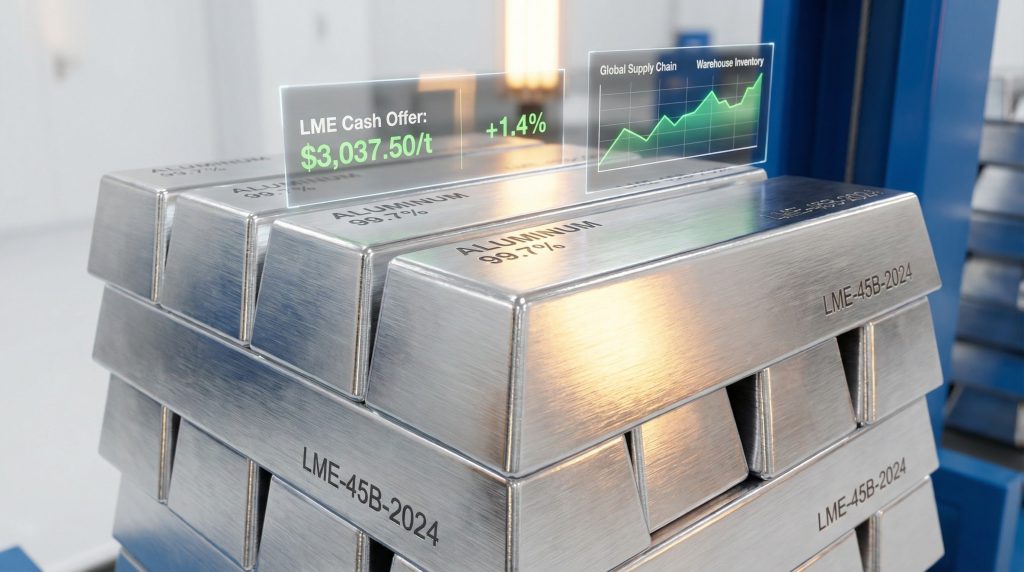
Global industrial metals operate within sophisticated pricing ecosystems where physical inventory, financial contracts, and macroeconomic factors converge to create dynamic market conditions. The aluminium sector exemplifies these complexities, as traders navigate between immediate delivery requirements and forward-looking supply constraints. Recent market developments demonstrate how LME aluminium cash offer increases respond to evolving industrial demand patterns, particularly as manufacturing sectors adapt to energy transition requirements and shifting geopolitical supply chains. Furthermore, effective market volatility hedging strategies become essential as traders manage exposure across multiple timeframes.
How LME Cash Offers Function in Global Aluminium Trading
The London Metal Exchange aluminium cash offer mechanism represents one of the most transparent pricing systems in global commodity markets. As of February 18, 2026, the cash offer price reached $3,035.00 per tonne, reflecting a 0.36% increase from the previous session. This pricing structure operates through a sophisticated bid-ask system where cash contracts settle within 2-3 business days, making them the most reactive instruments to immediate supply-demand imbalances.
The Role of Bid-Offer Spreads in Price Discovery
Market liquidity conditions reveal themselves through spread analysis between bid and offer prices. The current spread of $0.50 per tonne between the cash bid price ($3,034.50/t) and cash offer price ($3,035.00/t) indicates relatively tight market conditions. This narrow differential suggests high market liquidity and balanced physical supply-demand dynamics.
Historically, spread widening occurs during periods of market stress or uncertainty, while compression typically signals stable trading conditions. The asymmetric price movement observed on February 18, where cash bids increased 0.70% while offers rose more modestly at 0.36%, demonstrates concentrated buying pressure from physical market participants.
Physical Settlement vs Financial Contract Implications
LME aluminium contracts operate across multiple settlement periods, creating a forward curve that reflects market expectations. Current pricing shows:
| Contract Period | Bid Price ($/tonne) | Offer Price ($/tonne) | Premium to Cash |
|---|---|---|---|
| Cash (2-3 days) | 3,034.50 | 3,035.00 | Baseline |
| 3-month | 3,060.00 | 3,061.00 | +$25.50 |
| December 27 | 3,058.00 | 3,063.00 | +$26.50 |
This contango structure, where future prices trade at premiums to spot prices, reflects carrying costs including storage, insurance, and financing. Consequently, the premium structure indicates markets are not experiencing immediate supply crisis conditions, as backwardation typically emerges during acute physical shortages.
When big ASX news breaks, our subscribers know first
Why Are Aluminium Warehouse Stocks Critical to Price Formation?
LME-approved warehouse inventory serves as the primary visible supply indicator for global aluminium markets. Total opening stocks declined to 475,550 tonnes on February 18, representing a 0.42% daily decrease of 2,000 tonnes. This inventory reduction accompanied the price appreciation, supporting the fundamental relationship between visible supply and market pricing.
Inventory Dynamics and Market Signal Interpretation
Warehouse stock categories provide distinct market signals:
- Live Warrants: 423,775 tonnes (89.1% of total stocks)
- Cancelled Warrants: 51,775 tonnes (10.9% of total stocks)
The proportional breakdown reveals that cancelled warrants experienced a 2.91% decline (-1,550 tonnes) while live warrants decreased only 0.11% (-450 tonnes). This 3.4:1 ratio of cancelled-to-live warrant reduction suggests accelerating physical withdrawal preparations, often preceding actual delivery to end-users.
Live Warrants vs Cancelled Warrants: What They Reveal
When cancelled warrants decline more rapidly than live warrants, it typically indicates either end-users taking physical delivery ahead of expected supply tightening, strategic inventory optimisation by warehouses, or arbitrage trading anticipating further price appreciation.
This pattern creates forward-looking supply signals that sophisticated market participants monitor closely. If the current cancelled warrant withdrawal pace sustained, the entire cancelled warrant inventory would be depleted within approximately 33 trading days, potentially creating additional upward pressure on LME aluminium cash offer increases.
Geographic Distribution of LME-Approved Warehouses
While specific geographic data was not available in current market reports, warehouse location significantly impacts pricing dynamics. Regional concentration creates delivery bottlenecks that can drive location-specific premiums and discounts. Asian markets, European storage facilities, and North American warehouses each maintain distinct queue times and delivery logistics that influence local pricing differentials.
How Do Supply-Side Fundamentals Shape Aluminium Pricing Trends?
Primary aluminium production operates within an energy-intensive framework requiring approximately 13-15 MWh of electricity per tonne. This energy dependency makes electricity costs the dominant variable in smelting economics, typically representing 25-35% of total operational costs in developed economies and up to 40-50% in marginal operations. Moreover, ongoing mining industry innovations continue to reshape operational efficiency across the sector.
Chinese Production Capacity Constraints and Export Dynamics
Chinese smelting operations maintain capacity utilisation rates around 85-90%, creating structural supply constraints with limited spare production capacity. This contrasts with developed nations where typical utilisation rates of 70-80% provide greater demand response flexibility.
With China representing approximately 50% of global primary aluminium production through an estimated 10-11 million tonnes of installed nameplate capacity, operational constraints in Chinese facilities directly impact global supply availability. In addition, US steel & aluminum tariffs further complicate international trade dynamics.
Energy Cost Pressures on Primary Smelting Operations
Electricity cost fluctuations create immediate profitability impacts on smelting decisions. Primary smelting facilities in hydroelectric-rich regions (Norway, Iceland, Canada) benefit from lower energy costs but face seasonal production variations tied to precipitation patterns and hydropower availability.
Climate patterns, including El Niño/La Niña effects on regional precipitation, influence hydroelectric generation capacity and consequently impact smelting economics in these regions. Furthermore, renewable energy in mining initiatives are increasingly becoming strategic imperatives for producers.
Bauxite-to-Alumina Supply Chain Bottlenecks
The aluminium supply chain operates through three sequential stages:
- Bauxite Mining: Raw ore extraction from Guinea, Australia, and Vietnam
- Alumina Refining: Bayer Process conversion to aluminium oxide (Al₂O₃)
- Primary Smelting: Hall-Héroult Process electrolytic reduction to metallic aluminium
Bottlenecks at any stage cascade through the supply chain, as refineries require consistent bauxite feed and smelters demand reliable alumina supply. Current market conditions show alumina prices at $306.93 per tonne, reflecting the intermediate processing stage costs within the broader supply framework. For instance, detailed bauxite mining insights reveal how upstream constraints affect downstream pricing.
What Demand Factors Are Driving Aluminium Market Tightness?
Contemporary aluminium demand reflects evolving industrial applications driven by technological transitions and infrastructure development. Three primary sectors contribute to current market tightness conditions that support LME aluminium cash offer increases.
Electric Vehicle Battery Housing Requirements
Aluminium's role in electric vehicle battery thermal management systems has expanded as battery pack sizes increase. The metal's high thermal conductivity (237 W/m·K) and lightweight properties make it essential for thermal interface materials and structural housings.
Modern EV battery packs require sophisticated thermal management to maintain optimal operating temperatures between 25-35°C. Aluminium components facilitate heat dissipation while contributing to overall vehicle weight reduction objectives.
Renewable Energy Infrastructure Expansion
Renewable energy deployment creates significant aluminium demand through multiple applications:
- Solar installations: Frame assemblies and structural components
- Wind energy: Turbine nacelle housings and support structures
- Grid infrastructure: Transmission line components and electrical systems
The aluminium intensity per megawatt of installed renewable capacity varies by technology type and geographic installation requirements, though specific 2026 deployment metrics were not available in current market data.
Packaging Industry Recovery Post-2024
Aluminium beverage cans and flexible packaging represent approximately 30-35% of global aluminium demand. Market recovery following 2024 consumption patterns supports current price levels, though specific recovery rate quantification requires additional industry consumption data.
How Should Investors Interpret Recent LME Aluminium Price Movements?
Current price action above the $3,000 per tonne threshold signals market participants' expectations of sustained supply-demand tightness. Technical analysis of recent movements reveals several key patterns supporting LME aluminium cash offer increases.
Technical Analysis of $3,000+ Price Levels
The sustained price momentum demonstrates market strength above psychological resistance levels. Recent performance shows:
| Date Range | Cash Offer Movement | Key Technical Levels |
|---|---|---|
| February 17-18, 2026 | +$11.00 (+0.36%) | Breaking above $3,030 resistance |
| Current Trading Range | $3,030-3,085/t | Establishing new support base |
| 3-Month Forward | $3,061/t | Contango structure maintained |
Forward Curve Implications for Industrial Buyers
The contango structure in LME aluminium contracts provides industrial consumers with hedging opportunities. Forward prices trading at premiums to spot levels suggest that immediate delivery commands a discount relative to future supply expectations. According to LME aluminium cash prices, this pricing structure reflects ongoing market fundamentals.
Industrial buyers utilising aluminium in manufacturing processes can optimise procurement timing by balancing immediate needs against forward contract pricing structures.
Hedging Strategies in Volatile Markets
Market participants employ various risk management approaches:
- Physical vs Financial Settlement: Direct material users versus financial market participants
- Time Spread Trading: Exploiting calendar spread relationships between contract months
- Cross-Commodity Hedging: Using related industrial metals for portfolio risk management
What Are the Macroeconomic Implications of Current Aluminium Pricing?
Aluminium pricing functions as both an inflation indicator and economic activity barometer. Current price levels above $3,000 per tonne reflect broader macroeconomic conditions affecting industrial commodity demand.
Inflation Transmission Through Industrial Metals
Rising aluminium costs transmit through supply chains affecting multiple sectors:
- Automotive manufacturing: Vehicle component costs and production planning
- Construction industry: Building material expenses and project economics
- Consumer goods: Packaging costs and retail price pressures
Currency Effects on USD-Denominated Commodity Pricing
LME contracts denominated in US dollars create currency exposure for international market participants. Dollar strength or weakness directly impacts purchasing power for non-US consumers and producers, influencing global demand patterns.
Central Bank Policy Impacts on Raw Material Demand
Monetary policy decisions affect industrial metal demand through multiple transmission mechanisms:
- Interest rate changes: Impacting financing costs for inventory holding and project development
- Quantitative measures: Influencing currency values and international trade flows
- Economic growth expectations: Driving industrial production and infrastructure investment
The next major ASX story will hit our subscribers first
How Do Alumina Prices Influence Primary Aluminium Production Economics?
The alumina-to-aluminium conversion process represents the final stage in primary metal production, with alumina costs directly impacting smelter profitability. Current alumina pricing at $306.93 per tonne establishes the raw material cost foundation for primary aluminium production.
The Bayer Process Cost Structure
Alumina refineries operate through the Bayer Process, chemically converting bauxite ore to aluminium oxide. This intermediate processing stage requires:
- Energy inputs: Though less intensive than primary smelting
- Chemical reagents: Caustic soda and other processing materials
- Transportation logistics: Moving refined alumina to smelting facilities
Alumina-to-Aluminium Price Ratios and Smelter Margins
Smelter profitability depends on the ratio between alumina input costs and aluminium output prices. Current market conditions show:
- Alumina Price: $306.93 per tonne
- Aluminium Cash Price: $3,035.00 per tonne
- Raw Material Ratio: Approximately 10.1% of output value
This ratio provides a baseline for smelter margin analysis, though energy costs, labour, and capital expenses contribute significantly to total production economics.
Integrated vs Merchant Smelter Strategies
Market participants operate through different business models:
Integrated Operations:
- Control bauxite mining through primary smelting
- Reduced exposure to intermediate commodity price volatility
- Higher capital requirements but improved margin stability
Merchant Smelters:
- Purchase alumina on spot or contract markets
- Greater exposure to input cost fluctuations
- More flexible operational scaling based on market conditions
What Regional Arbitrage Opportunities Exist in Global Aluminium Markets?
Geographic price differentials create trading opportunities across regional markets. The Asian Reference Price at $3,089 per tonne trades at a premium to LME cash prices, indicating regional supply-demand imbalances.
Asian Reference Price Premiums and Discounts
The $54 per tonne premium of Asian Reference Price over LME cash offers reflects several factors:
- Regional demand strength: Asian industrial consumption patterns
- Transportation costs: Shipping and logistics from global supply sources
- Local market dynamics: Currency effects and regional trading patterns
European Physical Delivery Constraints
European aluminium markets face distinct logistical challenges affecting regional pricing:
- Warehouse queue times: Delays in physical metal withdrawal
- Transportation infrastructure: Port capacity and inland distribution networks
- Regional consumption patterns: Industrial demand variations across European markets
North American Midwest Premium Dynamics
North American markets maintain separate premium structures reflecting local supply-demand conditions. However, detailed LME reference pricing provides the foundation for regional premium calculations, though specific current premium levels require access to regional market data not available in current reporting.
Which Risk Management Strategies Work Best for Aluminium Exposure?
Market participants employ diverse approaches to manage aluminium price risk based on their specific exposure profiles and risk tolerance levels.
Portfolio Hedging Using LME Contracts
LME aluminium contracts provide multiple hedging tools:
- Cash contracts: Immediate price risk management
- Forward contracts: Future delivery price certainty
- Options strategies: Asymmetric risk-reward profiles
Physical vs Financial Settlement Considerations
Different market participants utilise contracts based on their operational requirements:
Physical Users:
- Industrial consumers requiring actual metal delivery
- Focus on delivery timing and location specifications
- Integration with production planning and inventory management
Financial Participants:
- Investment funds and speculative traders
- Cash settlement preferred to avoid physical handling
- Focus on price movement capture rather than physical delivery
Correlation Trading with Related Industrial Metals
Aluminium price movements correlate with other industrial metals, creating cross-commodity trading opportunities:
- Copper relationships: Similar industrial demand drivers
- Steel correlations: Construction and automotive sector overlap
- Energy metal connections: Grid infrastructure and renewable energy applications
Strategic Positioning in Evolving Aluminium Markets
Current market conditions establish a foundation for longer-term strategic considerations as industrial demand patterns continue evolving through technological and infrastructure transitions.
Long-term Structural Demand Trends
Several megatrends support sustained aluminium demand growth:
- Electrification expansion: Electric vehicles and grid infrastructure development
- Lightweight material adoption: Aerospace and automotive efficiency requirements
- Infrastructure modernisation: Urban development and transportation system upgrades
Technology Disruption in Smelting Processes
Emerging technologies may reshape primary aluminium production:
- Alternative energy integration: Renewable power sources for smelting operations
- Process efficiency improvements: Advanced electrolytic reduction techniques
- Carbon reduction initiatives: Lower-emission production methods
ESG Considerations in Aluminium Investment Decisions
Environmental, social, and governance factors increasingly influence market dynamics:
- Carbon footprint assessment: Low-carbon aluminium premium development
- Supply chain transparency: Responsible sourcing requirements
- Circular economy integration: Recycling and secondary market expansion
Disclaimer: This analysis contains forward-looking statements and market projections that involve inherent risks and uncertainties. Aluminium markets are subject to volatile price movements influenced by numerous factors including but not limited to supply disruptions, demand fluctuations, currency movements, and macroeconomic conditions. Past performance does not guarantee future results. Investors should conduct independent research and consider their risk tolerance before making investment decisions involving commodity exposure.
Ready to Capitalise on ASX Mining Discoveries Before the Market Does?
Discovery Alert's proprietary Discovery IQ model delivers instant notifications on significant ASX mineral discoveries, transforming complex market data into actionable trading opportunities whilst industrial metals like aluminium demonstrate the potential returns from well-timed commodity positions. Begin your 14-day free trial today to position yourself ahead of the market and secure your competitive advantage in mineral discovery investing.