June 14, 2026
Understanding Current LNG Market Volatility Through Supply Chain Disruptions
Global energy markets face unprecedented structural pressures as liquefied natural gas supply chains adapt to mounting geopolitical tensions. The intersection of infrastructure vulnerabilities, seasonal demand patterns, and strategic chokepoint dependencies creates a complex web of market dynamics that extends far beyond traditional price discovery mechanisms.
Recent market data reveals significant strain across major export routes, with LNG exports plunging to a 6-month low as war throttles supply, forcing industry participants to reassess fundamental assumptions about global energy security. This transformation reflects deeper shifts in how energy flows navigate increasingly contested maritime corridors, particularly as declining US oil production compounds supply concerns.
When big ASX news breaks, our subscribers know first
What Drives LNG Export Volatility in Today's Market?
Understanding the Fundamentals of Liquefied Natural Gas Trade Flows
Liquefied natural gas trade operates through a sophisticated network of production facilities, shipping routes, and regasification terminals that requires precise coordination across multiple time zones and jurisdictions. Current market volatility stems from the convergence of three critical factors: infrastructure capacity constraints, geopolitical transit risks, and seasonal demand fluctuations.
Export capacity utilisation rates typically operate between 75-85% under normal conditions, leaving minimal spare capacity for emergency rerouting when major transit routes face disruption. This structural limitation means that even modest supply interruptions can trigger disproportionate market responses.
Furthermore, comprehensive oil price movements analysis reveals how interconnected global energy markets have become. The current crisis demonstrates that LNG exports plunge to 6-month low as war throttles supply, creating cascading effects across all hydrocarbon sectors.
Key Metrics That Determine Export Capacity Utilisation Rates
Several technical indicators govern how effectively LNG facilities can respond to market disruptions:
• Liquefaction train availability – Each facility operates multiple parallel processing units
• Storage tank capacity – Determines how much inventory can buffer supply/demand mismatches
• Loading berth utilisation – Physical constraints on vessel scheduling
• Pipeline feed gas availability – Upstream supply chain dependencies
The current crisis has exposed how quickly these systems reach operational limits when transit security becomes compromised. Moreover, OPEC production impact decisions further influence the delicate balance between supply and demand across energy markets.
How Seasonal Demand Patterns Interact With Geopolitical Events
Northern hemisphere winter heating demand traditionally drives LNG price seasonality, but geopolitical supply disruptions can override these patterns entirely. European gas prices surged 35% following infrastructure attacks on Qatar's LNG hub, demonstrating how security events can dwarf seasonal influences.
This price transmission occurs because LNG cargoes maintain flexibility to redirect between markets based on netback economics, meaning disruptions in one region quickly propagate globally through arbitrage mechanisms.
Which Geographic Chokepoints Control Global Energy Security?
The Strait of Hormuz: Gateway for Critical Energy Flows
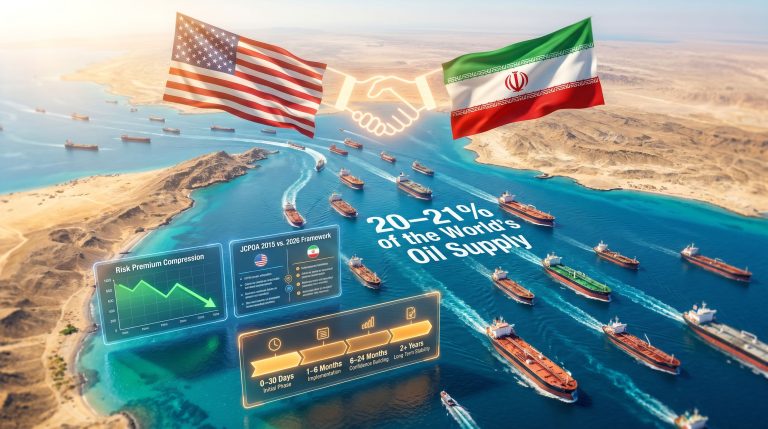
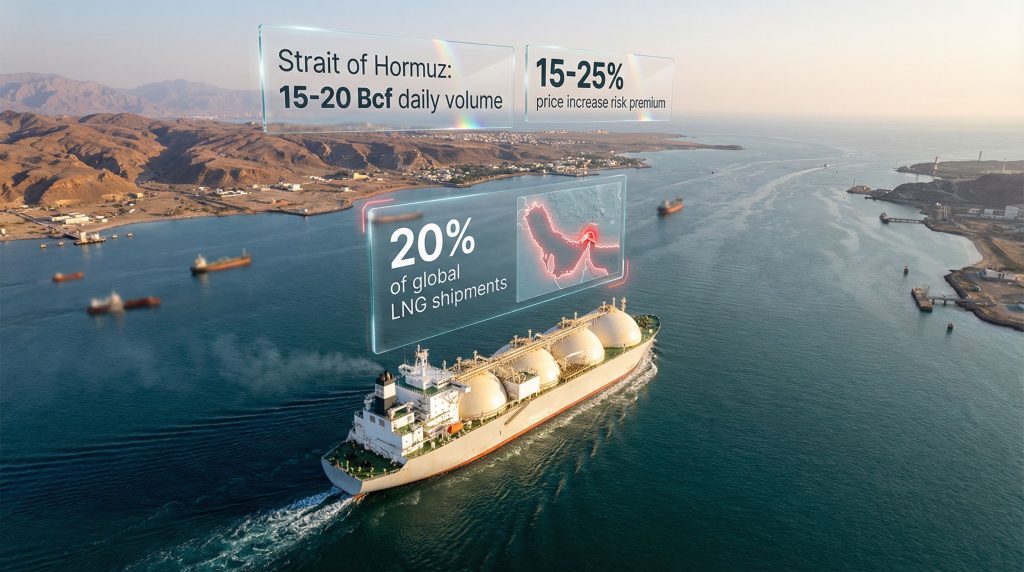
The Strait of Hormuz carries approximately one-third of the world's oil and about one-fifth of its liquefied natural gas, making it the single most critical maritime chokepoint for global energy security. This narrow waterway's strategic importance stems from its role as the primary export route for Gulf Cooperation Council producers.
Iran's threats to close this passage reflect a calculated strategy to leverage geographic positioning for geopolitical advantage. The capability to disrupt 15-20 billion cubic feet daily of LNG transit creates systemic vulnerability across major importing regions.
According to recent reports, LNG exports plunge to 6-month low as maritime security concerns intensify across critical shipping lanes. This development underscores the vulnerability of global supply chains to geopolitical disruption.
Alternative Routing Strategies and Their Economic Implications
When primary transit routes face disruption, LNG cargoes must utilise longer alternative paths that significantly increase transportation costs:
| Route | Daily LNG Volume | Alternative Options | Price Premium Impact |
|---|---|---|---|
| Strait of Hormuz | 15-20 Bcf | Suez Canal, Cape Route | 15-25% increase |
| Suez Canal | 8-12 Bcf | Cape of Good Hope | 8-12% increase |
| Panama Canal | 5-8 Bcf | Cape Horn | 10-15% increase |
These alternatives require additional voyage time, increased fuel consumption, and higher insurance premiums that ultimately translate into consumer price increases.
Infrastructure Vulnerabilities Across Major Shipping Lanes
The Bab-el-Mandeb Strait, a 16-mile-wide waterway between Yemen, Djibouti, and Eritrea, represents another critical vulnerability point through which flows approximately 10-15% of the world's seaborne oil shipments. Iranian-backed forces have demonstrated capability to threaten this chokepoint without fully closing it, maintaining escalation options.
Saudi Arabia's response illustrates adaptive capacity limits: increasing oil exports through the East-West pipeline to Yanbu from 1.7 million barrels per day average in 2025 to record daily exports of 5.9 million barrels per day in March, with plans to reach 7 million barrels per day. However, this bypass capacity remains insufficient to fully offset Hormuz closure scenarios.
How Do Supply Disruptions Cascade Through Energy Markets?
Price Transmission Mechanisms From Spot to Long-Term Contracts
LNG price discovery operates through multiple interconnected mechanisms that transmit volatility at different speeds across market segments. Spot markets react immediately to supply disruptions, while long-term contract adjustments typically occur with 2-6 month lags depending on indexation formulas.
Current market conditions demonstrate extreme transmission velocity, with European gas prices set for 20% weekly jump on Qatar's LNG outage. This rapid adjustment reflects the interconnected nature of global gas markets and limited alternative supply sources during peak demand periods.
In addition, oil price rally insights provide context for understanding how geopolitical tensions amplify price volatility across all hydrocarbon sectors.
Regional Price Differentials and Arbitrage Opportunities
Supply disruptions create significant regional price spreads that drive cargo diversions and arbitrage flows. Asian refiners paying record premiums for non-Middle East crude exemplifies how buyers compete for alternative supplies when primary sources face interruption.
These price differentials create powerful economic incentives for market participants to:
• Redirect uncommitted cargoes toward highest-priced destinations
• Accelerate alternative supply source development
• Invest in additional storage and inventory management capacity
• Renegotiate long-term contract terms to reflect new risk profiles
Storage Capacity Constraints and Inventory Management Strategies
Strategic petroleum reserves and commercial storage facilities serve as critical buffers during supply disruptions, but their capacity remains limited relative to daily consumption requirements. Japan's energy security concerns reflect this vulnerability, with 94% of crude imports coming from the Middle East and 93% transiting through the Strait of Hormuz.
Economic Multiplier Effects: A 10% reduction in LNG availability can trigger 2-3% inflation increases in gas-dependent economies, forcing central banks to balance growth concerns against price stability mandates.
What Are the Macro-Economic Implications of LNG Supply Shocks?
Inflation Pressures Across Major Importing Economies
Energy price volatility transmits directly into broader inflation measures through multiple channels: direct energy costs, transportation expenses, and industrial input prices. Current supply disruptions have prompted U.S. inflation expectations to surge amid oil price spikes, with central banks facing difficult policy trade-offs.
The magnitude of these effects depends on several factors:
- Energy intensity of the domestic economy
- Degree of import dependence for natural gas
- Availability of alternative energy sources
- Effectiveness of strategic reserve deployment
Consequently, US economic pressures continue mounting as energy price volatility intersects with other macroeconomic challenges.
Current Account Balance Impacts for Energy-Dependent Nations
Countries with high energy import dependence face deteriorating trade balances when supply disruptions drive prices higher. This effect compounds when domestic currencies weaken against the dollar, as most LNG contracts utilise USD pricing.
Central Bank Policy Responses to Energy-Driven Inflation
Monetary policymakers confront a complex challenge when energy price shocks threaten inflation targets while economic growth remains fragile. The Federal Reserve faces pressure to raise rates as oil prices spike, despite concerns about broader economic stability.
Which Countries Benefit Most From LNG Supply Disruptions?
Alternative Supplier Nations Gaining Market Share
Supply disruptions in traditional producing regions create opportunities for alternative suppliers to capture market share and command premium pricing. The current crisis has accelerated diversification efforts as buyers seek supply security over cost minimisation.
United States LNG producers benefit from their non-Middle East location and dollar-denominated pricing, while Australian and African suppliers gain advantage from alternative shipping routes that avoid contested chokepoints.
Strategic Petroleum Reserve Policies and Their Effectiveness
The International Energy Agency signals readiness for another emergency oil release as supply pressures mount, but the effectiveness of strategic reserves depends on coordination among member nations and the scale of deployment relative to market shortfalls.
Japan's consideration of stockpiling U.S. crude to strengthen energy security reflects growing recognition that diversified reserve holdings provide better protection than concentration in traditional suppliers.
Long-Term Contract Renegotiation Dynamics
Current supply disruptions accelerate renegotiation of existing long-term agreements as buyers prioritise supply security and sellers seek to capture higher prices. These negotiations typically involve:
• Destination flexibility clauses allowing cargo diversions
• Force majeure provisions and their interpretation
• Price indexation mechanisms and adjustment frequencies
• Take-or-pay obligations and volume flexibility terms
The next major ASX story will hit our subscribers first
How Are Energy Companies Adapting Their Investment Strategies?
Capital Allocation Shifts Toward Supply Diversification
Energy companies increasingly prioritise supply chain resilience over cost optimisation, driving investment toward geographically diversified production assets and transportation infrastructure. This strategic shift reflects recognition that supply security carries premium value during periods of geopolitical instability.
Technology Investments in Floating LNG Terminals
Floating liquefaction and regasification terminals offer greater flexibility and reduced infrastructure vulnerability compared to fixed installations. These technologies enable rapid deployment in new locations and provide backup capacity during disruptions to permanent facilities.
Risk Management Through Portfolio Optimisation
Energy companies implement sophisticated hedging strategies to manage exposure to price volatility and supply disruptions. These approaches include:
• Geographic diversification of supply sources
• Financial hedging instruments to manage price risk
• Operational flexibility to switch between fuel sources
• Strategic partnerships to share infrastructure investments
What Does This Mean for Global Energy Transition Timelines?
Natural Gas as a Bridge Fuel During Renewable Scaling
Current supply disruptions highlight natural gas's critical role in maintaining energy security during the transition to renewable sources. The volatility of traditional suppliers may accelerate domestic renewable investment while extending reliance on gas-fired backup generation.
Accelerated Investment in Energy Storage and Grid Flexibility
Supply chain vulnerabilities drive increased investment in battery storage, pumped hydro, and other grid-scale storage technologies that reduce dependence on just-in-time gas deliveries for electricity generation.
Policy Implications for Climate Commitments Versus Energy Security
Governments face difficult trade-offs between climate objectives and immediate energy security needs. The IEA urges working from home and cutting air travel to ease oil supply shock, demonstrating how supply disruptions can force temporary policy reversals.
Furthermore, analysts warn that energy market disruptions could intensify if current conflicts expand to additional energy infrastructure targets.
Investment Implications and Market Outlook
Sector Rotation Opportunities in Energy Infrastructure
Current market conditions favour infrastructure investments that enhance supply chain resilience: pipeline capacity, storage facilities, alternative transportation routes, and flexible generation assets command premium valuations.
Goldman Sachs boosted oil price forecasts by $8 for Brent and $7 for WTI, reflecting structural changes in supply/demand balance that may persist beyond immediate crisis resolution.
Currency Impacts on Energy Trade Settlements
Dollar strength relative to other currencies affects the purchasing power of non-USD economies when buying energy commodities. This dynamic can amplify inflation pressures in import-dependent countries while benefiting dollar-based producers.
ESG Considerations in LNG Investment Decisions
Environmental, social, and governance factors increasingly influence energy investment decisions, but supply security concerns may temporarily override ESG considerations as buyers prioritise reliability over carbon intensity.
Frequently Asked Questions About LNG Market Dynamics
How Quickly Can LNG Supply Chains Adapt to Disruptions?
LNG supply chain adaptation occurs across multiple timeframes:
Short-term flexibility (2-4 weeks):
• Cargo diversions to alternative destinations
• Inventory drawdowns from commercial storage
• Temporary fuel switching in power generation
Medium-term capacity adjustments (6-18 months):
• Alternative pipeline route activation
• Floating storage and regasification unit deployment
• Contract renegotiation for supply redirection
Long-term infrastructure development (3-7 years):
• New liquefaction capacity construction
• Alternative transportation route development
• Strategic storage facility expansion
What Role Do Strategic Reserves Play in Market Stability?
Strategic reserves serve multiple functions in maintaining energy market stability:
Government stockpiling strategies vary significantly among major importers, with some maintaining 90-day import coverage while others rely primarily on commercial inventory. Emergency release mechanisms require careful coordination to avoid market disruption while providing adequate supply relief.
Commercial inventory management practices focus on optimising storage costs against supply security, but limited tankage capacity constrains the industry's ability to buffer extended disruptions.
How Do Long-Term Contracts Protect Against Volatility?
Long-term LNG contracts incorporate several mechanisms to manage price and supply volatility:
Price indexation formulas typically reference regional gas benchmarks (Henry Hub, TTF, JKM) with quarterly or semi-annual adjustment periods that smooth short-term volatility while maintaining long-term price relationships.
Force majeure clauses define circumstances under which delivery obligations may be suspended, but their legal interpretation varies significantly across jurisdictions and can lead to lengthy arbitration proceedings.
Contract renegotiation trends increasingly favour buyer flexibility in destination and timing, while sellers seek higher base prices and reduced take-or-pay obligations to reflect increased supply chain risks.
This analysis is based on current market conditions and publicly available information. Energy markets remain highly volatile, and investors should conduct thorough due diligence before making investment decisions. Forward-looking statements involve significant uncertainty and actual results may differ materially from projections.
Ready to Capitalise on Energy Market Volatility?
Discovery Alert's proprietary Discovery IQ model delivers real-time alerts on significant ASX mineral discoveries, including critical battery metals and energy transition commodities that directly benefit from current market disruptions. With global energy supply chains under unprecedented pressure, positioning yourself ahead of the next major discovery through Discovery Alert's instant notification system ensures you can capitalise on emerging opportunities before they reach mainstream attention.