May 12, 2026
Understanding LNG Processing System Vulnerabilities During Maritime Disruptions
Modern liquefied natural gas facilities operate as integrated processing networks where maritime transport represents a critical component of the value chain. When shipping routes face restrictions, these facilities must rapidly reconfigure their operational parameters to maintain production efficiency. Furthermore, they must ensure personnel safety and equipment protection during periods of heightened uncertainty.
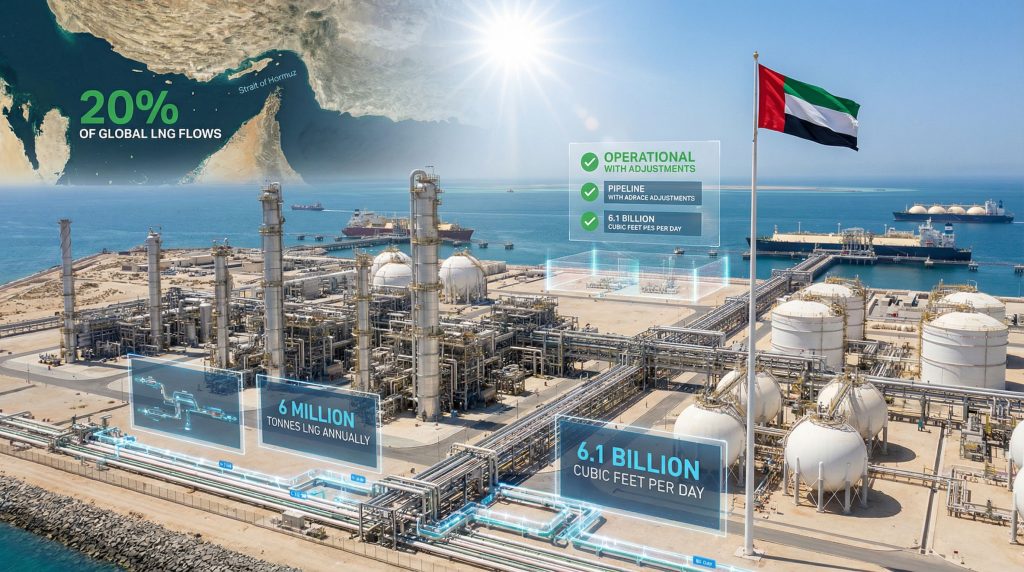
ADNOC Gas operations Strait of Hormuz disruption demonstrates this adaptive capacity through systematic modifications across their processing network. The Das Island facility, with its 6 million tonnes annual LNG capacity, exemplifies how major processing plants adjust to transportation constraints while preserving core operational integrity. These adjustments occur at multiple levels, from production scheduling to customer delivery arrangements.
The Habshan gas processing complex, handling 6.1 billion cubic feet per day, illustrates facility vulnerability when external debris impacts operations. Following a temporary shutdown on March 19 for safety assessments, the facility demonstrated standard industry protocols for managing unexpected disruptions. This incident provides concrete evidence of how processing facilities prioritise personnel safety while maintaining structural integrity assessments.
| Processing Metric | Das Island | Habshan Complex | Industry Standard |
|---|---|---|---|
| Annual Capacity | 6 million tonnes LNG | 6.1 billion cubic feet/day | Varies by facility |
| Safety Protocol Response | Operational with adjustments | Temporary shutdown | Case-by-case assessment |
| Personnel Impact | Zero injuries reported | Zero injuries reported | Safety-first approach |
The ADNOC Gas operations Strait of Hormuz disruption affects approximately 20 percent of global LNG flows, creating ripple effects across regional processing facilities. This maritime chokepoint serves multiple major LNG exporters, requiring coordinated responses across the Gulf Cooperation Council states to maintain global supply stability.
Processing facilities implement transaction-by-transaction operational protocols during disruption periods, enabling real-time adjustments based on shipping availability and customer requirements. In addition, this approach demonstrates advanced supply chain management capabilities that distinguish modern LNG operations from traditional bulk commodity production.
Infrastructure Resilience Assessment Protocols
Energy companies employ comprehensive integrity assessment methodologies when facilities encounter external impacts. These protocols involve structural inspections, process system evaluations, and equipment protection measures designed to ensure operational continuity under adverse conditions.
Debris Impact Analysis: Processing facilities conduct systematic evaluations of structural damage from external projectiles, including kinetic impact assessments and materials science approaches to evaluate equipment vulnerability. However, industry standards from the American Society of Mechanical Engineers provide technical benchmarks for these evaluations.
Process System Protection: Core processing systems incorporate compartmentalisation and redundancy features that enable continued operation even when peripheral systems experience impacts. Consequently, this design philosophy ensures that essential liquefaction processes remain operational during facility disturbances.
Personnel Safety Measures: Companies maintain zero-injury operational records through comprehensive safety protocols that prioritise human resources protection above production considerations. For instance, emergency response procedures enable rapid personnel evacuation and facility securing when external threats emerge.
When big ASX news breaks, our subscribers know first
Pipeline Infrastructure Solutions for Maritime Transport Alternatives
Regional energy producers leverage sophisticated pipeline networks to circumvent maritime chokepoints during periods of transportation instability. These infrastructure systems represent decades of strategic planning designed to provide operational flexibility when traditional shipping routes face constraints. Furthermore, Saudi Arabia exploration initiatives demonstrate regional commitments to energy infrastructure development.
Saudi Arabia's East-West Pipeline exemplifies strategic infrastructure development with 7 million barrels per day nameplate capacity, representing approximately 70 percent of the Kingdom's OPEC+ production quota. This single pipeline system demonstrates how deliberate infrastructure investment creates operational alternatives to maritime transport dependencies.
The pipeline connects eastern oil production facilities directly to western Red Sea terminals, enabling complete bypass of Strait of Hormuz transit requirements. This engineering solution illustrates how energy companies implement long-term risk management through physical infrastructure rather than financial hedging instruments alone.
Technical Specifications Analysis:
- Route Configuration: Eastern production fields to Red Sea export terminals
- Pumping Infrastructure: Multiple stations maintaining pressure across 1,200 kilometres
- Storage Integration: Terminal facilities accommodating large-vessel loading
- Maintenance Protocols: Regular inspection and preventive maintenance schedules
Alternative Transportation Technology Integration
Beyond traditional pipeline systems, energy companies explore emerging technologies for supply chain diversification. These solutions include floating liquefaction facilities, compressed natural gas conversion systems, and rail transport alternatives for smaller volume management.
Floating LNG Regasification: Mobile processing units provide temporary capacity supplements during infrastructure disruptions. These vessels can relocate based on market demands and transportation availability, offering strategic flexibility unavailable through fixed installations.
Compressed Natural Gas Systems: CNG technology enables natural gas transport via truck and rail networks, providing alternative delivery methods for domestic and regional markets when pipeline and LNG shipping face constraints. Moreover, these systems offer flexibility when considering US natural gas prices volatility impacts.
Rail Transport Integration: Specialised rail cars transport liquefied products across continental distances, offering supply chain alternatives that complement existing pipeline and maritime systems.
Operational Continuity During Supply Chain Constraints
LNG processing facilities implement sophisticated operational protocols to maintain production during transportation disruptions. These systems demonstrate how modern energy infrastructure adapts to external constraints while preserving core processing capabilities and customer service commitments.
Transaction-Based Operations: Facilities adjust production schedules and customer deliveries on individual transaction bases, enabling customised solutions that accommodate specific customer requirements while managing broader supply chain challenges. This approach provides operational flexibility unavailable through rigid production contracts.
Safety Assessment Integration: Processing facilities conduct comprehensive integrity evaluations following external incidents, ensuring structural and process system reliability before resuming normal operations. Industry standards require systematic inspections across all critical systems.
Customer Collaboration Protocols: Energy companies maintain customer relationships through transparent communication regarding operational constraints and alternative delivery arrangements. Consequently, this approach preserves long-term commercial relationships despite short-term operational adjustments.
Facility Damage Assessment and Recovery Procedures
Processing facilities implement standardised protocols for evaluating and recovering from external damage events. These procedures ensure systematic approaches to facility restoration while maintaining safety standards throughout recovery operations.
Structural Integrity Analysis: Engineering teams conduct comprehensive evaluations of facility structures, including foundation systems, processing equipment, and safety infrastructure. These assessments determine operational capability and identify necessary repairs.
Process System Evaluation: Technical specialists examine liquefaction systems, refrigeration equipment, and control systems to ensure proper functioning after external impacts. This analysis determines whether core processing capabilities remain intact.
Timeline Management: Recovery operations follow structured schedules that prioritise safety assessments, essential repairs, and gradual production restoration. For instance, industry experience suggests that comprehensive facility evaluations require several weeks for complete assessment.
Regional Production Network Impact Assessment
The broader Gulf region encompasses multiple major LNG processing facilities that collectively represent significant global production capacity. When transportation disruptions affect this geographic concentration, the impacts cascade across international energy markets through supply contract adjustments and pricing mechanisms. Additionally, these developments coincide with broader energy transition challenges affecting global markets.
Qatar LNG Infrastructure: The Ras Laffan facility represents a critical component of global LNG supply, with recent damage affecting 17 percent of production capacity. Engineering assessments suggest 3 to 5 years for complete facility restoration, illustrating the long-term implications of infrastructure damage in concentrated production regions.
Regional Facility Network:
- TotalEnergies Operations: 15 percent reduction in global output across UAE, Qatar, and Iraq facilities
- BAPCO Energies (Bahrain): 400,000 barrels per day capacity affected by force majeure declarations
- Multiple GCC Facilities: Coordinated operational adjustments across regional producer network
Force Majeure Mechanism Implementation
Energy companies invoke force majeure contractual provisions when extraordinary circumstances prevent normal contract performance. These legal instruments enable temporary suspension of delivery obligations without contractual liability, providing operational flexibility during crisis periods.
QatarEnergy Response: Force majeure declarations on LNG supply contracts following significant facility damage demonstrate how companies manage contractual obligations during infrastructure crises. These mechanisms protect both suppliers and customers from liability during unforeseeable circumstances.
TotalEnergies Adjustments: Coordinated responses across multiple geographic locations illustrate how integrated energy companies manage portfolio-wide disruptions through systematic operational modifications and customer communication protocols. According to Reuters reporting, these adjustments represent coordinated industry responses to maritime constraints.
Contract Management: Force majeure provisions require specific documentation of extraordinary circumstances, impact assessments, and good-faith efforts to maintain partial performance where technically feasible.
Crisis Management Framework Development
Middle Eastern national oil companies develop sophisticated crisis management capabilities through systematic scenario planning and organisational structure design. These frameworks enable rapid response to various disruption scenarios while maintaining operational effectiveness and stakeholder communication.
Scenario Planning Methodologies: Energy companies conduct comprehensive modelling exercises that examine various disruption scenarios, including transportation constraints, facility damage, and geopolitical tensions. These analyses inform investment decisions and operational contingency planning.
Organisational Resilience: Companies embed risk management capabilities within operational structures, enabling rapid decision-making and resource allocation during crisis periods. Furthermore, this institutional approach distinguishes prepared organisations from reactive management systems.
Strategic Infrastructure Investment: Long-term planning includes deliberate investment in alternative transportation routes, redundant processing capabilities, and diversified customer relationships that provide operational flexibility during various disruption scenarios.
Historical Crisis Response Analysis
Regional energy companies draw upon extensive experience managing geopolitical disruptions, developing institutional knowledge that enables effective crisis response. Historical precedents inform current operational strategies and investment priorities.
Previous Disruption Management: Companies reference operational experiences from the 1973 Arab oil embargo, 1990-1991 Gulf War, and various regional conflicts to inform current crisis management approaches. This historical perspective provides tested frameworks for managing complex operational challenges.
Infrastructure Development Timeline: Strategic infrastructure projects such as the East-West Pipeline represent decades-long development processes designed to address recurring regional risks. These investments demonstrate how companies balance immediate operational requirements with long-term strategic positioning.
Institutional Learning: National oil companies incorporate crisis management expertise within organisational structures, ensuring that operational knowledge transfers across management changes and time periods.
Market Dynamics and Investment Decision Frameworks
Energy infrastructure investment decisions reflect complex interactions between operational requirements, geopolitical risk assessment, and market pricing dynamics. Current market conditions demonstrate how supply disruptions influence both immediate operational adjustments and long-term strategic planning. Moreover, these factors contribute to oil price rally insights affecting global markets.
Pricing Impact Analysis: Oil prices sustained above $100 per barrel during disruption periods illustrate market responses to supply constraint scenarios. These price levels reflect both immediate supply concerns and longer-term risk premium adjustments across global energy markets.
Regional vs. Global Strategies: Regional energy producers focus on maintaining operational continuity and customer service, while international energy companies reassess exposure levels and risk management approaches. Consequently, these divergent strategies reflect different risk profiles and operational capabilities.
Investment Risk Recalibration: Global energy companies adjust Middle East investment strategies based on operational constraints and geopolitical risk assessments. This creates differentiated approaches between companies with established regional presence and those considering new investments.
Supply Chain Adaptation Economics
Energy companies evaluate alternative transportation costs against traditional maritime shipping to determine optimal supply chain configurations during disruption periods. These economic analyses inform both immediate operational decisions and longer-term infrastructure investment priorities.
Transportation Cost Analysis:
| Transport Mode | Capacity | Cost Premium | Flexibility Rating |
|---|---|---|---|
| Maritime LNG | High volume | Base cost | Low during disruptions |
| Pipeline Systems | Continuous flow | Fixed infrastructure | High operational flexibility |
| Rail Transport | Medium volume | Moderate premium | Medium flexibility |
| Truck Transport | Small volume | High premium | Very high flexibility |
Market Premium Assessment: Regional energy markets demonstrate pricing premiums that reflect transportation constraints and supply reliability concerns. These premiums influence both immediate commercial decisions and longer-term supply contract negotiations.
Strategic Investment Returns: Infrastructure investments in alternative transportation systems generate returns through operational flexibility during disruption periods, even when these systems operate below capacity during normal market conditions.
The next major ASX story will hit our subscribers first
Long-term Infrastructure Resilience Planning
Energy companies implement comprehensive long-term planning frameworks that address infrastructure resilience through diversified transportation systems, redundant processing capabilities, and flexible operational protocols. These approaches balance immediate operational requirements with strategic risk management objectives. Furthermore, understanding global trade impact insights helps companies assess broader market implications.
Infrastructure Diversification: Companies invest in multiple transportation routes, processing facilities, and customer relationships that provide operational alternatives during various disruption scenarios. This diversification approach reduces dependency on individual infrastructure components.
Technology Integration: Advanced process control systems, predictive maintenance capabilities, and automated safety systems enhance facility resilience and operational flexibility. These technologies enable rapid response to changing operational conditions while maintaining safety and efficiency standards.
Regional Cooperation: Gulf Cooperation Council energy companies coordinate infrastructure development and operational responses to maximise regional supply chain resilience. This cooperation includes shared transportation systems, emergency mutual assistance agreements, and coordinated market communication.
Future Market Structure Evolution
Current disruptions accelerate structural changes in global energy markets, including increased focus on supply chain resilience, alternative transportation route development, and risk management integration within operational planning. These changes influence both immediate market dynamics and longer-term investment patterns.
Supply Chain Redesign: Energy companies prioritise supply chain resilience through geographic diversification, transportation alternative development, and customer relationship flexibility. These structural changes may persist beyond immediate crisis resolution.
Investment Pattern Shifts: Infrastructure investment priorities emphasise operational flexibility, alternative route development, and advanced technology integration that enhance facility resilience and operational adaptability.
Market Relationship Evolution: Customer-supplier relationships incorporate increased flexibility provisions, alternative delivery mechanisms, and collaborative crisis management approaches that strengthen commercial relationships during difficult operational periods. As Bloomberg analysis indicates, these evolving relationships reflect industry-wide adaptations to operational constraints.
Disclaimer: This analysis incorporates publicly available information regarding energy infrastructure operations and market dynamics. Operational details, financial projections, and strategic assessments represent analytical interpretations that may not reflect complete or current information. Energy infrastructure investments involve substantial risks, and operational performance may vary significantly based on geopolitical developments, market conditions, and technical factors beyond company control.
Looking for Energy Infrastructure Investment Opportunities?
Discover how major energy disruptions create trading opportunities across global markets through Discovery Alert's proprietary Discovery IQ model. Gain insights into discovery opportunities that could benefit from infrastructure developments and energy sector volatility, helping you identify actionable investment prospects before the broader market responds.