June 8, 2026
Understanding the Technical Maritime Framework Driving LNG Rate Volatility
The liquefied natural gas transportation sector operates within a complex technical framework where vessel utilization rates, cargo scheduling precision, and fleet deployment strategies determine market pricing dynamics. Unlike traditional commodity shipping markets, LNG carriers face unique operational constraints that amplify rate volatility during periods of supply-demand imbalance.
Current market dynamics reflect a convergence of technical factors that have fundamentally altered vessel economics. The specialized nature of LNG carriers, which require precise temperature control systems and sophisticated cargo handling equipment, creates natural barriers to rapid fleet expansion that conventional shipping markets do not experience. Furthermore, these developments mirror broader commodity trading trends affecting global energy markets.
When big ASX news breaks, our subscribers know first
Current Rate Environment Analysis
LNG shipping rates soar across multiple trading corridors, with charter costs reflecting unprecedented operational constraints. The current environment demonstrates how technical shipping requirements interact with global supply chain disruptions to create pricing volatility that extends far beyond simple supply-demand fundamentals.
Current Market Benchmarks:
| Vessel Category | Daily Charter Rate | Technical Driver |
|---|---|---|
| Large LNG Carriers (174,000+ cbm) | $280,000-$320,000/day | Extended voyage times, port congestion |
| Medium Carriers (155,000-173,999 cbm) | $245,000-$275,000/day | Route optimization limitations |
| Smaller Vessels (<155,000 cbm) | $195,000-$225,000/day | Terminal access restrictions |
The extreme rate escalation reflects technical operational bottlenecks rather than temporary market imbalances. Modern LNG carriers incorporate advanced containment systems, including membrane or spherical tank designs, that require specialized port infrastructure and trained personnel for loading and discharge operations. According to shipping industry reports, these rates represent a staggering 650% increase from previous levels.
Technical Specifications Driving Rate Premiums
LNG carrier operations involve sophisticated technical requirements that differentiate this sector from conventional tanker markets:
- Boil-off management systems: Advanced reliquefaction equipment reducing cargo loss
- Dual-fuel propulsion: Engines optimised for natural gas consumption
- Cargo monitoring technology: Real-time temperature and pressure control systems
- Terminal compatibility: Vessel specifications matched to regasification facility requirements
Vessel Supply Constraints and Fleet Utilisation Metrics
The global LNG carrier fleet operates at utilisation levels that create natural rate volatility. Unlike crude oil tankers, which can ballast between various port combinations, LNG carriers face technical constraints that limit operational flexibility.
Fleet Utilisation Analysis:
- Active vessel deployment: 95% of available tonnage committed to long-term contracts
- Spot market availability: Less than 5% of fleet available for immediate charter
- Maintenance scheduling: Extended dry-dock periods due to specialised equipment
- Ballast positioning: 15-20% longer voyage times compared to crude tankers
Cargo Handling Technical Requirements
LNG loading and discharge operations require specialised terminal infrastructure that creates natural chokepoints in the supply chain. Modern regasification terminals feature high-pressure pumping systems, vaporisation equipment, and send-out capabilities that must be precisely coordinated with vessel arrival schedules.
Technical Terminal Requirements:
- Berthing specifications: Deep-water ports with specialised mooring systems
- Loading arm technology: Cryogenic transfer equipment rated for -162°C operations
- Vapor return systems: Environmental compliance for methane emissions
- Safety zones: Extended security perimeters affecting port throughput
Regional Route Analysis: Pacific vs. Atlantic Markets
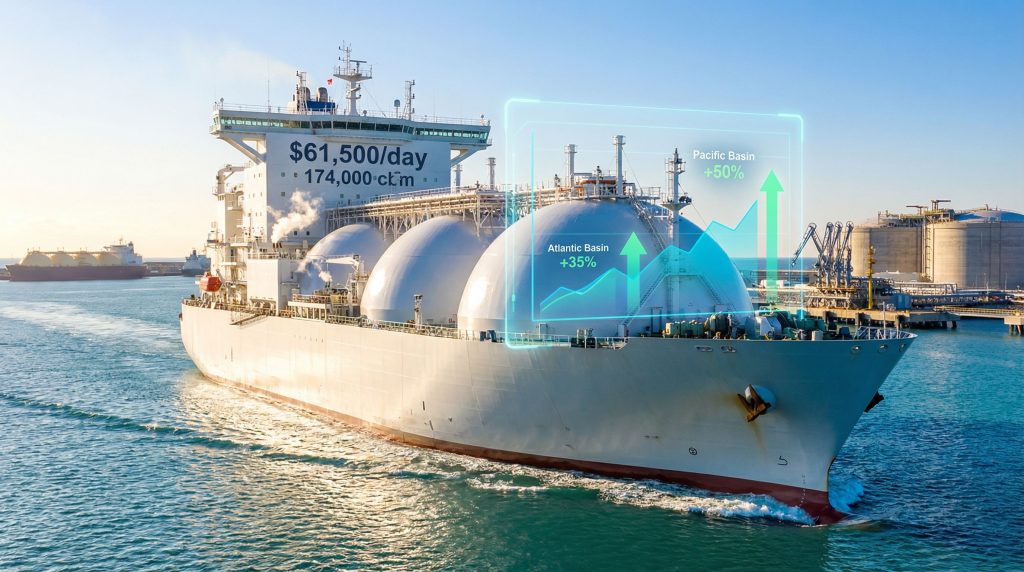
LNG shipping rates soar more dramatically in Pacific Basin markets due to technical operational factors that extend voyage duration and increase vessel commitment periods. The geographic distribution of LNG supply sources and import terminals creates natural rate differentials based on routing requirements.
Pacific Basin Technical Challenges:
- Voyage distances: 25-30% longer than Atlantic routes on average
- Weather routing: Seasonal patterns affecting optimal shipping lanes
- Port congestion: Limited regasification terminal capacity in key markets
- Ballast repositioning: Increased deadhead voyages between cargo assignments
Moreover, these regional dynamics are closely linked to the broader US-China trade war impacts affecting global energy supply chains.
Asian Import Terminal Capacity Constraints
Asian LNG import facilities operate near maximum throughput capacity during peak demand seasons, creating technical bottlenecks that affect vessel scheduling. Major terminals in Japan, South Korea, and China feature regasification capacity limitations that cannot be rapidly expanded.
Terminal Throughput Limitations:
- Regasification capacity: Fixed processing rates determined by equipment specifications
- Storage tank utilisation: Maximum fill levels affecting discharge scheduling
- Send-out pipeline constraints: Limited capacity for distribution to end users
- Maintenance windows: Planned shutdowns reducing available berth time
Geopolitical Risk Factors and Insurance Premiums
Maritime insurance markets have responded to Middle Eastern tensions by implementing technical risk assessments that directly impact charter costs. War risk insurance premiums now represent a significant portion of total voyage costs for vessels transiting high-risk areas.
The situation has created unprecedented market conditions, as reported by energy market analysts, where geopolitical tensions continue to disrupt global LNG flows. Consequently, vessel operators must implement enhanced security measures that further increase operational costs.
Insurance Technical Requirements:
- Route deviation clauses: Mandatory alternative routing increasing voyage time
- Security equipment: Enhanced communication and monitoring systems
- Crew training: Specialised security protocols for high-risk transits
- Port restrictions: Limited access to certain terminals and anchorages
Alternative Routing Impact Analysis
Vessels avoiding Middle Eastern chokepoints face technical challenges that extend voyage duration and increase fuel consumption. The Cape of Good Hope route adds approximately 15-20 days to typical Asia-Europe LNG trades, significantly impacting vessel availability.
Route Optimisation Challenges:
- Fuel consumption: 40-50% increase in total voyage fuel requirements
- Weather delays: Extended exposure to seasonal weather patterns
- Port availability: Limited bunkering facilities along alternative routes
- Cargo temperature management: Extended voyage time affecting boil-off rates
Fleet Expansion Timeline and Technical Specifications
The LNG carrier newbuilding pipeline reflects advanced technological developments that will reshape market dynamics. Modern vessels incorporate efficiency improvements and operational capabilities that differentiate them from existing fleet tonnage.
2026-2027 Delivery Schedule Analysis:
| Delivery Period | New Capacity | Technical Features |
|---|---|---|
| Q2-Q3 2026 | 85 vessels, 14.8 million cbm | Next-generation membrane systems |
| Q4 2026 | 42 vessels, 7.3 million cbm | Dual-fuel propulsion optimisation |
| H1 2027 | 67 vessels, 11.7 million cbm | Enhanced boil-off management |
Next-Generation Vessel Technology
Newly delivered LNG carriers incorporate technical advances that improve operational efficiency and reduce per-voyage costs. These improvements include enhanced insulation systems, optimised hull designs, and advanced cargo management technology.
Technical Improvements:
- Fuel efficiency: 18-22% reduction in daily fuel consumption
- Cargo capacity: Optimised tank designs increasing payload by 3-5%
- Operational flexibility: Enhanced compatibility with diverse terminal types
- Environmental compliance: Reduced methane emissions and improved sustainability metrics
The next major ASX story will hit our subscribers first
Demand Growth Drivers and Technical Requirements
Long-term LNG demand growth reflects technical developments in end-use applications that require reliable supply chain logistics. Industrial users, power generation facilities, and marine fuel applications each present distinct technical requirements for LNG delivery and storage.
In addition, the interconnected nature of energy markets means that oil price movements and US natural gas forecast trends significantly influence LNG demand patterns.
Technical Demand Applications (2026-2030):
- Industrial fuel switching: Coal replacement in manufacturing processes
- Power generation: Gas-fired capacity additions requiring flexible supply
- Marine bunker fuel: LNG-powered vessels creating new demand streams
- Residential heating: Small-scale regasification technology deployment
Small-Scale LNG Distribution Networks
Emerging small-scale LNG applications require technical infrastructure development that complements large-scale import terminals. These facilities feature mobile regasification units, truck loading capabilities, and distributed storage systems.
Small-Scale Technical Infrastructure:
- Mobile regasification: Transportable processing equipment
- Truck loading facilities: Road transport distribution capabilities
- Satellite storage: Smaller-scale storage tanks for regional distribution
- Pressure reduction systems: Equipment for various end-use pressure requirements
Seasonal Demand Patterns and Rate Optimisation
LNG shipping rates soar during winter heating seasons due to predictable seasonal demand patterns that create technical scheduling challenges. Northern Hemisphere winter demand concentrates cargo requirements into compressed timeframes that strain available vessel capacity.
Seasonal Technical Factors:
- Inventory building: Pre-winter storage filling affecting cargo timing
- Weather routing: Storm seasons impacting voyage planning
- Terminal maintenance: Summer maintenance windows reducing capacity
- Heating degree days: Weather patterns driving demand intensity
Technical Storage Management
LNG storage facilities operate under technical constraints that affect seasonal inventory management. Tank capacity limitations, boil-off rates, and regasification equipment capabilities determine optimal storage strategies.
Storage Technical Parameters:
- Fill rate limitations: Maximum daily storage capacity
- Boil-off management: Natural evaporation requiring gas handling systems
- Temperature control: Maintaining cryogenic conditions during extended storage
- Send-out flexibility: Ability to vary regasification rates based on demand
Risk Factors for Rate Sustainability
Current elevated charter rates face technical constraints that may moderate pricing as operational bottlenecks resolve. New vessel deliveries, improved port efficiency, and enhanced cargo scheduling systems represent potential rate moderating factors.
However, the broader implications of tariff impact on markets could continue to influence LNG trade flows and pricing dynamics.
Technical Risk Factors:
- Fleet capacity additions: New vessels entering service reducing scarcity premiums
- Port efficiency improvements: Faster cargo handling reducing vessel commitment time
- Route optimisation: Advanced voyage planning reducing positioning costs
- Alternative supply sources: New production facilities diversifying cargo flows
Operational Efficiency Developments
LNG industry participants employ advanced analytics and optimisation systems to improve vessel utilisation and reduce operational costs. These technical developments may moderate rate volatility over time.
Efficiency Technologies:
- Voyage optimisation software: AI-powered routing and scheduling systems
- Predictive maintenance: Equipment monitoring reducing unexpected delays
- Cargo planning systems: Advanced scheduling coordination between multiple parties
- Port coordination platforms: Real-time communication improving terminal efficiency
Market Outlook and Technical Evolution
The LNG shipping market continues evolving through technical innovations that improve operational efficiency while demand growth supports long-term rate stability. Understanding these technical factors provides insight into market dynamics beyond traditional supply-demand analysis.
Technical Market Drivers:
- Fleet modernisation: Older vessels requiring replacement with efficient tonnage
- Terminal development: New regasification facilities expanding market access
- Supply diversification: Additional production sources creating routing complexity
- Regulatory compliance: Environmental standards driving technical upgrades
The intersection of technical maritime requirements, operational constraints, and global energy demand creates a complex market environment where LNG shipping rates soar in response to multiple simultaneous factors. Successful market participants must navigate these technical complexities while optimising vessel deployment strategies for changing global trade patterns.
Disclaimer: This analysis discusses speculative market developments and rate projections based on current technical trends. LNG shipping markets involve significant risks, and actual outcomes may differ materially from projections discussed. Readers should conduct independent research and consult qualified advisors before making investment or operational decisions.
Ready to Capitalise on Energy Market Volatility?
Whilst LNG shipping demonstrates how technical constraints drive commodity pricing, Discovery Alert's proprietary Discovery IQ model delivers real-time alerts on significant ASX mineral discoveries, enabling subscribers to identify actionable opportunities ahead of broader energy and resource markets. Explore how major mineral discoveries generate substantial returns and begin your 14-day free trial today to secure your market advantage.