August 8, 2026
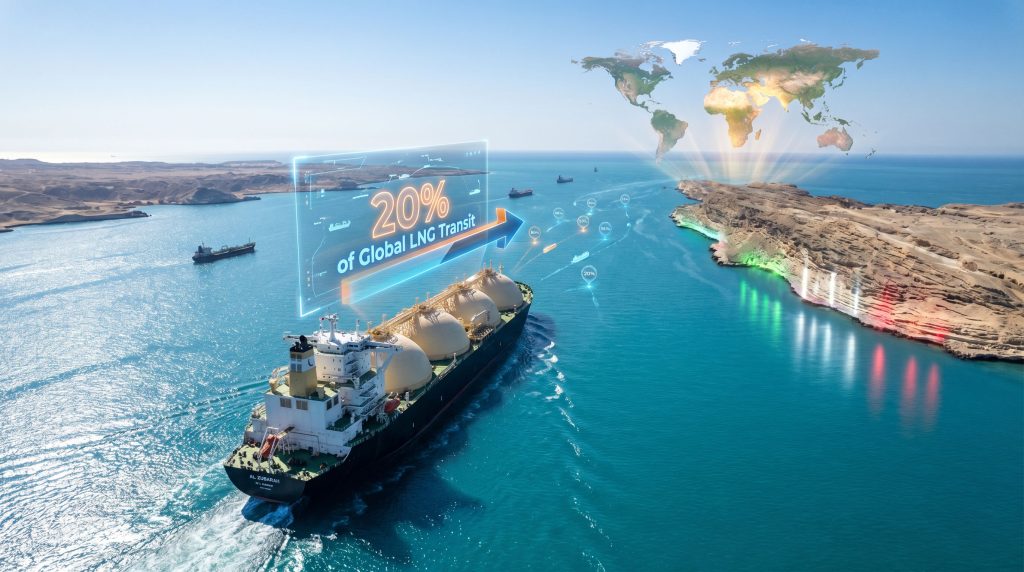
The global energy infrastructure ecosystem faces unprecedented stress testing as LNG tankers approaching Strait of Hormuz challenge fundamental assumptions about supply chain resilience. Maritime energy transport represents a complex intersection of geopolitical leverage, insurance market calculations, and strategic resource positioning that extends far beyond simple commodity flows.
Modern energy security depends on narrow chokepoints where single policy decisions can reshape entire continental markets. The Strait of Hormuz exemplifies this vulnerability, where 20% of global LNG supplies transit through a waterway controlled by competing national interests. Understanding how these transit patterns evolve under pressure reveals deeper strategic priorities among major energy consumers and producers.
How Do Geopolitical Chess Moves Shape Global Energy Transit Routes?
Strategic waterways function as natural laboratories for testing international resolve and economic interdependence. The current situation demonstrates how energy infrastructure becomes both weapon and shield in broader geopolitical conflicts.
The Strategic Value of Hormuz in Global LNG Supply Chains
The Strait of Hormuz controls approximately one-fifth of global LNG supplies, establishing it as a critical bottleneck in international energy flows. This concentration represents a fundamental vulnerability in global energy architecture, where single-point failures can cascade across multiple continental markets.
Recent vessel tracking data reveals 15 laden LNG vessels currently positioned in the Gulf, representing billions of dollars in stranded energy cargo awaiting transit decisions. These vessels carry strategic significance beyond their immediate commercial value, serving as barometers for insurance market confidence and geopolitical risk assessment.
The positioning of empty tankers Al Hamra and Mraweh, both operated by Abu Dhabi National Oil Company, near Fujairah anchorage demonstrates sophisticated risk management strategies. Empty vessel deployment minimises potential cargo losses while testing transit conditions and insurance market responses.
Multi-Party Negotiation Dynamics in Maritime Corridors
Iranian Foreign Minister Abbas Araghchi's declaration on April 18, 2026, that Hormuz remains "completely open" during a 10-day ceasefire between Israel and Hezbollah establishes conditional rather than unconditional transit access. This temporal limitation creates urgency among vessel operators while maintaining Iranian leverage over energy flows.
Competing authority claims emerge when Iranian openness declarations conflict with US President Donald Trump's statement that "America's naval blockade of Hormuz will remain in full force." This contradiction forces maritime operators and insurance companies to navigate between conflicting national directives.
Iranian conditions requiring transit arrangements with their authorities and restrictions on vessels linked to "hostile" countries create multi-layered approval processes. These requirements transform routine commercial shipping into diplomatic negotiations, extending decision timelines and increasing operational complexity.
When big ASX news breaks, our subscribers know first
Which Market Forces Drive LNG Tanker Movement Decisions?
Energy market dynamics during supply disruptions reveal how traders balance immediate profit opportunities against longer-term strategic positioning. Regional demand patterns and insurance market calculations become primary determinants of vessel routing decisions, especially considering the broader oil price movements affecting global energy markets.
Insurance Market Risk Assessment Frameworks
Insurance company responses to recent geopolitical developments represent the critical bottleneck in resuming energy flows. War risk premiums and coverage availability decisions ultimately determine whether theoretical transit permissions translate into actual cargo movements.
The extended 11-week period from late February through April 2026 without loaded LNG shipments exiting the Gulf demonstrates how insurance market hesitation can effectively halt energy flows regardless of political declarations. Coverage decisions create de facto maritime policy that supersedes diplomatic statements.
Lloyd's of London and major marine insurers employ sophisticated risk assessment models that evaluate real-time intelligence, historical precedent, and potential loss scenarios. These calculations consider vessel values, cargo worth, crew safety, and potential environmental liabilities when determining coverage terms.
Cargo Destination Optimisation Under Uncertainty
Regional market targeting becomes crucial during supply disruptions, with analysts noting that cargoes will likely target Asian buyers, particularly in South Asian markets where spot buying activity has increased during recent weeks. This geographic concentration reflects both demand patterns and strategic buyer positioning.
South Asian markets demonstrate greater willingness to accept higher risk premiums for immediate LNG access, creating arbitrage opportunities for successful transit operators. European markets, with more diverse supply sources and strategic reserves, show less urgency for Gulf-origin cargoes.
Strategic inventory management by major importers influences vessel routing decisions as buyers balance immediate needs against long-term supply security. Countries with limited storage capacity show greater willingness to pay premium rates for reliable delivery, particularly as trade market volatility affects global commodity flows.
What Production Recovery Scenarios Could Reshape Supply Dynamics?
Production facility restoration timelines create cascading effects across global energy markets. Qatar's Ras Laffan facility damage assessment and recovery planning influence both immediate supply calculations and longer-term contract negotiations.
Qatar's Ras Laffan Facility Restart Timeline Analysis
Qatar's world-largest LNG facility sustained approximately 17% capacity damage from Iranian attacks last month, creating significant production disruption beyond transit blockade effects. This damage represents both physical infrastructure destruction and operational complexity in restart procedures.
Technical assessment of LNG facility damage requires specialised expertise in cryogenic systems, compressor technology, and safety protocols. The complexity of these systems means that even partial damage can require extensive testing and certification before resuming operations.
Phased production restart scenarios suggest that even limited capacity recovery could generate substantial market impact. Wood Mackenzie analysis indicates that announcement of restart for "even just a few LNG trains at Ras Laffan" could drive significant downward price movement in gas markets.
| Recovery Phase | Capacity Percentage | Market Impact | Timeline Estimate |
|---|---|---|---|
| Initial Restart | 25-30% | High price volatility | 4-6 weeks |
| Partial Recovery | 50-70% | Moderate price decline | 8-12 weeks |
| Full Restoration | 85-90% | Market normalisation | 16-24 weeks |
Regional Production Diversification Strategies
Alternative Gulf production capacity becomes critical during Qatar's recovery period. UAE's ADNOC positioning demonstrates how regional producers can capture market share during competitor disruption while building longer-term customer relationships.
Oman and Kuwait LNG export capacity expansion plans gain strategic importance as buyers seek supply diversification. These facilities, traditionally secondary to Qatar's massive output, now represent crucial backup capacity for Asian importers, particularly considering Australia's resource energy exports challenges.
Long-term supply contract renegotiation implications extend beyond immediate crisis response. Buyers may demand force majeure clauses that provide greater flexibility during geopolitical disruptions, while sellers seek higher premiums for guaranteed delivery commitments.
How Do Transit Patterns Reveal Strategic Energy Security Priorities?
Vessel movement analysis provides insight into strategic positioning by major energy companies and national oil corporations. Empty tanker deployment and loaded cargo routing decisions reveal risk tolerance and market assessment strategies.
Vessel Movement Analysis and Strategic Signalling
The strategic positioning of Al Hamra and Mraweh near Fujairah represents calculated risk management by Abu Dhabi National Oil Company. These empty vessels serve multiple purposes: testing transit conditions, signalling market confidence, and maintaining operational readiness for cargo loading.
According to recent vessel tracking data, at least three additional tankers loaded with Qatari LNG are moving toward Hormuz, demonstrating escalating confidence in transit viability following Iranian opening declarations. This sequential approach minimises exposure while maintaining pressure on insurance companies to provide coverage.
Fleet deployment patterns reveal how national oil companies balance commercial objectives against strategic national interests. ADNOC's vessel positioning supports both UAE's energy export goals and broader regional stability objectives.
Asian Energy Import Strategy Evolution
Regional demand patterns during the crisis reveal strategic priorities among major Asian importers. South Asian markets' demonstrated willingness to maintain spot buying activity during supply disruption indicates prioritisation of energy security over cost optimisation.
Japan and South Korea's strategic petroleum reserve policies become crucial during extended supply disruptions. These countries' ability to maintain consumption from reserves influences their negotiating position and willingness to accept higher prices.
India's LNG import diversification efforts gain urgency as traditional Gulf supplies face disruption. Long-term contracts with US, Australian, and African suppliers become more valuable as alternative supply sources.
What Risk Management Frameworks Guide Maritime Energy Transport?
Multi-layered security assessment protocols govern energy transport decisions during geopolitical crises. Insurance companies, vessel operators, and cargo owners each employ distinct risk frameworks that must align for successful transit operations.
Multi-Layered Security Assessment Protocols
Insurance companies serve as final arbiters of transit viability through coverage decisions that supersede political declarations. Their risk assessment protocols consider vessel safety, crew security, cargo value, and potential environmental liabilities when determining premium levels.
Iranian requirements that ships linked to "hostile" countries cannot transit and that all passages must coordinate with Iranian authorities create additional compliance layers. These conditions force vessel operators to navigate between conflicting national requirements, while considering tariffs economic implications on global trade.
The persistence of US naval blockade despite Iranian opening declarations creates asymmetric risk environments. Insurance companies must evaluate competing authority claims and potential enforcement scenarios when calculating coverage terms.
War risk premium calculations incorporate multiple variables:
- Vessel value and replacement costs
- Cargo worth and market volatility
- Crew safety and evacuation procedures
- Environmental liability exposures
- Historical loss data and precedent analysis
- Real-time intelligence and threat assessment
Alternative Route Economic Viability Analysis
Cape of Good Hope routing adds approximately 3,500 nautical miles and 10-14 additional days to Asian deliveries, substantially increasing transportation costs and delivery uncertainty. These extended routes require additional fuel, crew provisions, and insurance coverage.
Suez Canal capacity constraints limit alternative routing options for simultaneous vessel diversions. Canal authorities prioritise transit scheduling based on vessel size, cargo type, and passage fees, creating potential bottlenecks during crisis periods.
Overland pipeline alternatives through Central Asia offer long-term supply diversification but require substantial infrastructure investment and multi-country coordination. These projects typically require 5-10 year development timelines before achieving operational capacity.
Which Long-Term Strategic Shifts Could Emerge From Current Tensions?
Current energy supply disruptions accelerate strategic infrastructure investment and geopolitical realignment trends that extend beyond immediate crisis resolution. These shifts reshape global energy architecture for decades.
Energy Infrastructure Resilience Investment Priorities
Floating LNG terminal deployment strategies gain importance as buyers seek infrastructure that reduces dependence on fixed pipelines and traditional shipping routes. These terminals provide greater operational flexibility during geopolitical disruptions.
Strategic storage capacity expansion becomes critical for energy importing nations seeking buffer capacity during supply interruptions. Countries with limited geological storage options invest in above-ground facilities and floating storage vessels.
Renewable energy acceleration serves dual purposes as climate policy and energy security measure. Domestic renewable capacity reduces exposure to international energy market volatility and geopolitical supply risks, particularly relevant given the natural gas forecast uncertainty.
Geopolitical Realignment Scenarios in Energy Trade
Russia-Iran energy cooperation expansion possibilities create alternative supply chains that bypass traditional Western-controlled infrastructure. These partnerships could reshape global energy flows and pricing mechanisms.
Gulf Cooperation Council internal supply sharing mechanisms become more sophisticated as member states balance individual commercial interests against regional security objectives. Enhanced cooperation provides resilience against external disruption.
US-Europe energy partnership strengthening initiatives include infrastructure investment, joint strategic reserves, and coordinated response protocols for supply disruptions. These partnerships reduce European dependence on problematic suppliers.
The next major ASX story will hit our subscribers first
How Do Current Events Reshape Global LNG Market Structure?
Supply disruptions reveal underlying structural vulnerabilities in global energy markets while accelerating trends toward regionalisation and strategic buyer-seller relationships.
Price Discovery Mechanisms Under Supply Uncertainty
Spot market premium calculations during transit disruptions demonstrate how supply uncertainty translates into price volatility. The 20% reduction in global LNG supplies creates arbitrage opportunities for successful deliveries while penalising unsuccessful transits.
Regional price convergence patterns during supply stress show how interconnected markets respond to localised disruptions. Asian markets experience greater price volatility due to higher dependence on Gulf supplies and limited pipeline alternatives.
Industry analysis indicates that long-term contract force majeure clause activations become critical during extended disruptions. These clauses determine whether buyers or sellers bear financial responsibility for undelivered cargoes during geopolitical crises.
Strategic Buyer Behaviour Evolution
Emergency procurement protocols by major importers reveal how energy security considerations override cost optimisation during crisis periods. Buyers demonstrate willingness to pay substantial premiums for reliable delivery guarantees.
Supplier diversification accelerates as buyers seek reduced dependence on single geographic regions or political entities. This diversification drives long-term contract negotiations that prioritise supply security over lowest-cost procurement.
Energy security versus cost optimisation trade-offs become explicit policy decisions rather than market-driven outcomes. Governments increasingly view energy procurement as national security matter requiring strategic rather than purely commercial approaches.
What Investment Implications Emerge for Energy Infrastructure?
Infrastructure investment priorities shift toward resilience and diversification rather than pure efficiency optimisation. These changes create opportunities for specialised technologies and alternative supply chain configurations.
Maritime Security Technology Development
Autonomous vessel operation capabilities for high-risk transits represent emerging technology solutions for dangerous passage requirements. These systems reduce crew exposure while maintaining cargo delivery capabilities.
Satellite monitoring and communication system enhancements provide real-time intelligence for vessel routing decisions and insurance risk assessment. Advanced tracking capabilities improve response coordination during emergencies.
Cybersecurity protocols for critical energy transport infrastructure become essential as digital systems control navigation, cargo management, and communication systems. Cyber attacks on energy transport could replicate physical blockade effects.
Regional Energy Hub Development Strategies
UAE's position as alternative LNG trading centre gains strategic importance as buyers seek options beyond traditional Qatar-centred supply chains. Dubai and Abu Dhabi terminals provide storage, blending, and re-export capabilities.
Singapore's strategic storage and blending facility expansion supports Asian market diversification by providing interim storage during supply disruptions and price arbitrage opportunities between regional markets.
Egypt's LNG re-export capacity development plans leverage geographic positioning between European and Asian markets. These facilities could provide alternative routing for stranded cargoes and emergency supply options.
Risk Disclaimer: This analysis involves forecasting and speculation about geopolitical events, energy market dynamics, and infrastructure development timelines. Actual outcomes may differ significantly from projected scenarios due to changing political conditions, market forces, and technological developments. Energy infrastructure investments carry substantial risks including regulatory changes, technological obsolescence, and geopolitical instability.
The convergence of LNG tankers approaching Strait of Hormuz with broader energy security challenges creates lasting implications for global supply chain architecture. Success in navigating current tensions will likely establish precedents for future crisis management while accelerating investment in alternative infrastructure and supply diversification strategies.
Maritime energy transport risks extend beyond immediate operational challenges to reshape international cooperation frameworks, insurance market structures, and strategic infrastructure investment priorities for the coming decade.
Ready to Position Yourself for the Next Energy Market Breakthrough?
Energy market volatility creates exceptional opportunities for informed investors tracking infrastructure developments and supply chain disruptions across critical sectors. Discovery Alert's proprietary Discovery IQ model delivers instant notifications on significant ASX mineral and energy-related discoveries, helping subscribers capitalise on market-moving announcements before broader market recognition occurs.