
June 26, 2026
Africa's broader macroeconomic stability depends on the success of national currency reforms across the continent. For decades, Southern African Development Community (SADC) nations have struggled to balance monetary sovereignty with international trade requirements. Zimbabwe's recent achievement of the lowest inflation in Zimbabwe in over two decades provides a unique case study for understanding how gold-backed currency systems can restore price stability in resource-rich economies.
Modern monetary policy faces unprecedented challenges when traditional fiscal tools fail to control inflation spirals. The intersection of commodity backing, foreign exchange stability, and market confidence creates complex dynamics that require careful analysis to understand sustainable economic recovery pathways. Furthermore, understanding gold as an inflation hedge becomes crucial when examining Zimbabwe's transformation.
Understanding Zimbabwe's 4.1% Inflation Achievement Within Regional Context
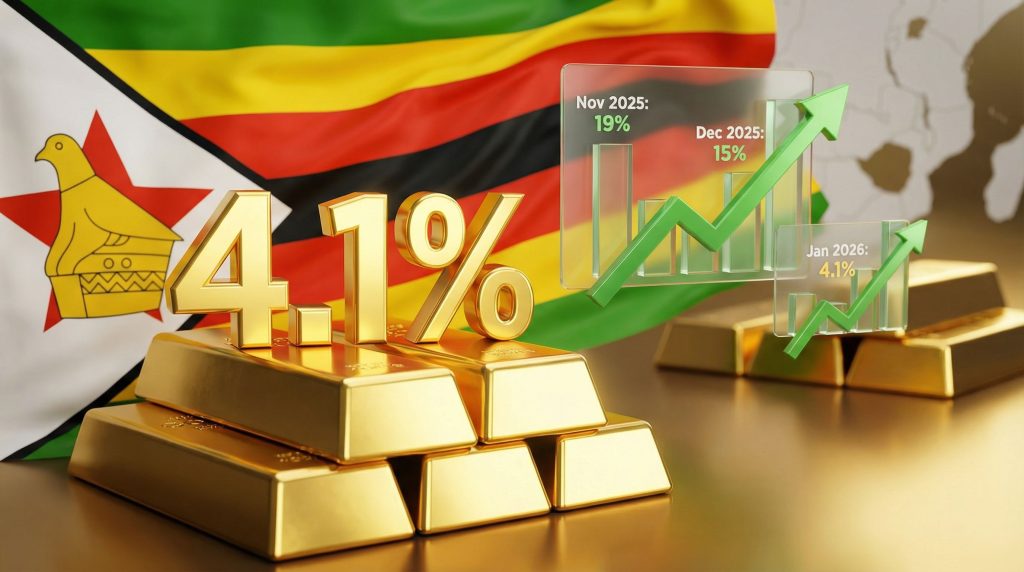
Zimbabwe's January 2026 inflation rate of 4.1% represents a fundamental shift in the nation's economic trajectory. This figure marks the lowest inflation in Zimbabwe since 2018, when local prices maintained parity with the US dollar system. Moreover, this achievement comes at a time when global markets are experiencing a historic gold surge, providing additional context for Zimbabwe's commodity-backed currency strategy.
Inflation Trajectory Analysis and Regional Implications
The speed of Zimbabwe's inflation reduction demonstrates remarkable policy effectiveness. Economic data reveals a 73.6 percentage point decline from September 2025's 82.7% inflation to January 2026's 4.1% rate within just four months.
| Month | Inflation Rate | Monthly Change |
|---|---|---|
| September 2025 | 82.7% | Baseline |
| October 2025 | 32.7% | -50 percentage points |
| November 2025 | 19% | -13.7 percentage points |
| December 2025 | 15% | -4 percentage points |
| January 2026 | 4.1% | -10.9 percentage points |
This inflation compression timeline surpasses even optimistic projections. The Confederation of Zimbabwe Industries initially forecasted a 50% reduction in annual inflation by December 2025, predicting rates between 15-20%. Consequently, the actual achievement of 4.1% exceeded these conservative estimates by significant margins.
Historical Inflation Context and Significance
Zimbabwe's inflation achievement gains historical significance when compared to its hyperinflation period. During 2008, Zimbabwe experienced monthly inflation rates reaching 79.6 billion percent, forcing complete economic dollarization in 2009. The current 4.1% annual rate represents approximately 0.34% monthly inflation if distributed evenly throughout the year.
For Zimbabweans facing this rare single-digit inflation, this development marks the first time in 29 years that inflation has dropped to such levels. This historic milestone represents a significant shift for ordinary citizens who have endured decades of economic uncertainty.
Economic analysts attribute this inflation reduction to three primary factors: stricter monetary policies implemented by Zimbabwe's central bank, improved supply chain conditions reducing input cost pressures, and enhanced stability within foreign exchange markets.
For ordinary Zimbabweans, this inflation level approaches international standards. Countries like South Africa typically maintain inflation targets between 3-6%, making Zimbabwe's 4.1% rate competitive within regional benchmarks for the first time in over two decades.
When big ASX news breaks, our subscribers know first
Zimbabwe Gold Currency: Mechanisms Behind Economic Stabilization
The Zimbabwe Gold (ZiG) currency launch in April 2024 created the foundation for the country's inflation breakthrough. Within nine months, ZiG achieved 40% penetration of daily commercial transactions, representing rapid market acceptance for a new national currency. This development aligns with broader gold market performance trends that have supported commodity-backed currencies globally.
ZiG Adoption Metrics and Market Performance
ZiG's 40% transaction share indicates substantial but incomplete market confidence. The remaining 60% of daily commerce continues using US dollars, creating a functional dual-currency economy. In addition, this mixed adoption pattern provides both stability and flexibility during the transition period.
Oxford Economics research confirms that ZiG maintains steady performance in official foreign exchange markets. However, parallel markets price ZiG at approximately 20% below official rates, indicating residual market skepticism about long-term currency sustainability.
| Currency Metric | Performance |
|---|---|
| Official Market Stability | Steady valuation maintained |
| Parallel Market Premium | ~20% above official rate |
| Transaction Penetration | 40% of daily commerce |
| USD Usage Remaining | 60% of transactions |
Gold-Backing Mechanism and Reserve Strategy
ZiG operates on a partial gold-backing system rather than full gold standard mechanics. This approach allows Zimbabwe's central bank to maintain monetary policy flexibility while providing tangible asset backing for currency confidence.
The partial backing mechanism means gold reserves cover a portion of circulating ZiG supply, though exact reserve ratios remain undisclosed by monetary authorities. Furthermore, this fractional reserve approach balances currency credibility with practical monetary management requirements.
Gold Production Supporting Currency Confidence:
- 2024 record output: 38.4 tons annually
- 2025 projections exceed previous records due to elevated global gold prices
- Export revenues provide foreign exchange reserves supporting ZiG valuation
- Domestic gold production offers tangible backing for currency claims
Monetary Policy Reforms Driving Inflation Control
Zimbabwe's central bank implemented comprehensive policy reforms coinciding with ZiG introduction. These stricter monetary policies created the framework enabling sustained inflation reduction from hyperinflation levels to single-digit rates. The success of these reforms comes despite global inflation and debt challenges affecting many economies worldwide.
Central Bank Strategy Implementation
The Reserve Bank of Zimbabwe restructured monetary policy transmission mechanisms to support ZiG adoption while controlling inflation pressures. Key policy adjustments included foreign exchange market stabilization measures and supply chain optimization initiatives.
Policy Reform Categories:
- Money Supply Controls: Reduced circulating currency through open market operations
- Interest Rate Adjustments: Modified borrowing costs to discourage excessive spending
- Reserve Requirements: Increased mandatory bank reserves to limit lending capacity
- FX Market Intervention: Direct currency market support to maintain stable exchange rates
Supply Chain and Exchange Rate Stabilization
Improved supply chain conditions contributed materially to inflation reduction. Better logistics efficiency reduced transportation costs and import premiums, while enhanced foreign exchange availability lowered input costs for domestic producers.
The central bank's foreign exchange stabilization measures targeted both official and parallel market premiums. By maintaining adequate reserves and intervening strategically, monetary authorities prevented speculative currency attacks that historically triggered inflation spirals.
Zimbabwe's policymakers studied outcomes from the 2009 dollarization period to inform the current ZiG partial adoption strategy, avoiding complete loss of monetary autonomy while maintaining currency credibility.
Gold Production's Role in Economic Recovery
Zimbabwe's 38.4 tons of gold production in 2024 established a record high supporting both export revenues and currency backing confidence. This production level exceeded previous benchmarks while providing essential foreign exchange earnings.
Production Performance and Market Dynamics
Gold output success reflects improved mining sector conditions and favourable international pricing. Current gold price forecast models indicate continued upward momentum, with gold reaching record levels during 2025.
| Production Metric | 2024 Performance |
|---|---|
| Annual Gold Output | 38.4 tons |
| Previous Record Status | Highest in modern Zimbabwe history |
| 2025 Projections | Exceeding 38.4 tons |
| Price Support Factor | Persistently elevated global prices |
Currency Confidence Through Commodity Backing
Gold production provides multiple support mechanisms for ZiG currency stability:
Direct Currency Support:
- Physical asset base for partial gold-backing mechanism
- International acceptability as universal settlement medium
- Price stability correlation with inflation control
Economic Multiplier Effects:
- Foreign exchange earnings supporting import capacity
- Government revenue funding monetary policy implementation
- International investor confidence signalling
The alignment between record gold production and successful currency introduction created mutually reinforcing confidence effects. Higher production supported ZiG backing while currency stability facilitated mining sector expansion.
Foreign Investment Response and Market Confidence
International investor behaviour provides objective measurement of confidence in Zimbabwe's economic recovery. Zimbabwe Stock Exchange data reveals foreign investor participation increased to 26.53% of total trading in Q2 2025, up from 15.39% in Q1 2025.
Investment Climate Transformation Indicators
The 72.7% increase in foreign participation within three months demonstrates substantial international confidence rebuilding. This investment surge coincided with ZiG adoption acceleration and inflation reduction momentum.
Foreign Investment Metrics:
- Q1 2025 participation: 15.39% of total trading
- Q2 2025 participation: 26.53% of total trading
- Quarterly growth rate: +72.7% increase
- Timeline correlation: Matches ZiG adoption period
Risk Assessment Improvements
International investors typically demand significant risk premiums for Zimbabwe exposure due to historical currency instability and hyperinflation experiences. The rapid increase in stock market participation suggests investors perceive meaningfully reduced country risk.
Market confidence rebuilding reflects improved regulatory frameworks, currency stability demonstrations, and sustained inflation control effectiveness over consecutive quarters.
Credit rating improvements and international lending accessibility could follow if inflation control proves sustainable. However, Zimbabwe must demonstrate consistent policy implementation over extended periods to achieve full international financial integration.
Structural Economic Challenges and Sustainability Risks
Despite significant progress, Zimbabwe faces substantial challenges threatening long-term inflation control sustainability. The 60% continued USD dependence indicates incomplete confidence in ZiG currency viability among market participants.
Currency Adoption Limitations
ZiG's 40% transaction penetration represents impressive initial adoption but reveals ongoing market segmentation. High-value transactions, international trade, and savings likely remain USD-denominated, limiting ZiG's complete monetary sovereignty.
Adoption Challenge Categories:
- Value-Based Segmentation: Large transactions favour USD stability
- International Trade: Export/import operations require USD liquidity
- Wealth Storage: Savings prefer established store-of-value currencies
- Parallel Market Premium: 20% unofficial exchange rate spread
External Shock Vulnerabilities
Zimbabwe's economy remains vulnerable to external disruptions that could reverse inflation progress. Commodity price volatility, regional economic instability, or global financial market stress could pressure ZiG currency confidence.
Potential Risk Scenarios:
- Gold Price Decline: Reduced export revenues weakening currency backing
- SADC Regional Stress: Spillover effects from neighbouring economies
- Global Financial Tightening: International capital flight from emerging markets
- Supply Chain Disruptions: Import cost inflation pressuring domestic prices
Regional Economic Integration Considerations
Zimbabwe's monetary policy independence creates tensions with SADC economic integration objectives. Neighbouring countries maintain different monetary frameworks, potentially complicating trade settlement and regional financial cooperation.
| Regional Comparison | Monetary Framework |
|---|---|
| South Africa | Independent floating currency |
| Botswana | USD-pegged pula system |
| Namibia | South African rand currency union |
| Zimbabwe | Gold-backed dual currency |
The next major ASX story will hit our subscribers first
Long-Term Sustainability Prospects and Economic Outlook
Zimbabwe's ability to maintain single-digit inflation depends on sustained policy discipline and continued market confidence building. Economic forecasting models suggest cautious optimism whilst highlighting critical variables affecting sustainability.
Policy Continuity Requirements
Sustained lowest inflation in Zimbabwe achievement requires consistent monetary policy implementation without political interference. Historical Zimbabwe experience demonstrates how policy reversals can rapidly recreate hyperinflation conditions.
Critical Sustainability Milestones:
- ZiG Adoption Expansion: Increasing transaction penetration beyond 40% threshold
- Parallel Market Convergence: Reducing 20% unofficial premium through confidence building
- International Recognition: Achieving regional central bank cooperation agreements
- Gold Production Maintenance: Sustaining record output levels supporting currency backing
Economic Recovery Roadmap Projections
Zimbabwe's inflation control success creates foundations for broader economic recovery if sustained over 24-36 month periods. However, complete economic normalisation requires addressing structural challenges beyond monetary policy.
According to recent reports on Zimbabwe's inflation performance, economists emphasise that sustained pricing stability would prove essential for fostering comprehensive economic recovery and restoring complete confidence in local currency systems.
Long-term Recovery Requirements:
- Infrastructure development supporting productive capacity expansion
- International sanctions resolution improving global market access
- Foreign direct investment attraction beyond portfolio flows
- Regional trade integration reducing import dependence
Investment Strategy Implications and Market Psychology
Zimbabwe's monetary transformation creates unique investment opportunities whilst maintaining significant risks requiring careful analysis. The lowest inflation in Zimbabwe environment changes fundamental investment calculus for the first time in decades.
Portfolio Allocation Considerations
International investors must balance Zimbabwe's improved fundamentals against remaining structural risks. Currency stability improvements support equity valuations whilst continued USD dependence limits complete confidence.
Investment Strategy Factors:
- Local Currency Exposure: ZiG adoption reducing USD transaction requirements
- Sectoral Allocation: Mining and gold production benefiting from price stability
- Risk Management: Diversification across SADC markets reducing country-specific exposure
- Timeline Considerations: Short-term improvements versus long-term sustainability questions
Market Psychology and Confidence Building
Investor sentiment reflects cautious optimism tempered by historical Zimbabwe experience. The rapid foreign participation increase in equity markets demonstrates positive momentum whilst parallel market premiums indicate residual scepticism.
Successful inflation control creates positive feedback loops encouraging additional investment and economic activity. However, Zimbabwe must demonstrate sustained policy discipline over extended periods to achieve complete market confidence restoration.
Regional Economic Integration and Continental Implications
Zimbabwe's monetary success provides valuable lessons for other African economies considering currency reform initiatives. The partial gold-backing model offers alternatives to complete dollarisation whilst maintaining monetary policy autonomy.
Continental Monetary Policy Lessons
Several African countries face similar currency instability challenges, making Zimbabwe's experience relevant for continental monetary policy development. The ZiG model demonstrates feasibility of commodity-backed currencies in resource-rich economies.
Applicable Framework Elements:
- Commodity Backing: Using natural resource reserves to support currency confidence
- Dual Currency Transition: Gradual adoption reducing economic disruption
- Central Bank Coordination: Balancing monetary autonomy with international integration
- Market Confidence Building: Demonstrating sustained policy discipline
Nigeria, Ghana, and other West African economies could potentially adapt similar approaches using oil, gold, or other commodity reserves to stabilise national currencies whilst maintaining regional integration objectives.
Southern African Development Community Impact
Zimbabwe's economic stabilisation strengthens SADC regional integration prospects by reducing currency volatility and trade settlement complications. Improved economic fundamentals support regional trade expansion and financial cooperation.
However, Zimbabwe's unique monetary framework may create coordination challenges with neighbouring countries using different currency systems. Regional monetary integration requires careful balance between national autonomy and collective economic objectives.
The success of Zimbabwe's gold-backed currency initiative could influence broader African Union monetary integration discussions and encourage similar commodity-backed currency experiments across the continent.
Zimbabwe's achievement of the lowest inflation in Zimbabwe in over two decades demonstrates that well-designed monetary reforms can restore price stability even after severe hyperinflation experiences. However, sustained success requires continued policy discipline, expanded market confidence, and structural economic improvements beyond monetary policy alone.
The ZiG currency experiment provides valuable insights for other emerging economies seeking alternatives to complete dollarisation whilst maintaining monetary sovereignty. Success or failure in sustaining these improvements will influence monetary policy discussions across Africa and other developing regions facing similar currency stability challenges.
Are You Tracking the Next Gold Discovery That Could Transform Your Portfolio?
Discovery Alert's proprietary Discovery IQ model instantly identifies significant ASX mineral discoveries, turning complex geological data into actionable trading opportunities just as Zimbabwe's gold-backed currency demonstrates the strategic importance of precious metals in modern economies. With the gold market experiencing historic performance and mining companies delivering exceptional returns following major discoveries, explore Discovery Alert's dedicated discoveries page to understand how early positioning in mineral discoveries has generated substantial portfolio gains.