August 6, 2026
When Supply Chains Become the Sustainability Frontier
For decades, the conversation around mining decarbonisation has centred almost exclusively on the most visible sources of emissions: haul trucks the size of houses, diesel-powered drilling rigs, and energy-hungry ore processing facilities. Yet a quieter, more persistent source of carbon output has largely escaped scrutiny. The continuous movement of maintenance, repair, and operations materials between distribution hubs and mine sites generates cumulative emissions that, when aggregated across an entire operation, rival those of many on-site processes.
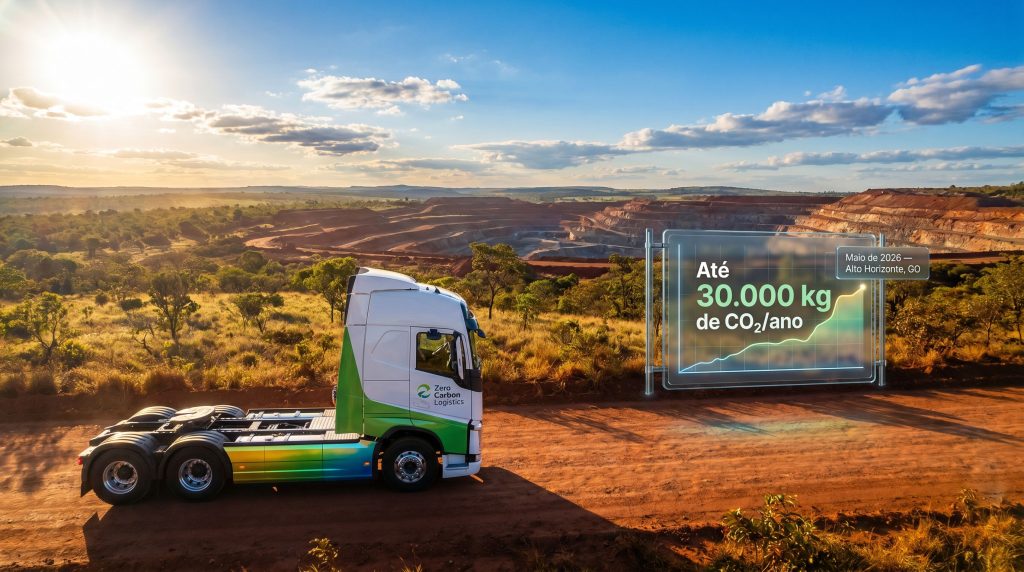
This structural blind spot is now being addressed with increasing urgency, and the deployment of the caminhão 100% elétrico da Lundin Mining em Alto Horizonte represents one of the clearest examples of how Brazilian mining is beginning to close that gap.
When big ASX news breaks, our subscribers know first
The Hidden Carbon Cost of MRO Logistics in Mining
Why Support-Chain Emissions Are Systematically Underestimated
Most ESG reporting frameworks place the greatest analytical weight on scope 1 and scope 2 emissions, which are the most straightforward to measure and directly control. Scope 3 emissions, which encompass all indirect emissions across a company's value chain including transportation of purchased goods, are considerably more complex to quantify and have historically received less rigorous attention.
Within scope 3, the logistics of MRO materials occupy a particularly overlooked position. Unlike bulk ore transport, which is measured and managed at scale, MRO deliveries are frequent, relatively small, and distributed across multiple suppliers and routes. This fragmentation makes them easy to undercount.
Furthermore, the mining electrification transition has largely focused on headline equipment rather than the supporting logistics network that keeps operations running daily.
The operational reality is that a single MRO delivery vehicle completing a daily route between a distribution branch and a mine site can accumulate emissions equivalent to those generated by tens of thousands of kilometres of conventional freight travel each year. The constancy of these runs is precisely what makes them significant in aggregate.
Consider a standard diesel-powered medium freight vehicle operating a 200 km daily round trip, five days a week across a 50-week operational year. At a consumption rate typical of that vehicle class and applying standard CO₂ emission factors for diesel combustion of approximately 2.68 kg of CO₂ per litre burned, the annual carbon footprint of that single route can reach or exceed 30,000 kg of CO₂. This is not a hypothetical figure. It is the benchmark against which the Lundin Mining initiative in Alto Horizonte has been measured.
What Is Actually Happening at Mina de Chapada in Alto Horizonte?
The Operation and Its Strategic Context
The Mina de Chapada is a copper and gold extraction operation located in Alto Horizonte, in the state of Goiás, central Brazil. Operated by Lundin Mining Brasil, it forms a significant part of the company's global copper production portfolio. The interior location, while rich in mineralisation, presents logistical challenges common to remote mining operations in Brazil, including distance from major distribution centres and the need for reliable, high-frequency supply runs to keep operations running without interruption.
Since May 2026, a fully electric truck operated by Zero Carbon Logistics has been conducting daily transport runs between the company's distribution branch and the Lundin Mining Brasil unit at Alto Horizonte. The vehicle carries MRO materials, meaning the operational consumables and maintenance supplies that keep a mine functioning on a day-to-day basis.
This arrangement is structured as a third-party logistics service, meaning Zero Carbon Logistics operates and maintains the vehicle while Lundin Mining Brasil benefits from both the supply reliability and the measurable environmental advantage the service delivers. According to IBRAM, this deployment marks a notable milestone in Brazil's mining sector electrification efforts.
Comparing the Electric and Diesel Alternatives
The performance differential between the two approaches is stark across several dimensions beyond emissions alone:
| Evaluation Criterion | 100% Electric Truck | Conventional Diesel Truck |
|---|---|---|
| Operational CO₂ emissions | Zero during use | Significant per kilometre |
| Estimated annual CO₂ avoidance | Up to 30,000 kg/year | Baseline reference |
| Noise impact | Substantially reduced | High |
| Local air quality effect | None | Particulate and NOₓ emissions |
| Maintenance complexity | Lower (fewer moving parts) | Higher |
| ESG alignment score | Strong | Weak to moderate |
| Long-term cost trajectory | Declining (battery cost trends) | Exposed to fuel price volatility |
Putting 30,000 Kilograms of CO₂ in Perspective
Translating the Number Into Something Tangible
Abstract weight measurements rarely convey environmental significance to a general audience. To understand what 30,000 kg of CO₂ per year actually represents, it helps to contextualise it against familiar benchmarks.
- An average passenger vehicle travelling 12,000 km annually emits approximately 2,000 to 2,400 kg of CO₂, meaning the avoided emissions from this single electric truck are equivalent to removing roughly 12 to 15 passenger cars from the road each year.
- In the context of Brazilian freight transport, where diesel remains the dominant fuel source, the figure represents a meaningful contribution toward sector-level decarbonisation targets.
- If a mining operation running five such daily MRO routes were to electrify its entire light logistics fleet, the aggregate annual CO₂ avoidance would approach 150,000 kg, a figure that becomes material in corporate sustainability reporting.
In addition, the mining decarbonisation benefits of initiatives like this extend well beyond emissions figures, encompassing cost efficiencies and improved stakeholder relations.
The Scalability Logic Behind a Single Vehicle
The strategic value of this initiative is not confined to its immediate emissions impact. Pilot deployments of this nature serve a critical data-generation function. Every kilometre logged, every delivery completed, and every charge cycle recorded builds an operational dataset that informs decisions about fleet expansion, infrastructure investment, and route optimisation.
Mining companies evaluating the electrification of broader logistics networks need real-world performance data from environments comparable to their own. High-temperature conditions, unpaved access roads, variable load weights, and remote charging infrastructure requirements all introduce variables that laboratory testing cannot fully replicate. Alto Horizonte provides those conditions, and the operational data being gathered there carries value well beyond this single route.
Pilot programmes in logistics electrification function as evidence-generating exercises. The emissions avoided are real and immediate, but the operational intelligence accumulated may ultimately unlock far larger reductions across expanded fleets.
How This Fits Into Lundin Mining's Broader ESG Architecture
The Strategic Logic of Choosing Sustainable Partners
One of the less-discussed dimensions of corporate ESG strategy is the role of supplier and partner selection in expanding a company's environmental impact beyond its own fenced perimeter. When a mining company chooses a logistics provider that operates zero-emission vehicles and aligns its business model with the United Nations Sustainable Development Goals, it effectively extends its sustainability footprint through procurement.
Zero Carbon Logistics has structured its operations around the UN SDGs, positioning its services as tools for clients seeking to reduce their scope 3 emissions. This alignment is commercially significant because it allows Lundin Mining Brasil to demonstrate progress on emissions reduction without the capital expenditure burden of owning and maintaining an electric fleet itself.
Cleiber Rezende, Director of Operations at Lundin Mining Brasil, has communicated that the company values partners oriented toward innovative, low-emission solutions, characterising this kind of collaboration as foundational to building a production chain that is both more responsible and better aligned with contemporary environmental expectations. This framing reflects an understanding that sustainability credentials now extend through supplier relationships, not just internal operations.
A Layered Approach to Decarbonisation
The Lundin Mining initiative in Alto Horizonte fits naturally into what can be described as a layered decarbonisation model, a structured progression that allows mining companies to generate measurable results at each stage while building toward more complex transitions:
- Layer One: Electrification of external support logistics, including MRO transport (current stage at Alto Horizonte)
- Layer Two: Electrification of auxiliary and light equipment within the mine boundary
- Layer Three: Electrification of heavy extraction equipment, including large haul trucks and drilling rigs (medium to long-term horizon)
Beginning at layer one is strategically rational for several reasons. The technical complexity is lower, the infrastructure requirements are manageable, the routes are predictable, and the return on ESG metrics is immediate. It also builds internal institutional knowledge about electric mining transport operations in a mining context, which is directly applicable to more complex transitions further up the stack.
Global Benchmarking: Where Brazil Sits in the Mining Electrification Landscape
| Operation / Company | Electrification Initiative | Current Stage |
|---|---|---|
| Lundin Mining, Alto Horizonte (Brazil) | 100% electric MRO logistics truck | Operational since May 2026 |
| Global copper mining operations | Large-scale electric haul truck trials | Pilots underway |
| Iron ore sector (global) | Electric conveying and rail systems | Gradual rollout |
| Lithium mining, Latin America | Hybrid and electric light equipment | Testing phase |
For instance, Cummins recently deployed the first commercial hybrid-electric ultra-class mining haul truck, further demonstrating the global momentum behind electrification across the mining sector.
Brazil's Energy Matrix as a Force Multiplier for Electric Vehicles
Why Geography Matters for Decarbonisation Outcomes
The environmental benefit of deploying an electric vehicle is not uniform across countries. It depends critically on the carbon intensity of the national electricity grid that powers the vehicle. In coal-heavy grids, electric vehicles can deliver relatively modest emissions reductions compared to their diesel equivalents. In renewable-dominant grids, the same vehicle can approach near-zero lifecycle emissions.
Brazil sits at the most favourable end of this spectrum. The country generates the majority of its electricity from renewable sources, with hydropower accounting for the largest share of the national mix. Consequently, every kilowatt-hour consumed by the Zero Carbon Logistics vehicle at Alto Horizonte carries a significantly lower carbon footprint than the same energy unit would in, for example, Germany, Australia, or the United States.
This structural advantage transforms what might be a moderate decarbonisation measure elsewhere into a highly effective one in Brazil. The combination of vehicle electrification and a renewable-dominated grid produces emissions reductions that are difficult to replicate through other means in the short term. The broader role of renewable energy in mining is increasingly recognised as a foundational enabler of this kind of outcome.
Operational Advantages Beyond the Carbon Count
The transition to electric logistics in a mining environment delivers benefits that extend beyond greenhouse gas metrics:
- Noise reduction: Electric motors operate at substantially lower decibel levels than diesel engines, reducing noise pollution near communities and ecologically sensitive areas adjacent to the mine.
- Mechanical simplicity: Electric drivetrains contain significantly fewer moving parts than internal combustion engines, resulting in lower maintenance frequency, reduced spare parts inventory requirements, and lower total cost of ownership over time.
- Cargo integrity: The reduced vibration characteristic of electric propulsion can improve the condition of sensitive MRO components during transport, particularly electronic instrumentation and precision parts.
- Fuel cost insulation: Operating costs for electric vehicles are less exposed to diesel price volatility, which in Brazil is subject to both exchange rate effects and domestic fuel pricing policy shifts.
The next major ASX story will hit our subscribers first
Implications for the Broader Brazilian Mining Sector
Logistics Sustainability as a Competitive Differentiator
The Lundin Mining initiative signals a structural shift in how Brazilian mining companies will evaluate their logistics partners in the coming years. As ESG reporting requirements tighten and as major commodity buyers in Europe and Asia apply greater scrutiny to the carbon intensity of their supply chains, the ability to demonstrate low-emission logistics will transition from a differentiating feature to a baseline expectation.
Logistics providers operating diesel-only fleets and serving the mining sector face a strategic choice: invest in fleet electrification or risk progressive exclusion from the supply chains of companies with credible decarbonisation commitments. This dynamic is already visible in other capital-intensive sectors and is moving into mining with increasing velocity.
Several enabling factors are accelerating this transition specifically within the Brazilian mining context:
- Battery technology costs have fallen dramatically over the past decade, with lithium-ion battery pack prices declining by more than 90% between 2010 and 2024, making electric commercial vehicles increasingly cost-competitive.
- The expansion of fast-charging infrastructure along major logistics corridors in Brazil is reducing range anxiety concerns that previously limited electric freight deployment.
- Growing availability of purpose-built electric medium-freight vehicles from both domestic and international manufacturers is expanding the viable options for specialised mining logistics applications.
Remaining Barriers to Wider Adoption
Honest assessment of the electrification trajectory also requires acknowledgment of the challenges that remain:
- Upfront capital costs for electric commercial vehicles remain higher than their diesel equivalents, though total cost of ownership calculations over vehicle lifetimes increasingly favour electrics.
- Charging infrastructure in remote regions of Goiás and other interior mining states is still developing, and operations with longer daily routes or limited access to grid power face genuine logistical constraints.
- Vehicle availability in heavier categories remains limited in Brazil, with most proven electric freight solutions concentrated in medium-duty applications. Very heavy logistics and extraction vehicles are still largely in prototype or limited-pilot phases globally.
However, considerations around natural capital in mining are increasingly shaping how companies weigh these trade-offs, with environmental costs factored more explicitly into long-term investment decisions.
Investors and analysts monitoring this space should note that the pace of battery technology development, combined with tightening ESG reporting requirements, points to accelerating adoption of electric logistics in the mining sector through the late 2020s. However, projections about specific timelines and cost trajectories carry inherent uncertainty and should be treated as indicative rather than definitive.
Frequently Asked Questions: Electric Trucks in Mining Logistics
What does a 100% electric MRO logistics truck actually do in a mining operation?
In the context of Alto Horizonte, the electric truck performs daily transport of maintenance, repair, and operations materials between the Zero Carbon Logistics branch facility and the Lundin Mining Brasil mine site. These materials include the consumables, spare parts, and operational supplies that keep the mine running on a day-to-day basis. The vehicle replaces a conventional diesel truck on the same route, delivering identical logistics functionality with zero direct emissions during operation.
How is the 30,000 kg CO₂ avoidance figure calculated?
The figure represents the estimated annual CO₂ emissions that would have been produced by a diesel-powered equivalent vehicle operating the same route and frequency. It is derived by applying standard emission factors to the estimated fuel consumption of a comparable diesel vehicle across the annual operating schedule. This is a comparative metric, representing avoided emissions relative to the diesel baseline rather than an absolute measurement of emissions produced.
Why start with logistics rather than mine equipment electrification?
External logistics routes offer several characteristics that make them ideal entry points for electrification: fixed, predictable routes; manageable daily distances; access to charging infrastructure at both endpoints; and lower vehicle procurement complexity compared to heavy extraction equipment. These features reduce operational and technical risk, allowing companies to generate real-world performance data and demonstrate ESG progress while the technology for heavier applications continues to mature.
Does the renewable nature of Brazil's electricity grid affect the environmental benefit?
Significantly. Because Brazil's electricity generation relies predominantly on renewable sources, particularly hydropower, the carbon intensity of the electricity used to charge the vehicle is substantially lower than in countries dependent on fossil-fuel-based generation. This amplifies the effective emissions reduction delivered by the caminhão 100% elétrico da Lundin Mining em Alto Horizonte compared to identical deployments in less renewable-heavy grid environments.
What is Zero Carbon Logistics' alignment with UN SDGs?
Zero Carbon Logistics structures its operations around the United Nations Sustainable Development Goals, positioning the company as a provider of logistics services that contribute to measurable progress on environmental and sustainability objectives. The partnership with Lundin Mining Brasil in Alto Horizonte represents a practical application of this positioning in the mining sector.
From Proof of Concept Toward Structural Transformation
What This Initiative Demonstrates
The deployment of the caminhão 100% elétrico da Lundin Mining em Alto Horizonte through its partnership with Zero Carbon Logistics carries significance that extends well beyond its immediate environmental metrics. It demonstrates three things of considerable strategic importance.
First, meaningful scope 3 emissions reductions are achievable in Brazilian mining operations right now, without waiting for the availability of heavy electric extraction equipment or the resolution of every infrastructure challenge.
Second, the third-party logistics service model provides a commercially viable pathway for mining companies to access the benefits of electric vehicle technology without direct fleet ownership, lowering the capital barrier to adoption.
Third, partner selection based on environmental alignment rather than cost alone is emerging as a credible ESG strategy, with measurable outcomes that satisfy institutional investor scrutiny.
The Road Ahead
The replication potential of this model across Brazilian mining is considerable. Any operation with regular, fixed-route MRO deliveries of manageable daily distances is a candidate for the same approach. The data being generated in Alto Horizonte creates a practical template for that expansion.
As battery costs continue to decline, charging infrastructure continues to expand, and ESG reporting requirements continue to tighten, the economic and regulatory case for electric logistics in mining will only strengthen. The Alto Horizonte initiative positions Lundin Mining Brasil as an early mover in this transition, generating operational knowledge and stakeholder confidence that will have value as the sector accelerates its transformation through the remainder of the decade.
This article is intended for informational purposes only and does not constitute financial or investment advice. Forecasts and projections regarding technology adoption, cost trajectories, and emissions outcomes involve inherent uncertainty. Readers should conduct independent research before making investment or operational decisions.
Want to Identify the Next Major Mineral Discovery Before the Broader Market?
Discovery Alert's proprietary Discovery IQ model delivers real-time alerts on significant ASX mineral discoveries, instantly transforming complex mineral data into actionable insights for both short-term traders and long-term investors — explore Discovery Alert's discoveries page to understand how historic finds have generated substantial returns, and begin your 14-day free trial today to position yourself ahead of the market.