August 7, 2026
The Engineering Backbone of Canada's Gold Ambitions
In large-scale resource development, the companies that build the mines rarely attract the same attention as the miners themselves. Yet the engineering firms responsible for translating geological potential into operational reality are quietly accumulating some of the most durable revenue streams in the sector. When a single EPCM contract spans multiple years and anchors a pipeline worth hundreds of millions in capital expenditure, the contracting firm's position becomes as strategically significant as the ore body itself.
This dynamic sits at the heart of understanding the Lycopodium Blackwater mine expansion contract, an A$93 million Engineering, Procurement and Construction Management award that extends Lycopodium Limited's (ASX: LYL) involvement across every meaningful phase of one of British Columbia's most consequential gold development projects.
When big ASX news breaks, our subscribers know first
What EPCM Actually Means for a Project of This Scale
The Mechanics Behind the Delivery Model
The EPCM framework is widely misunderstood outside engineering circles. Unlike a lump-sum turnkey arrangement, where the contractor assumes full financial liability for construction outcomes, EPCM places the appointed firm in an orchestration role. The engineering firm manages design development, coordinates supply chains for major equipment packages, and provides supervisory oversight of construction contractors. Critically, the project owner retains direct contractual relationships with those construction entities, absorbing the associated cost risk.
This structure is not chosen arbitrarily. For phased, multi-year mining expansions, EPCM delivers advantages that alternative models cannot replicate:
- Scope flexibility allows design to evolve as site conditions, metallurgical data, and regulatory feedback accumulate over the project lifecycle
- Institutional continuity means the same engineering team carries accumulated knowledge from feasibility through to construction commissioning
- Risk allocation is structured so that the project owner retains control over contractor selection, enabling competitive procurement without locking into fixed-price contingencies priced by an EPC contractor
- Phased delivery permits progressive capital deployment rather than front-loading the full construction cost before a single tonne of ore is processed
| Delivery Model | Risk Holder | Scope Flexibility | Typical Use Case |
|---|---|---|---|
| EPC (Turnkey) | Contractor | Low | Standardised industrial plants |
| EPCM | Project Owner | High | Complex, phased mining expansions |
| Alliance Contracting | Shared | Very High | Greenfield mega-projects |
| Owner-Managed | Owner | Full | Small-scale or brownfield works |
For phased mine expansions, retaining the same EPCM contractor across successive development stages significantly reduces the risk of design discontinuity, procurement misalignment, and construction interface errors. The accumulated institutional knowledge held by the incumbent firm functions as a material project risk mitigation factor in its own right.
Blackwater Mine: Capacity Architecture and Strategic Positioning
From Initial Production Base to Tier-One Throughput
The Blackwater Mine sits in central British Columbia, a jurisdiction that has long been regarded as one of Canada's most stable environments for long-term mining capital deployment. Its regulatory frameworks, established infrastructure corridors, and transparent mining permitting realities have consistently attracted institutional investment across multiple commodity cycles.
The mine's development has followed a deliberate, staged architecture:
- Phase 1A established the operational foundation, commissioning an initial processing plant and associated infrastructure
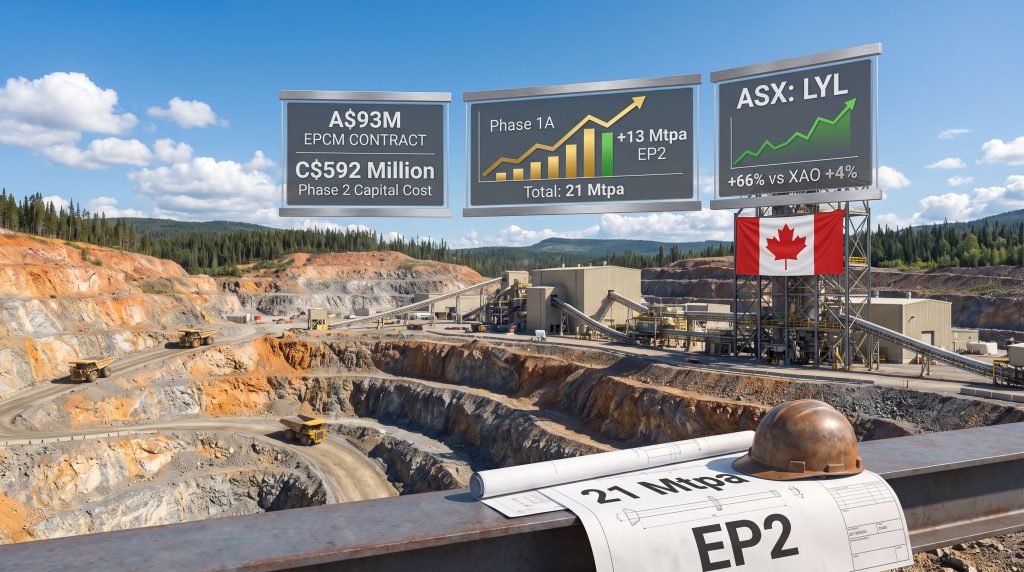
- Expanded Phase 2 (EP2) is engineered to overlay an additional 13 million tonnes per annum (Mtpa) of processing throughput onto the existing base
- Post-EP2 total capacity is targeted at 21 Mtpa, positioning Blackwater among Canada's highest-throughput gold operations
- Phase 3 (prospective) would extend total capacity further, toward approximately 25 Mtpa, though this remains in longer-term planning horizons
The capital requirement for the EP2 build-out is estimated at approximately C$592 million, a figure that reflects not only expanded processing plant infrastructure but also significant upgrades to power supply systems, water management facilities, and tailings containment. At this scale of throughput, the processing plant itself is only one element of a deeply interconnected infrastructure system.
Why 21 Mtpa Is a Meaningful Threshold in Canadian Gold Mining
Achieving 21 Mtpa throughput places Blackwater in a processing tier historically occupied by only a handful of operations in Canada. Most gold mines in Ontario's Timmins Belt, Quebec's Abitibi Greenstone Belt, and British Columbia's interior operate at substantially lower throughput rates, relying on higher head grades to compensate for smaller processing volumes.
Blackwater's strategy runs counter to this model. By targeting high-volume processing of lower-grade material, the project's economics are more sensitive to throughput efficiency and operating cost per tonne than to grade variability. This makes the quality of the processing plant design, and by extension the capability of the EPCM contractor, a direct input into the mine's long-term unit economics.
Lycopodium's Phased Engagement: A Blueprint for Retained EPCM Mandates
How Institutional Knowledge Becomes a Competitive Moat
One of the more strategically significant aspects of the Lycopodium Blackwater mine expansion contract is that it does not represent a new relationship. Lycopodium's engagement with the Blackwater project traces back through multiple development milestones, with definitive feasibility studies forming a critical part of that foundation:
- Feasibility Study preparation, which established the foundational engineering and economic parameters underpinning the project's investment thesis
- Front-End Engineering and Design (FEED) for EP2, which translated the feasibility-level concepts into a construction-ready scope definition with costed equipment lists and schedule logic
- Phase 1A EPCM Delivery, through which Lycopodium managed the engineering and procurement functions for the initial operational build
- EP2 EPCM Award, formalising Lycopodium's continued role as lead delivery partner across the full expansion programme
This sequential engagement pattern is not accidental. In large mining projects, switching EPCM contractors between phases introduces substantial transition risk. Incoming firms must reconstruct design rationale, renegotiate supplier relationships, and re-learn site-specific constraints that the incumbent team has accumulated over years. The cost of that transition frequently exceeds any fee differential that a competing firm might offer.
For Lycopodium, this creates a form of embedded competitive advantage that is difficult for rival engineering firms to displace once established. The company's management described the Blackwater project as a world-class facility in a tier-one mining jurisdiction, with the EP2 award representing a materially significant domestic project for the company's Canadian-based business unit.
What the A$93 Million Scope Covers
The contract encompasses all three technical streams of the EPCM mandate:
- Engineering: Detailed design of the expanded processing circuit, including crushing and grinding, gravity and flotation circuits, reagent systems, and associated utility infrastructure
- Procurement: Supply chain management for long-lead equipment items (such as mills, crushers, and thickeners), bulk material sourcing, and vendor management
- Construction Management: On-site supervisory oversight of civil, structural, mechanical, electrical, and instrumentation contractors, including schedule control, quality assurance, and safety management systems
Early works for EP2 were already progressing at the time of the formal contract announcement, with major construction having recently commenced. This sequencing indicates that the project team structured the schedule to maintain critical path momentum whilst finalising the contractual framework.
Lycopodium's Global Engineering Footprint and Revenue Implications
Building International Capability Through Regional Business Units
Lycopodium operates across multiple geographies, with project delivery capability spanning Australia, sub-Saharan Africa, North America, and Southeast Asia. Furthermore, the Blackwater EP2 award is being delivered through the company's Canadian-based business unit rather than through fly-in expertise from its Australian operations, a distinction that carries practical significance.
Locally-based teams offer faster mobilisation timelines, stronger day-to-day client relationships, and demonstrable compliance with local content expectations that increasingly feature in large mining project procurement policies. Building genuine regional capability, rather than treating international projects as extensions of a domestic practice, positions an engineering firm to compete for repeat mandates in that market. This approach aligns closely with broader Australian-Canadian mining trends that have seen cross-Pacific engineering expertise become increasingly valued.
| Sector | Service Type | Geographic Presence |
|---|---|---|
| Gold Processing | EPCM, FEED, Feasibility | Australia, Canada, Africa |
| Mineral Processing | Engineering Design | Global |
| Phosphate and Fertilisers | Process Engineering | Middle East, Africa |
| Industrial Infrastructure | Project Management | Australia |
Revenue Recognition and Orderbook Dynamics in EPCM Contracting
A characteristic of EPCM contracts that is often underappreciated by investors accustomed to product or commodity businesses is the way revenue recognition aligns with project delivery milestones rather than lump-sum contract execution. EPCM contracts of this scale in the gold sector typically span two to four years of active delivery, with revenue recognised progressively as engineering hours are expended, procurement activities are completed, and construction management services are rendered.
For Lycopodium, an A$93 million contract distributed across a multi-year delivery timeline provides meaningful earnings visibility across multiple reporting periods. This forward revenue underpinning is a primary driver of the valuation premium that EPCM-focused engineering companies can attract relative to more cyclical industrial businesses.
Sustained share price outperformance in engineering services companies typically reflects a combination of expanding contract pipelines, improving earnings visibility from multi-year project awards, and investor re-rating of international growth credentials. All three factors appear present in Lycopodium's current positioning.
Share Price Performance and the Investor Case for Engineering Services Exposure
Benchmarking Lycopodium's Twelve-Month Return
Over the 12 months to August 2026, Lycopodium shares delivered a 66% return to shareholders. Over the same period, the All Ordinaries Index (ASX: XAO) gained 4%, producing an outperformance differential of approximately 62 percentage points against the broader Australian equity market.
This degree of outperformance warrants careful analysis rather than simple extrapolation. Engineering services companies can experience significant re-rating events when contract pipelines expand materially, particularly when those contracts are secured in international markets that the investor community had not previously priced into the company's valuation.
Several structural factors drive valuation in EPCM-focused businesses:
- Orderbook depth and duration provide multi-year earnings visibility that reduces the discount rate applied by investors pricing the business
- Margin profile, whilst typically lower on a percentage basis than EPC contracting, carries significantly reduced balance sheet risk given the absence of construction cost exposure
- Geographic diversification reduces dependence on any single commodity cycle or regional capital expenditure environment
- Repeat client relationships, as exemplified by the Blackwater engagement, create compounding competitive advantages that are difficult for competitors to disrupt
| Metric | Detail |
|---|---|
| EPCM Contract Value | A$93 million |
| EP2 Throughput Addition | 13 Mtpa |
| Total Site Capacity Post-EP2 | 21 Mtpa |
| Phase 2 Capital Cost Estimate | C$592 million |
| Project Location | Central British Columbia, Canada |
| Mining Jurisdiction | Tier-One (British Columbia) |
| EPCM Contractor | Lycopodium (Canadian business unit) |
| LYL 12-Month Share Return | 66% |
| All Ordinaries 12-Month Return | 4% |
Past performance is not indicative of future returns. This article contains general information only and does not constitute financial advice. Investors should consider their own circumstances and seek independent advice before making investment decisions.
The next major ASX story will hit our subscribers first
The Structural Demand Case for Mining Engineering Services in Canada
A Multi-Year Capital Expenditure Cycle Underway
Canada's gold mining sector is navigating a sustained period of elevated capital investment, driven by a combination of persistently strong gold price outlook, a pipeline of project approvals that accumulated during previous price cycles, and the operational expansion of established producing mines. British Columbia specifically has seen increased development activity across its established mining districts.
For engineering services firms with genuine Canadian operating presence, this cycle creates a sustained forward pipeline of EPCM mandates, FEED studies, and feasibility-level work. The critical distinction is between firms that maintain permanently staffed Canadian business units and those that attempt to service Canadian projects through periodic secondments from offshore offices. The former are far better positioned to capture the repeat relationship dynamics that define long-term contract flow in this market.
Why Australian Engineering Firms Have Proven Competitive in Canadian Markets
Australian mining engineering firms have built international reputations through decades of delivering complex projects in operationally demanding environments. Remote site logistics in Western Australia's Pilbara, extreme weather construction management in Queensland's wet tropics, and complex metallurgical processing in Papua New Guinea's highlands have all contributed to a depth of operational experience that translates directly to Canadian project conditions.
The parallels are more direct than they might initially appear. Remote British Columbia presents infrastructure challenges, weather-driven construction windows, and metallurgical complexity that closely mirror environments where Australian engineering firms have developed deep institutional capability. This transferable expertise, combined with the establishment of locally-based business units, has enabled Australian firms to compete credibly against both large North American engineering groups and boutique Canadian specialists.
Frequently Asked Questions: Lycopodium Blackwater Mine Expansion Contract
What is the Lycopodium Blackwater mine expansion contract?
Lycopodium has been awarded an A$93 million EPCM contract for the Expanded Phase 2 project at the Blackwater Mine in British Columbia, Canada. The contract covers detailed engineering design, procurement coordination, and construction management oversight required to expand the mine's processing capacity by 13 Mtpa, bringing total site throughput to 21 Mtpa.
Who owns the Blackwater Mine?
The Blackwater Mine is owned and operated by Artemis Gold. Located in central British Columbia, it is being developed toward a scale that would position it among Canada's largest gold operations by processing throughput.
What previous work has Lycopodium completed at Blackwater?
Prior to the EP2 EPCM award, Lycopodium prepared the project's feasibility study, delivered the Phase 1A engineering and procurement scope, and completed the Front-End Engineering and Design for the EP2 expansion. The current contract therefore represents a continuation of an established multi-phase engagement rather than a new market entry.
What does EPCM stand for and how does it differ from EPC?
EPCM stands for Engineering, Procurement and Construction Management. Under this model, the appointed firm manages all three technical disciplines whilst the project owner retains direct contracts with construction companies. Under EPC (Engineering, Procurement and Construction), the contractor assumes full financial responsibility for construction delivery, typically under a fixed-price arrangement.
What is the estimated capital cost of the Blackwater Phase 2 expansion?
Artemis Gold's expansion study estimated the Phase 2 capital cost at approximately C$592 million. Lycopodium's A$93 million EPCM contract represents the engineering and management fee component of this broader capital programme.
Is Lycopodium listed on the ASX?
Yes. Lycopodium Limited trades on the Australian Securities Exchange under the ticker ASX: LYL.
Key Takeaways for Investors and Industry Observers
The Lycopodium Blackwater mine expansion contract illustrates several broader dynamics that investors evaluating engineering services exposure should understand:
- Phased engagement continuity is the defining competitive advantage in large-scale EPCM delivery. Firms that secure involvement at feasibility stage and retain the mandate through to construction management are structurally difficult to displace, creating durable revenue pipelines.
- Processing throughput targets of 21 Mtpa place Blackwater in a tier typically associated with the largest, most capital-intensive gold operations in Canada, with further scale-up potential indicated in Artemis Gold's longer-term development framework.
- The A$93 million contract value, distributed across a multi-year delivery schedule, provides Lycopodium with meaningful forward revenue visibility that underpins earnings across multiple reporting periods.
- Australia's mining engineering sector has developed international capabilities that translate directly to operationally demanding Canadian conditions, and firms with established local business units are better positioned to capture sustained contract flow than those relying on offshore deployments.
- The 62-percentage-point outperformance of Lycopodium shares relative to the All Ordinaries over 12 months to August 2026 reflects market recognition of expanding international pipeline depth, though investors should evaluate current valuations in the context of their own risk tolerance and investment timeframes.
This article is intended for informational purposes only and does not constitute financial product advice. Readers should conduct their own due diligence and consult a licensed financial adviser before making investment decisions. Forward-looking statements and project metrics are based on publicly available information and company disclosures, and actual outcomes may differ materially from those described.
Want To Catch the Next Major ASX Mineral Discovery Before the Market Does?
Discovery Alert's proprietary Discovery IQ model delivers real-time alerts on significant ASX mineral discoveries, cutting through complex data across more than 30 commodities to surface actionable opportunities the moment they are announced — explore historic discovery returns to understand the scale of what early positioning can mean, and begin your 14-day free trial today to secure a genuine market-leading edge.