June 5, 2026
The Chemistry of Leadership: Why Rare Earths Processing Expertise Defines the Next Chapter at Lynas
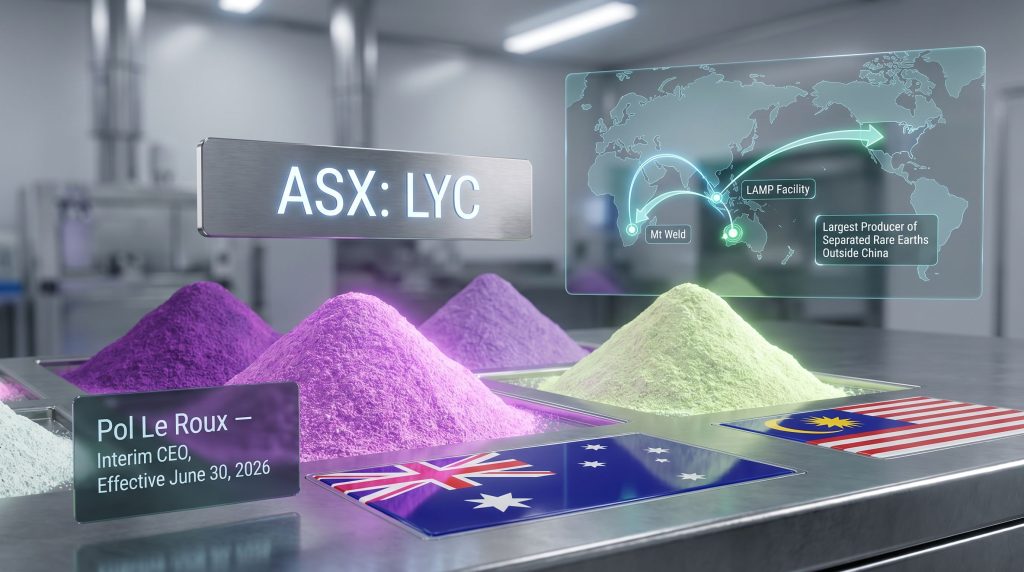
Most investors think of rare earth mining as a geological story, a question of what lies beneath the ground and how much of it can be extracted. But the industry's most consequential competitive advantage has never been the ore. It has always been the chemistry. The ability to separate, refine, and deliver individual rare earth elements at commercial purity levels is a discipline so technically demanding that fewer than a handful of companies outside China have mastered it. When the board of Lynas Rare Earths (ASX: LYC) selected Lynas Rare Earths interim CEO Pol Le Roux, effective June 30, 2026, the choice was not incidental. It reflected a deliberate institutional preference for someone whose entire professional identity is rooted in exactly that chemistry.
When big ASX news breaks, our subscribers know first
What Rare Earths Actually Are, and Why Separation Is Everything
Rare earth elements (REEs) comprise a group of 17 metallic elements, including the lanthanide series alongside scandium and yttrium. Despite the name, most are not geologically rare. The challenge lies in the fact that they occur together in mineralised deposits and are extraordinarily difficult to separate from one another due to their nearly identical chemical properties.
The commercial and strategic value of rare earths derives almost entirely from the downstream separation and refining process, not the mining itself. Furthermore, understanding rare earth processing challenges helps contextualise why so few non-Chinese companies have succeeded at scale. Key end-use applications include:
- Neodymium-iron-boron (NdFeB) permanent magnets used in electric vehicle drive motors and direct-drive wind turbines
- Lanthanum and cerium in fluid catalytic cracking catalysts for oil refining
- Dysprosium and terbium as heavy rare earth additives that preserve magnet performance at elevated temperatures
- Europium and terbium in phosphors for display and lighting technology
- Defence-grade applications including guidance systems, sonar, and radar components
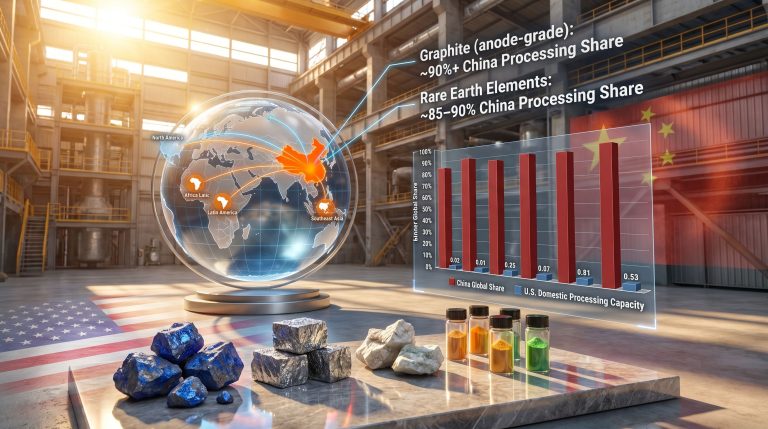
China's dominance in this sector is not primarily geological. It is chemical and industrial. Chinese processors developed hydrometallurgical separation techniques over decades, allowing them to capture approximately 85 to 90 percent of global rare earth processing capacity despite holding a smaller proportion of the world's mineable reserves. This is the structural gap that companies like Lynas exist to address.
Pol Le Roux and the Significance of a Chemicals-First Career
What Does His Background Actually Signal?
The appointment of Lynas Rare Earths interim CEO Pol Le Roux draws much of its significance from his career origins in speciality chemicals rather than conventional mining. Before joining Lynas in late 2010, Le Roux held roles at Rhône-Poulenc, the French chemicals conglomerate whose rare earths and specialty materials divisions were ultimately absorbed into Belgium-based Solvay following a series of corporate restructurings.
This background matters for a reason that is often underappreciated by generalist investors. Rhône-Poulenc was, for several decades, one of the Western world's most technically advanced rare earth processors. Its separation technologies and applications expertise were considered benchmark capabilities in the pre-China-dominance era of the 1980s and 1990s. Executives who trained within that institutional tradition carry a depth of process knowledge that cannot be replicated by operational experience in conventional base metals mining.
Le Roux joined Lynas in the company's most precarious period, years before the operational stabilisation that would later define the Lacaze era. His institutional memory therefore spans both the near-failure period and the subsequent transformation, giving him a continuity of organisational knowledge that few external candidates could match.
Le Roux's tenure at Lynas predates former CEO Amanda Lacaze's appointment, making him one of the longest-serving senior executives in the company's history and arguably its deepest repository of operational institutional knowledge.
Lynas Chair John Humphrey described Le Roux as possessing more than two decades of rare earths industry experience and noted that he is well regarded by the company's customers, investors, and industry peers for his detailed understanding of Lynas' operations and the broader rare earths market.
The Amanda Lacaze Legacy: What Is Being Handed Over
To understand the weight of the transition, it is necessary to appreciate the scale of what Lacaze built over her approximately 12-year tenure. When she assumed the CEO role, Lynas was financially distressed, operationally unstable, and facing serious regulatory pressure in Malaysia over the handling of low-level radioactive waste produced during the refining process.
The transformation that followed was structural rather than cosmetic. Key achievements during the Lacaze period include:
- Stabilisation and optimisation of the Lynas Advanced Materials Plant (LAMP) in Kuantan, Malaysia
- Expansion of the Mt Weld mine in Western Australia to support higher feed volumes into the processing chain
- Negotiation of US Department of Defense contracts to develop rare earth separation capabilities on American soil
- Repositioning Lynas as a preferred supplier to Japanese and Western downstream manufacturers seeking supply chain independence from Chinese sources
- Navigating a complex and politically sensitive operating licence renewal process in Malaysia
The following table summarises the key contrasts between the outgoing and incoming leadership profiles:
| Leadership Dimension | Amanda Lacaze | Pol Le Roux (Interim) |
|---|---|---|
| Tenure at Lynas | ~12 years as CEO | ~15+ years, including COO |
| Appointment type | External CEO hire | Internal promotion |
| Industry background | Telecommunications and corporate leadership | Rare earths and speciality chemicals |
| Strategic mandate | Turnaround, growth, and geopolitical positioning | Operational continuity and transition management |
| Effective transition date | Retiring June 30, 2026 | Commencing June 30, 2026 |
Mt Weld: The Geological Foundation Le Roux Inherits
At the core of Lynas' upstream operation is the Mt Weld deposit in Western Australia, widely regarded as one of the highest-grade rare earth deposits identified anywhere on Earth. The carbonatite-hosted mineralisation at Mt Weld carries total rare earth oxide (TREO) grades that are substantially higher than the global average for operating rare earth mines, which typically process ore grading below one percent TREO.
What makes Mt Weld particularly valuable is not just grade, but the composition of its rare earth basket. The deposit is enriched in the magnet-relevant elements, particularly neodymium and praseodymium (collectively known as NdPr), which are the primary value drivers in the current rare earths market. Their role in permanent magnet manufacturing for electric vehicles and wind energy systems makes them central to global rare earth supply chains.
A lesser-known aspect of carbonatite-hosted rare earth deposits like Mt Weld is the processing advantage they provide. Carbonatite mineralogy tends to be more amenable to conventional hydrometallurgical extraction than the ion-adsorption clay deposits that dominate Chinese heavy rare earth production. This translates into more predictable recovery rates and lower chemical consumption per tonne of product, which has direct implications for operating cost competitiveness.
The LAMP Facility and Malaysia's Regulatory Complexity
Processing rare earth concentrates from Mt Weld does not happen in Australia. The ore is concentrated at the mine site and then shipped to the LAMP facility in Kuantan, on the east coast of Peninsular Malaysia. This dual-geography model is operationally efficient but introduces a layer of sovereign and regulatory risk that has historically challenged Lynas.
The core regulatory tension at LAMP involves the management of Water Leach Purification (WLP) residue, a low-level radioactive by-product generated during the cracking and leaching of rare earth concentrates. Malaysian civil society groups and some government officials have periodically raised concerns about the long-term storage and disposal of this material, leading to periods of licence uncertainty that created material investment risk.
Le Roux, as COO, was directly involved in managing the operational dimensions of these regulatory relationships. His institutional familiarity with the LAMP facility's technical processes, regulatory obligations, and stakeholder dynamics represents a meaningful continuity advantage during a period when the company needs stability rather than disruption.
The next major ASX story will hit our subscribers first
NdPr Market Dynamics: The Commercial Stakes of Operational Continuity
Neodymium-praseodymium oxide is Lynas' most commercially significant product. NdPr is the precursor material for NdFeB permanent magnets, and demand for these magnets is structurally linked to electric vehicle penetration rates and wind turbine installations, both of which are expected to grow substantially over the next decade.
The NdPr market is notable for several characteristics that are not widely understood outside the industry:
- Pricing opacity: NdPr is not traded on a major commodity exchange with transparent real-time pricing. Published prices reflect aggregated spot assessments from specialist pricing services, and actual contract prices can deviate materially from these benchmarks.
- Supply concentration risk: Even outside China, NdPr supply is heavily concentrated. Lynas accounts for a dominant share of non-Chinese NdPr supply, meaning that any operational disruption at LAMP or Mt Weld has an outsized effect on global availability for Western buyers.
- Magnet alloy specifications: Not all NdPr is interchangeable. Downstream magnet manufacturers often qualify specific suppliers based on impurity profiles and oxide composition ratios. Lynas' long-standing supply relationships with Japanese magnet producers reflect years of product qualification work that would be difficult and time-consuming to replicate.
- Heavy rare earth dependency: For high-temperature magnet applications, such as those in hybrid and electric vehicle motors, dysprosium and terbium additions are required. These heavy rare earths are predominantly sourced from China's ionic clay deposits in Jiangxi Province, representing a separate and distinct supply chain vulnerability that Lynas does not currently address at scale.
The US Processing Initiative: Strategic Priority in a Transition Period
Why Does This Project Matter Right Now?
Among the most significant ongoing initiatives at Lynas is its commitment to establish rare earth separation capability within the United States. This project has been supported by contracts with the US Department of Defense, reflecting American government interest in America's rare earth supply chain and the development of domestic or allied-nation processing capacity outside the Chinese supply chain.
The intersection of this initiative with the CEO transition is worth examining carefully. Large capital projects at mining and processing companies are acutely sensitive to leadership continuity. Project finance structures, engineering procurement contracts, and government compliance requirements all depend on consistent senior management engagement. An extended or disruptive transition period carries the risk of momentum loss on a project that carries both commercial and strategic significance.
Le Roux's direct operational familiarity with the company's processing technologies and government relationships provides a degree of protection against this risk, though the board's timeline for appointing a permanent CEO will ultimately determine how long the company operates in a transitional posture.
Decoding the Interim Appointment: Governance Signals for ASX Investors
For shareholders in ASX: LYC, the interim nature of the appointment carries specific governance implications worth monitoring:
- Compensation structure: Interim CEO remuneration packages at ASX-listed companies are typically adjusted downward from permanent CEO packages and structured around transition milestones rather than long-term incentives. The board's disclosure of adjusted pay for Le Roux is consistent with standard governance practice for transitional appointments.
- Search process transparency: The board has not yet publicly disclosed a timeline or process for the permanent CEO appointment. The absence of this information is itself a data point, suggesting either that the search is in early stages or that the board is reserving optionality regarding whether Le Roux may ultimately be considered for the permanent role.
- Duration risk: Interim tenures that extend beyond 12 to 18 months are sometimes interpreted by institutional investors as evidence of difficulty attracting a suitable permanent candidate, which can create a modest governance discount in the share price.
- Internal versus external signal: When the permanent appointment is eventually announced, whether it goes to Le Roux or an external candidate will signal whether the board views the company as requiring transformational leadership or operational continuity.
The board's choice of an internal COO as interim leader, rather than appointing an external candidate directly, is a deliberate signal of stability preference over transformation, which is rational for a company that is mid-execution on multiple capital-intensive programmes.
The Non-China Production Gap: Where Lynas Sits in the Global Supply Architecture
The structural importance of Lynas to Western supply chains is best understood through the lens of market share concentration. Consequently, the rare earth geopolitics surrounding non-Chinese producers have become increasingly significant, particularly as China's export restrictions continue to reshape global procurement strategies.
| Producer Category | Estimated Global Share of Separated REE Output | Key Facilities |
|---|---|---|
| Chinese state-linked processors | 85 to 90 percent | Multiple facilities across Jiangxi, Sichuan, Inner Mongolia |
| Lynas Rare Earths | Largest single non-Chinese share | LAMP, Malaysia; US facility in development |
| MP Materials (USA) | Meaningful but smaller non-Chinese share | Mountain Pass, California |
| All other non-Chinese producers | Collectively minor | Various early-stage or small-scale operations |
This concentration means that Lynas occupies a near-singular position in the non-Chinese rare earth processing landscape. Leadership stability at Lynas is therefore not merely a corporate governance matter. It carries genuine supply chain significance for downstream manufacturers in Japan, South Korea, Europe, and the United States who depend on Lynas product to reduce their exposure to Chinese supply interruptions.
Key Milestones for Investors to Monitor
The following timeline and decision points will help ASX: LYC shareholders track the transition period:
- June 30, 2026: Le Roux formally assumes the interim CEO role. Watch for any accompanying operational guidance update or strategic commentary from the new leadership.
- Permanent CEO announcement: The timing and profile of this appointment will be the single most important governance event for Lynas in the next 12 to 18 months.
- US facility progress updates: Any material developments at the Lynas USA processing project during the interim period will indicate whether strategic execution velocity is being maintained.
- Quarterly production reports: Mt Weld output volumes and LAMP processing throughput will serve as the clearest operational indicators of transition stability.
- Malaysian operating licence: Ongoing regulatory compliance and any licence renewal developments at LAMP remain a background risk factor regardless of leadership structure.
- NdPr pricing environment: Given that NdPr revenues drive the majority of Lynas' financial performance, movements in oxide pricing will continue to dominate the fundamental investment thesis during the transition period.
Frequently Asked Questions
Who is Pol Le Roux and what is his professional background?
Pol Le Roux is a speciality chemicals and rare earths industry executive who joined Lynas in late 2010. Before Lynas, he held operational roles at Rhône-Poulenc, the French chemicals company whose materials divisions were later integrated into Belgium-based Solvay. At Lynas, he progressed to Chief Operating Officer, overseeing the company's dual-geography operations across Western Australia and Malaysia. He brings more than two decades of direct rare earths industry experience to the interim CEO role.
When Does Pol Le Roux Officially Become Interim CEO of Lynas?
Le Roux assumes the Lynas Rare Earths interim CEO position effective June 30, 2026, coinciding with the retirement of Amanda Lacaze.
Is the Lynas Interim CEO Appointment Likely to Become Permanent?
This remains an open question. The board has adjusted Le Roux's compensation to reflect the transitional nature of the role, which is standard governance practice, but has not disclosed whether Le Roux is a candidate for the permanent position. Historically, operationally complex mining companies with internally appointed interim CEOs do sometimes convert these appointments to permanent ones, particularly when institutional knowledge and customer relationship continuity are prioritised over external transformation.
What Are the Main Risks During Lynas' Leadership Transition?
Key risks include potential delays to the US processing facility, extended interim tenure duration, NdPr price volatility affecting revenue during a period of management change, and ongoing regulatory obligations at the LAMP facility in Malaysia. Le Roux's deep familiarity with all of these operational dimensions mitigates but does not eliminate these risks.
Strategic Outlook: When Executive Succession Becomes a Supply Chain Event
The appointment of Lynas Rare Earths interim CEO Pol Le Roux is unusual among corporate succession events in that its significance extends well beyond the company's own shareholder register. In virtually no other sector does an individual CEO transition carry the kind of systemic supply chain implications that this one does.
The rare earths industry's fundamental imbalance, where a single nation controls the overwhelming majority of processing capacity for materials that underpin electric vehicles, defence systems, and clean energy infrastructure, means that the operational stability of the handful of credible non-Chinese producers is watched not just by investors but by procurement executives, defence officials, and industrial planners across multiple sovereign governments.
Le Roux's chemistry-grounded background, his decade and a half of institutional knowledge at Lynas, and his direct operational ownership of both Mt Weld and LAMP position him as a low-disruption choice for the interim period. Whether that is sufficient to carry the company through the execution of its most ambitious international expansion while simultaneously managing the search for permanent leadership is the central question facing the Lynas board in the months ahead.
Disclaimer: This article is intended for informational purposes only and does not constitute financial advice. Forward-looking statements, market share estimates, and strategic assessments involve inherent uncertainty. Readers should conduct their own research and consult a qualified financial adviser before making any investment decisions. ASX: LYC share price performance and operational outcomes may differ materially from any projections or scenarios discussed herein.
Want to Track the Next Major ASX Mineral Discovery Before the Market Moves?
Discovery Alert's proprietary Discovery IQ model delivers real-time alerts on significant ASX announcements across more than 30 commodities — instantly translating complex mineral data into actionable investment insights for both short-term traders and long-term investors. Explore historic discoveries and their extraordinary returns on Discovery Alert's dedicated discoveries page, or begin your 14-day free trial today to position yourself ahead of the broader market.