August 14, 2026
The Lyten acquisition of Northvolt for lithium-sulfur battery manufacturing represents a pivotal moment in global energy storage transformation. Furthermore, this consolidation of European battery assets demonstrates how manufacturing capacity can be preserved during industry transitions while accelerating next-generation technology development.
Strategic Transformation Through European Manufacturing Consolidation
Defining the New European Battery Manufacturing Paradigm
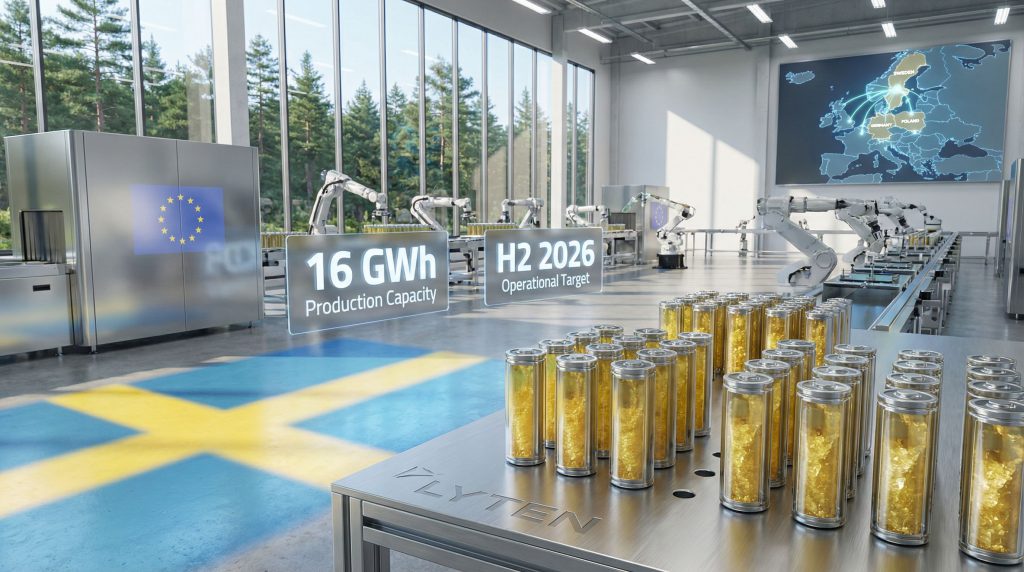
The Lyten acquisition of Northvolt assets represents a fundamental shift in European battery manufacturing strategy, consolidating 16 GWh of idle production capacity under new operational management while preserving critical research and development infrastructure. This transformation encompasses more than 160 hectares of industrial facilities in Skellefteå, Sweden, alongside Europe's largest battery research center in Västerås.
The acquisition model demonstrates how strategic asset consolidation can preserve manufacturing capacity during industry transitions. Rather than allowing facilities to remain dormant during bankruptcy proceedings, the transaction enables immediate operational planning for production restart by the second half of 2026. This approach maintains employment continuity while transferring technological capabilities to organisations with available capital and market positioning.
Manufacturing integration extends beyond simple capacity acquisition. The transaction includes comprehensive infrastructure spanning production lines, quality control systems, and specialised equipment optimised for gigawatt-hour scale battery cell production. This infrastructure represents years of capital investment and operational refinement that would require substantial time and resources to replicate independently.
Key Performance Metrics Driving the Acquisition Logic
| Metric Category | Pre-Acquisition Status | Post-Acquisition Projection |
|---|---|---|
| European Production Capacity | 16 GWh (idle) | 16 GWh (active by H2 2026) |
| R&D Infrastructure Scale | Largest European facility (underutilised) | Integrated US-EU development pipeline |
| Technology Focus | Conventional lithium-ion NMC | Dual-track: NMC + lithium-sulfur |
| Geographic Integration | Single-country operations | Trans-Atlantic manufacturing network |
The geographic distribution strategy establishes manufacturing presence across Northern Europe through integrated operations. The Polish facility in Gdansk provides 6 GWh of battery energy storage systems production capacity, creating a combined 22 GWh manufacturing footprint when operational alongside Swedish facilities.
Production restart methodology follows a systematic approach described as proceeding "one production line at a time," indicating risk mitigation through graduated commissioning rather than simultaneous full-capacity activation. This methodology enables quality validation, workforce training, and operational optimisation before scaling to full production volumes.
Timeline management from announcement to completion required approximately seven months, demonstrating relatively efficient execution for transactions involving complex industrial assets, international regulatory approval, and workforce transition planning.
When big ASX news breaks, our subscribers know first
Lithium-Sulfur Technology as Energy Storage Market Differentiator
Technical Advantages of Lithium-Sulfur Battery Architecture
Lithium-sulfur battery technology eliminates dependence on critical materials including nickel, cobalt, and manganese that comprise conventional NMC (nickel-manganese-cobalt oxide) chemistries. This fundamental architectural difference addresses supply chain vulnerabilities and material cost volatility that affect traditional lithium-ion systems.
The technology leverages sulfur abundance to potentially reduce raw material costs while offering theoretical energy density advantages over conventional battery chemistries. Sulfur represents one of the most abundant elements globally, providing supply security benefits compared to geographically concentrated cobalt and nickel deposits.
Manufacturing scalability challenges require significant process innovation to achieve "gigascale manufacturing" capabilities. Current lithium-sulfur production methods require adaptation for high-volume commercial deployment, necessitating collaboration between US-based research teams and European manufacturing facilities.
Market Positioning Against Traditional Battery Chemistries
The direct lithium extraction innovation continues revolutionising material processing efficiency. In addition, the battery recycling breakthrough addresses supply chain circularity concerns.
Key Insight: Lithium-sulfur batteries represent a strategic hedge against critical mineral supply chain vulnerabilities while offering superior performance in specific high-value applications requiring extended duration storage or weight-sensitive deployments.
The dual-track production strategy maintains conventional NMC battery manufacturing while developing lithium-sulfur capabilities, acknowledging that market transition timing remains uncertain. This approach provides operational flexibility to serve current commercial demand while preparing for future technology adoption.
Application-specific advantages emerge in sectors requiring high energy density, extended operational duration, or reduced weight constraints. Defense, aerospace, and long-duration grid storage applications represent potential market segments where lithium-sulfur technology characteristics offer distinct performance benefits.
Manufacturing Scalability Challenges and Solutions
Production line adaptation from lithium-ion to lithium-sulfur chemistry requires modifications to cell assembly, electrolyte handling, and quality control systems. The Swedish research facility will collaborate with Silicon Valley teams to "industrialise lithium-sulfur battery technology for gigascale manufacturing," indicating current production methods require significant scaling optimisation.
Quality control protocols must accommodate different chemical properties and performance characteristics compared to conventional lithium-ion systems. Established quality standards at Skellefteå demonstrate capability to "produce consistent, high-quality battery cells that meet customer needs," providing a foundation for lithium-sulfur quality system development.
Integration with existing lithium-ion manufacturing capabilities enables parallel production pathways, allowing technology transition without complete operational disruption. This approach reduces implementation risk while maintaining revenue generation during technology development phases.
Industrial Hub Model Redefining Battery Manufacturing Economics
Co-Location Strategy: Manufacturing, Data Centers, and Energy Infrastructure
The Lyten Industrial Hub model establishes physical co-location of battery manufacturing, data centre operations, and complementary industrial activities on a single site. This integration addresses multiple infrastructure challenges through shared resources, optimised energy utilisation, and reduced logistics complexity.
Furthermore, EdgeConneX plans to develop a data centre facility with potential to scale to one gigawatt of power capacity, representing substantial computational infrastructure. This scale would position the facility among Europe's largest data centre installations, requiring sophisticated power management and cooling systems.
Sweden's renewable energy resources provide strategic advantages for energy-intensive operations. Abundant hydroelectric and wind power generation supports both manufacturing processes and data centre operations while reducing carbon intensity compared to fossil fuel-dependent regions.
Supply Chain Integration Across European Markets
Table: Lyten's European Manufacturing Network
| Facility | Location | Capacity | Primary Function | Operational Status |
|---|---|---|---|---|
| Northvolt Ett (Lyten Industrial Hub) | Skellefteå, Sweden | 16 GWh | Battery manufacturing + R&D | Resuming H2 2026 |
| Northvolt Labs | Västerås, Sweden | R&D facility | Technology development | Active |
| Northvolt Dwa | Gdansk, Poland | 6 GWh | BESS production | Active since 2025 |
| Proposed German Assets | Heide, Germany | TBD | Manufacturing | Under negotiation |
Geographic distribution provides supply chain resilience through multiple production locations while serving regional markets with reduced transportation costs. The integrated network enables technology transfer between facilities and optimised production allocation based on market demand patterns.
Local supply chain development opportunities emerge through proximity to component suppliers, raw material processing facilities, and logistics infrastructure. Municipal collaboration in Skellefteå demonstrates recognition of the strategic importance for "European Union battery energy storage needs and the growing use of batteries by data centres."
Economic Impact on Regional Battery Supply Chains
Employment restoration involves collaboration with local authorities on "rehiring plans," acknowledging workforce continuity importance for maintaining operational capabilities and community economic stability. Skilled manufacturing and research personnel represent significant regional assets requiring retention during ownership transitions.
The integrated approach creates synergies between:
• Battery production and data centre power demand optimisation
• Renewable energy utilisation for industrial operations
• Research and development coordination across facilities
• Supply chain coordination reducing transportation costs
• Shared infrastructure reducing capital requirements
Strategic Scenarios Emerging from Acquisition Patterns
Scenario 1: Accelerated European Battery Independence
Reduced reliance on Asian battery manufacturers represents a strategic objective for European Union energy security and industrial competitiveness. The consolidation of European battery manufacturing assets under organisations with available capital and technological capabilities supports this independence objective.
Enhanced strategic autonomy in critical technologies requires domestic production capacity, research capabilities, and supply chain control. The preservation and restart of significant manufacturing facilities contributes to this autonomy while maintaining technological innovation capabilities.
Additional consolidation opportunities may emerge as the European battery industry continues restructuring. Financial distress among manufacturers creates acquisition opportunities for organisations with capital availability and operational expertise.
Scenario 2: Technology Leadership in Next-Generation Storage
First-mover advantage in lithium-sulfur commercialisation requires successful scaling of production technologies and market validation across target applications. The combination of manufacturing infrastructure and research capabilities provides platform advantages for technology development.
Competitive positioning against established manufacturers depends on successful technology differentiation and cost competitiveness. The dual-track approach maintaining conventional lithium-ion production while developing advanced chemistries reduces market transition risks.
Platform development for advanced battery chemistry research enables application-specific optimisation for defence, aerospace, and long-duration storage markets where performance advantages justify premium pricing.
Scenario 3: Integrated Energy-Digital Infrastructure Model
Battery manufacturing supporting data centre expansion addresses two critical infrastructure challenges: energy storage system supply and reliable power management for computational facilities. The co-location model optimises resource utilisation while reducing operational complexity.
Renewable energy optimisation through integrated facilities enables efficient utilisation of variable renewable generation while supporting consistent industrial operations. This approach maximises renewable energy value while maintaining operational reliability.
Template development for future industrial projects demonstrates how multiple infrastructure requirements can be addressed through integrated planning and shared resource utilisation.
Market Dynamics Supporting Acquisition Strategy
BESS Market Growth Drivers Supporting Investment
Global battery energy storage system deployment acceleration is driven by multiple factors including renewable energy integration, grid stabilisation requirements, and data centre power management needs. These applications require different performance characteristics and deployment scales.
Data centre power demand creates specific storage requirements including:
• Uninterruptible power supply functionality
• Peak demand management during high computational loads
• Grid services participation for revenue optimisation
• Integration with renewable energy sources
• Scalability for expanding computational capacity
Grid stabilisation needs drive long-duration storage adoption as renewable energy penetration increases. Traditional frequency regulation and peak shaving applications expand to include seasonal storage and multi-day duration requirements.
Competitive Positioning Analysis
Strategic Assessment: The Lyten acquisition of Northvolt for lithium-sulfur battery manufacturing targets market segments where lithium-sulfur technology offers distinct advantages over conventional lithium-ion systems, particularly in applications requiring extended duration storage or weight-sensitive deployments.
Investment risk mitigation through diversified applications reduces dependence on single market segments while enabling technology optimisation for specific use cases. Defence and aerospace markets provide stable demand with performance requirements justifying premium pricing.
Technology licensing potential creates additional revenue streams beyond direct manufacturing sales. Successful commercialisation of lithium-sulfur technology could enable licensing agreements with other manufacturers seeking advanced battery chemistries.
Manufacturing Footprint Optimisation
Trans-Atlantic production networks reduce geographic concentration risk while enabling regional market service with optimised logistics costs. The combination of US and European facilities provides operational flexibility during supply chain disruptions.
Technology transfer mechanisms between US and European operations enable knowledge sharing while maintaining intellectual property protection. Research collaboration structures facilitate innovation while preserving competitive advantages.
Local supply chain development supports regional economic objectives while reducing transportation costs and delivery timelines for critical components.
The next major ASX story will hit our subscribers first
Global Battery Supply Chain Restructuring Implications
Critical Material Dependencies and Supply Security
Lithium-sulfur technology addresses supply chain vulnerabilities associated with cobalt and nickel mining, which are concentrated in politically unstable regions and subject to price volatility. Sulfur abundance provides supply security advantages while reducing material cost exposure.
Strategic implications for battery material sourcing extend beyond immediate cost considerations to include supply reliability, environmental impact, and geopolitical risk factors. Alternative chemistries provide hedging opportunities against traditional material constraints.
Moreover, battery metals investment strategies must adapt to these technological shifts. Consequently, geothermal lithium extraction methods gain importance for sustainable production.
Manufacturing process innovations required for lithium-sulfur production create intellectual property opportunities and competitive advantages for organisations successfully achieving commercial scale production.
Investment and Operational Considerations
The $200 million funding round supporting European asset acquisitions demonstrates investor confidence in the strategic transformation approach and market opportunities. This capital allocation enables facility restart, technology development, and operational scaling without immediate revenue pressure.
For instance, the battery-grade lithium refinery development supports upstream integration strategies. However, operational timeline management requires coordination across multiple facilities, regulatory jurisdictions, and technology development programmes.
The H2 2026 production target provides specific milestone accountability for investment return evaluation. Risk factors include:
• Technology commercialisation timeline uncertainty
• Market acceptance of next-generation battery chemistries
• Competition from established manufacturers
• Regulatory changes affecting battery standards
• Raw material price volatility
Investment Disclaimer: This analysis contains forward-looking statements regarding technology development, market growth, and operational timelines that involve significant uncertainties. Actual results may differ materially from projections due to technical, market, competitive, and regulatory factors. Potential investors should conduct independent due diligence before making investment decisions.
According to Reuters, automotive partnerships will require time to develop as the company establishes its expanded European presence.
The strategic transformation represented by the Lyten acquisition of Northvolt for lithium-sulfur battery manufacturing demonstrates how industry consolidation can preserve critical manufacturing capabilities while accelerating next-generation technology development. Success will depend on execution across technology commercialisation, market development, and operational integration spanning multiple geographic regions and application markets.
Looking to Capitalise on Next-Generation Battery Technology Opportunities?
Discovery Alert's proprietary Discovery IQ model provides instant notifications on significant battery metals and technology-related discoveries across the ASX, turning complex mineral data into actionable investment insights for lithium, cobalt, and emerging battery material opportunities. Begin your 14-day free trial today to position yourself ahead of the market as the global battery supply chain undergoes this dramatic transformation.