July 15, 2026
What Makes Ma'aden's Ar Rjum Gold Processing Plant a Strategic Investment?
Modern gold extraction facilities represent sophisticated technological ecosystems where metallurgical engineering converges with economic strategy. The maaden gold processing plant exemplifies this convergence through its integration of advanced processing technologies and strategic economic positioning. The complexity of transforming ore deposits into refined precious metals requires substantial capital investment, advanced process control systems, and integrated environmental management protocols that extend far beyond traditional mining operations.
Saudi Arabia's Mining Diversification Strategy
The Kingdom's ambitious Vision 2030 framework targets a fundamental restructuring of its economic foundation, aiming to increase mining industry evolution from approximately 1.4% to 3.5% by the decade's end. This strategic pivot represents more than incremental growth; it signals a comprehensive transformation of Saudi Arabia's resource extraction capabilities and industrial infrastructure development.
Ma'aden functions as the government's primary vehicle for demonstrating the commercial viability of large-scale mineral extraction operations within the Kingdom. The company's expanding portfolio encompasses phosphates, aluminum, and precious metals, positioning it as a critical component in the nation's economic diversification strategy away from petroleum dependency.
Furthermore, regional employment generation through mining operations creates multiplier effects extending beyond direct extraction activities. Technical training programs, infrastructure development, and supply chain localization initiatives establish sustainable economic foundations that support Vision 2030's broader industrialization objectives. The Saudi exploration licenses expansion creates pathways for technology transfer, skills development, and industrial capacity building across multiple economic sectors.
Geographic and Geological Advantages of the Ar Rjum Location
The Arabian Shield represents one of Earth's most significant Precambrian crustal formations, containing extensive mineralized systems developed over geological timescales exceeding 600 million years. This ancient geological terrain hosts numerous gold deposits within metamorphic complexes and greenstone belt sequences that provide favourable conditions for economic mineral concentration.
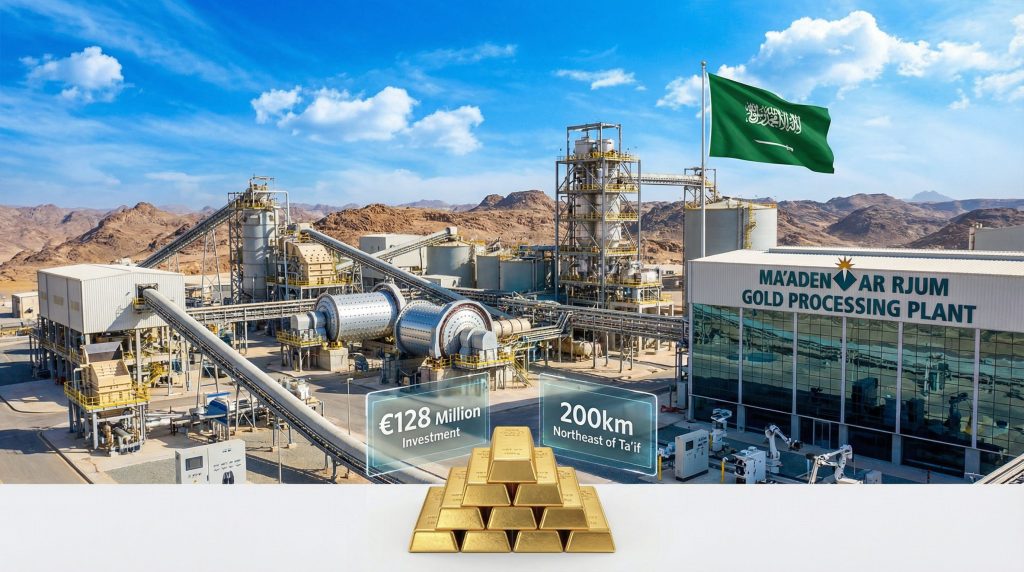
Located approximately 200 kilometres northeast of Ta'if in the Makkah Region, the Ar Rjum project benefits from strategic positioning that balances resource accessibility with infrastructure connectivity. The site's proximity to established transportation corridors reduces logistical development costs while maintaining access to regional labour markets and technical services.
Gold mineralisation within the Arabian Shield typically occurs through multiple geological processes:
- Quartz vein systems hosted within metamorphic rock formations
- Disseminated deposits distributed throughout greenstone belt sequences
- Shear-hosted concentrations developed along structural fault zones
- Contact metamorphic zones where intrusive rocks interact with surrounding formations
Consequently, the geological architecture of this region creates opportunities for both primary gold extraction and potential by-product recovery of associated metals, enhancing overall project economics through diversified revenue streams.
When big ASX news breaks, our subscribers know first
How Does Metso's €128 Million Gold Processing Technology Work?
Industrial-scale gold processing requires systematic integration of mechanical, chemical, and metallurgical processes designed to extract precious metals from complex ore matrices while managing environmental impacts and operational efficiency requirements. The €128 million investment in processing infrastructure represents comprehensive technological implementation spanning multiple processing stages for the maaden gold processing plant.
Complete Ore-to-Doré Processing Chain Overview
The Metso delivery encompasses an integrated processing system transforming run-of-mine ore into refined doré bars through sequential technological stages. This end-to-end approach optimises recovery efficiency while minimising intermediate handling, storage, and processing costs that characterise fragmented operational approaches.
Q3 2025 booking: €24 million
Q4 2025 booking: €104 million
The processing chain integrates eight primary technological components:
- Primary crushing stations for initial ore size reduction and material preparation
- Conveying systems enabling continuous material transport and flow control
- SAG and ball mill circuits providing fine grinding and particle size optimisation
- Pre-leaching conditioning systems preparing ore slurry for chemical extraction
- Carbon-in-Leach (CIL) circuits facilitating simultaneous gold dissolution and recovery
- Gravity separation technologies capturing coarse gold through mechanical concentration
- Elution and electrowinning facilities processing loaded carbon for final metal recovery
- Process control and automation infrastructure enabling real-time operational optimisation
Moreover, modern ore-to-doré processing methodology represents technological evolution beyond traditional approaches that separated leaching, clarification, and adsorption stages. Integrated CIL systems eliminate intermediate processing steps while maintaining recovery efficiency, reducing capital requirements and operational complexity.
Advanced Crushing and Conveying Systems
Primary crushing operations establish the foundation for downstream processing efficiency through controlled particle size reduction and material preparation protocols. The crushing station specifications determine throughput capacity, energy consumption characteristics, and downstream processing optimisation potential.
Industrial crushing systems typically achieve target particle distributions between 50-100 millimetres while managing dust generation, material degradation, and environmental compliance requirements. Modern installations incorporate advanced dust suppression technologies including wet scrubbing systems, baghouse filtration, and enclosed transfer points to minimise airborne particulate emissions.
Conveying infrastructure represents critical operational components enabling continuous material flow, variable throughput control, and emergency response capabilities. Belt conveyor systems require careful engineering for:
- Continuous material transportation at design capacity rates
- Variable speed control enabling throughput optimisation
- Spillage containment systems preventing material loss and environmental impact
- Emergency shutdown protocols ensuring personnel safety and equipment protection
In addition, Metso's award of a $148.6 million contract demonstrates the company's capabilities in large-scale crushing and grinding applications. The Yanacocha installation exemplifies Metso's expertise, where their SAG mill represented the world's largest installation when commissioned in 2010, establishing performance benchmarks for subsequent projects.
SAG and Ball Mill Grinding Circuit Technology
Semi-autogenous grinding (SAG) technology exploits ore fragments' natural abrasive properties to achieve particle size reduction with reduced reliance on external grinding media. This approach enables higher throughput rates and lower energy consumption compared to conventional ball mill circuits while accommodating variable ore hardness characteristics.
SAG mill operational parameters:
- Mill diameter: Typically 10-12 metres for large installations
- Rotational speed: 70-85% of critical speed for optimal grinding action
- Steel ball addition: 8-15% of mill volume supplementing autogenous grinding
- Power consumption: Scales with ore hardness and mill diameter specifications
Ball mill integration creates two-stage grinding circuits optimising particle size distribution for subsequent leaching operations. The secondary grinding stage produces final particle sizes typically reaching 75 micrometres (200 mesh), ensuring adequate surface area exposure for chemical extraction processes.
Furthermore, energy efficiency in grinding operations represents one of the largest operational cost components in gold processing facilities. Modern SAG-ball mill circuits incorporating variable frequency drives (VFDs) and advanced process control can achieve 15-25% energy consumption reductions compared to earlier generation equipment through optimised operational parameters and real-time adjustment capabilities.
What Are the Key Components of the CIL Leaching Circuit?
Chemical gold extraction through cyanide leaching represents the industry standard methodology for recovering dissolved precious metals from oxidised ore deposits. The process exploits gold's chemical affinity for cyanide solutions under alkaline conditions, enabling efficient extraction from complex mineral matrices.
Pre-Leaching and Carbon-in-Leach Process Design
Pre-leaching operations condition ore slurry for optimal CIL circuit performance through pH adjustment, temperature control, and chemical environment stabilisation. This preparatory stage improves overall recovery efficiency while reducing carbon fouling and operational complications in downstream processing.
The fundamental leaching reaction follows established hydrometallurgical principles:
4Au + 8CN⁻ + O₂ + 2H₂O → 4[Au(CN)₂]⁻ + 4OH⁻
Pre-leaching operational parameters:
- pH control: Maintained at 10.5-11.5 for optimal cyanide stability
- Temperature range: 25-35°C for enhanced reaction kinetics
- Detention time: 30-60 minutes in conditioning tanks
- Cyanide consumption: Typically 0.5-1.5 kg/tonne depending on ore mineralogy
Carbon-in-Leach (CIL) technology integrates gold dissolution and recovery simultaneously within a single processing circuit. Activated carbon particles (typically 8-16 mesh size) contact gold-bearing solution directly, eliminating intermediate clarification steps while achieving high recovery rates.
CIL circuit characteristics:
- Multiple tank configuration: 4-10 tanks in series for sequential contact optimisation
- Carbon retention screens: Prevent carbon loss with tailings discharge
- Expected recovery rates: 80-95% depending on ore characteristics and operational parameters
- Carbon loading capacity: 1-5 kg gold per tonne of activated carbon
Industrial CIL operations typically achieve 85-92% gold recovery from processed ore within 12-24 hours total contact time, representing efficient precious metal extraction while maintaining acceptable operational costs and environmental compliance standards.
Gravity Separation and Recovery Technologies
Mechanical gravity separation exploits the significant density differential between gold (19.3 g/cm³) and common silicate minerals (2.6-2.9 g/cm³) to achieve physical concentration without chemical processing requirements. This approach captures coarse gold particles that would otherwise require extended cyanide contact for dissolution.
Gravity concentration methods typically recover 20-40% of total gold content when present in coarse form (>100 micrometres), providing economic benefits through reduced cyanide consumption and accelerated processing timeframes for mechanically recoverable fractions.
Primary gravity separation technologies:
- Centrifugal concentrators: Exploit enhanced gravitational forces through bowl rotation (300-500 RPM) to capture particles down to 75-100 micrometres
- Shaking tables: Traditional hydraulic sorting technology effective for particles >150 micrometres with lower capital investment requirements
- Spiral concentrators: Gravity-driven continuous separation using helical channel configurations with minimal operating costs
- Knelson/Falcon concentrators: Enhanced gravity systems achieving higher recovery rates for fine gold particles
Elution Plant and Gold Room Operations
Carbon stripping and electrowinning operations represent the final metallurgical stages transforming loaded carbon into refined precious metal products. The elution process removes gold from activated carbon through controlled chemical stripping, while electrowinning deposits metallic gold onto cathode surfaces for subsequent refining.
Elution process parameters:
- Temperature: 120-150°C for enhanced gold desorption kinetics
- Pressure: Elevated pressure systems improving stripping efficiency
- Solution chemistry: Caustic cyanide solutions optimised for gold recovery
- Contact time: 12-24 hours for complete carbon regeneration
Electrowinning operations deposit metallic gold onto steel wool cathodes through controlled electrical current application. The process achieves 95-99% gold recovery from pregnant solutions while producing metallic deposits suitable for smelting and refining operations.
Gold room operations encompass smelting, refining, and doré bar production under strict security and quality control protocols. Final products typically achieve 85-95% gold purity with associated silver and trace metal content, meeting international standards for precious metal trading and further refining.
How Does This Project Compare to Global Gold Processing Standards?
Contemporary gold processing facilities worldwide demonstrate convergent technological approaches reflecting decades of metallurgical advancement and operational optimisation. The maaden gold processing plant incorporates proven technologies and design principles established at successful operations across multiple continents.
Metso's Track Record in Large-Scale Gold Processing
Metso's industrial experience encompasses major gold processing installations across diverse geological settings and operational environments. The company's technology portfolio includes grinding circuits, leaching systems, and process control infrastructure deployed at prominent mining operations worldwide.
The Yanacocha copper-gold operation in Peru represents a significant reference installation demonstrating Metso's capabilities in complex polymetallic processing environments. This facility processes both copper and gold mineralisation through integrated circuits achieving commercial production rates while maintaining environmental compliance standards.
Benchmark performance metrics from comparable installations:
- Processing capacity: 10,000-50,000 tonnes per day ore throughput
- Recovery efficiency: 88-94% gold recovery through integrated CIL circuits
- Energy consumption: 12-18 kWh per tonne processed in grinding circuits
- Water recycling: 85-95% process water recovery through tailings management
Processing Capacity and Production Projections
Large-scale gold processing facilities typically target processing rates between 20,000-40,000 tonnes per day to achieve economies of scale while maintaining operational flexibility for ore grade variations and equipment maintenance requirements.
Projected operational parameters:
- Annual throughput: 7-12 million tonnes per year depending on final design capacity
- Recovery targets: 90-93% overall gold recovery through integrated processing circuits
- Operational availability: 90-95% uptime through planned maintenance and reliability programs
- Economic thresholds: Processing costs typically $8-15 per tonne depending on ore characteristics
Production projections depend on ore grade characteristics, metallurgical test work results, and operational optimisation programs implemented during commissioning and early operations. Successful facilities achieve design capacity within 12-18 months of initial startup through systematic optimisation and troubleshooting protocols.
What Role Does Automation Play in Modern Gold Processing?
Digital integration and process automation represent fundamental components of contemporary gold processing facilities, enabling real-time optimisation, predictive maintenance, and operational efficiency improvements that would be impossible through manual control systems. The implementation of data-driven mining operations has become essential for maximising efficiency and maintaining competitive advantages in modern facilities.
Process Electrification and Control Systems
Modern processing plants incorporate distributed control systems (DCS) managing thousands of process variables simultaneously while maintaining optimal operating conditions across multiple processing stages. These systems enable operators to monitor and adjust operational parameters from centralised control rooms while maintaining safety and environmental compliance.
Advanced control system capabilities:
- Real-time process monitoring: Continuous measurement of flow rates, pressures, temperatures, and chemical concentrations
- Automated response protocols: Immediate adjustment of operational parameters based on process conditions
- Predictive analytics: Trend analysis enabling proactive maintenance and optimisation
- Remote operation capabilities: Secure network connectivity enabling off-site monitoring and control
Process electrification encompasses motor control systems, variable frequency drives, and power management infrastructure optimising energy consumption while maintaining processing reliability. Modern installations achieve 10-15% energy savings through coordinated motor control and load management compared to conventional electrical systems.
Field Instrumentation and Data Analytics
Sensor networks throughout processing facilities generate continuous data streams enabling detailed analysis of equipment performance, process efficiency, and operational trends. This information supports optimisation programs, maintenance planning, and capacity expansion decisions.
Instrumentation systems include:
- Flow measurement: Magnetic, ultrasonic, and mechanical flow metres monitoring slurry and solution movements
- Level detection: Radar, pressure, and ultrasonic systems controlling tank and vessel operations
- Chemical analysis: Online analysers measuring pH, dissolved oxygen, and chemical concentrations
- Vibration monitoring: Accelerometers and proximity sensors detecting equipment condition changes
Data analytics platforms process operational information to identify optimisation opportunities, predict equipment failures, and benchmark performance against design specifications. Advanced systems incorporate machine learning algorithms improving operational decision-making through pattern recognition and predictive modelling.
How Does This Investment Align with Saudi Arabia's Economic Goals?
The maaden gold processing plant represents strategic implementation of Vision 2030's mining sector expansion objectives while demonstrating the Kingdom's commitment to industrial diversification beyond petroleum-based economic activities.
Mining Sector Contribution to Economic Diversification
Saudi Arabia's mining development strategy encompasses multiple mineral commodities including phosphates, aluminium, gold, and industrial minerals to establish a diversified resource extraction industry supporting long-term economic stability and growth.
Economic impact projections:
- GDP contribution target: Increase from 1.4% to 3.5% by 2030
- Employment generation: Direct and indirect job creation across technical and operational roles
- Technology transfer: Advanced metallurgical capabilities and process expertise
- Supply chain development: Local procurement and service provision opportunities
Regional development effects extend beyond direct mining operations to encompass supporting industries, infrastructure development, and community economic growth. Mining operations create demand for construction services, equipment maintenance, transportation, and technical services that generate broader economic multiplier effects.
Regional Development and Infrastructure Impact
The Makkah Region location provides opportunities for coordinated development integrating mining operations with existing economic activities and infrastructure systems. The project's proximity to established transportation corridors and population centres facilitates workforce development and supply chain optimisation.
Regional development components:
- Local employment: Technical, operational, and administrative positions for regional residents
- Skills development: Training programmes developing metallurgical, mechanical, and electrical capabilities
- Infrastructure enhancement: Road improvements, power system upgrades, and communication network expansion
- Community investment: Healthcare, education, and social infrastructure supporting operational sustainability
The project establishes precedents for responsible resource development incorporating environmental stewardship, community engagement, and sustainable operational practices aligned with international best practices and Saudi regulatory requirements.
The next major ASX story will hit our subscribers first
What Are the Environmental and Sustainability Considerations?
Contemporary gold processing operations incorporate comprehensive environmental management systems addressing water usage, waste management, air quality, and ecosystem protection through proven technologies and operational protocols.
Sustainable Gold Extraction Technologies
Water management represents a critical component of sustainable gold processing operations, particularly in arid regions where water conservation and recycling capabilities determine long-term operational viability and environmental compliance.
Water management systems:
- Closed-loop processing: Recycling of process water through thickening and clarification
- Tailings dewatering: Water recovery from waste streams reducing freshwater requirements
- Treatment systems: Chemical neutralisation and metal removal before discharge or recycling
- Consumption optimisation: Process modifications reducing overall water requirements per tonne processed
Modern facilities achieve 85-95% water recycling rates through integrated water management systems, significantly reducing freshwater consumption while maintaining processing efficiency and environmental compliance standards.
Tailings management encompasses engineered storage facilities designed for long-term stability, environmental protection, and potential future resource recovery. Contemporary approaches emphasise dry stacking, filtered tailings, and progressive rehabilitation reducing environmental footprints compared to conventional tailings pond methodologies.
Regulatory Compliance and Best Practices
Saudi environmental regulations governing mining operations incorporate international standards for air quality, water protection, waste management, and ecosystem conservation. Compliance programmes require continuous monitoring, reporting, and adaptive management responding to operational conditions and regulatory updates.
Environmental monitoring components:
- Air quality: Particulate matter, chemical emissions, and dust generation measurement
- Water quality: Surface and groundwater monitoring for chemical parameters and physical characteristics
- Soil assessment: Heavy metal content and chemical contamination monitoring
- Biological surveys: Ecosystem health and species impact assessment
International certification programmes including ISO 14001 environmental management systems provide frameworks for systematic environmental stewardship, continuous improvement, and stakeholder engagement supporting operational licence to operate and community acceptance.
What Does This Mean for the Global Gold Processing Industry?
The maaden gold processing plant represents broader industry trends toward technological integration, operational automation, and environmental sustainability in large-scale gold processing operations worldwide. The project's implementation demonstrates how gold market analysis indicates continued investment in processing infrastructure despite market volatility.
Technology Trends in Gold Processing Equipment
Equipment manufacturers continue developing advanced technologies improving recovery efficiency, reducing energy consumption, and enhancing environmental performance through innovative metallurgical processes and control systems.
Emerging technology trends:
- Digital twin systems: Virtual plant models enabling optimisation and troubleshooting
- Artificial intelligence: Machine learning applications improving operational decision-making
- Energy efficiency: Advanced grinding technologies reducing power consumption per tonne processed
- Modular construction: Standardised equipment packages accelerating project development and reducing capital costs
Automation and remote operation capabilities become increasingly important for mining operations in challenging environments, enabling efficient operations while maintaining safety standards and reducing operational costs through optimised resource utilisation.
Market Implications and Industry Outlook
Large-scale processing facility development reflects positive long-term outlook for gold prices record highs driven by industrial applications, investment demand, and emerging market economic development. New processing capacity additions indicate industry confidence in sustained commodity pricing and operational profitability.
Industry development factors:
- Technology advancement: Continuous improvement in metallurgical processes and equipment reliability
- Environmental standards: Increasingly stringent regulations driving technological innovation
- Operational efficiency: Cost reduction pressures encouraging automation and process optimisation
- Market accessibility: Improved transportation and infrastructure reducing operational costs
Middle Eastern mining development represents strategic diversification for international equipment suppliers and engineering companies, creating opportunities for technology transfer and operational expertise development in emerging mining jurisdictions. For instance, Ma'aden's recent announcement of adding more than 7 million ounces of new gold resources demonstrates the Kingdom's commitment to expanding its mining portfolio.
Disclaimer: This analysis involves forecasts, speculation, and industry projections that are subject to uncertainty and change. Actual project performance, economic outcomes, and technological capabilities may differ significantly from projections and estimates presented. Investment decisions should consider comprehensive risk assessment and independent professional advice.
Processing facility development requires substantial capital investment, extended development timelines, and operational expertise that present both opportunities and risks for investors, equipment suppliers, and host communities. Successful project implementation depends on multiple factors including commodity pricing, operational execution, regulatory stability, and technological performance that involve inherent uncertainties and potential variability.
Seeking Opportunities in Saudi Arabia's Mining Revolution?
Discovery Alert's proprietary Discovery IQ model delivers real-time alerts on significant ASX mineral discoveries, offering investors immediate insights into actionable trading opportunities across global mining developments. With Saudi Arabia's ambitious Vision 2030 driving unprecedented mining investment and Ma'aden's expanding gold operations creating ripple effects throughout international mining markets, Discovery Alert's discoveries page showcases how major mineral announcements can generate substantial returns for early-positioned investors.