June 9, 2026
Machine Learning Revolutionizes Resource Discovery and Geological Analysis
The convergence of computational intelligence and extractive industries has reached a pivotal moment where traditional geological exploration methods are being fundamentally transformed. Advanced algorithms now process massive datasets from seismic surveys, satellite imagery, and underground sensors to identify mineral deposits with unprecedented precision. This technological evolution represents more than incremental improvement; it signals a complete restructuring of how AI in mining operations approach resource identification, equipment management, and operational optimisation.
Modern mining operations integrate sophisticated neural networks that analyse geological formations through pattern recognition systems capable of identifying ore bodies that human geologists might overlook. These machine learning frameworks process terabytes of geological data, incorporating historical drilling records, geochemical analyses, and three-dimensional subsurface mapping to create predictive models for mineral distribution.
Autonomous Processing Systems Transform Ore Identification
Supervised learning algorithms have evolved to predict ore grade distribution with remarkable accuracy, utilising vast databases of geological samples and mining outcomes. These systems analyse core samples, geophysical measurements, and chemical compositions to forecast mineral concentrations across unexplored terrain. Furthermore, the technology processes seismic and magnetic data in real-time, creating detailed subsurface maps that guide exploration teams toward high-probability zones.
Pattern recognition capabilities now extend beyond simple geological mapping to include complex mineral identification systems that operate continuously during extraction operations. These platforms integrate multiple data-driven mining operations streams from drilling equipment, processing facilities, and transportation systems to optimise resource recovery rates throughout the mining lifecycle.
Computer Vision Enhances Operational Monitoring and Safety Protocols
Automated equipment inspection protocols utilising computer vision technology have reduced maintenance-related downtime by 25-30% across major mining operations. These systems continuously monitor heavy machinery, analysing wear patterns, structural integrity, and performance indicators to predict maintenance requirements before equipment failures occur.
Rock fragmentation analysis through advanced image processing enables mining engineers to optimise blasting patterns and improve ore processing efficiency. In addition, computer vision algorithms evaluate blast results in real-time, providing immediate feedback on fragmentation quality and recommendations for subsequent operations.
Worker safety compliance monitoring has achieved new levels of sophistication through AI-powered surveillance systems that track personnel movements, equipment operation, and environmental conditions. These platforms identify potential safety violations, monitor personal protective equipment compliance, and coordinate emergency response procedures when hazardous conditions are detected.
When big ASX news breaks, our subscribers know first
Underground Operations Achieve Unprecedented Efficiency Through AI Integration
Ventilation system optimisation represents one of the most significant applications of AI in mining operations, with intelligent airflow management reducing energy consumption by 25-40% whilst maintaining optimal air quality standards. Smart ventilation systems analyse real-time atmospheric conditions, adjusting airflow patterns based on operational requirements, worker locations, and environmental factors.
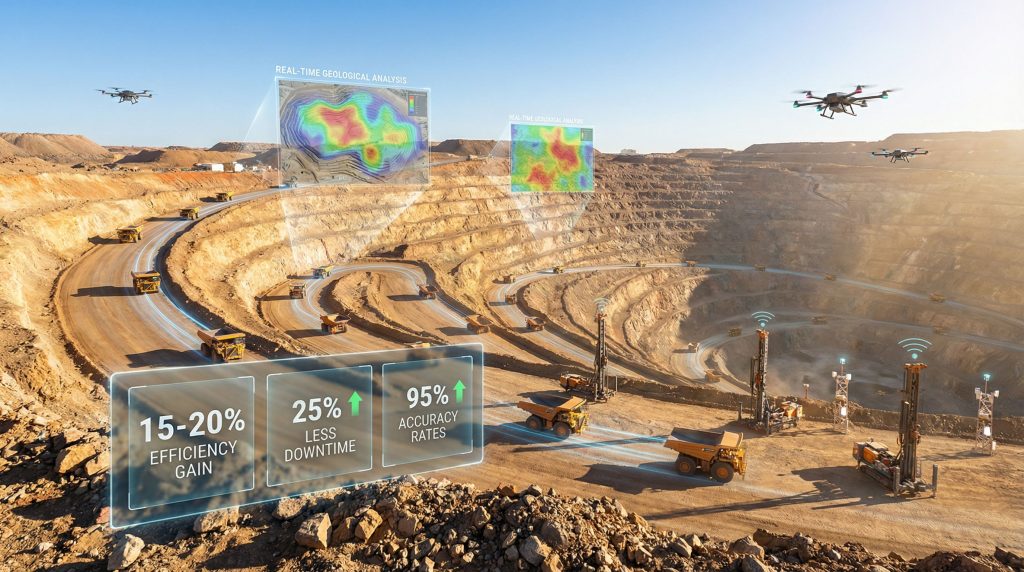
Autonomous drilling systems have demonstrated precision improvements of 15-20% compared to traditional operator-controlled equipment. These platforms utilise continuous feedback from geological sensors, adjusting drilling parameters in real-time to maximise ore recovery whilst minimising waste rock extraction. For instance, AI transforming drilling technologies have revolutionised how mining companies approach excavation planning.
Real-Time Structural Monitoring Prevents Catastrophic Failures
Underground operations implement sophisticated monitoring networks that track structural integrity through thousands of sensors embedded throughout tunnel systems and working areas. These systems process data on ground movement, stress distribution, and support structure performance to predict potential collapses or structural failures.
Emergency response coordination systems integrate multiple communication networks, evacuation route optimisation, and real-time personnel tracking to ensure rapid response during critical situations. Consequently, AI algorithms continuously update evacuation plans based on current operational conditions and personnel locations.
Open-Pit Mining Automation Delivers Measurable Productivity Gains
Autonomous haul truck fleets operating in major mining operations have achieved operational cost reductions of 10-15% whilst improving safety metrics significantly. These vehicle systems coordinate movements across complex mine sites, optimising routes based on traffic patterns, road conditions, and operational priorities.
Blast pattern optimisation algorithms analyse geological conditions, desired fragmentation outcomes, and safety requirements to design precise explosive patterns that increase ore recovery by 5-8%. These systems consider multiple variables including rock characteristics, proximity to infrastructure, and environmental constraints to maximise extraction efficiency.
Fleet management systems now coordinate 50+ vehicles simultaneously, optimising loading sequences, transport routes, and maintenance schedules to maximise operational throughput. These platforms integrate real-time data from GPS tracking, fuel consumption monitoring, and equipment performance metrics to maintain continuous operations.
Advanced Analytics Drive Predictive Maintenance and Equipment Optimisation
Equipment failure forecasting models analyse vibration patterns, temperature fluctuations, and operational parameters to predict maintenance requirements with 85-90% accuracy. These systems process continuous data streams from embedded sensors, identifying subtle changes in equipment performance that indicate impending failures.
Production optimisation algorithms coordinate multiple mining systems to maximise throughput whilst maintaining quality standards. However, these platforms analyse ore grade distribution, processing capacity, and market demand to optimise extraction sequences and processing schedules.
| AI Application | Efficiency Improvement | Cost Reduction | Safety Enhancement |
|---|---|---|---|
| Autonomous Haulage Systems | 15-20% productivity gain | 10-15% operational costs | 40% fewer incidents |
| Predictive Maintenance Programmes | 25% reduction in downtime | 20% maintenance savings | 30% fewer equipment accidents |
| Intelligent Ore Sorting | 8-12% recovery improvement | 5-10% processing costs | Reduced manual handling risks |
| Smart Ventilation Management | 30% energy savings | 15% utility cost reduction | Improved air quality metrics |
Processing Plant Intelligence Revolutionises Mineral Recovery
Ore sorting systems utilising machine learning algorithms achieve 95% accuracy rates in separating valuable minerals from waste material. These technologies analyse multiple characteristics including density, magnetic properties, and chemical composition to make instantaneous sorting decisions during processing operations.
Flotation process optimisation has improved mineral recovery rates by 3-5% through continuous monitoring and adjustment of chemical additions, air injection rates, and particle size distribution. Furthermore, AI systems analyse real-time data from processing circuits to maintain optimal conditions for mineral separation.
Energy consumption reduction through intelligent scheduling systems has achieved savings of 15-30% by coordinating processing operations with electricity pricing, equipment availability, and production targets. These platforms optimise energy-intensive operations during periods of lower electricity costs whilst maintaining continuous production schedules.
Safety Technologies Address Critical Workplace Hazards
Predictive safety systems monitoring operator alertness through fatigue detection algorithms have significantly reduced workplace incidents in mining operations. These technologies analyse behavioural patterns, response times, and physiological indicators to identify workers experiencing fatigue or impaired attention.
Gas leak detection systems operating with 99.7% accuracy provide continuous monitoring of atmospheric conditions in underground environments. Advanced sensor networks detect dangerous gas concentrations, automatically triggering ventilation adjustments and evacuation procedures when necessary. Companies investing in mining industry evolution are seeing substantial improvements in operational safety.
Remote Operation Capabilities Minimise Human Exposure to Hazardous Conditions
Drone-based hazard assessment protocols enable comprehensive site inspections without exposing personnel to dangerous areas. These systems conduct routine surveys of unstable slopes, contaminated zones, and equipment inspection in hazardous environments.
Robotic inspection systems perform detailed assessments of underground infrastructure, analysing structural conditions and identifying maintenance requirements in areas too dangerous for human access. In addition, these platforms operate autonomously, collecting high-resolution imagery and sensor data for analysis by engineering teams.
Remote-controlled equipment operation has expanded beyond simple machinery control to include complex mining operations conducted from secure control centres. Operators manage multiple pieces of equipment simultaneously whilst remaining safely removed from potentially hazardous work environments.
Biometric Monitoring Protects Worker Health
Heat stress prevention systems continuously monitor environmental conditions and worker physiological responses to prevent heat-related illnesses. These platforms analyse temperature, humidity, physical exertion levels, and individual health indicators to recommend work schedules and hydration requirements.
Exposure monitoring for hazardous substances provides real-time tracking of chemical concentrations, dust levels, and radiation exposure throughout mining operations. Advanced sensors create detailed exposure maps, enabling precise risk assessment and protective equipment recommendations.
Real-time location tracking systems in underground operations ensure accurate personnel accounting and enable rapid response during emergencies. These networks provide continuous position monitoring for all workers, equipment, and vehicles operating in underground environments.
Exploration and Resource Discovery Benefit from Machine Learning Applications
Satellite imagery analysis for prospect identification processes vast amounts of remote sensing data to identify geological features associated with mineral deposits. Machine learning algorithms analyse spectral signatures, topographical patterns, and geological formations to prioritise exploration targets. This approach aligns with AI in mineral exploration techniques being implemented across the industry.
Geochemical data processing for deposit modelling integrates soil samples, water analyses, and rock geochemistry to create three-dimensional models of subsurface mineral distribution. These systems identify subtle chemical patterns that indicate the presence of ore bodies at significant depths.
3D geological modelling through machine learning creates detailed subsurface models by integrating multiple data sources including drilling records, geophysical surveys, and historical mining data. These platforms generate probability maps for mineral occurrence, guiding exploration investment decisions.
Supply Chain Optimisation Reduces Operational Costs
Port scheduling algorithms analysing vessel arrivals, cargo requirements, and storage capacity have reduced wait times by 20% at major shipping facilities. These systems coordinate complex logistics operations, optimising berth assignments and cargo handling sequences.
Rail transport optimisation platforms analysing traffic patterns, maintenance schedules, and delivery requirements have achieved delivery cost reductions of 8% whilst improving schedule reliability. These systems coordinate multiple transportation modes to maintain continuous product flow.
Market price prediction models process global commodity data, economic indicators, and supply chain information to optimise selling strategies. Consequently, mining companies utilise these forecasts to time product sales for maximum revenue whilst managing inventory levels efficiently.
Environmental Monitoring and Compliance Integration
Water quality monitoring systems with real-time alert capabilities continuously analyse multiple parameters including pH levels, heavy metal concentrations, and chemical contamination. These platforms provide immediate notifications when environmental standards are approached or exceeded. According to the BCG's research on AI in mining, these monitoring systems have proven crucial for maintaining regulatory compliance.
Air emission tracking and reduction strategies monitor particulate matter, gas emissions, and dust levels throughout mining operations. AI systems analyse emission patterns, weather conditions, and operational activities to implement mitigation measures that maintain environmental compliance.
Biodiversity impact assessment tools evaluate the effects of mining activities on local ecosystems, tracking wildlife populations, vegetation health, and habitat quality. These systems provide data for environmental impact assessments and guide conservation efforts.
The next major ASX story will hit our subscribers first
Implementation Challenges and Infrastructure Requirements
High-speed connectivity requirements in remote mining locations represent a significant infrastructure challenge for AI in mining operations implementation. Operations require reliable data transmission capabilities to support real-time decision-making and remote monitoring systems.
Data storage and processing capabilities must handle massive datasets generated by continuous monitoring systems, geological surveys, and operational sensors. Mining companies invest substantial resources in computing infrastructure capable of processing terabytes of operational data daily.
Workforce Adaptation and Training Programmes
Reskilling programmes for traditional miners focus on developing technical competencies required for AI-enhanced operations. These initiatives combine classroom instruction with hands-on training on automated systems and data analysis tools.
AI literacy development for supervisory staff emphasises understanding system capabilities, interpreting algorithmic recommendations, and managing human-AI collaboration in operational environments. Training programmes address both technical aspects and strategic decision-making in AI-supported operations.
Change management strategies address cultural shifts required for successful AI integration, including communication protocols, performance metrics, and organisational structures adapted for technology-enhanced operations.
Future Technological Developments and Industry Transformation
Quantum computing applications for complex geological modelling promise unprecedented computational capabilities for analysing subsurface conditions and mineral distribution patterns. These technologies will enable more sophisticated predictive models and optimisation algorithms.
Advanced robotics designed for extreme environment operations will expand automation capabilities into previously inaccessible areas. Furthermore, these systems will perform complex tasks in high-temperature, high-pressure, and contaminated environments without human intervention. The Mining Digital analysis highlights how these developments are reshaping operational capabilities.
Blockchain integration for supply chain transparency provides immutable tracking of mineral extraction, processing, and transportation. These systems address increasing demands for responsible sourcing verification and conflict mineral compliance.
Digital Twin Technology Revolutionises Operational Planning
Digital twin technology for entire mining operations creates virtual replicas of physical systems, enabling comprehensive simulation and optimisation before implementing operational changes. These platforms integrate real-time data with predictive models to test scenarios and optimise performance.
Carbon footprint reduction through optimised operations utilises AI in mining operations to minimise energy consumption, reduce transportation requirements, and implement sustainable practices throughout the mining lifecycle.
Estimated Industry Transformation Timeline:
• 2026-2028: Widespread adoption of autonomous haulage systems and predictive maintenance platforms
• 2029-2031: Full integration of AI across exploration, extraction, and processing operations
• 2032-2035: Emergence of fully autonomous mining facilities with minimal human oversight
• Beyond 2035: AI-designed mining operations optimised from initial planning through reclamation
Strategic Implementation Framework for Mining Companies
Current operation analysis and AI readiness evaluation requires comprehensive assessment of existing infrastructure, workforce capabilities, and operational requirements. Companies must evaluate data collection systems, connectivity infrastructure, and integration capabilities before implementing AI solutions.
Return on investment modelling for different AI implementation scenarios helps companies prioritise technology investments based on operational impact and financial returns. These analyses consider implementation costs, training requirements, and projected productivity improvements.
Pilot Programme Development and Scaling Strategies
Small-scale AI deployment in controlled environments enables companies to validate technology performance and operational integration before full-scale implementation. Pilot programmes provide valuable data on system effectiveness and training requirements.
Performance metrics establishment and monitoring systems track key indicators including productivity improvements, safety enhancements, and cost reductions. These measurements guide expansion decisions and optimisation efforts.
Iterative improvement processes incorporate lessons learned from pilot programmes into broader implementation strategies. In addition, companies develop systematic approaches for technology refinement and operational optimisation.
Success metrics definition encompasses multiple performance dimensions including operational efficiency, safety improvements, environmental compliance, and financial returns. These comprehensive measurements provide complete assessment of AI in mining operations implementation effectiveness.
Disclaimer: The information presented in this analysis reflects current industry trends and technological capabilities in AI mining applications. Performance metrics, cost savings, and efficiency improvements may vary significantly based on specific operational conditions, implementation approaches, and geological factors. Mining companies should conduct thorough feasibility studies and pilot programmes before making substantial technology investments. Market conditions, regulatory requirements, and technological developments continue to evolve rapidly in this sector.
Looking to Stay Ahead of the Next Major Mineral Discovery?
Discovery Alert's proprietary Discovery IQ model delivers instant notifications on significant ASX mineral discoveries, transforming complex geological data into actionable investment insights for both short-term traders and long-term investors. Explore the substantial returns generated by historic major discoveries and begin your 30-day free trial to position yourself ahead of the market with real-time mining discovery alerts.