May 21, 2026
Understanding Madagascar's Environmental Vulnerabilities in Rare Earth Development
Global critical mineral supply chains face unprecedented pressure as nations worldwide accelerate renewable energy transitions and electrification strategies. This mounting demand creates complex policy challenges for resource-rich developing nations, particularly those balancing economic development needs against environmental stewardship responsibilities. Madagascar's substantial rare earth deposits represent a case study in these competing priorities, where geological wealth intersects with biodiversity conservation imperatives and community livelihoods.
The island nation's position reflects broader tensions affecting mineral-rich regions globally, where extractive industries promise economic transformation while threatening irreversible ecological damage. Understanding these dynamics requires examining both the technical complexities of rare earth extraction and the institutional frameworks governing environmental protection in emerging mining jurisdictions.
When big ASX news breaks, our subscribers know first
Chemical Processing Risks and Water System Vulnerabilities
Rare earth extraction operations pose fundamental threats to Madagascar's hydrological systems through complex chemical processing requirements that extend far beyond conventional mining activities. The separation of rare earth elements from host rock formations demands intensive acid leaching operations, typically employing sulfuric acid and hydrochloric acid solutions to dissolve target minerals from surrounding geological materials.
These processing methods generate substantial volumes of contaminated process waters containing heavy metals, residual acids, and dissolved chemical compounds that require extensive treatment before environmental discharge. Madagascar's tropical climate amplifies these risks, as seasonal rainfall patterns could accelerate contaminant migration through groundwater systems and surface water networks.
The geological composition of Madagascar's rare earth deposits adds another layer of complexity to water contamination risks. Host rock formations often contain thorium and uranium isotopes alongside target rare earth elements, according to industry analysis from Ecofin Agency. This radioactive material presence means processing operations must manage both chemical and radiological contamination risks throughout the extraction and beneficiation phases.
Key water system vulnerabilities include:
- Groundwater acidification from processing chemical infiltration
- Surface water contamination through tailings seepage
- Long-term radioactive material persistence in aquatic ecosystems
- Seasonal flooding risks spreading contaminated sediments
Waste Generation Scale and Long-Term Management Challenges
The scale of waste generation associated with Madagascar rare earth mining environmental impact operations reflects the low-grade nature of most rare earth deposits globally. Industry-standard processing typically produces over 1,000 tons of tailings material for every ton of rare earth oxide concentrate, creating massive waste management challenges that persist for decades beyond active mining periods.
Projected Waste Output Scenarios for Madagascar Operations
| Annual Production | Tailings Volume | Process Water | Management Duration |
|---|---|---|---|
| 1,000 tons TREO | 1.2 million tons | 15 million tons | 40+ years |
| 5,000 tons TREO | 6 million tons | 75 million tons | Multi-generational |
| 10,000 tons TREO | 12 million tons | 150 million tons | Century-scale |
These waste streams require specialised containment facilities designed to prevent environmental release while maintaining structural integrity across Madagascar's challenging tropical conditions. Furthermore, tailings storage facilities must withstand cyclone-force winds, torrential rainfall, and potential seismic activity while containing radioactive materials and chemical residues.
The temporal dimension of waste management creates particular challenges for Madagascar's institutional capacity. Monitoring and maintenance responsibilities extend far beyond typical mining project lifespans, requiring sustained financial and technical resources that exceed most developing nation capabilities without international support frameworks.
Biodiversity Hotspot Exposure and Endemic Species Risks
Madagascar's status among global biodiversity hotspots amplifies the ecological stakes associated with large-scale mineral extraction. The island hosts approximately 90% endemic species across multiple taxonomic groups, representing evolutionary lineages found nowhere else on Earth. This biological uniqueness makes environmental damage from mining operations effectively irreversible on human timescales.
Rare earth deposits concentrate in ecologically sensitive regions where mining infrastructure development threatens critical habitat connectivity. The Ampasindava Peninsula, identified as a primary development target, supports marine ecosystems alongside terrestrial biodiversity that local communities depend upon for subsistence and economic activities.
Community opposition documented in the Ampasindava region reflects direct observation of environmental degradation from previous exploration phases. In addition, residents reported farmland disruption from drilling activities and marine resource degradation concerns, according to coverage by Ecofin Agency. These experiences inform community scepticism about proposed large-scale development benefits versus environmental costs.
Critical biodiversity risk factors:
- Habitat fragmentation disrupting endemic species populations
- Marine ecosystem contamination affecting fishing communities
- Watershed disruption impacting downstream agricultural areas
- Invasive species introduction through increased human activity
Regulatory Framework Evolution and Implementation Challenges
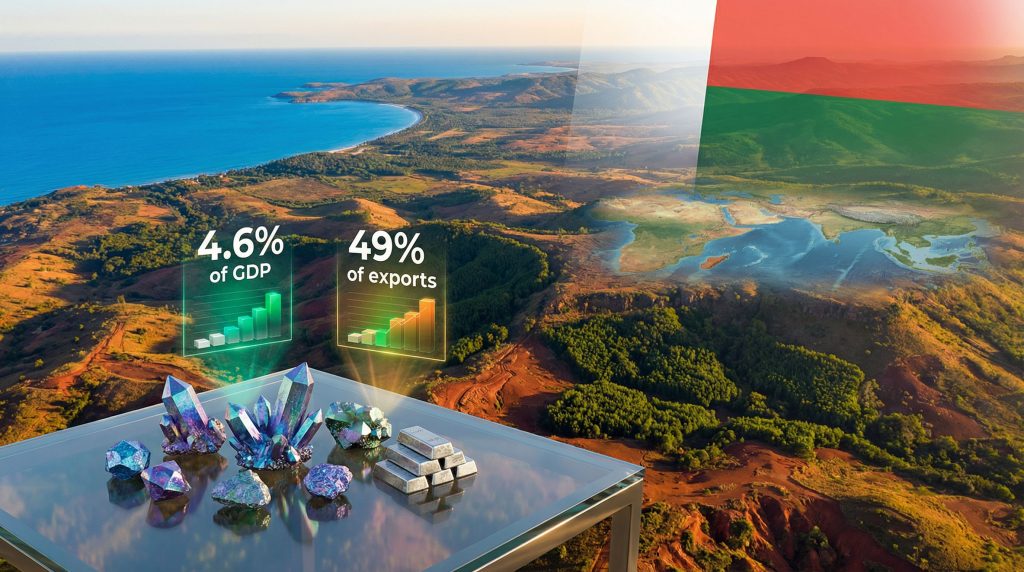
Madagascar's mining sector governance reflects ongoing efforts to balance development opportunities with environmental protection through updated legal frameworks. The island's mining industry contributed 4.6% of GDP and 49% of exports in 2023, demonstrating the sector's economic importance while highlighting regulatory challenges in managing environmental impacts.
Recent regulatory developments include enhanced environmental assessment requirements and community benefit-sharing mechanisms designed to address historical governance gaps. However, institutional capacity constraints limit effective oversight across Madagascar's vast territory, where mining concessions often operate in remote locations with minimal government presence.
The enforcement challenge becomes particularly acute for rare earth operations requiring continuous monitoring of chemical processing activities and waste containment systems. Consequently, Madagascar's environmental ministry lacks sufficient technical specialists and monitoring equipment to ensure compliance with international environmental standards throughout project lifecycles.
Environmental protection depends fundamentally on institutional capacity that exceeds current government resources, creating implementation gaps between regulatory intentions and operational reality.
Economic Development Pressures and Revenue Potential
Madagascar's rare earth mining environmental impact considerations must be evaluated alongside substantial economic development opportunities that could transform the island's fiscal position. The Ampasindava project demonstrates significant financial potential, with projected after-tax cash flows of $2.6 billion over 20 years and an internal rate of return of 27%, according to feasibility studies reported by Ecofin Agency.
Similarly, the Vara Mada project shows 38-year operational potential producing 24,000 tons of monazite annually, with rare earth sales contributing 27% of total project revenue. These projections position Madagascar as a potential significant supplier in global markets where Western nations seek alternatives to Chinese production dominance.
Financial metrics for major projects:
- Ampasindava: $464.3 million after-tax NPV, $142 million initial investment
- Vara Mada: 38-year lifespan, multi-commodity revenue streams
- Sector contribution: Potential to substantially exceed current 4.6% GDP share
- Export diversification: Reducing dependence on traditional commodity exports
The next major ASX story will hit our subscribers first
Community Opposition Patterns and Social Licence Challenges
Local community resistance to proposed rare earth development reflects specific grievances rooted in previous exploration experiences and concerns about development model sustainability. Opposition documented on the Ampasindava Peninsula involves residents, local officials, and civil society organisations who question whether promised benefits will prove proportional to environmental and social costs.
Community concerns centre on observable damage from earlier exploration phases, including farmland disruption from drilling activities and unmet social commitments from exploration companies. These experiences create scepticism about industry promises and highlight the importance of transparent consultation processes in building social acceptance for mining operations.
The agricultural and marine-based livelihood systems that sustain local populations face potential disruption from large-scale industrial operations. For instance, communities fear that mining development could weaken traditional economic activities while delivering limited local benefits, particularly given Madagascar's history of extractive industries providing minimal community returns.
Primary community concerns include:
- Previous exploration damage remaining unremediated
- Threats to agricultural land productivity
- Marine resource degradation affecting fishing livelihoods
- Inadequate benefit-sharing from previous extractive projects
Global Supply Chain Dynamics and Geopolitical Context
Madagascar's rare earth development occurs within broader geopolitical competition for critical mineral access, where Western nations seek supply chain diversification away from Chinese market dominance. China's position controlling global rare earth supply has enabled its use as leverage in trade war impacts, creating strategic incentives for alternative source development.
The island's Indian Ocean location adds geopolitical complexity to investment decisions, as competing international partners seek influence over critical mineral access. This dynamic creates both opportunities and risks for Madagascar, where development partnerships must navigate complex international relationships while maintaining national sovereignty over resource decisions.
Madagascar's potential role as an African rare earth supplier could contribute to global supply chain resilience while supporting renewable energy transitions in Western markets. However, realising these strategic benefits requires overcoming significant technical, financial, and environmental challenges that have constrained previous mining development efforts.
Environmental Assessment Methodologies and Mitigation Strategies
Comprehensive environmental impact assessment for Madagascar rare earth mining environmental impact requires evaluation methodologies that address the unique characteristics of both the island's ecosystems and rare earth processing technologies. Standard assessment frameworks must be adapted to account for endemic biodiversity, tropical climate conditions, and radioactive material management requirements.
Baseline ecological surveys represent a critical foundation for impact assessment, requiring multi-year data collection across seasonal variations to establish pre-development conditions. Furthermore, these studies must document species populations, habitat connectivity, and ecosystem services that support local communities while identifying sensitive areas requiring special protection.
Water resource impact modelling becomes particularly complex in Madagascar's context, where seasonal rainfall patterns, groundwater systems, and marine environments interact in ways that could amplify contamination risks. Advanced modelling techniques must account for chemical transport pathways, radioactive decay processes, and long-term ecosystem accumulation effects.
Essential assessment components:
- Multi-year baseline biodiversity and habitat surveys
- Comprehensive hydrogeological impact modelling
- Radioactive material transport and decay analysis
- Community livelihood dependency mapping
- Long-term monitoring protocol development
Sustainable Development Alternative Approaches
Madagascar could explore innovative sustainable mining approaches that prioritise environmental protection while capturing economic value from rare earth resources. Small-scale extraction methods using advanced processing technologies might reduce waste generation while maintaining economic viability, though technical feasibility requires careful evaluation against ore grade characteristics.
Circular economy principles applied to mineral processing could minimise waste streams through comprehensive material recovery and recycling systems. These approaches demand higher initial capital investment but offer potential for reduced environmental impact and improved community acceptance through demonstrated environmental stewardship.
Integration with existing economic sectors, particularly agriculture and tourism, could create diversified development models that reduce dependence on extractive industries while maintaining economic growth. Such approaches require careful spatial planning to minimise land use conflicts and preserve ecosystem services supporting multiple economic activities.
What Role Does Technology Play in Reducing Environmental Impact?
Modern mining technologies offer significant potential for reducing Madagascar rare earth mining environmental impact through improved processing efficiency and waste minimisation. Advanced separation techniques can reduce chemical consumption while increasing recovery rates, thereby reducing per-unit environmental footprint.
Digital monitoring systems enable real-time environmental tracking across mining operations, providing early warning systems for potential contamination events. However, implementing these technologies requires substantial capital investment and technical expertise that may exceed current operator capabilities without international partnerships.
Regional Cooperation and Capacity Building Requirements
Effective environmental protection for Madagascar's rare earth development requires international cooperation frameworks that provide technical expertise, monitoring capacity, and financial resources exceeding national capabilities. Regional partnerships with Indian Ocean states could enhance environmental monitoring while sharing lessons learned from mining governance experiences.
Institutional capacity building represents a fundamental prerequisite for sustainable rare earth development, requiring sustained investment in environmental monitoring institutions, regulatory enforcement capabilities, and technical expertise development. In addition, international partnerships could support capacity development while ensuring independent environmental oversight throughout project lifecycles.
Community-centred governance models that integrate traditional knowledge systems with formal regulatory frameworks offer potential for improved environmental protection outcomes. These approaches recognise local environmental expertise while strengthening community participation in decision-making processes affecting their territories and livelihoods.
Future Development Pathways and Policy Implications
Madagascar's rare earth mining environmental impact decisions will influence both national development trajectories and global critical mineral supply chains over the coming decades. The island's approach could establish precedents for sustainable mineral development in other African nations facing similar choices between economic opportunity and environmental protection.
Policy frameworks currently under development will determine how environmental concerns influence mining licence approvals and operational parameters for proposed projects. The integration of environmental safeguards with economic development objectives requires sophisticated policy tools that balance competing priorities while maintaining long-term sustainability.
The timeline for policy decisions creates urgency around developing effective governance frameworks before large-scale operations commence. Once mining infrastructure is established, modifying operational parameters becomes significantly more difficult, highlighting the importance of comprehensive planning during the current pre-development phase.
Critical policy development areas:
- Environmental monitoring and enforcement capacity
- Community benefit-sharing mechanisms
- Long-term environmental liability frameworks
- International cooperation and technical assistance agreements
- Sustainable development integration strategies
How Does Madagascar Compare to Other Mining Jurisdictions?
Madagascar's environmental challenges reflect broader patterns seen in developing nation mineral extraction, where institutional capacity constraints limit effective environmental oversight. However, the island's unique biodiversity profile creates particularly high stakes for environmental protection compared to other mining jurisdictions.
Recent mining industry trends emphasise the growing importance of environmental, social, and governance (ESG) considerations in mining investment decisions. This shift creates both pressure and opportunity for Madagascar to demonstrate leadership in sustainable mining practices.
The critical minerals energy transition context adds complexity to Madagascar's situation, as global demand for rare earths creates economic incentives that may conflict with environmental protection priorities. Balancing these competing demands requires sophisticated policy frameworks and strong institutional capacity.
Research from the University of Bern highlights the particular challenges facing biodiversity hotspots in managing large-scale mining impacts on local communities. Their analysis demonstrates how mining development in Madagascar could disproportionately affect vulnerable populations who depend on natural resources for subsistence and economic activities.
Long-Term Monitoring and Remediation Strategies
The temporal scale of Madagascar rare earth mining environmental impact requires monitoring systems designed to function across multi-generational timeframes. Traditional mining closure planning proves inadequate for rare earth operations, where radioactive materials and chemical residues persist in environmental systems long after active extraction ends.
Post-mining reclamation and innovation strategies must address both immediate rehabilitation needs and long-term ecosystem recovery requirements. This dual focus demands innovative approaches that combine established restoration techniques with experimental methods designed for complex contamination scenarios.
Financial bonding mechanisms must account for extended monitoring and maintenance requirements that exceed typical mining project lifecycles. Madagascar's regulatory framework development should include provisions for perpetual care funding that ensures environmental monitoring continues regardless of operator financial status.
Madagascar's rare earth development challenge reflects broader global tensions between urgent climate action requirements and environmental protection imperatives. Successfully navigating these competing demands requires innovative governance approaches that demonstrate sustainable critical mineral development remains achievable through comprehensive planning, community engagement, and international cooperation.
The island's decisions regarding rare earth mining environmental impact will resonate far beyond its borders, potentially influencing global approaches to sustainable mineral development while determining the fate of unique ecosystems that represent irreplaceable components of planetary biodiversity. Achieving positive outcomes demands unprecedented integration of environmental science, community participation, and economic development planning within governance frameworks capable of managing complex, long-term industrial operations.
This analysis is based on publicly available information and industry reports. Investment decisions should consider comprehensive due diligence and professional advice. Environmental impact projections involve uncertainties that may affect actual outcomes.
Interested in Mining Investment Opportunities Beyond Madagascar?
Discovery Alert's proprietary Discovery IQ model delivers instant notifications on significant ASX mineral discoveries, empowering investors to identify actionable opportunities in the critical minerals sector before broader market awareness develops. Explore how major mineral discoveries have historically generated exceptional returns for early investors and begin your 30-day free trial today to position yourself ahead of the market.