August 3, 2026
When Mineral Wealth Becomes National Infrastructure: The Logic Behind Resource-to-Development Conversion
Across much of sub-Saharan Africa, a fundamental question has shaped resource policy debates for decades: how do nations transform extractive revenue into lasting physical capital? The answer has rarely been straightforward. Commodity booms have come and gone, royalty regimes have been contested, and the infrastructure deficits in many mineral-rich nations have paradoxically deepened even as mine output climbed. Yet a structural shift is now underway, with governments no longer content to treat mining revenue as general budget receipts.
Instead, they are engineering dedicated fiscal channels that tie extraction directly to development outcomes. The geopolitical landscape in mining has accelerated this transformation, particularly across West Africa, where resource sovereignty movements are reshaping how states engage with international operators.
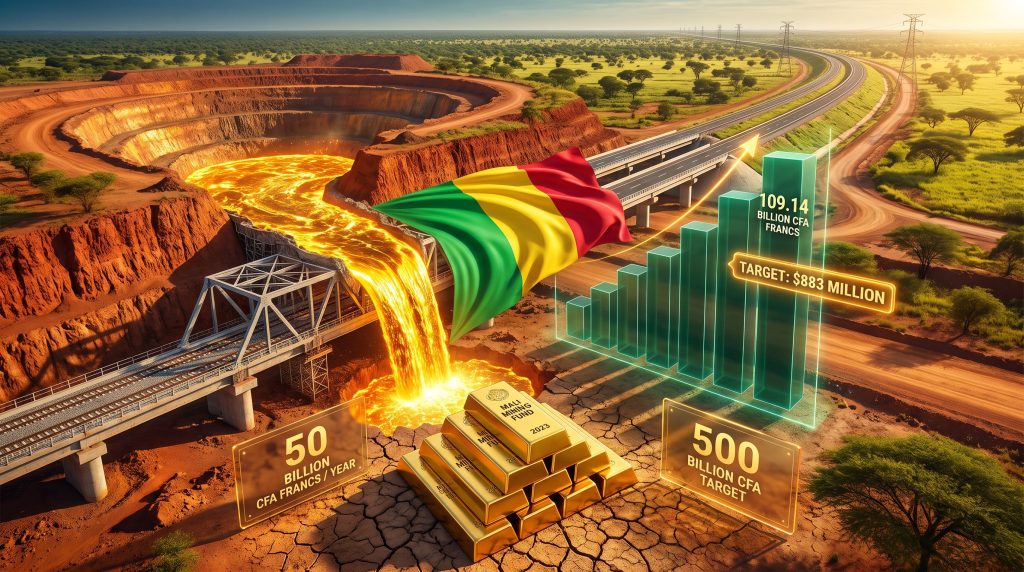
Mali's mali mining-backed infrastructure fund sits at the centre of this shift. Formally established in 2023 under the country's overhauled mining code, the Energy, Water and Transport Infrastructure Development Fund represents one of the continent's most explicit attempts to convert mandatory mining contributions into a leveraged national investment vehicle. Finance Minister Alousseni Sanou confirmed that the fund had mobilised 109.14 billion CFA francs between January 1, 2025 and June 30, 2026.
Furthermore, the annual baseline generation of at least 50 billion CFA francs could potentially be leveraged to unlock financing of up to 500 billion CFA francs, equivalent to approximately $883 million USD, for energy, water, and transport infrastructure. According to CNBC Africa, this figure has drawn significant attention from regional development finance observers.
Understanding how this mechanism works, what it has delivered so far, and where it might fall short requires examining both the fund's architecture and the broader political economy driving it.
When big ASX news breaks, our subscribers know first
How the Fund Is Structured and Who Pays Into It
The fund operates on a contribution model that is exclusive to the mining sector. Both large-scale and small-scale mining permit holders operating in Mali are legally obligated to pay into it. The contribution structure is tiered and time-sensitive, creating a built-in escalation as mines mature.
| Contribution Type | Rate (Years 1 to 5) | Rate (Post Year 5) | Applies To |
|---|---|---|---|
| Quarterly Turnover Levy | 1% | 2% | All permit holders |
| Ad Valorem Tax Contribution | 10% | Adjusted rate | All permit holders |
| Fund Establishment Year | 2023 | N/A | Government mandate |
| Minimum Annual Generation | ~50 billion CFA francs | N/A | Baseline projection |
The escalating levy structure is deliberate. During a mine's early years, when capital recovery remains a priority for operators, the contribution rate is lower. As mines move into their more profitable mid-life and late-life phases, the state captures a larger share through the fund. This design reflects an understanding of mine economics that many earlier royalty frameworks failed to incorporate.
What distinguishes this mechanism from a sovereign wealth fund or general budget allocation is its ring-fenced nature. Contributions flow directly into the fund rather than through consolidated government accounts, theoretically insulating the capital from broader fiscal pressures. Whether that ring-fencing holds in practice under a military administration is a separate question, addressed later in this analysis.
What the Fund Has Mobilised and What the Leverage Target Means in Practice
The 109.14 billion CFA francs raised in the 18-month period from January 2025 to June 2026 represents a meaningful initial accumulation. At an annualised rate, this implies collections running above the stated minimum floor of 50 billion CFA francs per year, suggesting that either mine contributions have exceeded baseline projections or that audit-driven recoveries have supplemented regular inflows.
The government projects a minimum annual generation of 50 billion CFA francs from the fund, with the potential to leverage this into total infrastructure financing of up to 500 billion CFA francs, or approximately $883 million USD. This leverage ratio implies that direct fund contributions would serve as collateral or credit enhancement for external debt facilities rather than being deployed as standalone grants.
The leverage mechanism is critical to understanding the fund's real ambition. A 50 billion CFA franc annual contribution stream, accumulated over multiple years and used to underwrite borrowing, could theoretically support a far larger capital program if structured through development finance institutions or sovereign bond markets. However, this leverage pathway carries its own risks:
- Debt serviceability depends on maintaining consistent mine output and contribution flows
- Creditworthiness in leveraged structures will be sensitive to Mali's political risk rating
- Currency risk is present given CFA franc dynamics and the denomination of infrastructure debt
- Operator disputes could reduce the contribution base, impairing the leverage thesis
The gap between the 109.14 billion CFA francs mobilised and the 500 billion CFA franc target is therefore not simply a matter of time. It requires successful external financing, which is not guaranteed in a frontier market operating under military governance.
The Four Infrastructure Pillars: What Projects Will the Fund Finance?
Infrastructure Minister Dembele Madina Sissoko confirmed that projects presented to the fund span four broad categories, each addressing a distinct dimension of Mali's development gap.
Railway Development
Rail corridor development features prominently in the project pipeline. Mali's landlocked geography makes rail connectivity a particularly high-value infrastructure investment. Efficient rail links to coastal ports would reduce logistics costs for both mining exports and agricultural commodities, potentially generating economic returns that extend well beyond the mining sector itself.
Road Construction and Inland Waterways
National road construction programmes and the acquisition of vessels for inland waterway transport have also been presented to the fund. The Niger River system offers an underutilised transport corridor, and investment in river transport capacity could meaningfully reduce road freight costs in regions where road infrastructure remains limited.
Aviation and Logistics Infrastructure
Projects linked to state-owned Mali Airlines SA represent a less conventional use of a mali mining-backed infrastructure fund, but signal the government's intent to use mining revenue as a cross-sectoral development engine rather than a single-purpose facility. Aviation connectivity supports both economic integration and foreign investment attraction.
The 2023 Mining Code: The Reform Architecture That Made This Possible
The fund cannot be understood in isolation from the 2023 mining code reforms that created it. Those reforms raised royalty rates, increased the state's equity participation in mining operations, and established a five-fund framework designed to systematically redirect mining revenue toward development outcomes at both national and local levels.
| Fund Type | Primary Purpose | Beneficiary Level |
|---|---|---|
| Energy, Water and Transport Infrastructure Fund | National infrastructure financing | National government and state projects |
| Local Mining Development Fund | Community and municipal development | Local municipalities |
| Additional reform funds (x3) | Varied sector-specific mandates | To be determined by sector |
The Local Mining Development Fund distributed approximately 18.4 billion CFA francs to municipalities in March 2026, demonstrating that the reform architecture is producing tangible community-level outcomes alongside the larger national infrastructure programme. Considerations around natural capital in mining have also shaped how these funds are structured to account for environmental and community obligations.
The broader fiscal context also matters. A government audit completed in December 2024 identified 761 billion CFA francs in alleged arrears owed by mining companies. This figure, if even partially recovered, represents a significant one-time fiscal windfall that could accelerate the fund's leverage capacity considerably.
The 2023 code reforms generated friction with international operators, including Canada's Barrick Gold, which has been among those disputing aspects of the new fiscal arrangements. This tension is not unique to Mali. Across West Africa, governments are fundamentally renegotiating the terms of resource extraction, often accepting short-term investor conflict in exchange for longer-term revenue capture.
Mali Within a Wider African Resource Sovereignty Movement
Mali's approach reflects a continental pattern that has been building momentum for several years. Ghana's parliament approved a comparable model through its flagship Big Push infrastructure programme, which channels mineral revenues directly into priority national infrastructure spending. The structural similarity between these two frameworks is not coincidental.
West African governments are learning from each other's fiscal experiments, and the trend toward dedicated mining revenue vehicles is accelerating. Consequently, government intervention in mining has become increasingly assertive across the region, with states willing to accept investor friction in exchange for stronger revenue capture.
Several forces are driving this shift:
- Commodity price cycles have made governments increasingly aware of the revenue volatility that comes from relying on general budget receipts from mining
- Infrastructure deficits are now widely recognised as binding constraints on economic diversification, creating political demand for visible investment programmes
- Debt sustainability pressures have made development finance institutions more receptive to ring-fenced revenue mechanisms that reduce sovereign risk
- Geopolitical realignment in the Sahel has prompted military-led governments to accelerate visible development programmes as legitimacy-building exercises
For international investors and development finance institutions, this trend creates a complex risk-reward calculus. Revenue capture from mining operations is increasing, but the infrastructure investment it funds may ultimately create the logistics capacity that makes mining itself more competitive over the long term.
The next major ASX story will hit our subscribers first
Risks and Challenges Facing the Fund
Despite the structural logic underpinning the mali mining-backed infrastructure fund, several risk dimensions warrant serious consideration.
Governance and Transparency
Ring-fenced funds in politically constrained environments face persistent governance challenges. Independent verification of disbursements, procurement processes, and project delivery is essential to the fund's long-term credibility, particularly if it is to attract leveraged external financing from multilateral or commercial sources. The Extractive Industries Transparency Initiative has previously documented governance concerns in Mali's extractive sector that remain relevant to this question.
Operator Compliance and Dispute Risk
The ongoing friction between Mali's government and certain international operators introduces contribution base risk. If major permit holders successfully challenge their obligations through arbitration or renegotiation, the fund's annual inflow could fall below the 50 billion CFA franc baseline that underpins the leverage calculation. In addition, mining industry consolidation among major operators may further complicate contribution compliance and negotiation dynamics.
Political Continuity Risk
Mali has operated under military governance since 2021. Long-term infrastructure programmes typically require policy continuity across multiple years and, ideally, across government transitions. The fund's institutional durability under future administrations cannot be assumed.
Currency and Financing Risk
While the CFA franc's peg to the euro provides nominal stability, accessing the leverage necessary to reach the 500 billion CFA franc target will require Mali to engage international capital markets or development finance institutions on terms that reflect current political risk assessments of the country.
Scenario Analysis: Three Pathways to 2030
| Scenario | Description | Likely Outcome |
|---|---|---|
| Full Leverage Achieved | 500 billion CFA francs unlocked via external debt facilities | Transformative rail, road, and energy infrastructure delivered across multiple sectors |
| Partial Mobilisation | Fund operates primarily as a domestic grant mechanism | Smaller-scale projects funded; leverage ambition deferred pending governance improvements |
| Contribution Base Erosion | Operator disputes reduce inflows below 50 billion CFA francs annually | Leverage thesis undermined; fund becomes a modest supplementary budget instrument |
The most likely near-term trajectory sits between the first two scenarios. The fund has demonstrated real mobilisation capacity, collecting over 100 billion CFA francs in its first active 18-month period. The path to full leverage, however, runs through the resolution of operator disputes, improvements in governance credibility, and sustained political stability.
Furthermore, the role of definitive feasibility studies in validating individual infrastructure projects will be critical to securing external financing partners who require robust project appraisal before committing capital.
Key Metrics at a Glance
| Metric | Value |
|---|---|
| Fund establishment year | 2023 |
| Total mobilised (Jan 2025 to Jun 2026) | 109.14 billion CFA francs |
| Minimum annual fund generation | ~50 billion CFA francs |
| Maximum leverage target | 500 billion CFA francs (~$883 million USD) |
| Contribution rate (Years 1 to 5) | 1% of quarterly turnover plus 10% ad valorem tax |
| Contribution rate (Post Year 5) | 2% of quarterly turnover |
| Audit-identified arrears (Dec 2024) | 761 billion CFA francs (alleged) |
| Local development fund distribution (Mar 2026) | ~18.4 billion CFA francs to municipalities |
What Mali's infrastructure fund ultimately demonstrates is that the conversion of mineral wealth into physical capital is achievable through deliberate institutional design. The fund's early performance shows that the contribution model works in practice. Whether the leverage ambition can be realised depends on factors that extend well beyond the mining sector itself, touching on governance quality, geopolitical positioning, and Mali's evolving relationship with international finance.
This article contains forward-looking projections and scenario analysis based on publicly available information. It does not constitute financial or investment advice. Readers should conduct independent research before making decisions based on any information contained herein.
Want to Track the Next Major Mineral Discovery Before the Market Catches On?
Discovery Alert's proprietary Discovery IQ model delivers real-time alerts on significant ASX mineral discoveries, transforming complex geological and commodity data into actionable investment insights for both short-term traders and long-term investors — start your 14-day free trial today, or explore historic discoveries and their returns to understand just how transformative major finds can be.