May 21, 2026
Mali's mining sector continues experiencing unprecedented transformation as African governments reassess their relationships with natural resource extraction. Rather than serving as passive revenue collectors through traditional royalty systems, nations across the continent are establishing direct ownership mechanisms that position states as active participants in mining operations. This institutional evolution reflects deeper strategic shifts toward capturing greater value from natural resource extraction while maintaining investment attractiveness for international operators.
Mali's recent establishment of its Mali state mining company Sopamim represents a crystallisation of these continental trends, offering a case study in how resource-rich nations are balancing sovereignty aspirations with economic pragmatism. The broader implications extend beyond Mali's borders, influencing regional mining governance frameworks and international investment strategies across West Africa's mineral-rich corridor.
Understanding Sopamim's Institutional Framework
The Malian government formalised the creation of Société de patrimoine minier (Sopamim SA) on February 6, 2026, establishing a wholly state-owned entity designed to consolidate government mining stakes under centralised management. This institutional innovation departs from traditional revenue collection models by positioning the state as a direct equity holder rather than merely a tax and royalty recipient.
Sopamim's operational mandate encompasses acquiring and managing government stakes in mining projects while serving as a centralised vehicle for state participation across the sector. The entity functions as Mali's primary mechanism for implementing the enhanced state participation requirements introduced under the country's 2023 Mining Code.
This structure enables Mali to create a streamlined approach to equity management and asset consolidation. The institutional architecture reflects broader African trends toward establishing specialised state entities for mineral wealth management. Unlike traditional mining ministries that focus on regulatory oversight, Sopamim operates as a commercial entity with direct financial interests in mining operations.
The Mali state mining company Sopamim represents a fundamental shift from passive government involvement toward active state capitalism in the extractive sector. This transformation positions Mali alongside other African nations pursuing direct ownership strategies rather than relying solely on fiscal instruments for resource revenue capture.
Furthermore, the entity's structure creates several key operational advantages:
• Centralise equity management across multiple mining projects
• Develop specialised expertise in mining asset evaluation and oversight
• Streamline decision-making for state participation in mining ventures
• Create transparent governance mechanisms for state mining investments
When big ASX news breaks, our subscribers know first
Mali's Mining Code Evolution Since 2012
Mali's regulatory framework has undergone dramatic transformation since the liberalisation era of the 1990s. The 1991 Mining Code established generous incentives designed to attract foreign investment through favourable tax treatment and minimal state participation requirements. A subsequent 1999 reform extended these liberal policies, creating one of West Africa's most investor-friendly regulatory environments.
However, the paradigm began shifting in 2012 when authorities initiated moves toward larger state shares of mining revenues. This transition accelerated significantly with the adoption of a new Mining Code in August 2023 under President Assimi Goïta's administration, marking a decisive turn toward sovereignty-focused policies.
The 2023 Mining Code establishes a tiered state participation system with structured equity requirements. This regulatory evolution represents one of the most significant transformations in West African mining governance, requiring international mining companies to accommodate mandatory state equity participation.
Enforcement Mechanisms and Compliance Tools
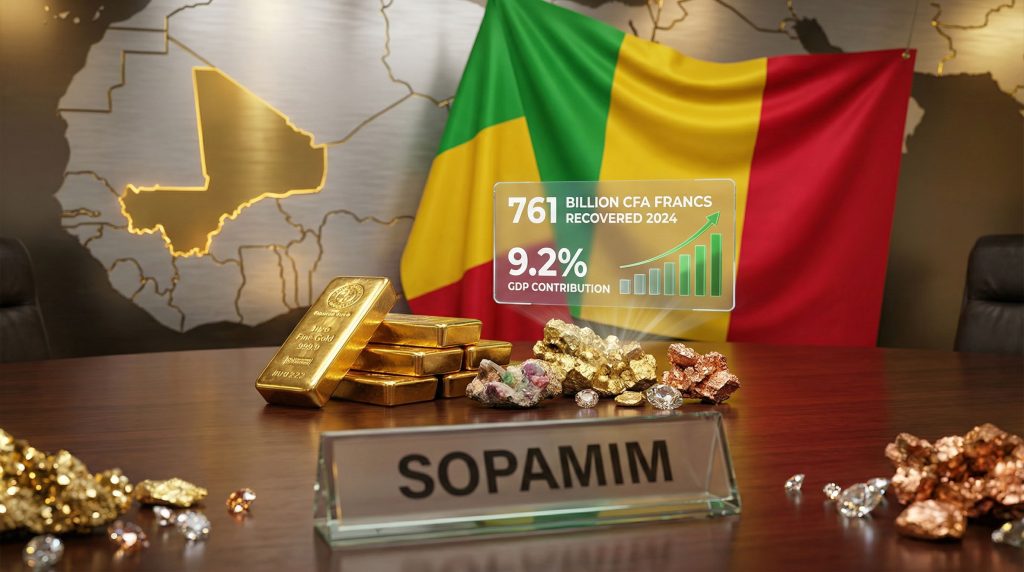
Mali's approach to implementing enhanced state control extends beyond regulatory mandates to include sophisticated enforcement mechanisms. The government achieved revenue recovery of 761 billion CFA francs in 2024 through various compliance and optimisation strategies, demonstrating the financial impact of assertive resource governance.
Consequently, the enforcement framework includes several key components that create a comprehensive compliance architecture. These mechanisms support the state's expanded role in mining operations while providing clear frameworks for international operators to navigate regulatory requirements.
The implementation tools include operational audit procedures for international mining companies, currency repatriation requirements ensuring local retention of mining revenues, and enhanced monitoring systems for revenue transparency and tracking. Additionally, the framework incorporates tax authority intervention mechanisms for non-compliance situations.
West African State Mining Governance Models
Mali's institutional innovations occur within a broader regional context of evolving state participation in mining. Across West Africa, governments are implementing various models of direct ownership and control, creating a diverse landscape of resource governance approaches that reflect different political economies and strategic priorities.
Regional Comparative Framework
The regional diversity in state participation models demonstrates different approaches to balancing sovereignty objectives with investment attraction. Mali's Sopamim model represents a comprehensive approach to centralising state mining assets under professional management, contrasting with more sector-specific or project-based approaches adopted by neighbouring countries.
West African state mining entities generally follow one of three organisational models. Centralised Asset Management sees countries like Mali consolidate all state mining interests under single entities with broad mandates for equity acquisition and management.
Sector-Specific Participation involves nations focusing state ownership on particular commodities or strategic minerals while maintaining traditional royalty systems for other resources. Meanwhile, Hybrid Public-Private Models establish state entities that partner with private investors, sharing both ownership and operational responsibilities.
These varied approaches reflect different institutional capacities and strategic priorities across the region. For instance, the development of new mining claims framework initiatives in other jurisdictions demonstrates global trends toward enhanced regulatory structures.
Mali's choice of the centralised model through Sopamim indicates confidence in developing state capacity for direct mining asset management. This approach aligns with broader continental trends toward more assertive resource governance frameworks.
Economic Impact of Mali's Mining Sector Transformation
Mali's mining sector generates substantial economic value that provides the foundation for enhanced state participation. According to the Extractives Global Programmatic Support initiative, extractive sector revenues reached 1,075.4 billion CFA francs (approximately $1.95 billion) in 2022, representing a significant portion of national economic activity.
Sectoral Economic Contributions
The mining sector's economic importance is reflected across multiple indicators that demonstrate its centrality to Mali's economy:
• GDP Contribution: 9.2% of gross domestic product
• Tax Revenue Share: 53.53% of tax authority collections
• Employment Impact: 1.9% of national workforce
• Export Revenue: Significant portion of foreign exchange earnings
While mining generates substantial revenue, its employment impact remains relatively modest at 1.9% of the workforce. This highlights the capital-intensive nature of modern mining operations and the sector's limited direct job creation despite its economic centrality.
Revenue Optimisation Through Direct Ownership
The establishment of Sopamim enables Mali to capture value beyond traditional fiscal instruments. Direct equity participation potentially offers several advantages over royalty-only systems, including enhanced revenue streams that provide access to mining profits in addition to royalties and taxes.
Moreover, state ownership of mining assets creates opportunities to benefit from long-term asset value appreciation and exploration success. Direct ownership also provides government access to operational data and decision-making processes, enhancing regulatory oversight capabilities while facilitating technology transfer and local capacity building.
The financial implications of this transition are substantial. Mali's ability to generate 761 billion CFA francs through revenue recovery in 2024 demonstrates the potential for enhanced state control to generate significant additional resources beyond traditional collection mechanisms.
International Mining Investment Climate
Mali's mining sector transformation occurs against a backdrop of significant international investment, with major global operators including Canada's Barrick Gold maintaining substantial operations in the country. The presence of world-class mining companies creates both opportunities and challenges for implementing enhanced state participation requirements.
International mining companies operating in Mali face an evolving regulatory environment that requires careful risk assessment and strategic adaptation. The transition from the 1991 liberalised framework to the 2023 sovereignty-focused code represents significant regulatory change, creating uncertainty about future policy directions.
Policy Risk Assessment Framework
Key risk factors include regulatory stability concerns, potential contract renegotiation requirements for existing mining agreements, and operational flexibility considerations as enhanced state participation may influence decision-making processes. These changes create potential for disputes that may require international arbitration or other resolution mechanisms.
However, international mining companies are implementing various strategies to adapt to Mali's evolving regulatory environment. These include establishing compliance framework development systems, developing partnership structuring approaches with Sopamim, and investing in local capacity building initiatives.
The success of Mali's approach will largely depend on maintaining a balance between sovereignty objectives and investment attractiveness. This alignment becomes particularly important when considering global trends such as the critical minerals strategy development and US permit executive order changes that affect international mining investment flows.
Continental Resource Sovereignty Trends
Mali's establishment of Sopamim reflects broader African trends toward resource nationalism and enhanced state control over natural resources. Across the continent, governments are implementing various mechanisms to increase national benefit retention from mineral wealth extraction, creating a continental movement toward greater resource sovereignty.
Continental trends in mining governance reflect several key developments including state participation expansion, where African governments are increasingly requiring equity participation in mining projects rather than relying solely on fiscal instruments for revenue generation.
Pan-African Mining Governance Evolution
Enhanced mandates for local procurement, employment, and technology transfer are becoming standard across African mining jurisdictions. Regional coordination efforts see African countries developing collaborative approaches to mining governance through continental frameworks and regional economic communities.
Additionally, emphasis on capturing technological spillovers and building local capacity in mining-related industries is growing across the continent. The establishment of state-owned mining companies, as seen with Mali's creation of Sopamim, demonstrates this continental shift toward direct state participation.
Future Regulatory Evolution Scenarios
Several potential development pathways may shape African mining governance in the coming years. Expanded state control could see further increases in mandatory state equity participation across additional African countries following Mali's example.
Regional harmonisation may involve development of coordinated mining governance frameworks through African Union or regional economic community initiatives. Climate transition integration could incorporate climate transition metal governance into national mining strategies as global demand for critical minerals increases.
Furthermore, digital oversight enhancement may see implementation of digital technologies for mining oversight, transparency, and revenue tracking across African jurisdictions. These trends suggest that Mali's approach through Sopamim may represent early adoption of governance models that could become more widespread across resource-rich African nations.
The Saudi Arabia licensing impact on global mining investment patterns also influences how African nations structure their resource governance frameworks to remain competitive while maintaining sovereignty objectives.
The next major ASX story will hit our subscribers first
Strategic Implications for Stakeholders
The establishment of Mali's state mining company Sopamim creates new dynamics for various stakeholders in the mining sector, requiring strategic adjustments and collaborative approaches to navigate the evolving landscape. These changes affect international mining companies, government entities, and local communities across the region.
Recommendations for International Mining Companies
Mining companies operating in Mali and similar jurisdictions should consider several strategic adaptations to navigate the new environment effectively. Proactive engagement involves developing early and continuous engagement with state mining entities to build collaborative relationships and understand operational expectations.
Compliance integration requires embedding regulatory compliance into core business processes rather than treating it as an additional requirement. This ensures seamless integration with operational planning and reduces implementation friction.
Value creation focus identifies opportunities to create mutual value through partnership with state entities. This includes technology transfer initiatives, local capacity building programmes, and shared operational improvements that benefit all stakeholders.
Risk management enhancement develops comprehensive frameworks for managing political and regulatory risks while maintaining operational flexibility and investment returns. This approach helps companies adapt to changing regulatory environments while preserving commercial viability.
Policy Development Considerations
Governments implementing similar state participation models can benefit from Mali's experience and lessons learned. Institutional capacity building requires investing in developing professional capacity for state mining asset management to ensure effective governance and operational oversight.
Transparent governance involves establishing clear frameworks for decision-making and accountability in state mining entities. This builds confidence among international investors and domestic stakeholders while ensuring effective resource management.
Investment balance maintains regulatory environments that attract productive international investment while maximising national benefits. This delicate balance is crucial for long-term sector sustainability and economic development.
Regional coordination develops collaborative approaches with neighbouring countries to avoid regulatory arbitrage and enhance collective bargaining power. Such coordination strengthens the continent's position in global mining markets.
What Does Mali's Mining Governance Transformation Mean for Africa?
Mali's creation of Sopamim represents a fundamental shift in African mining governance, moving beyond traditional revenue collection toward direct state participation in mineral wealth creation. This institutional innovation reflects broader continental trends toward resource sovereignty while establishing new frameworks for government-private sector collaboration in extractive industries.
The success of this model will depend on several critical factors that determine long-term viability. Institutional capacity development for professional asset management ensures that state entities can effectively manage mining assets and partnerships with international operators.
Transparent governance mechanisms that maintain investor confidence create stable operating environments while maximising national benefit retention. Balanced approaches that optimise mineral wealth governance while preserving investment attractiveness ensure continued sector development and economic growth.
Continental Influence and Future Implications
Mali's experience with Sopamim will likely influence similar initiatives across resource-rich African nations seeking to optimise their mineral wealth governance. The success or challenges of this model will inform policy development across the continent.
The broader implications of Mali's approach extend beyond national borders, contributing to continental conversations about resource sovereignty and development finance. As other African nations observe Mali's implementation of enhanced state mining control through Sopamim, the model may serve as either a template for replication or a case study for alternative approaches to resource governance optimisation.
Furthermore, the role of state entities in economic transformation becomes increasingly important as African countries seek to maximise benefits from their natural resources. The establishment of institutions like Mali's new state-owned mining company demonstrates concrete steps toward greater resource sovereignty.
The Mali state mining company Sopamim thus represents more than a national policy change – it embodies Africa's evolving relationship with its mineral wealth and the continent's determination to capture greater value from natural resource extraction. This transformation will continue shaping mining investment patterns and governance frameworks across Africa in the years ahead.
Important Note: This analysis is based on available information through early 2026 and reflects evolving policy frameworks that may continue to change. Investors and industry stakeholders should conduct independent due diligence and seek current regulatory guidance before making investment decisions in Mali's mining sector.
Looking to Capitalise on Emerging Mining Opportunities in Africa?
Discovery Alert's proprietary Discovery IQ model delivers real-time alerts on significant ASX mineral discoveries, instantly empowering subscribers to identify actionable opportunities ahead of the broader market. Understand why historic discoveries can generate substantial returns by visiting Discovery Alert's dedicated discoveries page, showcasing exceptional market outcomes from major mineral finds.