May 21, 2026
The Geopolitics of Discount Mining: When Political Networks Become Investment Thesis
Across the history of resource investment, some of the most consequential trades have not been made on the basis of commodity fundamentals alone. They have been made on the basis of jurisdictional mispricing, where political complexity has compressed valuations far below the intrinsic worth of underlying assets. The Ray Washburne Gillon Capital Sherritt stake sale is a textbook example of this dynamic playing out in real time, as the acquisition of a controlling position in a Cuba-exposed mining company by a politically connected U.S. family office illustrates how the geopolitical mining landscape increasingly shapes investment thesis construction.
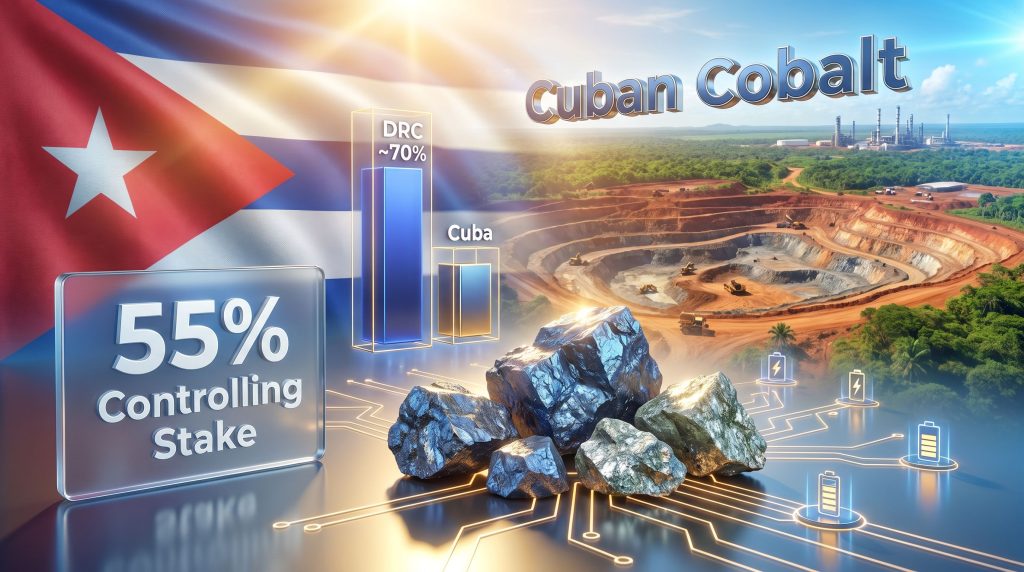
The preliminary agreement between Sherritt International and Gillon Capital LLC, in which Gillon Capital would acquire 55% of Sherritt's shares at a discount, is not simply a corporate transaction. It is a structured wager on geopolitical optionality, executed with the kind of institutional knowledge that comes from years operating at the intersection of sovereign risk, development finance, and international policy.
When big ASX news breaks, our subscribers know first
What the Sherritt–Gillon Capital Deal Actually Involves
Sherritt International is a Canadian-listed nickel and cobalt miner and refiner whose primary operational footprint sits inside Cuba, making it one of the few Western-affiliated companies with active, meaningful exposure to Cuban resource extraction. The company's core Cuban operations have long generated a financial paradox: the underlying assets hold genuine strategic value within a global critical minerals energy security context, yet the company has consistently traded at a discount to its peers due to the unique legal and regulatory risks attached to doing business in Cuba.
The preliminary agreement with Gillon Capital LLC, as reported by the Washington Post in May 2026, would transfer a 55% controlling stake to the family office vehicle. This is not a passive minority investment. A 55% stake delivers effective corporate control, meaning Gillon Capital would hold the authority to shape Sherritt's strategic direction, capital allocation, and operational priorities.
Critically, this remains a preliminary, non-binding arrangement. Before any transaction closes, both parties must complete due diligence, navigate regulatory review processes, and execute binding documentation. None of these steps are trivial given the Cuba-related compliance landscape.
Who Is Gillon Capital and Why Does It Matter?
Gillon Capital is a private family office investment vehicle. Its principal, Ray Washburne, is a Dallas-based businessman whose career intersects private investment, real estate through the Gillon Property Group, and a period of senior U.S. government service. During the first Trump administration, Washburne led the U.S. International Development Finance Corporation (DFC), the primary U.S. government institution responsible for development finance and, increasingly, for deploying capital into strategic regions to counter the influence of geopolitical rivals in resource-rich developing nations.
That biographical detail is not incidental to this transaction. The DFC's operational mandate under Washburne's tenure included direct engagement with the strategic importance of critical mineral supply chains, and its activity was explicitly framed around reducing Western dependence on adversarial supply networks. Furthermore, a former DFC chief now acquiring a controlling stake in a cobalt-producing operation is not a routine portfolio play.
The involvement of a former head of America's primary development finance institution in a Cuba-facing critical minerals investment carries a weight of institutional knowledge and political connectivity that conventional mining investors simply cannot replicate.
Cuba's Nickel-Cobalt Complex: Understanding What Sherritt Actually Produces
The Moa Bay Operation and Laterite Processing
Sherritt's Cuban production centres on the Moa Bay nickel-cobalt complex, a large-scale laterite mining and hydrometallurgical processing operation. Understanding why this asset class carries both unique value and unique operational challenges requires a brief introduction to laterite metallurgy.
Unlike sulfide nickel deposits, which are mined underground and processed via flotation and smelting, laterite deposits are near-surface, weathered rock formations with lower grade but enormous scale. The Moa Bay ore body carries average grades of approximately 1.6% nickel and 0.1% cobalt, typical of the Cuban laterite profile. While these grades are modest compared to high-grade sulfide operations, the scale of the resource compensates when accessed through the correct processing technology.
Sherritt employs a pressure acid leaching (PAL) process, one of the most technically demanding hydrometallurgical methods in the industry. PAL involves dissolving metals from the laterite ore using sulphuric acid under high temperature and pressure conditions, selectively recovering nickel and cobalt into solution before refining to final metal or mixed hydroxide precipitate (MHP) form. This technology is capital-intensive and operationally complex, which partly explains why very few companies globally have mastered the combination of large-scale laterite mining and PAL refining.
Cobalt as a By-Product: The Critical Minerals Dimension
A crucial detail that shapes the strategic significance of Sherritt's Cuban operations is that cobalt is produced as a by-product of nickel laterite processing at Moa Bay. This is structurally different from cobalt sourced from artisanal or dedicated cobalt mining, particularly in the Democratic Republic of Congo (DRC), which accounts for roughly 70% of global cobalt production according to U.S. Geological Survey data.
Cuba's identified cobalt reserves represent a geographically meaningful alternative source for Western battery supply chains. The industrial-scale, by-product nature of Cuban cobalt production also carries a distinct advantage in an ESG context: unlike a significant portion of DRC output, which involves artisanal and small-scale mining operations associated with labour rights concerns, Moa Bay production proceeds through a formal industrial process with traceable provenance.
| Cobalt Supply Factor | DRC Production | Cuban / Sherritt Production |
|---|---|---|
| Share of global supply | ~70% | ~1.5% of non-DRC supply |
| Primary extraction method | Artisanal and industrial | Industrial PAL refining |
| ESG provenance concerns | Significant | Lower by comparison |
| Geopolitical risk concentration | High | Diversified alternative |
| Sanctions / access restrictions | None | U.S. Cuba sanctions apply |
The Sanctions Discount: Why Sherritt Has Traded Below Intrinsic Value
For investors unfamiliar with the Sherritt story, the company's persistent valuation discount relative to comparable nickel-cobalt producers represents the defining feature of its financial history. That discount is not the product of poor management or inferior assets. It is the direct consequence of the U.S. Cuba sanctions regime.
Several layers of regulatory risk compound to create this structural discount:
- The Helms-Burton Act, particularly its Title III provisions, creates legal mechanisms through which U.S. persons can file civil claims in U.S. courts against companies they allege have trafficked in property confiscated by the Cuban government after 1959. Sherritt has faced exactly this type of litigation exposure.
- OFAC licensing requirements mean that U.S.-connected entities seeking to transact with Cuba-exposed businesses must navigate the Office of Foreign Assets Control's complex licensing framework before any transaction can legally proceed.
- The sanctions environment has systematically excluded U.S. institutional capital from Sherritt's shareholder register, suppressing demand for the stock and limiting the company's access to U.S. debt capital markets.
- Cuban sovereign counterparty risk adds a further layer of complexity. Sherritt's joint venture structure involves the Cuban state, meaning revenue repatriation, capital allocation decisions, and operational approvals all require Cuban government engagement.
This accumulated risk premium has created precisely the kind of mispricing that sophisticated, long-horizon private capital is designed to exploit.
Is This a Geopolitical Trade Disguised as a Mining Investment?
The Optionality Thesis: Pricing Policy Change
The most intellectually interesting dimension of the Ray Washburne Gillon Capital Sherritt stake sale is not the near-term operational profile of Moa Bay. It is the embedded optionality in the deal structure itself.
A fundamental principle in options pricing is that the value of an option increases with the volatility of the underlying. Cuba's geopolitical relationship with the United States represents one of the most volatile bilateral dynamics in the Western Hemisphere. The policy pendulum has swung dramatically across administrations, from the Obama-era normalisation initiative to subsequent re-tightening. Each swing has created and destroyed value for Cuba-exposed investors.
This transaction may represent less a bet on current cobalt prices and more a structured position on the probability of a policy shift that would remove the primary discount factor embedded in Sherritt's valuation.
The controlling stake, acquired at a discount reflecting the current sanctions environment, would experience substantial mark-to-market appreciation if U.S.-Cuba relations were to improve even partially. A full sanctions relaxation scenario would arguably remove the single largest drag on Sherritt's valuation in one regulatory stroke.
The Critical Minerals Angle Reinforces the Thesis
Cobalt's classification as a critical mineral by the U.S., EU, and Australian governments reflects its indispensable role in lithium-ion battery cathodes, particularly in nickel-manganese-cobalt (NMC) and nickel-cobalt-aluminum (NCA) chemistries that power electric vehicles and grid-scale energy storage. With battery demand projections pointing firmly upward through the 2030s, the long-duration demand thesis for cobalt remains intact even as battery chemistries evolve.
Western governments seeking to build resilient critical mineral supply chains have consistently identified geographic concentration in the DRC as a systemic vulnerability. The DRC cobalt export ban further underscores why alternative sources such as Cuba are attracting increasing strategic attention. A Cuban cobalt source, if the regulatory environment evolved to allow Western investment and offtake agreements, would represent exactly the kind of supply diversification that strategic minerals frameworks are designed to promote.
Key Risk Factors Every Investor Should Understand
The analytical case for this investment is compelling in its architecture, but the risk profile is equally demanding. Investors and observers should understand the following risk dimensions clearly:
Regulatory and OFAC Compliance Risk
The non-binding nature of the current agreement is a meaningful signal that regulatory clearance pathways are still under assessment. Any transaction involving U.S.-connected entities and Cuban assets requires careful OFAC navigation. The specific licence category, the structure of intermediate holding entities, and the treatment of any U.S. person involvement in the resulting ownership chain all require careful legal engineering. The possibility that OFAC review could require structural modifications, impose conditions, or decline to authorise specific elements of the transaction cannot be dismissed.
Cuban Joint Venture Structure Limitations
Sherritt does not hold unilateral operational control at Moa Bay. The joint venture structure involves Cuban state entities as co-venturers, meaning profit distribution, capital reinvestment decisions, and operational approvals all flow through a decision-making framework that includes Cuban government participation. Foreign exchange access and dividend repatriation from Cuba involve additional approval mechanisms that have historically created cash flow predictability challenges for the company.
Deal Structure and Minority Shareholder Considerations
The transfer of 55% control to a single private family office concentrates corporate governance influence significantly. Existing minority shareholders face a changed governance dynamic in which a well-connected but relatively opaque private entity holds majority control. The discount pricing mechanism that reflects accumulated sanctions risk also means the transaction values are being established in an environment of structural information asymmetry.
Operational Infrastructure Constraints
Cuba's energy supply reliability, infrastructure quality, and labour market dynamics present operational variables that compound the political risk profile. Mining and hydrometallurgical operations are energy-intensive. Cuba's chronic energy sector challenges have directly affected Sherritt's production reliability in recent years, a risk that persists regardless of ownership structure.
The next major ASX story will hit our subscribers first
Private Capital's Growing Appetite for Politically Complex Mining Assets
The Gillon Capital move into Sherritt does not exist in isolation. It reflects a broader structural shift in how sophisticated private capital approaches resource investment in jurisdictions that mainstream institutional investors have vacated. In addition, US critical minerals production policy is actively incentivising alternative sourcing strategies that make deals like this one structurally more relevant.
Several dynamics converge to make this pattern increasingly prevalent:
- ESG-driven institutional exclusions have caused large asset managers to exit or avoid positions in politically complex jurisdictions, creating valuation gaps that private capital can fill without the same governance constraints.
- Family office capital typically operates with longer investment horizons and lower liquidity requirements than institutional funds, making it better suited to hold assets through the multi-year regulatory and geopolitical cycles that determine outcomes in sanctioned jurisdictions.
- Political connectivity as a competitive moat: Investors with genuine relationships in relevant regulatory and policy environments possess an advantage in timing and structuring transactions that purely financial investors cannot replicate.
- Asymmetric return profiles in distressed or discount-priced assets mean that the downside is often already reflected in current prices, while the upside remains conditional on events that current prices do not credit.
| Investment Characteristic | Institutional Investor | Private Family Office |
|---|---|---|
| Investment horizon | Quarterly to 3-year | 5-15+ years |
| ESG/governance constraints | High | Lower |
| Sanctions risk tolerance | Very low | Variable, case-specific |
| Political network advantage | Limited | Can be significant |
| Liquidity requirements | High | Low |
Three Scenarios That Will Determine the Outcome
Scenario One: Deal Closes, Sanctions Remain
Gillon Capital completes the acquisition and manages Sherritt through the existing sanctions environment. Returns are constrained in the near term. The investment functions as a long-duration hold, preserving strategic option value while generating operational cash flows from nickel and cobalt sales into non-U.S. markets. The thesis is not invalidated but the realisation timeline extends.
Scenario Two: Deal Closes, Partial Sanctions Relief Materialises
A U.S. policy shift, even partial, removes the primary valuation discount driver. Institutional investors previously excluded by sanctions compliance constraints are able to re-engage with Sherritt. The company re-rates toward intrinsic asset value. Gillon Capital's 55% controlling stake, acquired at a discount, appreciates materially. The critical minerals narrative attracts strategic co-investors and potential offtake partners from Western battery supply chains seeking provenance-credible cobalt supply.
Scenario Three: Transaction Collapses Under Regulatory Scrutiny
OFAC review or political opposition prevents the transaction from reaching closing. The preliminary agreement is abandoned or restructured beyond recognition. Sherritt remains in its existing ownership structure, continuing to navigate the sanctions environment without the strategic repositioning this transaction represents. The Globe and Mail has noted that the episode nonetheless signals market-level demand for Cuban asset exposure among private capital.
Regardless of which scenario materialises, the Ray Washburne Gillon Capital Sherritt stake sale has demonstrated that politically sophisticated private capital is actively pricing Cuban geopolitical optionality into investment decisions — a signal that other participants in the Cuba-adjacent resource space will be watching closely.
Frequently Asked Questions
What is Gillon Capital LLC?
Gillon Capital LLC is a private family office investment vehicle whose principal is Ray Washburne, a Dallas-based businessman and former senior government official. The firm operates across real estate and private investment strategies, with the Gillon Property Group representing its real estate activity. Gillon Capital does not operate as a public fund or registered investment adviser, functioning instead as a vehicle for the principal's private capital deployment.
Who is Ray Washburne?
Ray Washburne is a U.S. businessman and former Trump administration official who served as chief executive of the U.S. International Development Finance Corporation during the first Trump term. His background spans the hospitality and real estate sectors, and he has been an active figure in Republican political fundraising circles. His DFC tenure provided direct institutional exposure to sovereign risk assessment, emerging market investment strategy, and the geopolitics of critical mineral supply chains in developing nations.
What percentage of Sherritt is being sold to Gillon Capital?
Under the terms of the preliminary non-binding agreement, Gillon Capital would acquire 55% of Sherritt's shares, representing a majority controlling interest in the company.
Why is Sherritt being sold at a discount?
Sherritt's market valuation has been persistently compressed by the U.S. Cuba sanctions environment, including exposure to Helms-Burton Act Title III litigation risk, exclusion from U.S. institutional capital flows, and the operational complexity of a Cuban state joint venture counterparty. These factors have created a structural discount relative to comparable mining companies without Cuban exposure, making the asset attractive to a buyer capable of pricing and managing the associated risks.
Has the deal been finalised?
No. The transaction remains at the preliminary, non-binding agreement stage. Final completion is contingent upon due diligence completion, regulatory approvals including OFAC review, and the execution of binding transaction documentation.
What critical minerals does Sherritt produce in Cuba?
Sherritt produces nickel and cobalt through the Moa Bay laterite mining and pressure acid leaching refining complex in Cuba. Cobalt is generated as a by-product of the nickel laterite processing circuit, positioning the company as a meaningful participant in the critical minerals supply chain relevant to lithium-ion battery cathode production and energy transition applications.
This article is intended for informational purposes only and does not constitute financial or investment advice. The transaction described remains a preliminary, non-binding arrangement subject to regulatory review and conditions. Investors should conduct their own due diligence and seek independent professional advice before making investment decisions based on information contained herein. Forward-looking statements, scenario analyses, and valuation observations involve assumptions and uncertainties that may not materialise as described.
Want To Stay Ahead of the Next Geopolitically-Driven Resource Discovery?
Discovery Alert's proprietary Discovery IQ model delivers real-time alerts on significant ASX mineral discoveries, transforming complex resource data into actionable investment insights for both short-term traders and long-horizon investors. Explore how major discoveries have historically generated substantial returns on Discovery Alert's dedicated discoveries page, and begin your 14-day free trial today to position yourself ahead of the broader market.