
July 28, 2026
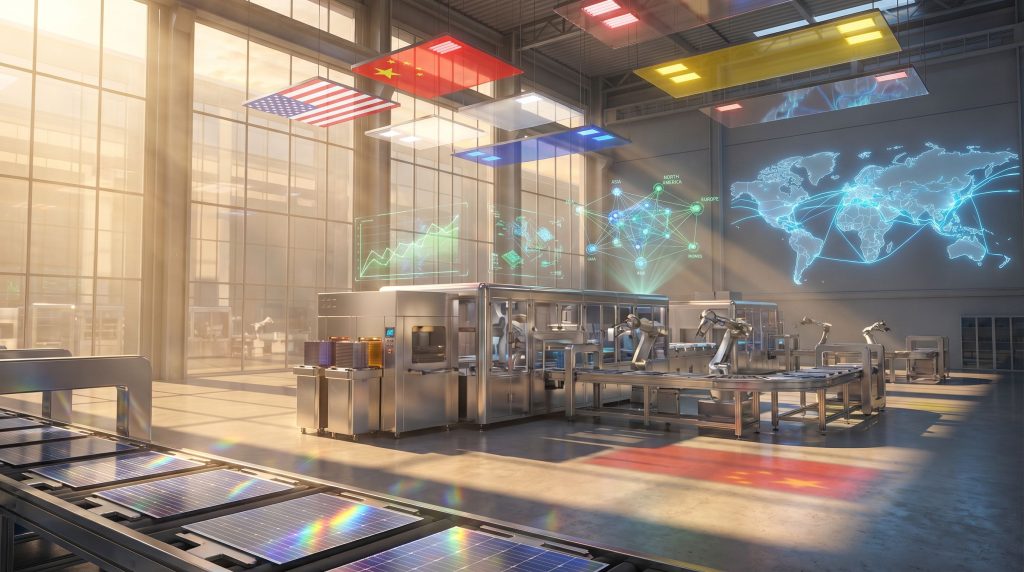
Manufacturing Dependencies Reshape Global Energy Infrastructure
The renewable energy sector stands at a critical juncture where technological advancement intersects with geopolitical strategy. As nations accelerate their transition to clean energy systems, the underlying manufacturing capabilities that enable this transformation have become increasingly concentrated in specific regions. China's export limits on US solar supply chain represent a significant development that could reshape global energy infrastructure dependencies and competitive dynamics.
Advanced manufacturing ecosystems require decades to develop, involving complex integration of specialised knowledge, supply chain relationships, and technological innovation. The solar photovoltaic industry exemplifies this dynamic, where upstream equipment manufacturing capabilities determine downstream production capacity across global markets. Understanding these dependencies becomes essential as countries navigate the tension between rapid clean energy deployment and supply chain resilience.
When big ASX news breaks, our subscribers know first
Understanding the Strategic Context Behind Equipment Export Controls
The Mechanics of Manufacturing Dominance
Solar panel production represents a complex multi-stage process where specialised equipment determines both production capacity and technological advancement. Unlike finished product restrictions that affect immediate availability, equipment controls impact long-term manufacturing capability development. China's position controlling more than 80% of global solar panel components creates a foundation for potential equipment export leverage that extends beyond immediate commercial considerations.
The technical complexity of modern solar manufacturing equipment creates additional barriers to supply chain diversification. Industry analysis indicates that non-Chinese equipment suppliers typically operate several generations behind leading-edge Chinese solutions. Many alternative suppliers still rely on critical components sourced from Chinese manufacturers. This technological gap compounds the challenge of equipment sourcing, particularly in cell manufacturing where advanced automation systems prove most difficult to replicate.
Supply Chain Integration Vulnerabilities
Equipment manufacturing integration with downstream production creates systemic dependencies that resist rapid substitution. Years of investment, scale development, and supply chain integration have produced manufacturing ecosystems difficult to replicate in compressed timeframes. Cell production equipment represents a particular vulnerability point, where alternative sourcing options remain limited and technological performance gaps persist.
Alternative mitigation strategies exist but carry significant limitations. Industry experts identify that sourcing second-hand equipment from Southeast Asia or India provides some supply diversification. However, these options come with clear constraints regarding efficiency levels and technological relevance for competitive manufacturing operations. Furthermore, the China export controls demonstrate how strategic materials and equipment access can become policy tools.
Economic Impact Analysis: Quantifying Supply Chain Vulnerabilities
Capacity Development Responses
Domestic manufacturing expansion efforts demonstrate the scale of investment required to address supply chain vulnerabilities. Suniva's announced expansion includes a 4.5GW solar cell manufacturing facility in South Carolina, scheduled to open in Q2 2027. Combined with existing Georgia operations, this will achieve total annual capacity exceeding 5.5GW. This expansion represents a concrete example of domestic capacity development, though the timeline extends well into the late 2020s.
Key Manufacturing Expansion Metrics:
- Total planned domestic capacity: 5.5GW annually by Q2 2027
- New facility scale: 4.5GW manufacturing capability
- Implementation timeline: Multi-year development period
- Geographic diversification: South Carolina and Georgia operations
The economic implications extend beyond individual company expansion plans to encompass broader questions about renewable energy cost competitiveness. Solar power has emerged as one of the fastest-growing electricity generation sources, supporting grid decarbonisation whilst meeting rising demand from electrification and digital infrastructure expansion. Equipment supply constraints could impact deployment timelines and project economics across these growing market segments.
Technology Sector Strategic Responses
Major technology companies are adapting their energy infrastructure strategies in response to supply chain considerations. Tesla continues expanding solar manufacturing whilst exploring energy applications including data centre power systems and space-based energy infrastructure. Similarly, Google is investing in solar and energy storage systems to support electricity demand from digital infrastructure operations.
These technology sector responses indicate that supply chain considerations extend beyond traditional energy companies to encompass broader industrial and infrastructure applications. Consequently, energy security intersects with operational reliability requirements across multiple sectors. Moreover, the renewable energy transformations affecting various industries demonstrate the widespread impact of these developments.
Strategic Response Scenarios: Mapping Potential Outcomes
Limited Equipment Restrictions Impact
A targeted approach focusing on advanced manufacturing equipment would create differential impacts across solar industry segments. Cell manufacturing faces the most acute challenges regarding alternative equipment sourcing, whilst other production stages might maintain greater supplier diversity. This scenario would likely accelerate investment in domestic equipment manufacturing capabilities whilst creating premium pricing for advanced technology access.
Companies responding to limited restrictions would need to evaluate technology performance trade-offs between available alternative suppliers and Chinese equipment providers. The several-generation technological gap between Chinese and non-Chinese suppliers would create strategic decisions about accepting reduced efficiency in exchange for supply chain diversification.
Comprehensive Supply Chain Restructuring
Broad equipment export restrictions would necessitate fundamental supply chain restructuring across the solar industry. Alternative sourcing strategies would need to accommodate both capacity constraints and technological limitations of non-Chinese equipment suppliers. Emergency sourcing protocols might include accelerated development of alternative supplier relationships and potential technology transfer partnerships with European or Japanese manufacturers.
The challenge of rapid supply chain de-risking becomes particularly acute when considering the technical sophistication required for competitive solar manufacturing equipment and the limited number of alternative suppliers capable of matching Chinese technological capabilities.
Regional Manufacturing Hub Development
Supply chain diversification pressures could accelerate development of alternative manufacturing hubs in Southeast Asia and India. However, these regions currently offer primarily second-hand equipment with efficiency and technological limitations. Regional hub development would require substantial investment in both manufacturing infrastructure and technical capability development to approach Chinese production standards.
In addition, the industry evolution and innovation trends suggest that new manufacturing approaches may emerge as companies seek alternatives to traditional supply chains.
Industry Adaptation Strategies: Building Resilient Supply Chains
Domestic Manufacturing Expansion Approaches
Companies are pursuing domestic manufacturing strategies that balance supply chain security with competitive positioning. Industry leadership perspectives emphasise that solar energy represents the fastest and most economical approach to expanding national energy supply. This creates strategic imperatives that extend beyond purely commercial considerations.
Strategic Manufacturing Positioning Benefits:
- Enhanced energy supply security through domestic production
- Reduced exposure to international supply chain disruptions
- Competitive positioning in growing renewable energy markets
- Strategic alignment with national energy independence objectives
The expansion of domestic capacity requires significant capital investment and multi-year development timelines. Companies pursuing this strategy must balance immediate equipment sourcing needs with longer-term capacity development goals whilst maintaining competitive cost structures.
Technology Development Acceleration
Supply chain pressures are creating incentives for accelerated technology development in equipment manufacturing capabilities. Domestic manufacturers are investing in research and development programmes designed to close technological gaps with Chinese suppliers whilst developing alternative approaches to manufacturing efficiency.
This technology development focus extends to both equipment innovation and manufacturing process optimisation. Companies seek to achieve competitive performance through alternative technological approaches rather than direct replication of Chinese manufacturing methods. Furthermore, the energy transition trends indicate that new technologies may provide competitive advantages.
Broader Implications for Global Energy Security
Energy Infrastructure Control Dynamics
The intersection of energy security and supply chain control reflects broader questions about industrial competitiveness in clean energy transitions. Access to energy infrastructure components, including manufacturing equipment, increasingly defines competitive positioning as nations accelerate renewable energy deployment. This acceleration aims to meet decarbonisation targets and growing electricity demand.
China's export limits on US solar supply chain signal a shift from purely commercial competition toward strategic positioning where manufacturing capability control becomes a policy tool. This evolution transforms supply chain management from operational optimisation to strategic risk management across energy infrastructure development.
International Market Development Impacts
Global energy markets face potential restructuring as supply chain considerations influence technology deployment patterns and project development timelines. Countries pursuing aggressive renewable energy expansion must balance deployment speed with supply chain security considerations. This balancing potentially affects both project costs and implementation schedules.
The strategic positioning around manufacturing capability control creates ripple effects across international energy cooperation frameworks, trade relationships, and technology transfer agreements. These effects extend well beyond bilateral relationships to encompass multilateral energy security arrangements.
The next major ASX story will hit our subscribers first
Investment and Policy Implications
Strategic Investment Opportunities
Supply chain diversification pressures are creating investment opportunities across multiple segments of the renewable energy ecosystem. Equipment manufacturing represents a critical area where alternative suppliers could capture market share through technological advancement and capacity expansion. However, the substantial investment requirements and technical challenges create significant barriers to entry.
Emerging Investment Focus Areas:
- Alternative equipment manufacturing capability development
- Supply chain diversification infrastructure projects
- Energy storage integration with solar deployment
- Domestic manufacturing facility expansion programmes
Technology companies are positioning themselves strategically within this evolving landscape. For instance, firms like Tesla and Google are expanding their energy infrastructure investments to support both operational requirements and strategic positioning in energy-intensive sectors including data centres and advanced manufacturing.
Policy Framework Evolution
The relationship between energy security and industrial policy is driving new approaches to trade, technology transfer, and international cooperation frameworks. Domestic manufacturing incentive programmes are gaining strategic importance as tools for building supply chain resilience whilst maintaining competitive positioning in global renewable energy markets.
Policy responses must balance multiple objectives including deployment speed for climate targets, supply chain security for energy independence, and competitive positioning for industrial development. These complex trade-offs are reshaping traditional approaches to energy policy and international trade frameworks. Moreover, the critical minerals in energy transition highlight additional supply chain considerations.
Risk Mitigation Strategies for Industry Stakeholders
Procurement Strategy Adaptations
Companies are adapting procurement strategies to address supply chain vulnerabilities whilst maintaining operational efficiency. These adaptations include diversifying supplier relationships, extending procurement timelines to accommodate alternative sourcing requirements, and developing contingency plans for equipment availability scenarios.
The technological performance trade-offs associated with alternative suppliers require careful evaluation of project-specific requirements against available equipment capabilities. Companies must balance immediate availability against long-term technological competitiveness when selecting equipment suppliers and manufacturing partners.
Operational Flexibility Development
Building operational flexibility becomes essential as companies navigate supply chain uncertainty and evolving geopolitical considerations. This flexibility encompasses both equipment sourcing strategies and production planning approaches that can accommodate varying supplier capabilities and availability schedules.
Successful risk mitigation requires integrating supply chain considerations into broader strategic planning processes rather than treating them as purely operational challenges. Consequently, companies are developing scenario planning capabilities that address multiple potential supply chain configurations and their implications for competitive positioning.
Future Outlook: Navigating Supply Chain Transformation
Timeline Considerations for Industry Adaptation
The renewable energy industry faces a multi-year adaptation period as supply chains restructure to address security and resilience requirements. Near-term challenges include managing immediate equipment sourcing needs whilst longer-term adaptation involves developing alternative supplier relationships and domestic manufacturing capabilities.
Suniva's Q2 2027 facility opening timeline provides one concrete example of domestic capacity development schedules, indicating that significant supply chain adaptations require multi-year implementation periods. Companies pursuing similar strategies must plan procurement and production schedules accordingly whilst maintaining competitive market positioning.
Technology Innovation Acceleration
Supply chain pressures are accelerating technology innovation across multiple aspects of solar manufacturing and deployment. Equipment manufacturers are investing in alternative technological approaches that reduce dependency on Chinese suppliers whilst potentially achieving competitive or superior performance characteristics.
Innovation Focus Areas:
- Advanced automation systems for domestic manufacturing
- Alternative materials and processes for equipment production
- Integration technologies for supply chain optimisation
- Performance monitoring and efficiency improvement systems
The innovation acceleration extends beyond equipment manufacturing to encompass broader renewable energy system integration. Companies seek competitive advantages through technological differentiation rather than purely cost-based competition. Furthermore, reports suggest that China could limit solar exports, potentially affecting how sector stocks respond to market pressures.
Strategic Positioning for Energy Transition
Long-term success in the evolving renewable energy landscape requires strategic positioning that balances multiple considerations including supply chain security, technological competitiveness, and market access. Companies are developing integrated approaches that address these challenges whilst maintaining focus on fundamental objectives of cost-effective clean energy deployment.
China's export limits on US solar supply chain will continue defining competitive positioning as nations pursue energy transition objectives. Companies and countries that successfully navigate these considerations whilst maintaining deployment momentum will establish advantageous positioning for the next phase of global energy transformation.
The question of where energy infrastructure originates and who controls manufacturing supply chains will remain central to competitive dynamics. However, innovation and strategic adaptation may provide pathways for reducing dependencies whilst achieving clean energy deployment goals.
Disclaimer: This analysis is based on publicly available information and industry observations. Financial projections, timeline estimates, and strategic assessments represent analytical perspectives rather than guaranteed outcomes. Investors and industry stakeholders should conduct independent research and consider multiple scenarios when making strategic decisions related to renewable energy investments and supply chain strategies.
Want to Stay Ahead of Critical Mining Discoveries That Could Reshape Supply Chains?
Whilst renewable energy supply chains navigate manufacturing complexities, the mining sector continues delivering breakthrough discoveries that support these global transitions. Discovery Alert's proprietary Discovery IQ model provides instant notifications on significant ASX mineral discoveries, helping subscribers identify actionable opportunities in critical materials and rare earth elements powering energy infrastructure. Explore historic examples of major discoveries and begin your 14-day free trial today to position yourself ahead of market-moving announcements.