August 25, 2026

Manufacturing Excellence Drives Global Energy Storage Transformation
The global transition toward renewable energy has created unprecedented demand for grid-scale storage solutions, fundamentally reshaping how battery manufacturers allocate production resources and capitalise on emerging market opportunities. While traditional automotive battery segments face demand headwinds, energy storage applications are experiencing explosive growth, creating new revenue streams that offset declining electric vehicle market momentum.
This shift represents more than a simple market reallocation. It signals a strategic pivot where manufacturers are discovering that battery energy storage system sales offer superior margin profiles, longer-term contract visibility, and geographic diversification opportunities that automotive applications cannot match. The implications extend far beyond quarterly earnings reports, fundamentally altering how global battery production capacity gets deployed across different end markets.
When big ASX news breaks, our subscribers know first
Grid Modernisation Fuels Unprecedented Storage Demand
Modern electrical grids require sophisticated balancing mechanisms to accommodate increasing renewable energy penetration. Traditional grid infrastructure, designed around predictable fossil fuel generation patterns, struggles with the intermittent nature of solar and wind power. This technological mismatch creates substantial market opportunities for utility-scale storage systems that can provide essential grid services while capturing economic value from energy arbitrage and capacity markets.
Market Fundamentals Behind BESS Expansion:
• Grid stability requirements across developed economies driving utility procurement
• Renewable energy intermittency solutions creating long-term demand visibility
• Data center power reliability needs generating new revenue opportunities
• Industrial energy cost optimization through peak shaving applications
The convergence of these factors has created a market environment where leading manufacturers report battery energy storage system sales growing at rates exceeding 40% annually, even as automotive segments experience significant demand contraction. This divergence illustrates how energy storage markets have developed independent momentum, driven by infrastructure modernisation rather than consumer adoption cycles.
Furthermore, the role of critical minerals in energy transition has become increasingly vital, as these materials form the foundation of advanced battery technologies that power grid-scale storage solutions.
Technology Cost Trajectories Enable Mass Market Adoption
Lithium iron phosphate (LFP) battery chemistry has emerged as the dominant technology for utility-scale applications, offering optimal cost-performance characteristics for long-duration storage requirements. Manufacturing scale economies, originally developed for automotive applications, are now being redirected toward energy storage production, creating rapid cost reductions that make grid-scale projects economically viable without subsidies.
Technology Cost Curves Enabling Deployment:
• LFP battery manufacturing reaching economic parity with traditional grid assets
• Automotive production spillover effects reducing system integration costs
• Standardised containerised solutions improving deployment efficiency
• Balance-of-system innovations reducing total project capital requirements
The technical evolution from pouch-type to prismatic battery formats represents a fundamental shift toward manufacturing standardisation optimised for utility-scale applications. This transition enables automated production processes that reduce labour costs while improving quality consistency across large deployment volumes.
In addition, recent developments in lithium refinery developments have significantly improved the supply chain efficiency for battery-grade materials, enabling manufacturers to secure more stable material sourcing for their growing energy storage production lines.
Regional Market Leadership Patterns Emerge
North American markets have established clear leadership in battery energy storage system sales, driven by policy incentives and grid modernisation requirements. Industry data indicates that North America accounts for approximately 50% of global battery demand for energy storage applications, with growth rates significantly exceeding other regional markets.
Regional BESS Market Characteristics
| Region | Primary Drivers | Policy Support | Market Leadership |
|---|---|---|---|
| North America | Grid stability, renewable integration | IRA tax credits, state mandates | 50% of global demand |
| Asia-Pacific | Manufacturing hub, urbanisation | Feed-in tariffs, carbon targets | Production leadership |
| Europe | Energy security, decarbonisation | Green Deal, REPowerEU | Policy innovation |
The geographic concentration of demand in North America has prompted major manufacturers to establish local production capacity, with over 80% of planned global expansion focused on serving this market. This localisation strategy reflects both policy incentive structures and supply chain optimisation considerations that favour regional manufacturing approaches.
Asian Manufacturing Hub Advantages
Asian manufacturers maintain structural advantages in global battery energy storage system sales through established supply chain ecosystems and government support for strategic energy initiatives. China, South Korea, and Japan have developed vertically integrated production capabilities spanning raw materials processing through finished system integration.
The competitive positioning of non-Chinese manufacturers has become particularly important in North American markets, where supply chain diversification requirements create market opportunities for companies offering alternatives to Chinese production capacity. This dynamic has enabled certain manufacturers to command premium pricing while establishing long-term customer relationships with major utilities and developers.
However, innovations such as the battery recycling breakthrough are helping to create more sustainable supply chains, potentially reducing dependence on primary raw materials and improving the economics of battery production across all regions.
Production Strategy Optimisation Transforms Manufacturing Economics
Leading manufacturers have developed sophisticated capacity allocation strategies that maximise utilisation rates across different end markets. The ability to reallocate production capacity between automotive and energy storage applications provides operational flexibility that improves financial performance during demand cycle variations.
Capacity Allocation Strategies:
• Flexible manufacturing lines optimising between EV and ESS production volumes
• Geographic diversification capturing regional policy incentives
• Multi-chemistry production approaches serving different application requirements
• Vertical integration expanding into complete system solutions
Recent financial performance data demonstrates the effectiveness of these strategies. Major manufacturers report that energy storage divisions achieve quarterly revenue growth exceeding 28% sequentially, while automotive segments face continued demand challenges. This performance divergence has prompted strategic capacity reallocation away from automotive applications toward energy storage production.
Financial Performance Indicators
The economics of battery energy storage system sales have fundamentally improved manufacturing industry profitability profiles. Companies implementing flexible production strategies report operating profit improvements exceeding 100% year-over-year, primarily driven by energy storage revenue growth and improved asset utilisation rates.
Key Strategic Insight: Manufacturing flexibility between automotive and energy storage applications has become a critical competitive advantage, enabling companies to optimise capacity utilisation while capturing higher-margin opportunities in rapidly growing energy storage markets.
Order backlog visibility provides additional strategic advantages, with leading manufacturers reporting energy storage order backlogs exceeding 140 GWh, representing multiple years of production visibility at current deployment rates. This forward demand certainty enables more efficient capital allocation and production planning compared to automotive markets characterised by shorter order cycles.
Consequently, the focus on battery metals investment has intensified as manufacturers seek to secure long-term supply agreements that support their expanding energy storage production capacity.
Revenue Model Evolution Creates Sustainable Growth Patterns
The revenue structure for battery energy storage system sales differs fundamentally from automotive applications, offering superior contract terms and diversified income streams. Utility-scale energy storage projects typically involve long-term purchase agreements with investment-grade counterparties, providing revenue certainty that supports project financing and manufacturing capacity planning.
Utility-Scale Contract Structures:
• Long-term supply agreements with major utilities and developers
• Capacity payments for grid reliability services
• System integration revenues from complete turnkey solutions
• Performance-based contracts linking payments to operational metrics
The transition toward large-scale, long-term contracts represents a strategic shift away from transactional sales models toward partnership-based relationships with major infrastructure developers. This evolution provides manufacturers with predictable revenue streams while reducing customer acquisition costs through extended engagement periods.
Commercial and Industrial Application Growth
Beyond utility-scale markets, commercial and industrial applications for battery energy storage system sales are expanding rapidly, driven by rising electricity costs and power reliability requirements. Data centre expansion, in particular, creates substantial demand for backup power and peak shaving applications that complement utility-scale market growth.
C&I Market Drivers:
• Peak demand charge reduction for large electricity consumers
• Time-of-use rate optimisation strategies
• Critical facility backup power requirements
• Microgrid integration for energy independence
The diversity of application areas provides manufacturers with multiple growth vectors that reduce dependence on any single market segment. This diversification strategy proves particularly valuable during utility procurement cycle variations or policy change periods that might temporarily affect specific market segments.
For instance, many industrial facilities are now exploring battery energy storage systems to optimise their energy consumption patterns and reduce operational costs through sophisticated demand management strategies.
The next major ASX story will hit our subscribers first
Technology Innovation Shapes Future Market Trajectories
Battery chemistry evolution continues to drive performance improvements and cost reductions that expand addressable market opportunities. The shift toward LFP chemistry for utility-scale applications reflects optimisation for cycle life and safety characteristics rather than energy density priorities that dominate automotive applications.
Comparative Battery Technology Analysis
| Technology | Energy Density | Cycle Life | Cost Position | Primary Applications |
|---|---|---|---|---|
| LFP | 90-160 Wh/kg | 6,000+ cycles | Lowest cost | Utility-scale, long-duration |
| NCA/NCM | 200-260 Wh/kg | 3,000-5,000 cycles | Moderate cost | Grid-scale, high-power |
| Sodium-ion | 70-150 Wh/kg | 4,000+ cycles | Emerging low-cost | Alternative chemistry |
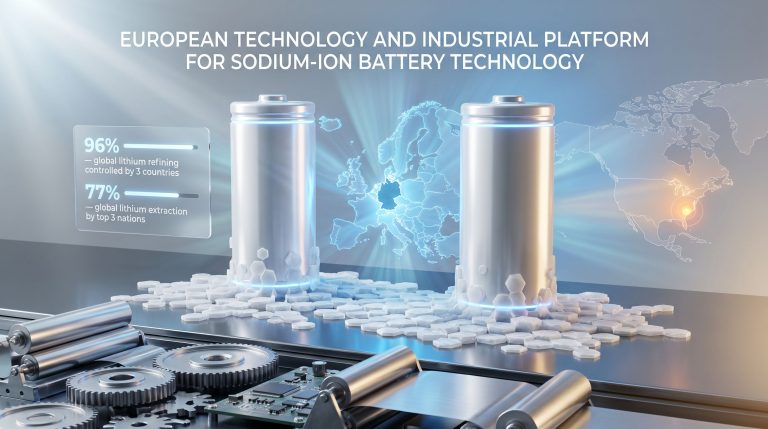
The development of sodium-ion battery technology represents a potential disruptive force in energy storage markets, offering cost advantages and reduced critical material dependencies. While current performance characteristics limit near-term applications, continued development could create new market segments focused on ultra-low-cost, long-duration storage requirements.
System-Level Integration Advances
Beyond battery cell improvements, system-level innovations are creating additional value for battery energy storage system sales through enhanced grid services capabilities and improved operational efficiency. AI-powered energy management software enables sophisticated charge-discharge optimisation that maximises revenue across multiple market participation opportunities.
Advanced System Features:
• Grid-forming inverters providing enhanced stability services
• Modular designs enabling capacity expansion without full replacement
• Advanced fire safety systems addressing insurance and regulatory requirements
• Predictive maintenance capabilities reducing operational costs
These system-level capabilities differentiate energy storage products from commodity battery sales, enabling manufacturers to capture higher margins through value-added services and performance guarantees that utilities increasingly demand.
Moreover, the ongoing lithium industry innovations continue to drive improvements in both cost and performance across the entire battery value chain, supporting the economic viability of diverse energy storage applications.
Policy Framework Impact on Market Development
Government policy support has emerged as a critical factor driving battery energy storage system sales growth, particularly in North American markets where tax incentive programmes provide substantial economic benefits. The US Inflation Reduction Act's 30% investment tax credit significantly improves project economics, making previously marginal installations financially attractive.
Policy Incentive Analysis:
• United States: IRA tax credits improving project returns by 30-40%
• European Union: Green Deal funding supporting deployment acceleration
• China: National storage targets creating domestic market demand
• Australia: State renewable energy zones requiring storage integration
The quantitative impact of policy support on manufacturer performance demonstrates its critical importance. Leading companies report that without tax incentive benefits, quarterly operating losses would expand by over 200%, illustrating the extent to which current market growth depends on supportive policy frameworks.
Regulatory Evolution Supporting Market Growth
Market design reforms are increasingly recognising energy storage as a firm grid resource capable of providing essential reliability services. These regulatory changes enable storage systems to participate in capacity markets and ancillary service programmes that provide additional revenue streams beyond energy arbitrage opportunities.
Grid interconnection procedures are also evolving to accommodate bidirectional energy flows and storage-specific technical requirements. These regulatory improvements reduce project development timelines and costs, making energy storage projects more competitive with traditional generation alternatives.
Investment Capital Allocation Patterns
The growth in battery energy storage system sales has attracted substantial institutional investment, with pension funds and infrastructure investment vehicles recognising the sector's stable, long-term return characteristics. Utility-scale storage projects offer investment profiles similar to traditional infrastructure assets, combining predictable cash flows with essential service characteristics.
Capital Market Trends:
• Manufacturing capacity expansion requiring $10-50 billion in global investment
• Institutional investors entering utility-scale project development
• Supply chain localisation driven by geopolitical risk considerations
• Technology R&D investment focusing on next-generation performance improvements
The scale of required capital investment reflects the rapid market expansion and the capital-intensive nature of battery manufacturing. Companies are implementing diverse financing strategies, including asset sales and joint venture partnerships, to fund expansion while maintaining balance sheet flexibility.
What Are the Key Risk Assessment Considerations?
Investment decision-making for battery energy storage system sales involves multiple risk evaluation dimensions that differ from traditional energy investments. Technology maturity, regulatory stability, and operational track record have emerged as critical assessment criteria for institutional investors evaluating market opportunities.
Investment Consideration: Successful energy storage investments require careful evaluation of technology risk, policy stability, customer creditworthiness, and operational performance track records across multiple market cycles.
The development of standardised risk assessment methodologies is improving capital market access for energy storage projects, reducing financing costs and accelerating deployment across different geographic markets and application segments.
Emerging Market Segments and Growth Opportunities
The expansion of battery energy storage system sales beyond traditional utility applications is creating new market segments with distinct characteristics and growth potential. Data centres represent one of the fastest-growing segments, driven by artificial intelligence computing requirements and 24/7 power reliability needs.
High-Growth Application Areas:
• Hyperscale data centres requiring continuous power reliability
• Electric vehicle fast-charging infrastructure with grid buffering capabilities
• Industrial manufacturing facilities optimising energy cost management
• Distributed residential systems supporting home energy independence
Each application segment presents unique technical requirements and economic characteristics that enable manufacturers to develop specialised product offerings and capture premium pricing for application-specific solutions.
Geographic Expansion Potential
International market development represents significant growth opportunities for battery energy storage system sales, particularly in regions with unreliable grid infrastructure or high electricity costs. Island nations and remote industrial operations present compelling use cases for energy storage systems that provide grid independence and cost optimisation benefits.
Developing market opportunities often involve different technical and financial characteristics compared to developed market applications, requiring manufacturers to adapt product offerings and business models for local market conditions and customer requirements.
Furthermore, companies like PowerLink Energy are developing tailored solutions that address specific regional requirements while maintaining the scalability needed for global deployment strategies.
Supply Chain Dynamics and Material Considerations
The rapid growth in battery energy storage system sales has created supply chain challenges and opportunities that manufacturers must navigate carefully. Lithium supply constraints represent a potential limiting factor for market expansion, while recycling infrastructure development creates opportunities for circular economy business models.
Critical Supply Chain Factors:
• Raw material availability affecting production capacity scaling
• Transportation costs favouring regional manufacturing strategies
• Quality control advantages from vertically integrated supply chains
• Recycling infrastructure creating secondary material sources
Manufacturing localisation trends reflect both supply chain optimisation and policy incentive considerations. Companies are establishing regional production capabilities to reduce logistics costs while capturing local content requirements and policy benefits.
Alternative Chemistry Development
The development of alternative battery chemistries, including sodium-ion technologies, represents a strategic approach to reducing critical material dependencies while potentially achieving lower costs. These emerging technologies could reshape competitive dynamics in cost-sensitive applications where performance requirements allow for chemistry substitution.
Current sodium-ion development suggests potential cost advantages of 20-30% compared to lithium-ion alternatives, though energy density limitations currently restrict applications to stationary storage rather than mobile applications.
Performance Metrics and Operational Excellence
The maturation of battery energy storage system sales markets has led to increasingly sophisticated performance measurement and operational requirements. Utilities and commercial customers now expect standardised performance metrics and long-term operational guarantees that influence manufacturer product development strategies.
Industry Performance Benchmarks
| Metric | Standard Performance | Leading Performance |
|---|---|---|
| Round-trip Efficiency | 85-90% | 92-95% |
| Annual Degradation | 2-3% | <1.5% |
| System Availability | 95-97% | >98% |
| Grid Response Time | <1 second | <100 milliseconds |
Performance differentiation has become a key competitive factor as markets mature beyond pure cost competition. Companies achieving leading performance metrics can command premium pricing while establishing long-term customer relationships based on operational excellence rather than lowest-cost positioning.
Financial Return Optimisation
The economics of battery energy storage system sales continue to improve as technology costs decline and revenue optimisation strategies evolve. Successful projects now achieve internal rates of return exceeding 12-15% while providing essential grid services that command stable, long-term pricing.
Project Economics Framework:
• Levelised cost of storage targets below $100/MWh for utility-scale applications
• Payback periods under 7-10 years for commercial installations
• Revenue diversification across multiple value streams and market participation
• Long-term performance guarantees supporting project financing
The development of sophisticated revenue optimisation strategies enables storage systems to participate simultaneously in multiple market mechanisms, including energy arbitrage, capacity markets, and ancillary services, maximising economic returns while providing grid benefits.
This analysis is based on publicly available industry data and should not be considered investment advice. Market conditions and regulatory frameworks continue to evolve rapidly, and readers should conduct independent research when evaluating energy storage investment opportunities.
Are You Positioned to Capitalise on the Energy Storage Revolution?
Discovery Alert's proprietary Discovery IQ model delivers real-time alerts on significant ASX mineral discoveries, including critical battery metals powering the global energy storage transformation. Understand why major mineral discoveries can lead to substantial market returns by exploring Discovery Alert's dedicated discoveries page, showcasing historic examples of exceptional outcomes, and begin your 14-day free trial today to position yourself ahead of the market.