June 29, 2026
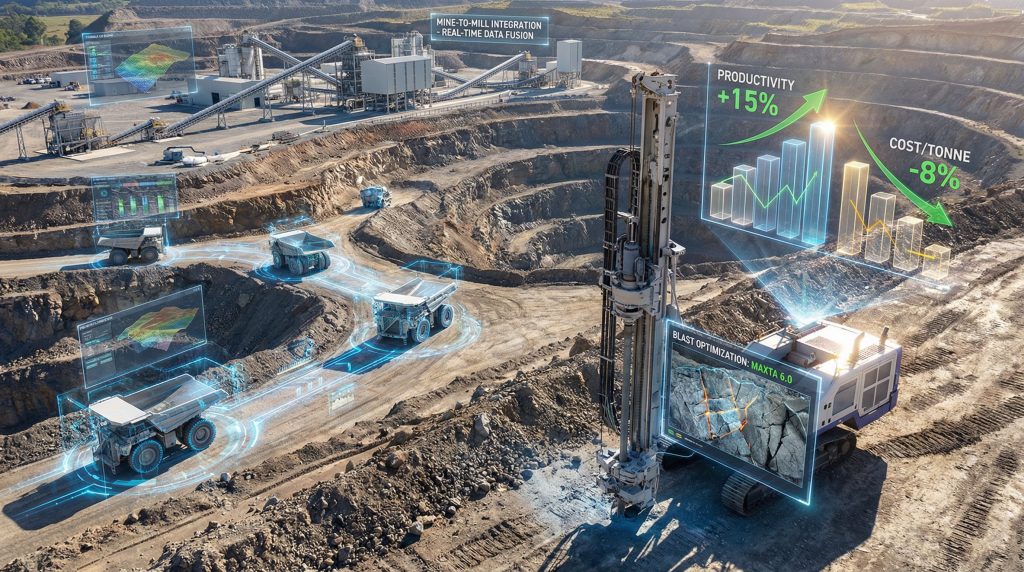
The mining industry faces unprecedented challenges as ore grades decline and operational costs rise globally. Maptek and PETRA mine-to-mill AI technology integration represents a revolutionary approach to addressing these challenges through comprehensive digital transformation. This technological convergence transforms traditional mining workflows by connecting geological assessment, extraction planning, and processing optimization through unified artificial intelligence platforms that deliver measurable operational improvements.
Modern mining enterprises require sophisticated technological frameworks that can process vast quantities of geological, operational, and environmental data in real-time. The convergence of machine learning algorithms, predictive analytics, and autonomous systems represents a fundamental shift from conventional mining practices toward data-driven operations.
Understanding Digital Mine-to-Mill Integration Fundamentals
Digital mine-to-mill integration represents a comprehensive technological approach that connects extraction operations with processing facilities through unified data management systems. This methodology eliminates traditional silos between mining departments, creating seamless information flow from geological assessment through final product delivery.
The fundamental principle underlying this integration involves transforming raw operational data into actionable intelligence. Mining operations generate enormous quantities of information daily, including geological survey results, equipment performance metrics, environmental monitoring data, and production statistics. Traditional approaches often struggle to synthesize this information effectively, leading to suboptimal decision-making and missed optimization opportunities.
| Traditional Mining Operations | AI-Enhanced Mining Operations |
|---|---|
| Reactive decision-making | Predictive optimization |
| Departmental data silos | Integrated data workflows |
| Manual analysis processes | Automated insight generation |
| Static operational parameters | Dynamic parameter adjustment |
| Limited geological visibility | Real-time orebody intelligence |
Industry research indicates that mining operations implementing comprehensive AI integration can achieve 15-25% improvements in overall equipment effectiveness while reducing operational costs by 10-20% through optimized resource allocation and predictive maintenance protocols.
Operational Efficiency Through Systematic Integration
The business case for integrated mining technology centers on measurable performance improvements across multiple operational dimensions. Cost reduction opportunities span equipment optimization, energy management, maintenance scheduling, and workforce allocation. These benefits compound throughout the value chain, creating substantial return on investment potential for mining enterprises.
Risk mitigation through predictive analytics represents another critical value proposition. Traditional mining operations often encounter unexpected geological variations, equipment failures, or processing bottlenecks that disrupt production schedules. Furthermore, AI-powered efficiency systems can anticipate these challenges through pattern recognition and predictive modeling, enabling proactive intervention strategies.
When big ASX news breaks, our subscribers know first
Advanced Orebody Intelligence Through Digital Twin Technology
Digital twin technology revolutionizes orebody understanding by creating virtual representations of geological formations that update continuously based on new data inputs. This approach transcends traditional geological modeling limitations, providing dynamic insights into ore distribution, grade variability, and structural characteristics throughout the mining lifecycle.
Machine learning algorithms enhance geological modeling accuracy through sophisticated pattern recognition capabilities. These systems analyze historical drilling data, geophysical surveys, and production results to identify subtle geological relationships that human analysts might overlook. In addition, 3D geological modelling provides more precise predictions of ore body characteristics and facilitates optimized extraction planning.
Core Machine Learning Applications in Geological Assessment
• Supervised learning algorithms for ore grade prediction based on geological indicators
• Unsupervised clustering techniques for identifying geological domains and structural features
• Ensemble methods combining multiple predictive models for enhanced accuracy
• Deep learning networks processing complex geophysical and geochemical data patterns
• Reinforcement learning systems optimizing extraction sequences based on geological constraints
Data fusion techniques integrate information from diverse sources, including drill hole data, remote sensing imagery, geophysical surveys, and real-time production monitoring. This comprehensive approach creates more robust geological models that account for spatial variability and uncertainty quantification.
Predictive Analytics for Resource Optimization
Advanced predictive analytics transform how mining operations approach resource optimization. These systems analyze geological variability patterns to predict ore characteristics before extraction, enabling dynamic adjustment of processing parameters and equipment configurations.
| Geological Formation Type | Prediction Accuracy Range | Key Variables Analyzed |
|---|---|---|
| Sedimentary deposits | 85-92% | Stratigraphic continuity, porosity |
| Igneous intrusions | 78-88% | Mineral assemblage, alteration zones |
| Metamorphic complexes | 72-85% | Structural deformation, grade distribution |
| Placer deposits | 90-95% | Channel morphology, size distribution |
Real-time model updating methodologies ensure geological intelligence remains current throughout mining operations. As new data becomes available from production activities, machine learning algorithms automatically incorporate this information to refine predictive models and improve future forecasting accuracy.
Comprehensive Mining AI Platform Architecture
Modern mining AI platforms require sophisticated architectural designs that accommodate diverse data sources, processing requirements, and user applications. These systems must integrate seamlessly with existing mining software while providing scalable infrastructure for future technological enhancements.
The technological foundation supporting AI-driven mining operations encompasses multiple interconnected components. Data acquisition systems collect information from sensors, monitoring equipment, and operational databases. Processing engines apply machine learning algorithms to generate insights and recommendations. User interfaces present results in accessible formats for operational decision-making.
Essential Integration Workflow Components
- Data ingestion protocols standardizing information from diverse mining systems
- Quality assurance algorithms validating data integrity and identifying anomalies
- Processing orchestration managing computational resources and workflow scheduling
- Model deployment frameworks implementing machine learning algorithms in production
- Result visualization systems presenting insights through intuitive user interfaces
- Feedback mechanisms enabling continuous model improvement based on operational outcomes
Cloud-based deployment options provide scalability advantages for mining operations with fluctuating computational requirements. These architectures support elastic resource allocation, enabling companies to adjust processing capacity based on seasonal production cycles or project-specific demands.
On-premise deployment alternatives offer enhanced data security and reduced latency for operations requiring real-time processing capabilities. Hybrid architectures combine both approaches, maintaining sensitive data locally while leveraging cloud resources for intensive computational tasks.
Platform Integration Synergies
Mining AI platforms achieve maximum effectiveness through seamless integration with established mining software ecosystems. These connections enable automated data flow between geological modeling, mine planning, and operational control systems without requiring manual intervention or data format conversions.
Mine planning automation features utilize AI insights to optimize extraction sequences, equipment deployment, and resource allocation. Dynamic scheduling algorithms adjust operational parameters based on real-time conditions, geological discoveries, and market demands. However, achieving such integration requires significant investment in infrastructure and mining innovation trends continue to shape how companies approach these challenges.
Key Integration Benefits:
- Elimination of data transfer bottlenecks between operational systems
- Automated workflow orchestration reducing manual coordination requirements
- Consistent data formatting standards across diverse software platforms
- Real-time synchronization ensuring all systems operate with current information
Revolutionizing Drill-and-Blast Operations Through AI Enhancement
Artificial intelligence transforms drill-and-blast operations by optimizing fragmentation patterns, reducing explosive consumption, and minimizing environmental impact. Traditional blast design relies heavily on empirical relationships and operator experience, while AI-driven blast optimization approaches utilize comprehensive data analysis to achieve superior results.
Computer vision technology analyzes blast fragmentation patterns with unprecedented precision. High-resolution imaging systems capture detailed fragmentation data immediately following blasting operations, enabling quantitative assessment of size distribution and uniformity. This information guides subsequent processing optimization and identifies opportunities for blast design improvements.
Advanced Fragmentation Analysis Methodologies
Fragmentation analysis through computer vision represents a significant advancement over traditional assessment methods. Automated image processing algorithms measure individual fragment dimensions, calculate size distribution statistics, and identify oversized materials requiring secondary breaking.
| Fragmentation Size Range | Processing Impact | Optimization Strategy |
|---|---|---|
| 0-50mm | Optimal crushing efficiency | Maintain current parameters |
| 50-200mm | Standard processing flow | Monitor for consistency |
| 200-500mm | Increased crushing time | Adjust blast pattern density |
| >500mm | Secondary breaking required | Modify explosive distribution |
The downstream impact of fragmentation optimization extends throughout the processing chain. Consistent fragmentation reduces crushing equipment wear, improves throughput rates, and enhances grinding efficiency. These benefits translate into measurable cost reductions and increased plant capacity utilisation.
Dynamic Blast Design Optimization
AI-driven blast design optimization algorithms consider multiple variables simultaneously, including geological conditions, explosive properties, equipment constraints, and environmental restrictions. These systems generate optimal blast patterns that balance fragmentation quality, cost efficiency, and safety requirements.
Geological variability compensation techniques adjust explosive placement and timing based on local rock characteristics. Areas with harder rock formations receive increased explosive density, while softer zones utilise reduced charges to prevent over-fragmentation and minimise environmental disturbance.
Best practices for AI-driven blast design include systematic geological characterisation, comprehensive blast monitoring, continuous parameter optimization based on fragmentation results, and integration with downstream processing optimization systems.
Strategic Data Management for Mining AI Success
Effective data management forms the foundation of successful mining AI implementation. Mining operations generate diverse data streams requiring sophisticated integration, validation, and processing protocols to ensure AI systems receive high-quality inputs for accurate analysis and prediction.
Automated data fusion workflows consolidate information from multiple sources while maintaining data integrity and traceability. These systems handle geological surveys, production monitoring, equipment telemetry, and environmental measurements through standardised protocols that ensure consistency and compatibility across different data sources.
Comprehensive Data Integration Strategies
• Geological survey data including drill hole logs, assay results, and structural measurements
• Production monitoring systems tracking tonnage, grade, and processing parameters
• Equipment telemetry providing real-time operational status and performance metrics
• Environmental sensors monitoring air quality, noise levels, and ground stability
• Financial systems containing cost data, budget information, and performance indicators
• Supply chain databases tracking inventory, logistics, and procurement activities
Quality control and validation protocols ensure data accuracy before AI processing begins. Automated algorithms identify outliers, inconsistencies, and missing values that could compromise analysis results. These systems implement correction procedures or flag problematic data for manual review.
Real-Time Decision Support Implementation
Real-time decision support systems provide operational teams with immediate access to AI-generated insights and recommendations. Dashboard visualisations present complex data relationships through intuitive interfaces that highlight critical trends and potential issues requiring attention.
Consider a mining operation experiencing unexpected geological conditions during extraction. Real-time AI analysis could immediately assess the situation, compare it with historical data patterns, and recommend adjusted processing parameters to maintain productivity while ensuring safety standards. Mobile accessibility enables field personnel to receive these insights directly at operational locations, facilitating rapid implementation of recommended adjustments.
Mobile accessibility extends decision support capabilities to field operations where immediate action may be required. Tablet and smartphone applications provide simplified interfaces optimised for outdoor use while maintaining secure connections to centralised AI systems.
Measuring AI Implementation Success in Mining Operations
Mining companies require comprehensive metrics to evaluate AI implementation effectiveness and justify continued technology investments. Success measurement encompasses operational performance improvements, cost reductions, and strategic competitive advantages gained through enhanced decision-making capabilities.
Key performance indicators for Maptek and PETRA mine-to-mill AI technology integration span multiple operational dimensions. Productivity metrics examine tonnage processed, recovery rates, and equipment utilisation. Cost indicators analyse operational expenses, maintenance requirements, and energy consumption. Quality measurements assess product specifications, consistency, and customer satisfaction levels.
Operational Performance Enhancement Metrics
| Performance Category | Traditional Operations | AI-Enhanced Operations | Improvement Range |
|---|---|---|---|
| Equipment Utilisation | 65-75% | 80-90% | 15-25% increase |
| Processing Recovery | 88-92% | 93-97% | 3-8% improvement |
| Maintenance Costs | Baseline | 15-30% reduction | $2-5M annually |
| Energy Consumption | Standard | 8-15% reduction | 10-25% cost savings |
| Production Consistency | ±12% variance | ±5% variance | 60% improvement |
Timeline expectations for achieving return on investment vary based on implementation scope and operational complexity. Initial improvements often appear within 6-12 months, while comprehensive benefits typically materialise over 18-36 month periods as systems mature and organisational processes adapt.
Strategic Value Creation Analysis
Million-dollar savings examples from comprehensive AI implementations include reduced equipment downtime through predictive maintenance, optimised energy consumption through dynamic parameter adjustment, improved recovery rates through real-time process optimisation, and enhanced safety performance reducing incident-related costs.
Scalability across multiple mining sites provides additional value creation opportunities. Successful AI implementations at one location can be replicated at other facilities with modifications for local geological and operational conditions. This approach leverages development investments across broader operational portfolios.
The next major ASX story will hit our subscribers first
Addressing Technical Integration Challenges
Mining AI integration encounters several technical challenges that require systematic resolution approaches. Data quality and standardisation issues represent primary obstacles, as mining operations often utilise diverse systems with incompatible data formats and quality standards.
Legacy system compatibility requirements demand careful planning and phased implementation strategies. Many mining operations rely on established software systems that may lack modern integration capabilities. Custom interface development or middleware solutions may be necessary to achieve seamless data flow.
Common Implementation Obstacles
- Inconsistent data formats across different operational systems and departments
- Legacy software limitations restricting integration with modern AI platforms
- Network infrastructure constraints limiting real-time data transmission capabilities
- Cybersecurity requirements necessitating secure data handling protocols
- Staff training needs for effective utilisation of AI-enhanced systems
- Change management resistance from personnel accustomed to traditional workflows
Staff training and change management considerations require dedicated resources and structured approaches. Personnel must understand AI system capabilities, learn new operational procedures, and adapt decision-making processes to incorporate AI-generated insights effectively.
Infrastructure Requirements for Successful Deployment
Infrastructure requirements for AI deployment encompass computational resources, network connectivity, and data storage capabilities. High-performance computing systems provide the processing power necessary for complex machine learning algorithms and real-time analysis requirements.
Network connectivity demands ensure reliable data transmission between operational sites, processing centres, and decision-making locations. Redundant communication pathways and backup systems maintain operational continuity during network disruptions or maintenance activities.
Minimum technical requirements for mining AI systems include dedicated computing resources with GPU acceleration capabilities, high-bandwidth network connections supporting real-time data streams, secure data storage systems with backup and recovery protocols, and integrated cybersecurity frameworks protecting sensitive operational information.
Transformative Potential of Agentic AI in Mining
Agentic AI represents the next evolution in mining automation, featuring systems capable of autonomous decision-making and proactive optimisation without constant human intervention. These advanced systems analyse operational conditions continuously and implement improvements automatically while maintaining safety standards and operational constraints.
The scheduled release of MAXTA 6.0 in 2026 will introduce advanced agentic AI capabilities designed to convert optimisation insights directly into measurable value for mining operations. This technology advancement represents a significant step toward fully autonomous mining systems that can adapt to changing conditions without manual oversight.
Autonomous Optimization Mechanisms
Autonomous optimisation recommendations emerge from sophisticated algorithm combinations that evaluate multiple operational scenarios simultaneously. These systems consider geological conditions, equipment status, market demands, and environmental constraints to identify optimal operational parameters in real-time.
Industry experts anticipate that agentic AI systems could achieve 30-50% improvements in operational efficiency by eliminating delays between problem identification and solution implementation, while reducing human error through consistent algorithmic decision-making processes.
Value conversion mechanisms translate AI insights into specific operational adjustments that generate measurable business benefits. Rather than simply providing recommendations, agentic systems implement approved changes automatically while monitoring results and adjusting approaches based on outcomes.
Future Applications of Autonomous Mining Systems
Consider a fully automated mine-to-mill operation where agentic AI systems monitor geological conditions, optimise extraction sequences, adjust processing parameters, and coordinate equipment deployment without human intervention. Such systems would respond instantaneously to changing conditions, maintaining optimal performance while ensuring safety and environmental compliance.
Regulatory considerations for autonomous systems require careful evaluation of safety protocols, liability frameworks, and compliance requirements. Mining operations must demonstrate that autonomous systems meet or exceed human-operated safety standards while maintaining regulatory compliance across all operational aspects.
Safety protocol integration ensures autonomous systems operate within established parameters that protect personnel, equipment, and environmental resources. These protocols include emergency shutdown procedures, fault detection algorithms, and human override capabilities for exceptional circumstances.
Future Landscape of Mining Technology Integration
The future of mining technology integration centres on comprehensive digitalisation that encompasses every aspect of mining operations. Internet of Things sensors, advanced analytics, and autonomous systems will create fully integrated operational ecosystems that optimise performance continuously while minimising environmental impact.
Technology convergence trends indicate increasing integration between geological modeling, equipment automation, environmental monitoring, and business management systems. This convergence creates opportunities for holistic optimisation approaches that consider operational efficiency, environmental stewardship, and financial performance simultaneously.
Emerging Digitalisation Trends
| Technology Category | Current Adoption | 2030 Projection | Primary Benefits |
|---|---|---|---|
| IoT Sensor Networks | 35% | 80% | Real-time monitoring |
| Autonomous Equipment | 15% | 60% | Reduced operational costs |
| Predictive Analytics | 45% | 90% | Proactive maintenance |
| Digital Twins | 25% | 70% | Enhanced planning |
| Integrated Platforms | 20% | 85% | Unified operations |
Integration with IoT and sensor networks creates comprehensive operational visibility through continuous monitoring of equipment performance, environmental conditions, and production parameters. This information feeds AI systems that optimise operations dynamically based on current conditions rather than static assumptions.
Sustainability benefits of optimised operations include reduced energy consumption, minimised waste generation, and improved resource recovery rates. AI-driven optimisation helps mining operations achieve environmental objectives while maintaining economic viability.
Strategic Considerations for Technology Adoption
• Technology assessment evaluating AI platform capabilities against operational requirements
• Vendor evaluation examining provider stability, support capabilities, and development roadmaps
• Implementation planning developing phased deployment strategies that minimise operational disruption
• Integration architecture designing systems that accommodate future technological enhancements
• Cost-benefit analysis quantifying expected returns and investment requirements
• Risk assessment identifying potential challenges and mitigation strategies
Partnership versus acquisition strategies require careful consideration of organisational capabilities, resource availability, and strategic objectives. Some companies may prefer developing AI capabilities internally, while others benefit from partnerships with established technology providers.
Technology-agnostic approaches maximise operational flexibility by avoiding vendor lock-in situations. Consequently, both Maptek and PETRA maintain independence from equipment manufacturers, providing customers with flexibility and long-term focus on solving high-value mining challenges without conflicting commercial interests.
Practical Implementation Questions and Answers
How Long Does AI Implementation Take?
AI implementation timelines vary significantly based on project scope, organisational readiness, and technical complexity. Basic AI applications may deploy within 3-6 months, while comprehensive Maptek and PETRA mine-to-mill AI technology integration projects typically require 12-24 months for complete implementation.
Phased deployment strategies help manage implementation complexity and minimise operational disruption. Initial phases often focus on specific applications such as equipment monitoring or production optimisation, with subsequent phases expanding AI capabilities across broader operational areas.
Success measurement milestones provide progress tracking throughout implementation projects. Early milestones might include successful data integration and initial AI model deployment, while later milestones measure operational improvements and return on investment achievement.
What Are the Costs Associated with Mining AI?
| Investment Category | Cost Range | Typical Duration | Key Components |
|---|---|---|---|
| Software Licensing | $500K-$2M | Annual | AI platform access |
| Hardware Infrastructure | $300K-$1.5M | 5-7 years | Computing resources |
| Implementation Services | $200K-$800K | 6-18 months | Integration support |
| Training and Development | $100K-$400K | Ongoing | Staff capability building |
| Maintenance and Support | $150K-$500K | Annual | System maintenance |
Ongoing operational expenses include software licensing, system maintenance, staff training, and technology updates. These costs should be evaluated against expected operational improvements and cost savings to determine overall return on investment.
Cost-benefit analysis frameworks help mining companies evaluate AI investments systematically. These analyses consider implementation costs, operational savings, productivity improvements, and strategic advantages to determine project viability and prioritisation.
How Does AI Integration Affect Mining Employment?
AI integration transforms rather than eliminates mining employment opportunities. While some routine tasks become automated, new positions emerge requiring skills in data analysis, system management, and AI-human collaboration.
Workforce transformation requirements include retraining existing personnel for AI-enhanced roles and recruiting specialists with relevant technical capabilities. Mining companies must invest in comprehensive training programmes that prepare employees for evolving job responsibilities.
New skill development opportunities arise in areas such as data interpretation, system optimisation, and predictive maintenance. These roles often provide enhanced career growth potential and increased compensation compared to traditional mining positions.
Strategic Implementation for Competitive Advantage
Successful AI implementation in mining requires systematic approaches that address technological, organisational, and operational considerations comprehensively. Companies that develop effective implementation strategies achieve significant competitive advantages through improved efficiency, reduced costs, and enhanced decision-making capabilities.
Essential Implementation Steps
- Comprehensive needs assessment identifying specific operational challenges and improvement opportunities
- Technology platform evaluation comparing available AI solutions against organisational requirements
- Pilot project development testing AI capabilities on limited operational scope before full deployment
- Infrastructure preparation ensuring adequate computing, networking, and data storage capabilities
- Personnel training programmes developing staff capabilities for effective AI system utilisation
- Gradual system integration expanding AI applications systematically across operational areas
- Performance monitoring protocols measuring results and adjusting implementation approaches
- Continuous improvement processes refining AI applications based on operational experience
Risk mitigation strategies address potential implementation challenges through contingency planning, vendor diversification, and gradual deployment approaches. These strategies help ensure successful AI adoption while minimising operational disruption risks.
Long-term competitive advantages from AI implementation include superior operational efficiency, enhanced safety performance, improved environmental stewardship, and advanced decision-making capabilities that position companies for sustained success in increasingly competitive mining markets.
Industry Outlook and Executive Recommendations
The mining industry stands at a technological inflection point where AI adoption will increasingly differentiate successful operations from those struggling with traditional approaches. Investment priorities should focus on comprehensive integration strategies rather than isolated technology implementations.
Canadian Mining Journal recently reported that Maptek's strategic acquisition of PETRA strengthens their mine-to-mill AI capabilities, positioning the company for enhanced market leadership in integrated orebody intelligence solutions.
Key takeaways for mining executives include the critical importance of systematic AI implementation planning, the necessity of organisational change management alongside technology deployment, the value of comprehensive data management strategies, and the strategic advantage of technology-agnostic approaches that maintain operational flexibility.
Mining companies that embrace AI-driven optimisation while maintaining focus on safety, environmental responsibility, and operational excellence will establish leadership positions in the industry's technological evolution. The convergence of geological intelligence, automated systems, and predictive analytics creates unprecedented opportunities for value creation across the entire Maptek and PETRA mine-to-mill AI technology integration value chain.
Ready to Capitalise on the Next AI-Driven Mining Breakthrough?
Discovery Alert's proprietary Discovery IQ model delivers real-time alerts on significant ASX mineral discoveries, instantly empowering subscribers to identify actionable opportunities in the rapidly evolving mining technology sector. Understand why major mineral discoveries can lead to significant market returns by exploring Discovery Alert's dedicated discoveries page, then begin your 14-day free trial today to position yourself ahead of the market.