July 20, 2026
Marine Fuel Specification Requirements Drive Market Complexity
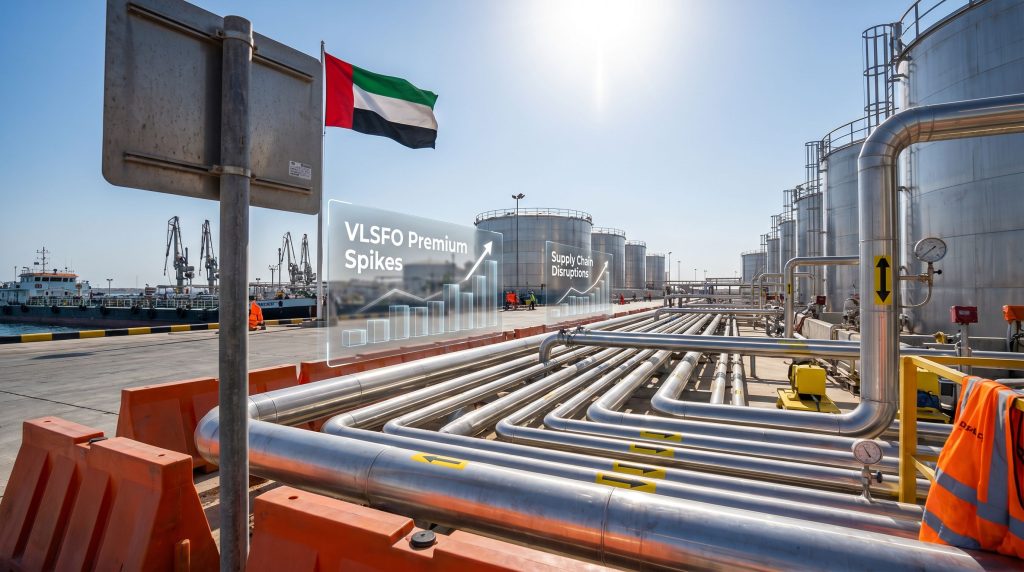
The global marine fuel industry operates within an intricate framework of technical specifications and regulatory compliance standards that fundamentally shape pricing dynamics across major bunkering hubs. Very Low Sulphur Fuel Oil (VLSFO) represents one of the most significant regulatory-driven products in modern shipping, with specifications requiring sulfur content below 0.5% to meet International Maritime Organization standards implemented on 1 January 2020. These technical requirements create specific production constraints that directly influence regional premium volatility, particularly during supply disruptions where VLSFO premiums up in Fujairah have become a critical market concern.
Understanding premium mechanics requires recognising how delivered bunker assessments function against benchmark pricing structures. Singapore VLSFO cargo prices serve as the primary regional reference point, with Fujairah premiums calculated as the differential between local delivered costs and this standardised benchmark. During normal market conditions, these premiums typically range between $10-20 per tonne, reflecting routine logistics and quality assurance costs.
When big ASX news breaks, our subscribers know first
Supply Chain Vulnerabilities Exposed Through Crisis Analysis
Recent market disruptions have revealed the fragility of marine fuel supply networks, particularly in strategically important hubs like Fujairah. Analysis of the April 2026 crisis period demonstrates how geopolitical tensions can rapidly transform market dynamics, with delivered bunker premiums surging from $15 per tonne weekly averages to peaks exceeding $50 per tonne within days.
The crisis highlighted multiple supply chain failure points simultaneously. Kuwait's al-Zour refinery, operating at 615,000 barrels per day capacity, became effectively inaccessible due to shipping route disruptions. The Marlin Santorini, carrying 110,000 tonnes of VLSFO product, exemplified physical supply immobilisation when trapped since 28 February 2026, representing both immediate cargo loss and broader market signalling of supply unavailability.
Furthermore, these disruptions demonstrated the interconnected nature of global energy markets, where regional conflicts can have far-reaching consequences for oil price movements across different commodity sectors.
Feedstock Sourcing Challenges Create Production Bottlenecks
Local production facilities faced compounding difficulties beyond simple crude import disruptions. Vitol's 100,000 barrels per day Fujairah refinery, along with other regional producers, historically relied on specific feedstock streams to maintain VLSFO production economics. The loss of Dar Blend crude from South Sudan, classified as a medium-sweet grade with favourable sulfur characteristics, forced producers toward more expensive alternatives.
Brazilian low-sulfur residual sourcing became increasingly problematic during the crisis period. While this alternative feedstock could theoretically replace lost regional supplies, elevated war-risk insurance premiums and security concerns deterred shipping companies from undertaking extended voyages. This created a cascading effect where backup supply chains became economically or operationally unviable precisely when primary sources failed.
Additionally, the US oil production decline has further complicated global supply dynamics, contributing to tighter markets and increased price volatility across various fuel types.
Geopolitical Risk Integration in Fuel Markets
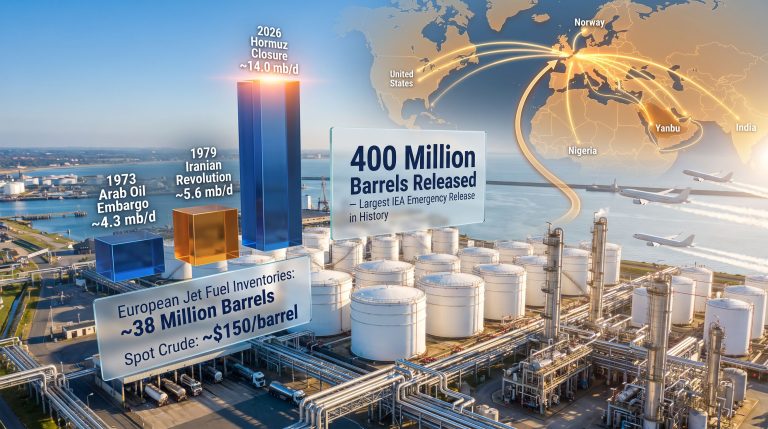
The Strait of Hormuz disruption beginning 28 February 2026 demonstrated how critical chokepoints affect global energy flows beyond simple transportation constraints. Separate blockade enforcement by Iran and the United States effectively severed product import flows from major Middle Eastern refineries, creating immediate physical scarcity in downstream markets.
According to Vitol CEO Russell Hardy's analysis during the crisis, global oil demand declined approximately 4 million barrels daily since conflict commencement, while supply losses totalled around 12 million barrels daily. Global refinery output declined 6 million barrels daily from pre-war levels, with cumulative production losses reaching 600-700 million barrels during the initial phase. These figures illustrate the disproportionate impact of strategic chokepoint disruptions on global energy balances.
However, the current situation mirrors broader concerns about oil price stagnation in global markets, where multiple factors including trade tensions and production decisions continue to influence price formation mechanisms.
War-Risk Insurance Premium Mechanisms
War-risk insurance premiums function as a critical transmission mechanism between geopolitical tensions and physical commodity markets. During the 2026 crisis period, elevated insurance costs effectively priced many commercial operators out of normal shipping operations, even when physical infrastructure remained technically accessible. This created artificial scarcity conditions where products existed but could not be economically transported to consuming markets.
The insurance mechanism works through risk assessment models that factor conflict duration, geographic scope, and historical precedents. Unlike standard marine insurance covering weather, mechanical failure, or piracy, war-risk coverage addresses state-level military actions and their consequences for commercial shipping operations.
In addition, the broader US‑China trade impact on global markets has created additional layers of complexity for risk assessment models, as trade tensions influence shipping routes and commodity flows worldwide.
Storage Infrastructure Under Operational Stress
Fujairah's position as the fourth-largest global bunkering hub provides crucial infrastructure for regional fuel distribution, but crisis conditions revealed significant vulnerabilities in storage and distribution networks. Market participants reported systematic drawdown of tank inventories into barge systems due to security concerns, fundamentally altering normal supply chain operations.
The tank-to-barge transfer pattern reflected risk management decisions rather than normal commercial operations. Storage facility operators prioritised maintaining mobile inventory that could be rapidly relocated or distributed, rather than maintaining traditional tank reserves. This precautionary behaviour accelerated inventory depletion rates beyond normal consumption patterns.
Moreover, OPEC production impact decisions have created additional uncertainty around future supply levels, influencing how storage operators manage their inventory strategies.
Barge Inventory Depletion Dynamics
Critical supply shortages became evident when major suppliers reported remaining barge inventory at approximately 500 tonnes of VLSFO, representing minimal buffer capacity for a major regional hub. These inventory levels indicated systematic supply chain breakdown rather than temporary logistics delays.
| Supply Indicator | Normal Operations | Crisis Period |
|---|---|---|
| Delivered Premium | $10-20/tonne | $50+/tonne |
| Barge Availability | Multiple suppliers | Single-digit suppliers |
| Spot Availability | Routine access | Low/no availability |
| Lead Times | 1-3 days | Indefinite |
The depletion pattern suggested that suppliers prioritised existing contract obligations over spot market sales, creating artificial scarcity for non-contracted buyers. This market structure change forced customers toward alternative hubs or acceptance of premium pricing for limited available supplies.
Consequently, the situation has highlighted the critical importance of maintaining adequate storage reserves, with industry experts warning about shrinking low-sulphur oil supply threatening marine fuel stability across global markets.
Technical Specifications Driving VLSFO Production Economics
VLSFO production requires sophisticated blending operations combining multiple hydrocarbon streams to achieve sulfur compliance while maintaining operational characteristics. The 0.5% sulfur threshold demands specific feedstock selection and processing capabilities that not all refineries possess without significant capital investment.
Typical VLSFO specifications include:
- Sulfur content: Maximum 0.5% mass
- Kinematic viscosity: 10-100 cSt at 40°C
- Flash point: Minimum 60°C
- Density: 920-991 kg/m³ at 15°C
- Pour point: Maximum 30°C
These parameters require careful component selection during blending operations. Refineries must balance low-sulfur residual fractions with distillate components to achieve viscosity targets while maintaining combustion characteristics suitable for marine engines.
Quality Control Protocols Under Pressure
Crisis conditions placed additional strain on quality assurance procedures that normally ensure VLSFO specification compliance. Expedited production schedules and limited feedstock availability created potential quality risks that required enhanced testing protocols. ASTM D6379 sulfur analysis and ISO 3103 viscosity measurements became more critical when normal supply chain safeguards were compromised.
The technical complexity of VLSFO production means that specification failures can result in costly remediation, vessel engine damage claims, or regulatory penalties. During supply crises, the economic pressure to maintain output volumes must be balanced against quality control requirements that protect both suppliers and end users.
Market Psychology During Supply Constraints
Customer behaviour patterns during the Fujairah crisis revealed important insights into marine fuel procurement strategies under stress conditions. Rather than accepting elevated premium pricing, many regular bunker customers relocated to alternative hubs, demonstrating price sensitivity limits even during physical scarcity periods.
This customer migration pattern indicates that marine fuel markets retain competitive dynamics even during supply disruptions. Shipping companies possess sufficient operational flexibility to adjust bunkering locations when regional premiums exceed acceptable thresholds, providing natural demand destruction mechanisms that limit extreme price escalation.
Industry analysts noted that marine fuel blenders and refiners have increasingly sought alternative heavy sweet oil sources amid ongoing regional disruptions, highlighting the adaptability of market participants.
Risk Management Evolution
The crisis period accelerated adoption of more sophisticated supply chain risk management practices among both suppliers and customers. Traditional just-in-time procurement strategies proved inadequate when normal supply relationships became unreliable or prohibitively expensive.
Forward contracting mechanisms gained increased importance as spot market reliability deteriorated. Long-term supply agreements provided security for both parties but required more sophisticated credit risk assessment when counterparty stability became uncertain during geopolitical stress periods.
The next major ASX story will hit our subscribers first
Financial Market Response Mechanisms
Physical supply constraints created disconnect between paper market pricing and actual delivery capabilities. Front-month contract premiums exhibited greater volatility than longer-dated instruments, reflecting immediate supply concern versus expectations of eventual normalisation.
The cargo-bunker price relationship became distorted during crisis periods as physical delivery constraints affected spot markets while paper trading continued based on different assumptions about supply restoration timelines. This created arbitrage opportunities for participants with storage capacity or existing inventory positions.
Hedging Instrument Effectiveness
Traditional financial hedging mechanisms faced limitations during extreme supply disruptions. Bunker swap contracts and other derivative instruments rely on normal correlation patterns between different market segments that can break down when physical delivery becomes constrained.
Risk management strategies required adaptation to account for basis risk between financial instruments and actual procurement costs. Standard hedging approaches that worked during normal market conditions proved less effective when regional premiums diverged significantly from benchmark pricing relationships.
Regional Hub Competition Dynamics
Fujairah's premium spike created opportunities for competing bunkering centres to capture market share through relative pricing advantages. Singapore's position as the regional benchmark pricing hub provided natural competitive positioning when Middle Eastern alternatives became expensive or unreliable.
Alternative routing economics became critical considerations for shipping operations. Mediterranean and European hubs gained attractiveness despite longer transit times when regional security concerns and elevated premiums made traditional routes economically unfavourable.
The competitive response pattern demonstrated resilience in global bunkering infrastructure, with capacity utilisation shifting between hubs based on relative economics rather than complete market breakdown. This geographic diversification provided natural market stabilisation mechanisms that limited the duration and severity of regional price dislocations.
Long-Term Structural Market Changes
Supply chain resilience considerations gained prominence following the crisis experience. Market participants began evaluating strategic inventory policies, supplier diversification requirements, and alternative fuel transition planning with greater urgency than previous assessment cycles.
The crisis accelerated discussions around supply chain redundancy investments and vertical integration strategies that could provide greater operational security during future disruptions. Technology adoption for supply chain visibility and early warning systems became higher priorities for risk management frameworks.
Investment in storage infrastructure and alternative sourcing capabilities represented structural responses to demonstrated supply chain vulnerabilities. These capital allocation decisions reflected lessons learned about the economic costs of supply disruption versus the insurance value of operational flexibility and redundant capacity.
Future Preparedness Strategies
Scenario planning frameworks require integration of geopolitical risk assessment with technical supply chain analysis. The Fujairah experience demonstrated that traditional risk models focusing on weather, mechanical failure, or routine commercial disputes were insufficient for contemporary threat environments.
Strategic planning considerations must now account for the interaction between regional security situations, critical infrastructure vulnerability, and global supply chain interdependencies. The speed of market disruption during the 2026 crisis highlighted the importance of advance preparation rather than reactive response strategies.
Enhanced supplier qualification procedures, geographic diversification requirements, and financial risk management protocols represent minimum adaptations necessary for operating in increasingly complex threat environments. Market participants who successfully navigated the crisis period demonstrated the value of comprehensive preparation and operational flexibility in volatile global energy markets.
Important Disclaimer: This analysis contains forward-looking statements and market projections that involve inherent risks and uncertainties. Marine fuel markets are subject to rapid changes due to geopolitical events, regulatory modifications, and supply chain disruptions. Past performance and historical pricing relationships may not predict future market behaviour. Readers should conduct independent research and consult with qualified professionals before making commercial decisions based on this analysis.
Looking to Capitalise on Energy Market Volatility?
Discovery Alert's proprietary Discovery IQ model provides instant notifications on significant ASX mineral discoveries, helping investors identify actionable opportunities in volatile commodity markets like those affecting marine fuel supply chains. Explore how major mineral discoveries generate substantial returns and begin your 14-day free trial today to position yourself ahead of market disruptions.