
June 6, 2026
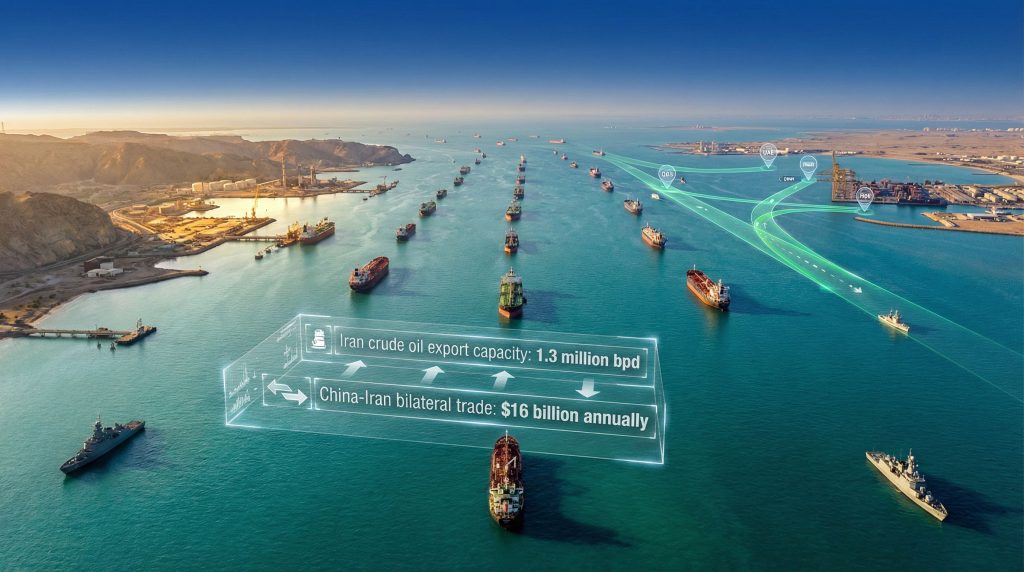
International maritime law faces unprecedented challenges as naval enforcement mechanisms intersect with global trade dependencies. The relationship between military blockades and commercial shipping routes reveals complex dynamics that extend far beyond immediate geopolitical tensions. Understanding these mechanisms requires examining how maritime security operations reshape economic flows across interconnected supply chains, particularly when considering a blockade of Iranian ports.
Understanding Maritime Blockade Implementation and Legal Framework
The enforcement of naval blockades operates within established international maritime law principles, though interpretation and application remain contentious. When military forces restrict access to specific ports or coastal areas, they invoke complex legal precedents that balance national security interests against freedom of navigation principles.
Legal Mechanisms Governing Port Access Restrictions
Maritime blockades derive their legal authority from several international law sources. The United Nations Convention on the Law of the Sea (UNCLOS) establishes baseline frameworks for territorial waters and exclusive economic zones. However, unilateral enforcement actions often operate outside multilateral treaty structures.
Key legal considerations include:
• Distinction between territorial waters (12 nautical miles) and international shipping lanes
• Rights of innocent passage for commercial vessels
• Economic sanctions versus military blockade classifications
• Insurance and liability implications for affected shipping companies
Historical precedents demonstrate that blockade effectiveness depends heavily on international compliance and enforcement consistency. The 1990-2003 Iraq sanctions period showed how maritime restrictions evolved from multilateral UN Security Council resolutions into comprehensive economic isolation mechanisms.
Geographic Scope and Strategic Chokepoints
The Arabian Gulf and Gulf of Oman represent critical nodes in global energy transportation infrastructure. Iranian ports within this region handle significant volumes of crude oil, refined petroleum products, and petrochemical exports. Furthermore, the geographic proximity to the Strait of Hormuz amplifies the strategic importance of any maritime restrictions.
| Port Facility | Primary Cargo Types | Annual Capacity | Regional Significance |
|---|---|---|---|
| Bandar Abbas | Containers, Oil Products | 85 million tons | Primary commercial hub |
| Kharg Island | Crude Oil Export | 1.5 million bpd | Critical energy infrastructure |
| Asaluyeh | Natural Gas, Petrochemicals | 25 million tons | Industrial export center |
| Chabahar | General Cargo, Transit Trade | 15 million tons | Afghanistan/Central Asia gateway |
The implementation timeline for such enforcement requires coordination across multiple naval assets, intelligence gathering systems, and diplomatic channels. Maritime domain awareness technology enables real-time vessel tracking throughout the region.
When big ASX news breaks, our subscribers know first
Supply Chain Vulnerability Assessment and Trade Flow Analysis
Global supply chains demonstrate varying degrees of resilience when facing maritime disruptions. The concentration of specific commodity flows through Iranian ports creates vulnerability points that extend far beyond bilateral trade relationships. Energy markets, petrochemical supply chains, and regional transit routes all face potential reconfiguration pressures.
Energy Market Dependencies and Alternative Routes
Iran's position in global energy markets extends beyond direct crude oil exports. The country maintains significant natural gas reserves and operates extensive petrochemical production facilities. In addition, disruption of these export flows creates ripple effects across regional energy pricing and supply security calculations.
Critical energy infrastructure at risk:
• Crude oil export terminals with combined capacity exceeding 1.3 million barrels per day
• Natural gas liquefaction facilities serving Asian markets
• Petrochemical complexes producing feedstocks for global manufacturing
• Refined petroleum product distribution networks
Alternative routing through neighbouring countries requires significant infrastructure investment and diplomatic coordination. Iraq, the UAE, and Kuwait possess spare port capacity, but pipeline connectivity and processing capabilities limit immediate substitution possibilities.
Market Analysis: Historical data from previous sanctions periods indicates that energy market volatility typically increases by 15-25% during the initial implementation phase, with price premiums often exceeding direct supply impact calculations due to risk premium factors.
Non-Energy Trade Corridor Disruptions
Beyond energy exports, Iranian ports serve as crucial transit points for Central Asian trade flows. Afghanistan, Turkmenistan, and other landlocked nations rely on Iranian infrastructure for access to international markets. Consequently, the disruption of these transit arrangements forces cargo flows toward alternative routes through Pakistan, Turkey, or Russian territory.
China represents Iran's largest trading partner, with bilateral commerce exceeding $16 billion annually according to recent trade statistics. This relationship encompasses manufactured goods, agricultural products, and technology transfers alongside energy transactions. Maritime restrictions complicate this trade relationship by increasing transportation costs and delivery timelines.
Regional Response Strategies and Maritime Security Adaptation
Gulf Cooperation Council (GCC) nations face immediate pressures to expand port capacities and enhance maritime security cooperation. The redistribution of cargo flows creates opportunities for infrastructure development while simultaneously increasing regional tensions around naval presence and commercial competition. Moreover, tariffs impact markets as countries adjust their trade policies in response to these disruptions.
Port Capacity Expansion Initiatives
The United Arab Emirates and Qatar maintain sophisticated port infrastructure capable of absorbing redirected cargo volumes. Dubai's Jebel Ali Port and Qatar's Hamad Port operate with significant expansion potential, though full capacity utilisation requires months of operational scaling.
Regional port capacity analysis:
• UAE ports: 25 million TEU annual container capacity with 15% current spare capacity
• Qatar facilities: 6 million TEU capacity with expansion projects underway
• Kuwait infrastructure: Limited container capacity but significant bulk cargo capability
• Oman strategic positioning: Salalah Port serves as regional transhipment hub
Saudi Arabia's Red Sea ports offer alternative routes for trade flows traditionally transiting through Iranian facilities. However, the Saudi Arabia impact extends beyond port capacity as the development of NEOM and other economic zones creates long-term infrastructure investment opportunities tied to regional trade pattern shifts.
International Maritime Organization Response Framework
The International Maritime Organisation (IMO) maintains established protocols for addressing maritime security disruptions. These frameworks balance flag state responsibilities with port state control mechanisms. Furthermore, insurance underwriters adjust risk assessments and premium calculations based on evolving security conditions.
Commercial shipping companies implement operational changes including:
• Route optimisation algorithms incorporating security risk factors
• Enhanced vessel tracking and communication systems
• Crew safety protocols for high-risk transit areas
• Cargo insurance modifications reflecting elevated regional risks
Economic Consequences and Market Adaptation Mechanisms
The intersection of maritime security and commercial trade creates multiple layers of economic impact. Direct shipping cost increases combine with broader market volatility to reshape investment patterns and supply chain strategies across affected industries. This situation reflects broader global recession trends that influence international trade dynamics.
Energy Infrastructure Investment Patterns
Maritime security concerns historically drive accelerated investment in alternative energy infrastructure. Pipeline projects, renewable energy systems, and strategic petroleum reserve facilities receive increased funding during periods of transportation route uncertainty.
Investment sector impacts include:
• Pipeline construction projects connecting alternative supply sources
• LNG terminal development in import-dependent markets
• Strategic petroleum reserve expansion programmes
• Renewable energy acceleration in energy-importing nations
Regional development banks and sovereign wealth funds typically increase infrastructure financing during maritime security disruptions. For instance, the Asian Infrastructure Investment Bank and similar multilateral institutions maintain project pipelines designed to enhance supply chain resilience.
Financial Market Response Patterns
Currency markets demonstrate heightened volatility during maritime blockade periods. Oil-importing economies face pressure on current account balances, while energy-exporting nations may benefit from price premium effects. Central bank policy responses vary based on domestic economic conditions and international reserve positions.
| Market Sector | Typical Impact Range | Duration | Recovery Timeline |
|---|---|---|---|
| Crude Oil Prices | +15-30% premium | 3-6 months | 12-18 months |
| Shipping Rates | +25-50% for affected routes | 2-4 months | 6-12 months |
| Regional Currencies | ±5-15% volatility | 6-12 months | Variable |
| Infrastructure Investment | +20-40% in alternative projects | 12-24 months | 3-5 years |
The oil price movements during such disruptions often reflect both supply concerns and geopolitical risk premiums that exceed actual delivery shortfalls.
Historical Context and Policy Precedent Analysis
Previous maritime enforcement actions provide instructive examples for understanding current policy implementation challenges. The Iraq sanctions period (1990-2003) demonstrated both the potential effectiveness and unintended consequences of comprehensive maritime restrictions.
Sanctions Effectiveness and Economic Impact Assessment
The Iraq Oil-for-Food programme illustrated how humanitarian concerns eventually modify strict blockade enforcement. Similar dynamics may emerge as regional humanitarian needs and international diplomatic pressures influence implementation decisions.
Historical precedent analysis reveals:
• Blockade effectiveness typically peaks within the first 6-12 months
• Alternative trade routes develop over 18-36 month timeframes
• Regional economic integration often accelerates during enforcement periods
• International mediation becomes more active after 12-24 months
The 2011 Libya intervention provided additional insights into modern maritime enforcement capabilities. However, NATO naval coordination demonstrated enhanced technological surveillance and enforcement mechanisms compared to earlier sanctions periods.
Diplomatic Resolution Pathway Development
International mediation frameworks evolve during extended maritime enforcement periods. The European Union, United Nations, and regional organisations develop parallel diplomatic initiatives designed to address underlying policy disputes while managing humanitarian and economic impacts.
Negotiation framework components typically include:
• Graduated enforcement modification mechanisms
• Humanitarian cargo exemption procedures
• Third-party monitoring and verification systems
• Economic compensation discussions for affected parties
Long-Term Geopolitical Realignment and Strategic Implications
Maritime blockade enforcement accelerates existing trends toward regional economic integration and alternative partnership development. Countries affected by trade route disruptions pursue diversification strategies that permanently alter global economic relationships. These developments intersect with broader patterns of US-China trade impact on global supply chains.
Alternative Partnership Development
China's Belt and Road Initiative gains additional strategic importance as traditional maritime routes face restrictions. Overland transportation corridors through Central Asia and Pakistan become more attractive despite higher costs and longer transit times.
Russia's role as an alternative energy supplier and transit route provider increases during Middle Eastern maritime disruptions. In addition, the Northern Sea Route and Trans-Siberian Railway system offer alternative pathways for Asian-European trade flows.
Energy Security Architecture Evolution
The global energy system demonstrates remarkable adaptability during supply disruptions. Strategic petroleum reserves, renewable energy acceleration, and demand response mechanisms provide buffer capacity during transition periods.
Strategic Assessment: Maritime security disruptions typically accelerate energy transition initiatives by 2-5 years as importing nations prioritise supply security through diversification and domestic renewable energy development.
Europe's experience with Russian energy supply disruptions provides relevant precedents for managing Iranian energy export restrictions. LNG import terminal development, pipeline diversification, and demand reduction strategies offer replicable policy responses.
The next major ASX story will hit our subscribers first
What Are the Investment Strategy and Risk Management Considerations?
The intersection of maritime security and global trade creates complex investment opportunities and risks. Portfolio managers and corporate strategists must navigate heightened volatility while identifying sectors positioned to benefit from supply chain reconfiguration.
Sector-Specific Investment Implications
Energy infrastructure companies face divergent impacts based on their geographic exposure and asset positioning. Alternative energy suppliers, pipeline operators, and LNG infrastructure developers typically benefit from maritime disruption premiums.
High-impact investment sectors:
• Regional port development and logistics infrastructure
• Alternative energy supply chain companies
• Maritime security technology providers
• Insurance and risk management services
Shipping companies experience mixed impacts depending on route exposure and operational flexibility. Container shipping firms with diverse route networks may capture market share from competitors with concentrated Middle Eastern exposure.
Corporate Risk Management Adaptation
Multinational corporations implement supply chain resilience strategies during maritime security disruptions. These initiatives often become permanent operational improvements that enhance long-term competitiveness beyond the immediate crisis period.
Risk management priorities include:
• Supply source diversification across multiple geographic regions
• Inventory optimisation balancing cost efficiency with security buffer requirements
• Transportation mode flexibility enabling rapid route switching
• Financial hedging strategies for energy and currency exposure management
The complexity of modern supply chains requires sophisticated risk assessment tools that incorporate geopolitical factors alongside traditional operational metrics. Companies investing in supply chain visibility technology often discover competitive advantages that persist long after immediate security concerns resolve.
Moreover, according to official US Central Command statements, the enforcement of a blockade of Iranian ports would involve comprehensive naval operations across multiple sectors. Furthermore, recent analysis from CNBC indicates that such actions could significantly impact global oil markets and shipping rates across the region.
Disclaimer: This analysis discusses speculative scenarios and market impacts based on historical precedents and current geopolitical developments. Investment decisions should incorporate comprehensive risk assessment and professional financial advice. Market conditions and political developments may differ significantly from historical patterns and analytical projections.
Looking to Navigate Geopolitical Investment Opportunities?
Discovery Alert's proprietary Discovery IQ model delivers real-time alerts on significant ASX mineral discoveries that often benefit from global supply chain disruptions and resource security concerns. Start your 14-day free trial today and position yourself to identify actionable investment opportunities ahead of market movements driven by geopolitical developments.