July 11, 2026
The global energy landscape faces unprecedented challenges as maritime chokepoints become central to international security discussions. Furthermore, the Strait of Hormuz toll debate exemplifies how geopolitical tensions can transform traditional shipping arrangements into complex economic and legal frameworks. The interconnection between computing infrastructure, financial systems, and energy security creates cascading effects that extend far beyond simple commodity pricing.
Understanding the Strategic Importance of Maritime Chokepoints
Why the Strait of Hormuz Commands Global Attention
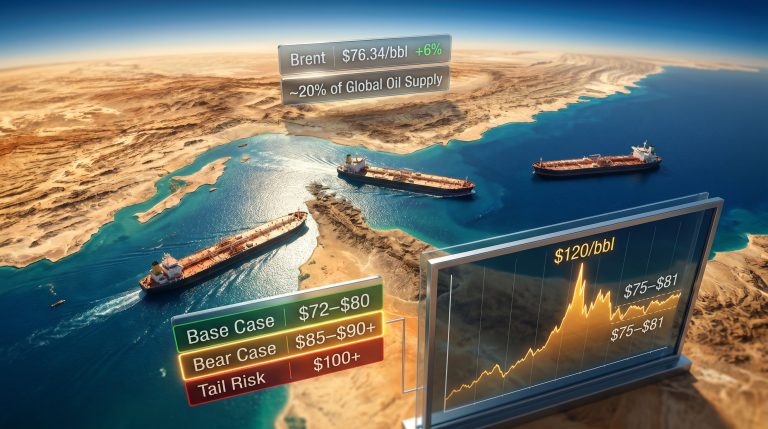
The narrow waterway connecting the Persian Gulf to the Arabian Sea represents the world's most critical energy transit bottleneck. This 21-mile wide passage facilitates approximately 20% of global petroleum liquids transit, making it indispensable to international energy markets. When regional tensions escalate, the strategic value of this chokepoint amplifies exponentially.
Daily petroleum flows through this corridor encompass both crude oil and liquefied natural gas shipments destined for major consuming regions across Asia, Europe, and beyond. The concentration of energy transit through such a narrow geographic space creates systemic vulnerability in global supply chains.
Recent developments highlight the evolving nature of control mechanisms in this region. Oman, which shares territorial waters encompassing the strait alongside Iran, has explicitly stated it has no plans to impose fees on vessels passing through the waterway. This position demonstrates the complex multi-stakeholder dynamics governing access to critical maritime infrastructure.
The economic implications of potential disruptions extend beyond immediate price volatility. Insurance premiums, shipping schedules, and strategic petroleum reserve management all adjust based on perceived risks in this transit corridor. Regional powers maintain naval presence precisely because of these systemic dependencies.
The Legal Framework Governing International Waterways
International maritime law establishes complex frameworks for territorial waters versus transit passage rights through strategic chokepoints. The United Nations Convention on the Law of the Sea (UNCLOS) provides foundational principles, though enforcement mechanisms remain subject to interpretation during periods of heightened geopolitical tension.
Sovereignty over territorial waters grants coastal nations certain regulatory authorities, yet customary international law recognises innocent passage rights for commercial vessels. The tension between these competing legal frameworks intensifies when wartime conditions alter normal peacetime arrangements.
Historical precedents from other major waterways provide guidance yet also reveal the complexity of implementing toll mechanisms. For instance, the Suez Canal operates under Egyptian sovereignty with established fee structures, while the Bosphorus Strait functions under Turkish control with specific regulatory protocols.
Legal experts emphasise that any toll implementation would require careful navigation of existing treaty obligations and customary international law principles to maintain legitimacy in the international community.
Enforcement capabilities represent another critical dimension. Collection mechanisms must balance commercial efficiency with security requirements, particularly during periods when military tensions remain elevated between regional powers and external stakeholders.
When big ASX news breaks, our subscribers know first
How Would a Toll System Actually Function?
Proposed Implementation Models Under Discussion
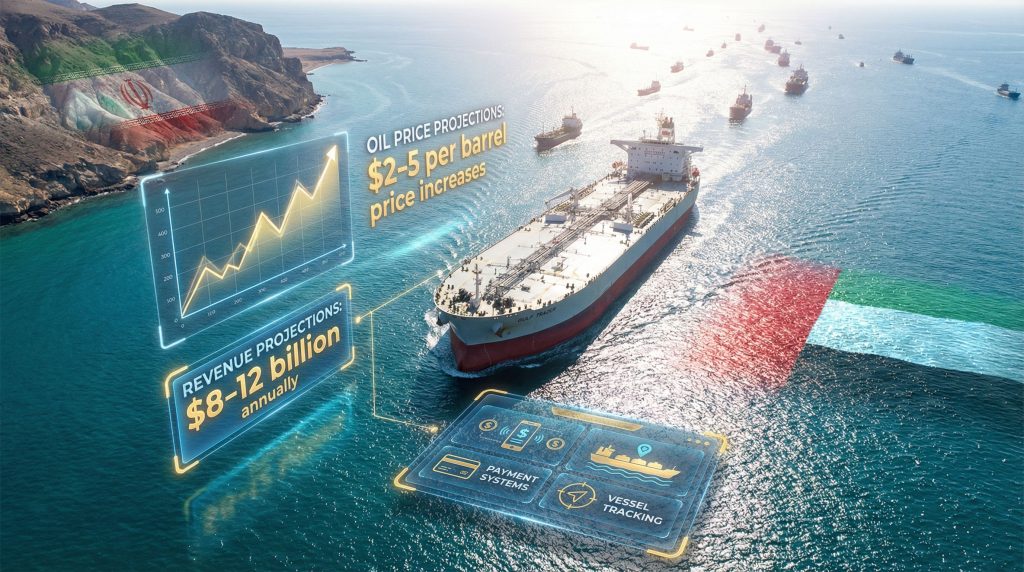
Recent analytical frameworks suggest toll structures could range from $0.50 to $1.00 per barrel equivalent, with conservative projections indicating potential annual revenues of $8-12 billion based on current transit volumes. These figures represent substantial income streams that would fundamentally alter regional economic dynamics.
Potential Toll Structure Scenarios:
| Fee Model | Rate Structure | Annual Revenue Projection | Implementation Complexity |
|---|---|---|---|
| Fixed Transit Fee | $50,000-100,000 per vessel | $6-10 billion | Moderate |
| Cargo-Based Pricing | $0.50-1.00 per barrel equivalent | $8-12 billion | High |
| Vessel Tonnage | $5-10 per deadweight ton | $7-11 billion | Moderate |
| Hybrid Model | Combined fixed + cargo fees | $10-15 billion | Very High |
Technical infrastructure requirements would necessitate sophisticated digital systems capable of processing real-time transactions across multiple currencies and settlement mechanisms. The coordination between computing power, financial systems, and physical security represents unprecedented operational complexity.
Settlement Currency Options and Implications
Innovation in settlement mechanisms could transform traditional energy trade finance. Proposals for pegging tolls to oil price fluctuations would create dynamic pricing structures that adjust to market conditions, potentially stabilising revenue flows for collecting authorities.
Additionally, experts propose innovative solutions that could reduce dependency on traditional USD-denominated transactions, though implementation would require extensive coordination across existing banking and port authority systems.
Key settlement framework considerations include:
- Real-time price indexing to global oil benchmarks
- Multi-currency acceptance and conversion protocols
- Digital verification and audit trail maintenance
- Integration with existing port management systems
- Compliance with international banking regulations
The joint venture concept between major powers suggests revenue sharing arrangements that extend beyond simple collection to encompass broader security and coordination responsibilities.
What Are the Economic Implications for Global Energy Trade?
Revenue Generation Potential Analysis
Current transit volume patterns indicate that toll collection could generate substantial annual revenues, fundamentally altering regional economic calculations. Conservative analytical models project $8-12 billion in annual toll revenue based on existing petroleum flow patterns and proposed fee structures.
These projections assume continued current-level transit volumes, though implementation of tolls could trigger demand responses that alter shipping patterns and route selection decisions across the industry. However, the scale of potential revenue generation creates incentives for permanent institutionalisation of toll mechanisms.
Economic modelling suggests that toll implementation could increase global petroleum prices by $2-5 per barrel, depending on the specific fee structure adopted and how market participants respond to the new cost environment.
Meanwhile, oil price rally insights suggest that additional cost pressures could accelerate existing market trends, particularly when combined with other geopolitical factors affecting global energy markets.
Impact on Global Energy Pricing
Price pass-through mechanisms would distribute toll costs across global energy consumers, though regional variations would emerge based on import dependency patterns and alternative supply availability. Major energy importing nations face disproportionate burden increases relative to domestic production capabilities.
Regional impact distribution analysis:
- High-impact regions: East Asia, South Asia, European Union
- Moderate-impact regions: North America, Latin America
- Low-impact regions: Russia, Middle East producers, Africa
- Variable-impact regions: Oceania, Central Asia
Strategic petroleum reserve management becomes more complex when toll costs are factored into acquisition and release decision frameworks. Storage economics shift when transit fees represent permanent rather than temporary cost additions.
Shipping Industry Response Scenarios
Maritime transport companies would likely implement surcharge mechanisms to maintain profit margins while managing increased operational costs. These surcharges could become permanent fixtures in shipping rate structures, fundamentally altering the cost basis for international energy trade.
Insurance premium adjustments would reflect both the direct toll costs and increased operational complexity associated with the new regulatory environment. Risk assessment models must incorporate both financial and operational dimensions of toll implementation.
Consequently, vessel scheduling modifications could emerge as companies optimise transit timing relative to fee structures, particularly if toll rates vary based on cargo types, vessel specifications, or market conditions.
Could Alternative Energy Routes Emerge?
Existing Pipeline Infrastructure Assessment
Current pipeline capacity outside the Strait of Hormuz remains limited relative to total regional energy export volumes. The Trans-Arabian Pipeline system provides some alternative capacity, though throughput limitations restrict its ability to handle significant volume diversions from maritime routes.
Regional LNG export terminals represent another dimension of alternative infrastructure, though many existing facilities still require maritime transit through the strategic chokepoint for access to major consuming markets.
Major Alternative Route Projects Assessment:
| Infrastructure Type | Current Capacity | Expansion Timeline | Capital Requirements |
|---|---|---|---|
| East-West Crude Pipelines | Limited | 3-5 years | $15-25 billion |
| LNG Terminal Expansion | Moderate | 2-4 years | $8-15 billion |
| Rail Transportation | Minimal | 5-7 years | $20-35 billion |
| Strategic Storage Facilities | Variable | 1-3 years | $5-12 billion |
Economic Viability of Route Alternatives
Cost comparison analysis reveals that alternative routes typically involve 2-3 times higher transportation costs compared to maritime transit through the strait, even when toll fees are included in the calculation. This cost differential limits the economic attractiveness of diversification strategies for most market participants.
Transit time considerations add another dimension to route selection decisions. Pipeline alternatives offer faster delivery times but limited flexibility in destination selection, while overland routes involve significantly longer transport durations.
Infrastructure investment requirements for meaningful route diversification would require $50-100 billion in coordinated capital deployment across multiple projects over 5-10 year timeframes. These investment levels exceed current regional development plans and would necessitate major strategic shifts in energy infrastructure priorities.
How Would Regional Powers Navigate This Development?
China's Energy Security Calculations
China's position as both major energy importer and potential technology provider creates complex strategic calculations around toll implementation. The coordination requirements across computing power, oil markets, financial systems, and security arrangements reflect the interconnected nature of modern energy trade infrastructure.
Digital token proposals for settlement mechanisms position China as both mediator in toll discussions and supplier of technological infrastructure that could facilitate new payment systems. This dual role provides strategic influence opportunities while managing import cost implications.
China's strategic considerations include:
- Import dependency vulnerability management
- Belt and Road Initiative infrastructure coordination
- Alternative supplier relationship development
- Strategic petroleum reserve optimisation
- Technology export opportunities in settlement systems
Gulf State Positioning Strategies
Regional producer nations face divergent interests regarding toll implementation. Countries like Oman have explicitly stated opposition to fee collection, while others may see revenue sharing opportunities that could benefit their economic diversification strategies.
The temporary versus permanent nature of toll mechanisms represents a critical distinction for Gulf state planning. Wartime measures that evolve into permanent institutional arrangements would require different diplomatic and economic responses compared to clearly temporary crisis management tools.
Revenue sharing negotiations would need to account for geographic control percentages, infrastructure provision responsibilities, and broader regional security coordination commitments among participating nations.
International Maritime Coalition Responses
Major energy importing nations would likely develop multilateral frameworks for negotiating toll structures and dispute resolution mechanisms. These coalitions could leverage collective bargaining power to influence fee levels and implementation approaches.
Naval security arrangements represent another dimension of international response. Protecting commercial shipping through toll-collecting waterways requires coordination between multiple maritime security stakeholders and collecting authorities.
The formalisation of grey zone arrangements into permanent institutional structures could fundamentally alter international maritime law precedents and create templates for other strategic waterway governance.
What Legal Challenges Could Emerge?
International Court Jurisdiction Issues
UNCLOS dispute resolution mechanisms provide frameworks for addressing conflicts over toll implementation, though enforcement authority remains complex when multiple sovereignty claims intersect with international transit rights.
Bilateral treaty obligations between various stakeholder nations could conflict with multilateral toll arrangements, creating legal complexity that requires careful navigation to maintain international legitimacy.
Potential legal challenge areas:
- Transit passage rights versus territorial sovereignty
- Revenue sharing arrangement legality
- Enforcement mechanism authorisation
- Dispute resolution jurisdiction determination
- Customary international law application
Precedent-Setting Implications
Other strategic waterway authorities could cite Strait of Hormuz toll precedents to justify their own fee collection systems. The Malacca Strait, Turkish Straits, and other chokepoints represent potential candidates for similar arrangements if legal precedents are established.
Comparison with existing toll systems like the Suez Canal reveals both similarities and critical differences in legal foundations and operational frameworks. The wartime versus peacetime context creates additional complexity in precedent interpretation.
International maritime trade organisations would likely challenge toll implementations that lack clear legal foundation or transparent operational frameworks, potentially creating extended litigation processes. Some critics argue that such measures constitute modern piracy contrary to international law.
The next major ASX story will hit our subscribers first
How Might This Reshape Global Energy Geopolitics?
Long-term Strategic Realignments
Energy supply chain diversification accelerates when major transit routes become subject to toll collection or potential disruption. This diversification reshapes bilateral energy relationships and regional power balance calculations across multiple continents.
Strategic realignment indicators:
- Bilateral energy partnership formation outside traditional suppliers
- Regional cooperation framework development for alternative routes
- Technology transfer agreements for energy infrastructure
- Financial system coordination for non-USD energy transactions
Investment flow redirections toward alternative infrastructure development would create new centres of energy trade influence, potentially reducing the strategic importance of traditional chokepoints over multi-decade timeframes.
Investment Flow Redirections
Infrastructure development priorities shift when permanent toll mechanisms alter the economic calculations for energy transportation investments. Pipeline projects, LNG terminals, and storage facilities that previously lacked economic justification could become attractive under new cost structures.
Technology innovation acceleration emerges as market participants seek solutions for managing increased operational complexity and cost burdens. Digital settlement systems, automated compliance monitoring, and route optimisation technologies represent growth areas.
Alternative energy transition impacts could accelerate as toll costs increase the economic attractiveness of domestic renewable energy development relative to imported petroleum products for major consuming nations.
Critical Questions About Hormuz Tolls
How would toll collection affect global petroleum pricing mechanisms?
Economic modelling indicates potential $2-5 per barrel price increases depending on fee structures and market response patterns. These increases would distribute unevenly across regional markets based on import dependency levels and alternative supply accessibility.
Furthermore, the relationship between toll implementation and broader market dynamics could amplify existing price pressures from other sources, including tariff market impacts and US-China trade impact.
What role would international mediation frameworks play?
Multilateral negotiation platforms involving major energy importing nations would likely emerge to address fair implementation standards and dispute resolution mechanisms. These frameworks could provide templates for managing other strategic waterway arrangements.
Could shipping companies completely avoid the strait?
Alternative routes exist through pipeline systems and longer maritime pathways, though economic analysis suggests 200-300% higher transportation costs compared to direct strait transit, making complete avoidance economically challenging for most energy trade flows.
Additionally, analysis of oil price crash analysis suggests that market participants must consider multiple risk scenarios when evaluating route alternatives and their long-term viability.
Would toll implementation violate international maritime law?
Legal expert analysis remains divided, with some emphasising UNCLOS transit passage protections while others suggest wartime framework agreements could provide implementation legitimacy under specific circumstances.
Navigating an Uncertain Energy Transit Future
Key Takeaways for Energy Market Participants
Risk assessment frameworks must incorporate permanent toll cost scenarios into long-term energy security planning. The distinction between temporary wartime measures and permanent institutional arrangements requires different strategic planning approaches and investment decision matrices.
Strategic petroleum reserve management becomes more complex when toll costs represent ongoing rather than temporary expense categories. Acquisition timing, storage duration, and release coordination must account for evolving transportation cost structures.
Investment decision implications include:
- Alternative route infrastructure evaluation
- Digital settlement system integration planning
- Risk management framework updates
- Supplier diversification acceleration
- Regional market prioritisation adjustments
Monitoring Critical Development Indicators
Diplomatic negotiation progress represents the primary indicator for toll implementation likelihood and specific structural details. Revenue sharing arrangements between participating nations will determine operational feasibility and international acceptance levels.
Infrastructure investment announcements in alternative route development provide insight into market participant expectations regarding toll permanence and their strategic responses to evolving transportation cost structures. Moreover, the OPEC oil production impact must be considered alongside potential toll implementations.
Regional coalition formation among energy importing nations could influence toll negotiation outcomes and establish precedents for managing other strategic waterway governance challenges in the future.
Market pricing mechanism evolution in energy commodity trading will reflect both direct toll cost impacts and broader geopolitical risk premium adjustments as participants adapt to the new operational environment.
This analysis provides educational context for understanding strategic maritime chokepoint dynamics and their implications for global energy security. Readers should consult multiple sources and professional analysis for investment or policy decisions related to energy trade infrastructure.
Looking to Capitalise on Energy Market Disruptions?
Discovery Alert's proprietary Discovery IQ model delivers real-time alerts on significant ASX mineral discoveries, including energy and critical minerals that could benefit from global supply chain disruptions like the Strait of Hormuz toll debate. Explore how historic discoveries have generated substantial returns during periods of geopolitical uncertainty, then begin your 14-day free trial to position yourself ahead of the market as energy security concerns reshape investment landscapes.