August 6, 2026
Global maritime economics underwent a dramatic transformation in March 2026, when emerging regulatory frameworks in critical shipping chokepoints began reshaping centuries of established international trade patterns. The evolution of maritime passage systems represents one of the most significant challenges to traditional free navigation principles since the establishment of modern international law. Strategic waterways that facilitate approximately 20% of global petroleum movement have become testing grounds for new operational paradigms that blur the lines between security protocols and commercial levies, contributing to an oil price rally 2025 that continues to affect global markets.
Understanding these developments requires examining the intersection of geopolitical tensions, energy security imperatives, and the fundamental legal structures governing international maritime commerce. The implications extend far beyond regional shipping routes, affecting global supply chains, energy pricing mechanisms, and the broader framework of international trade law that has underpinned economic globalisation for decades.
Understanding Iran's Maritime Control Mechanisms
The Strait of Hormuz toll system represents a fundamental shift from traditional passage protocols to a centralised clearance regime that has operated since March 2026. This system requires vessel operators to submit comprehensive documentation packages, obtain specific clearance codes, and accept supervised passage through designated maritime corridors controlled by Iran's Islamic Revolutionary Guard Corps (IRGC).
Operational Framework and Requirements:
- Documentation Protocol: All vessels must provide complete shipping manifests, cargo details, crew information, and destination verification before receiving transit authorisation
- Clearance System: A digital authorisation process issues specific codes that must be transmitted to IRGC maritime units before entering controlled waters
- Escort Requirement: Approved vessels receive mandatory IRGC naval escort through a single designated corridor, replacing traditional multi-route navigation options
- Timeline Parameters: The system has processed 26 vessels since its March 13, 2026 implementation date, with no recorded transits through traditional shipping lanes after March 15, 2026
Geographic Routing and Navigation Changes
The controlled corridor system fundamentally alters maritime navigation patterns that have remained consistent for decades. According to Lloyd's List Intelligence data utilising Automatic Identification System (AIS) tracking, the new routing requirements have eliminated vessel choice in navigation paths, concentrating all approved traffic through a single monitored waterway.
This concentration mechanism serves multiple strategic purposes: enhanced monitoring capability, simplified enforcement protocols, and centralised revenue collection potential. The geographic restrictions represent the first systematic attempt to channel international commercial traffic through government-controlled chokepoints in this strategic region.
Verification and Compliance Mechanisms
The Iranian Defence Council established specific criteria for vessel classification, distinguishing between friendly nation vessels receiving automatic approval and others requiring detailed compliance verification. The system demands that non-aligned vessels demonstrate they "neither participate in nor support acts of aggression against Iran and fully comply with the declared safety and security regulations."
However, the specific documentation proving non-participation remains undefined, creating operational uncertainty for shipping companies attempting to navigate compliance requirements. This ambiguity may be intentional, providing Iranian authorities with discretionary approval mechanisms based on evolving political considerations.
When big ASX news breaks, our subscribers know first
Global Energy Market Disruption and Economic Impacts
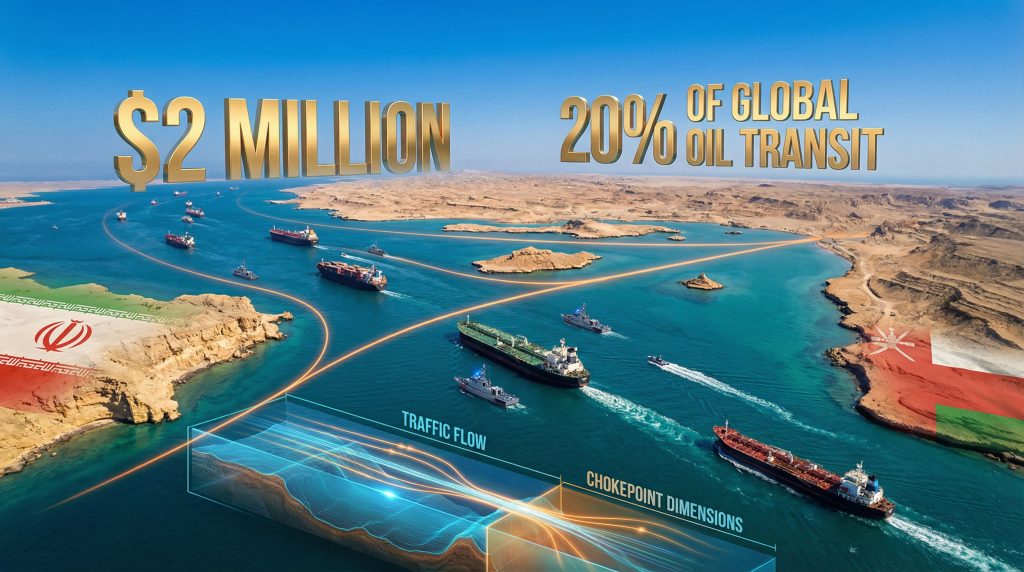
The Strait of Hormuz toll system has generated significant disruption across international energy markets, affecting crude oil pricing, liquefied natural gas (LNG) shipping schedules, and broader supply chain reliability. The strait typically facilitates approximately 20 million barrels of daily oil throughput under normal operational conditions, representing roughly 20% of global petroleum trade.
Market Transmission Mechanisms:
| Impact Category | Primary Effects | Secondary Consequences |
|---|---|---|
| Crude Oil Pricing | Immediate volatility increase | Strategic reserve drawdowns |
| LNG Shipping | Route delays and diversions | Alternative supplier activation |
| Insurance Markets | War-risk premium escalation | Coverage restriction policies |
| Supply Chain Planning | Inventory buffer expansion | Alternative route development |
UN Secretary-General António Guterres characterised the situation as creating systemic stress across multiple commodity sectors simultaneously. His March 26, 2026 statement emphasised that the strait closure is "choking the movement of oil, gas, and fertiliser at a critical moment in the global planting season."
Regional Energy Security Implications
Asian energy importers face particular vulnerability due to their heavy reliance on Persian Gulf petroleum supplies. Furthermore, major importing nations including India, China, and Japan have been forced to activate emergency supply protocols and explore alternative sourcing arrangements that typically carry significant cost premiums, highlighting the tariffs impact on investments across global markets.
Critical Supply Chain Stress Points:
- Agricultural Fertiliser Movement: Timing coincides with Northern Hemisphere planting season, creating potential food security implications
- Industrial Gas Supplies: LNG cargo delays affect manufacturing sectors dependent on natural gas feedstocks
- Strategic Reserve Management: Major economies implementing coordinated reserve releases to maintain market stability
- Insurance Cost Escalation: Maritime insurers increasing war-risk premiums by estimated 200-400% for Persian Gulf routes
The interconnected nature of these impacts demonstrates how maritime chokepoint control can generate cascading economic effects across seemingly unrelated sectors, particularly when combined with OPEC production impact on global supply dynamics.
International Maritime Law Framework and Legal Challenges
The legal foundation governing international strait navigation rests primarily on the United Nations Convention on the Law of the Sea (UNCLOS), which establishes fundamental principles of freedom of navigation and prohibits the imposition of transit fees on vessels exercising passage rights through international waterways.
India's Ministry of Shipping provided the most explicit legal challenge to toll implementation, with Special Secretary Rajesh Kumar Sinha stating that "this is an international Strait, and as per international convention, it has the right of freedom of navigation and no levy fee can be imposed on it as per international regulation." This position invokes core UNCLOS provisions governing transit passage rights.
UNCLOS Provisions and Legal Precedents
Key Legal Framework Elements:
- Article 38 Definition: Transit passage rights through straits used for international navigation between high seas or exclusive economic zones
- Article 42 Conduct Rules: Specifications for vessel behaviour during transit passage, emphasising non-interference with navigation
- Toll Prohibition Principle: General international law consensus preventing levy imposition on ships exercising transit passage rights
- State Sovereignty Limits: Coastal state authority bounded by international navigation rights in strategic waterways
Comparison with Other Strategic Chokepoints
The Strait of Hormuz situation differs significantly from other major maritime passages:
Suez Canal: Operates under Egyptian sovereignty with established toll structures, but governs territorial waters rather than international strait passage rights under UNCLOS
Malacca Strait: Joint management by Indonesia, Malaysia, and Singapore maintains free passage principles despite significant regional authority and security coordination
Turkish Straits: The Montreux Convention provides specific regulatory framework but maintains fundamental passage rights for commercial vessels
These precedents demonstrate that while coastal states exercise various forms of authority over strategic waterways, the imposition of transit tolls on international shipping represents a significant departure from established international practice.
Iran's Selective Access Policy and Geopolitical Alignments
Iranian Foreign Minister Abbas Araghchi explicitly identified five nations receiving preferential passage treatment: China, Russia, India, Iraq, and Pakistan. This selective approach demonstrates Iran's strategic use of maritime control as a diplomatic tool, creating a hierarchy of access based on political alignment rather than commercial or legal criteria.
Verified Transit Success Cases:
As of March 26, 2026, five vessels with Indian destinations successfully completed transit through the controlled system, with two specific vessels (Jag Vasant and Pine Gas) scheduled for week-end arrival at Indian ports. These cases demonstrate the operational effectiveness of the preferential access system for designated friendly nations.
Two-Tier Access Structure
Tier 1 – Automatic Exemption Countries:
- China: Strategic ally with UN diplomatic support
- Russia: Military and energy cooperation partner
- India: Major energy importer with historical ties
- Iraq: Regional neighbour with religious community connections
- Pakistan: South Asian partner with energy import needs
Tier 2 – Conditional Access Requirements:
- Complete documentation submission proving non-hostile intent
- Coordination with Iranian maritime authorities
- Compliance with evolving safety and security regulations
- Declaration of non-participation in regional conflicts
This structure provides Iran with significant leverage over international shipping while maintaining energy export relationships with key strategic partners, particularly during periods of heightened US–China trade war effects on global commerce.
Diplomatic Coordination Mechanisms
The preferential system requires ongoing diplomatic coordination between Iranian authorities and friendly nation governments. This creates an additional layer of state-to-state negotiation beyond traditional commercial shipping arrangements, effectively politicising routine maritime commerce.
The system's diplomatic requirements may serve Iran's broader strategic objectives by strengthening bilateral relationships with key partners while demonstrating the economic costs of opposing Iranian regional positions.
Shipping Industry Adaptation Strategies and Economic Responses
Global shipping companies have implemented comprehensive operational adjustments to navigate the new regulatory environment, including route optimisation protocols, enhanced insurance coverage, and specialised compliance systems for Persian Gulf operations.
Risk Management Adaptations:
- Insurance Premium Adjustments: Maritime insurers have implemented war-risk surcharges ranging from 0.25% to 1.5% of vessel value for Persian Gulf transits
- Alternative Route Analysis: Economic modelling for Cape of Good Hope routing shows 14-21 day voyage extensions with corresponding fuel and operational cost increases
- Fleet Deployment Strategies: Major operators are pre-positioning vessels outside the Persian Gulf to reduce exposure to clearance delays
Technology and Compliance Solutions
Digital Documentation Platforms:
Modern shipping companies have rapidly developed specialised systems for managing Iranian clearance requirements, including automated documentation submission, real-time coordination interfaces, and compliance tracking mechanisms.
AIS Compliance Enhancement:
Automatic Identification System broadcasting has become critical for demonstrating cooperation with Iranian monitoring requirements, with vessels maintaining continuous position reporting throughout transit periods.
Economic Impact Assessment
The shipping industry faces a complex cost-benefit analysis when comparing toll payments against alternative routing expenses, particularly considering the trade war oil market impact on pricing dynamics:
| Cost Category | Direct Transit | Cape Route Alternative |
|---|---|---|
| Transit Time | 3-5 days | 21-28 days |
| Fuel Costs | Standard consumption | 40-60% increase |
| Insurance Premium | War-risk surcharge | Standard coverage |
| Port Scheduling | Maintained schedules | Complete rescheduling |
| Cargo Delivery | On-time performance | 3-week delays |
These calculations demonstrate why many operators continue accepting the controlled corridor system despite associated regulatory uncertainties and political risks.
Revenue Generation Models and Economic Justification
While specific toll amounts remain undisclosed, industry analysis suggests the system could generate substantial annual revenue if formalised through parliamentary legislation. The economic model appears based on security service provision rather than traditional port authority fee structures.
Revenue Calculation Framework:
Assuming 26 vessels transited in approximately two weeks, extrapolated annual volume could reach 650-750 vessels under current operational patterns. If average payments approximate $2 million per vessel (industry speculation), potential annual revenue could reach $1.3-1.5 billion.
Cost-Benefit Analysis for Transit Users
Toll Payment Advantages:
- Maintained shipping schedules and delivery commitments
- Reduced voyage time compared to alternative routes
- Continued access to Persian Gulf loading terminals
- Avoided fuel cost increases from extended routing
Alternative Route Considerations:
- Cape of Good Hope routing adds approximately $500,000-800,000 in additional fuel and operational costs per vessel
- Three-week delivery delays create significant supply chain disruption costs
- Port scheduling complications generate compound operational inefficiencies
These economic factors explain continued shipping company cooperation with the toll system despite legal and political objections from various governments.
The next major ASX story will hit our subscribers first
Legislative Formalisation Timeline and Parliamentary Developments
Iran's Parliament Speaker Mohammad Bagher Ghalibaf has indicated legislative intent to formalise the toll system through parliamentary action, potentially creating permanent legal framework regardless of regional conflict resolution. This formalisation process represents a critical escalation from current de facto operations to formal government policy.
Proposed Legislative Framework Elements:
- Secure Route Service Fees: Formal tax and toll structure for IRGC-provided security escort services
- Revenue Integration: Incorporation into Iran's broader maritime revenue strategy and national budget planning
- Legal Codification: Parliamentary legislation providing domestic legal foundation for toll collection
- International Legal Standing: Potential basis for defending toll system against international legal challenges
Post-Conflict Implementation Scenarios
The parliamentary formalisation suggests Iranian intent to maintain the system beyond current regional tensions, creating permanent structural changes to Persian Gulf navigation regardless of conflict resolution. This represents a significant shift from temporary wartime measures to permanent economic policy.
Potential Permanent Implementation Features:
- Standardised fee schedules based on vessel size, cargo type, and destination
- Formal bilateral agreements with friendly nations for preferential access
- Integration with Iran's port authority systems and maritime regulatory framework
- International marketing of "secure passage services" as legitimate government function
Global Trade Implications and Strategic Waterway Precedents
The Strait of Hormuz toll system potentially establishes dangerous precedents for other strategic maritime chokepoints, raising concerns about copycat implementations in the Malacca Strait, Bab-el-Mandeb, or Turkish Straits. International shipping depends on consistent application of free navigation principles across all critical waterways.
Precedent-Setting Risks for International Commerce
Potential Copycat Locations:
- Malacca Strait: Joint Indonesian-Malaysian-Singaporean security coordination could evolve toward fee-based systems
- Turkish Straits: Enhanced security requirements following regional conflicts might justify service fee implementation
- Bab-el-Mandeb: Red Sea access control could follow similar security-service revenue models
- Panama Canal: Existing toll system could expand security premium categories
If multiple chokepoints implement similar systems, global shipping costs could increase by 15-25%, with corresponding impacts on consumer prices for imported goods across all major economies.
Supply Chain Resilience and Investment Responses
Infrastructure Development Acceleration:
The toll system demonstrates the vulnerability of chokepoint-dependent trade routes, likely accelerating investment in alternative infrastructure including pipeline development, strategic reserve expansion, and diversified shipping route capabilities.
Investment Priority Shifts:
- Pipeline Infrastructure: Enhanced investment in overland petroleum transport systems bypassing maritime chokepoints
- Strategic Stockpiling: Expanded petroleum and LNG storage capacity across major importing nations
- Alternative Energy: Accelerated renewable energy development reducing chokepoint dependency
- Arctic Shipping Routes: Increased interest in Northern Sea Route development despite seasonal limitations
International Response Coordination and Enforcement Mechanisms
Regional powers and international organisations face complex decisions regarding appropriate responses to the toll system, balancing diplomatic pressure, economic sanctions, and potential military options while avoiding escalation of underlying regional conflicts.
Diplomatic Response Mechanisms:
- UN Security Council Action: Potential resolutions challenging toll legality under international maritime law
- International Court of Justice: Possible legal proceedings regarding UNCLOS violation claims
- Maritime Coalition Formation: Coordination among affected shipping nations for unified policy response
- Bilateral Negotiation: Individual nation agreements for vessels under their flags
Economic Counter-Measures and Sanctions
Revenue Targeting Strategies:
International responses might focus on preventing Iranian toll revenue collection through banking restrictions, shipping insurance limitations, or vessel flag state interventions prohibiting compliance with toll requirements.
Maritime Insurance Coordination:
Lloyd's of London and other major maritime insurers could coordinate policies refusing coverage for vessels paying unauthorised strait tolls, creating economic pressure against system compliance.
Navigating the Future of Maritime Economics
The Strait of Hormuz toll system represents a fundamental challenge to established maritime commerce principles, with implications extending far beyond regional shipping considerations. The system's evolution from de facto operations to potential parliamentary formalisation demonstrates how geopolitical tensions can generate permanent structural changes in global trade infrastructure.
Critical Impact Metrics:
- 26 vessels successfully processed through controlled corridor system since March 13, 2026
- 5 friendly nations receiving preferential access treatment (China, Russia, India, Iraq, Pakistan)
- 20% of global oil trade potentially affected by permanent toll implementation
- $1.3-1.5 billion estimated annual revenue potential under full formalisation
The international community's response to this precedent will determine whether strategic waterway control becomes a normalised tool of economic statecraft or remains constrained by traditional maritime law enforcement. Success or failure of the Iranian model will significantly influence decisions by other chokepoint-controlling nations regarding similar revenue generation strategies.
Disclaimer: This analysis is based on publicly available information as of March 2026. Maritime law interpretations, toll system implementation details, and international response coordination continue evolving. Shipping companies should consult current legal counsel and maritime authorities before making operational decisions regarding Persian Gulf transit options. Financial projections represent analytical estimates rather than confirmed revenue data.
Are You Tracking Strategic Investments in Energy Infrastructure?
Discovery Alert's proprietary Discovery IQ model instantly identifies significant ASX mineral discoveries, particularly those affecting strategic commodities during periods of global supply chain disruption. With energy security becoming increasingly critical, subscribers receive real-time alerts on mining and exploration opportunities that could benefit from shifting geopolitical dynamics, ensuring you position yourself ahead of market movements driven by infrastructure and resource security concerns.