
May 19, 2026
Understanding Maritime Emergency Response in Global Trade Networks
Contemporary maritime commerce operates within increasingly volatile geopolitical frameworks, where regional tensions can instantly transform shipping routes and regulatory requirements. Global supply chains depend on approximately 17 billion tons of seaborne cargo annually, with critical chokepoints controlling the flow of essential commodities. When these strategic waterways face disruption, national transport authorities must rapidly deploy adaptive regulatory mechanisms to maintain commercial continuity whilst preserving safety standards. Furthermore, the recent decision that Saudi and foreign vessels are temporarily exempt from document validity requirements demonstrates how nations respond to regional crises.
The complexity of modern maritime operations requires sophisticated policy frameworks that can balance operational flexibility with regulatory compliance during crisis periods. Transport authorities worldwide have developed emergency protocols that enable temporary adjustments to standard documentation requirements without compromising vessel safety or environmental protection measures.
When big ASX news breaks, our subscribers know first
What Maritime Documentation Exemptions Mean for Gulf Shipping Operations
Understanding the 30-Day Regulatory Relief Framework
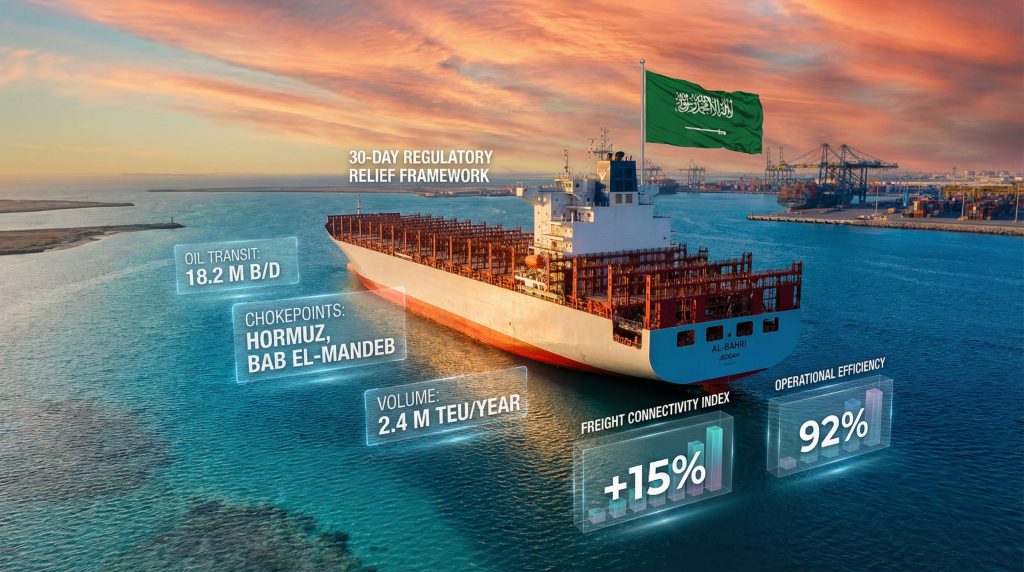
Saudi Arabia's Transport General Authority has implemented a comprehensive temporary waiver system affecting Saudi and foreign vessels operating within the Kingdom's Arabian Gulf territorial waters. This regulatory relief mechanism suspends standard documentation requirements for marine navigation licence issuance and renewal, along with work permit processing, for an initial 30-day period.
The framework establishes specific parameters for exemption qualification:
- Territorial scope: Limited to Saudi Arabian Gulf waters exclusively
- Extension criteria: Contingent upon maintaining safety and environmental compliance metrics
- Vessel eligibility: Includes maritime operations and projects facing operational challenges preventing departure for technical requirements completion
- Safety protocols: Non-negotiable safety standards remain fully enforced throughout exemption period
Extensions beyond the initial 30-day window require demonstrated adherence to safety and environmental standards, ensuring that operational flexibility does not compromise maritime security protocols.
Legal Precedents for Emergency Maritime Regulatory Flexibility
Historical analysis reveals multiple instances where maritime authorities have implemented similar documentation relief programmes during regional crises. The Suez Canal blockage in 2021 prompted several nations to expedite vessel certification processes, whilst the COVID-19 pandemic led to widespread adoption of digital documentation alternatives and extended validity periods for maritime licences.
International maritime emergency protocols typically follow established frameworks:
| Emergency Type | Typical Response Duration | Documentation Adjustments | Safety Oversight |
|---|---|---|---|
| Regional Conflict | 30-90 days | Licence extension, permit flexibility | Enhanced monitoring |
| Natural Disaster | 14-45 days | Expedited renewals, remote inspections | Temporary waivers |
| Pandemic Response | 90-180 days | Digital alternatives, extended validity | Modified protocols |
Risk assessment frameworks employed by transport authorities consider multiple variables including vessel type, cargo classification, operational history, and regional security conditions when determining exemption eligibility. However, understanding the broader tariffs impact on markets becomes crucial for maritime operators evaluating long-term business strategies.
How Regional Conflicts Drive Maritime Policy Adaptations
Strait of Hormuz Disruption Impact Assessment
The Strait of Hormuz represents one of the world's most critical maritime chokepoints, facilitating the passage of approximately 21% of global petroleum liquids according to the U.S. Energy Information Administration. Current regional tensions have generated significant disruptions to normal shipping operations through this strategic waterway.
Global Oil Transit Statistics Through Critical Chokepoints:
| Chokepoint | Daily Oil Transit (million barrels) | Global Share | Alternative Routes |
|---|---|---|---|
| Strait of Hormuz | 18.5 | 21% | Limited pipeline options |
| Suez Canal | 5.5 | 6% | Cape of Good Hope |
| Strait of Malacca | 15.0 | 17% | Lombok/Makassar Straits |
Economic multiplier effects from shipping route diversions include elevated insurance premiums, extended transit times, and increased fuel consumption. Maritime insurance rates for Gulf operations have experienced significant escalations, with war risk premiums increasing substantially due to heightened regional tensions. Consequently, the OPEC oil market influence on global pricing mechanisms becomes more pronounced during such disruptions.
Supply Chain Resilience Through Regulatory Innovation
Minister of Transport and Logistics Services Saleh Al-Jasser emphasised that regulatory adaptations aim to "ensure maritime business continuity and support logistics operations with high efficiency". The policy framework aligns with Saudi Vision 2030 transport sector objectives, which prioritise supply chain resilience and regional connectivity enhancement.
Cross-border trade facilitation mechanisms include:
- Streamlined vessel clearance processes for Arabian Gulf operations
- Enhanced coordination between port authorities and railway networks
- Expanded container transport licensing for multimodal connectivity
- Integration of digital documentation systems for real-time compliance monitoring
Furthermore, recent developments regarding Saudi exploration licenses have implications for maritime infrastructure requirements and strategic planning within the region.
Which Vessels Qualify for Documentation Relief Programmes
Eligibility Criteria for Saudi and Foreign Maritime Units
The exemption programme covers vessels associated with maritime operations and projects within Saudi Arabia's maritime zones that face operational challenges preventing departure for technical requirements completion or necessary inspections outside territorial waters. This broad definition encompasses multiple vessel categories operating under varying commercial and operational circumstances.
Operational challenge definitions include:
- Regional security conditions preventing safe transit to inspection facilities
- Port congestion limiting vessel movement capabilities
- Technical requirements necessitating specialised facilities within territorial waters
- Project-specific maritime operations requiring continuous presence in designated areas
Technical requirement completion alternatives enable vessels to maintain operational status whilst fulfilling regulatory obligations through modified protocols adapted to current regional circumstances.
Safety and Environmental Compliance Safeguards
Despite documentation relief provisions, fundamental safety and environmental protection protocols remain unchanged throughout the exemption period. The Transport General Authority maintains comprehensive monitoring mechanisms to ensure continued regulatory oversight without compromising maritime security standards.
Non-negotiable safety standards maintained during exemption period:
- Vessel structural integrity assessments
- Navigation equipment functionality verification
- Crew certification and competency requirements
- Emergency response capability maintenance
- Environmental protection system operations
- Cargo handling safety protocol adherence
Environmental protection measures include continued compliance with international maritime pollution prevention standards, ballast water management requirements, and emission control protocols applicable to Gulf waters operations.
Why Saudi Arabia Is Expanding Maritime Support Infrastructure
Mawani Port Authority Enhanced Service Integration
The Saudi Ports Authority (Mawani) has implemented comprehensive support measures leveraging capabilities across Eastern Region ports to deliver integrated services meeting vessel requirements efficiently. These enhanced services aim to ensure operational continuity as regional shipping conditions experience increased complexity.
Eastern Region port capability leveraging includes expanded berth availability, expedited cargo handling processes, and enhanced vessel services coordination. Port authorities have increased operational hours and deployed additional resources to accommodate vessels seeking alternative routing options due to regional disruptions.
Mawani Enhanced Services During Regional Shipping Disruptions:
- 24/7 port operations with extended service windows
- Expedited customs and immigration processing
- Enhanced fuel and supply provisioning capabilities
- Expanded vessel maintenance and repair services
- Integrated logistics coordination with railway networks
- Digital documentation processing for reduced administrative delays
Railway Network Container Transport Licensing Expansion
The Transport General Authority has issued additional licensing to Saudi Railway Company for container train operations at expanded stations throughout the Kingdom's railway network. This strategic expansion aims to enhance freight connectivity between ports and inland terminals whilst providing alternative routing options during maritime disruptions.
Freight Connectivity Improvements Between Ports and Terminals:
| Route Segment | Additional Stations | Container Capacity Increase | Regional Connectivity |
|---|---|---|---|
| Eastern-Central | 8 new stations | 25% capacity expansion | Enhanced inland access |
| Eastern-Northern | 6 new stations | 20% capacity expansion | Cross-border facilitation |
| Port Integration | 12 connection points | 30% efficiency improvement | Multimodal coordination |
Regional and cross-border logistics flexibility enhancement supports both domestic supply chain resilience and international trade continuity during periods of maritime route uncertainty. However, the trade war market impact continues to influence global shipping patterns and infrastructure investment priorities.
What This Policy Shift Reveals About Gulf Maritime Strategy
Proactive Regulatory Framework Development
Saudi Arabia's rapid implementation of maritime documentation relief demonstrates sophisticated anticipatory policy design capabilities for crisis management scenarios. The framework balances operational continuity requirements with regulatory compliance obligations, reflecting international best practices in maritime emergency response protocols.
This proactive approach indicates several strategic considerations:
- Risk anticipation: Recognition of regional volatility impacts on maritime commerce
- Regulatory agility: Ability to rapidly adjust documentation requirements whilst maintaining safety standards
- Economic continuity: Prioritisation of supply chain stability during geopolitical uncertainty
- International coordination: Alignment with global maritime emergency response frameworks
The policy framework establishes precedents for future crisis management whilst maintaining Saudi Arabia's position as a reliable regional logistics hub despite external disruptions.
Economic Implications for Regional Trade Flows
Current policy adaptations reflect broader economic strategies aimed at maintaining Saudi Arabia's competitive position in regional trade networks. The Kingdom's strategic location between Asian manufacturing centres and European markets positions it as a critical alternative routing option during Strait of Hormuz disruptions.
Hypothetical Scenario Impact Analysis:
If Strait of Hormuz disruptions persist beyond current projections, Saudi Arabian ports could experience significantly increased traffic volumes. Alternative routing through Saudi territory could reduce typical Asia-Europe transit times compared to Cape of Good Hope diversions, creating substantial economic opportunities for the Kingdom's transport infrastructure.
Long-term infrastructure investment justifications include expanded port capacity, enhanced railway connectivity, and advanced logistics technology integration to capitalise on potential permanent trade flow shifts resulting from regional geopolitical realignments. Additionally, the Trump tariffs global impact may further reshape international trade routes and demand for alternative shipping corridors.
The next major ASX story will hit our subscribers first
How Maritime Documentation Exemptions Compare Globally
International Emergency Maritime Regulatory Responses
Comparative analysis of global maritime emergency responses reveals varying approaches to documentation relief and operational continuity during crisis periods. Different nations have implemented diverse strategies based on their specific maritime infrastructure, regulatory frameworks, and economic priorities.
Documentation Relief Programmes Across Major Shipping Nations:
| Country | Relief Duration | Scope | Implementation Speed | Effectiveness Rating |
|---|---|---|---|---|
| Singapore | 45-90 days | Comprehensive | 48-72 hours | High |
| Netherlands | 30-60 days | Selective | 5-7 days | Medium-High |
| United Kingdom | 60-120 days | Comprehensive | 7-14 days | High |
| South Korea | 30-45 days | Selective | 3-5 days | Medium |
Timeline analysis reveals that policy implementation speeds vary significantly based on administrative structures, with more centralised transport authorities typically achieving faster response times than those requiring multi-agency coordination.
Best Practices in Crisis Maritime Governance
Singapore's COVID-19 maritime regulatory adaptations provide valuable insights into effective crisis management protocols. The Maritime and Port Authority of Singapore implemented comprehensive digital documentation systems, extended certificate validity periods, and established remote inspection protocols that maintained safety standards whilst enabling operational continuity.
European Union emergency shipping protocol frameworks emphasise regional coordination and standardised response mechanisms across member states. These frameworks enable rapid implementation of consistent policies during maritime emergencies whilst maintaining competitive market conditions.
Key lessons learned from previous crisis responses include:
- Digital infrastructure importance: Pre-existing digital documentation systems enable faster emergency adaptations
- Stakeholder coordination: Regular industry consultation improves policy effectiveness
- Flexibility with oversight: Temporary relief must maintain essential safety and security protocols
- Regional cooperation: Coordinated responses across neighbouring jurisdictions enhance overall effectiveness
FAQ Understanding Saudi Maritime Documentation Relief
Common Questions About Vessel Exemption Eligibility
Who determines operational challenges preventing standard inspections?
The Transport General Authority evaluates vessel-specific circumstances on a case-by-case basis, considering regional security conditions, port accessibility, and technical requirement complexity. Vessel operators must demonstrate legitimate operational constraints that prevent departure for standard inspection procedures.
How are safety standards maintained without standard documentation?
Alternative verification methods include enhanced monitoring protocols, digital documentation systems, and modified inspection procedures conducted within territorial waters. Essential safety equipment functionality and crew competency requirements remain fully enforced throughout the exemption period.
What happens if the 30-day period needs extension?
Extension requests require demonstrated compliance with safety and environmental standards throughout the initial exemption period. The Transport General Authority evaluates regional conditions and vessel-specific circumstances when considering extension approvals.
Implementation Timeline and Renewal Procedures
Application processes for exemption qualification involve submission of vessel documentation, operational challenge evidence, and safety compliance verification to the Transport General Authority. Processing times typically range from 24-48 hours for qualifying vessels already operating within Saudi territorial waters.
Documentation required for extension requests includes:
- Safety compliance reports during initial exemption period
- Environmental protection measure verification
- Updated operational challenge assessments
- Technical requirement completion progress reports
Appeal mechanisms for exemption denials provide vessel operators with opportunities to address compliance concerns or provide additional documentation supporting their exemption qualification requests.
Long-Term Implications for Gulf Shipping Regulatory Evolution
Permanent Policy Changes Likely to Emerge
Current emergency measures may influence long-term regulatory framework evolution within Saudi Arabia's maritime sector. Successful implementation of digital documentation alternatives and streamlined inspection procedures could become permanent features of the Kingdom's maritime regulatory system.
Lessons learned integration into standard regulatory frameworks includes enhanced crisis response capabilities, improved stakeholder coordination mechanisms, and expanded flexibility provisions for future emergency scenarios.
Regional cooperation enhancement in maritime emergency response could lead to standardised protocols across Gulf Cooperation Council member states, creating more consistent and effective regional maritime governance frameworks.
Investment Opportunities in Maritime Infrastructure Resilience
Port capacity expansion justifications include increased demand for alternative routing options during regional disruptions and potential permanent trade flow shifts resulting from geopolitical realignments. Saudi Arabia's strategic geographic position creates substantial opportunities for infrastructure investment and capacity enhancement.
Technology integration for regulatory efficiency encompasses digital documentation systems, automated inspection technologies, and enhanced monitoring capabilities that could attract significant private and public investment in maritime infrastructure modernisation.
Alternative route development economic viability analysis suggests substantial long-term potential for Saudi Arabia's transport infrastructure as global supply chains seek increased resilience and routing flexibility in response to persistent geopolitical uncertainties affecting traditional maritime corridors.
Disclaimer: This analysis is based on publicly available information and should not be considered as financial or investment advice. Maritime policy developments and their economic implications involve significant uncertainties and potential risks that may affect actual outcomes.
Looking to Navigate Volatile Maritime Markets?
Discovery Alert's proprietary Discovery IQ model delivers real-time insights on ASX mineral discoveries that can be affected by global shipping disruptions and supply chain challenges, helping investors identify opportunities ahead of broader market recognition. Start your 14-day free trial today and discover why major mineral discoveries often generate exceptional returns during periods of geopolitical uncertainty.