
July 20, 2026
Understanding the Critical Nature of Maritime Energy Chokepoints
When examining global energy security vulnerabilities, few geographic locations carry the strategic weight of narrow maritime passages that facilitate petroleum transportation. These waterways represent convergence points where geopolitical tensions, economic interdependencies, and military capabilities intersect with profound consequences for international stability. The concentration of energy transit through specific corridors creates asymmetric leverage opportunities for regional powers while exposing importing nations to supply disruption risks that cascade through their entire economic systems.
The complexity of managing these vulnerabilities requires sophisticated coordination mechanisms between nations with divergent interests but shared dependencies. Energy importing economies must balance immediate supply security concerns with long-term strategic positioning, while regional powers leverage geographic advantages to advance broader geopolitical objectives. Understanding this dynamic provides essential context for analyzing contemporary maritime security challenges and the international response frameworks they generate.
When big ASX news breaks, our subscribers know first
Economic Implications of Strategic Waterway Disruptions
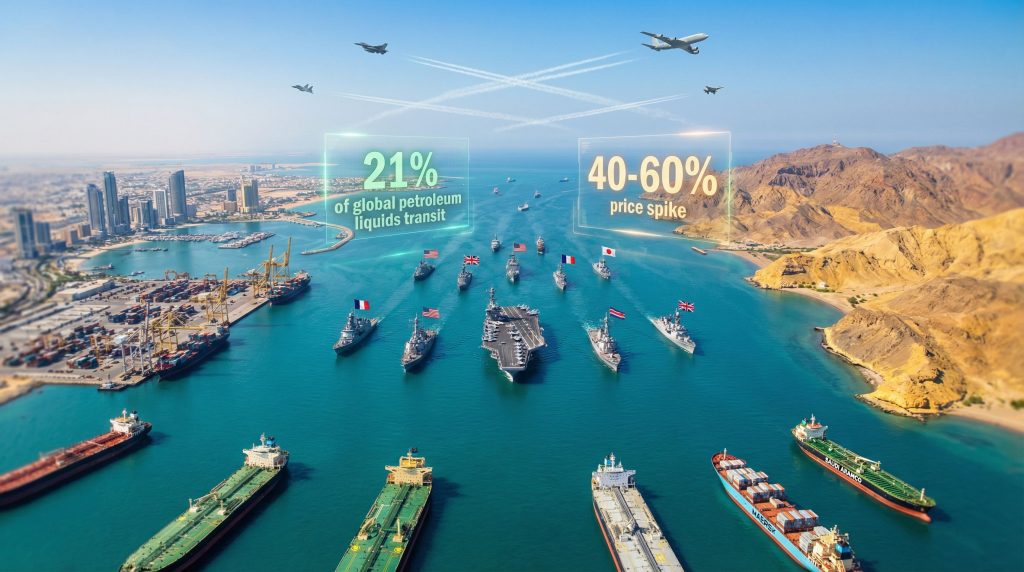
Maritime energy chokepoints facilitate approximately one-third of global petroleum liquids transit, making their operational status a critical variable in international economic stability. When these passages face closure or significant restriction, the resulting market disruptions extend far beyond immediate energy price fluctuations to encompass shipping costs, currency volatility, and supply chain reconfiguration across multiple industries.
The interconnected nature of global markets means that these disruptions trigger immediate responses similar to those seen during an oil price rally. Furthermore, understanding the broader tariffs impact analysis becomes essential when evaluating comprehensive economic consequences.
Economic Impact Analysis Framework:
| Disruption Duration | Energy Price Effects | GDP Consequences | Market Adaptations |
|---|---|---|---|
| 1-7 Days | 20-40% price volatility | Minimal structural impact | Emergency reserves deployment |
| 1-4 Weeks | 40-80% sustained increases | 0.3-0.7% quarterly reduction | Alternative routing acceleration |
| 1-6 Months | New pricing equilibrium | 1.5-3% annual impact | Infrastructure investment shifts |
| 6+ Months | Permanent market restructuring | Long-term economic rebalancing | Energy security overhaul |
Financial institutions typically observe predictable patterns during these crises, with energy-intensive industries experiencing the most significant valuation impacts while alternative energy and logistics sectors often benefit from increased investment flows.
Regional Economic Vulnerabilities
Different economic regions demonstrate varying degrees of susceptibility to maritime energy disruptions based on their import dependencies, alternative supply access, and strategic reserve capacities. European markets typically face higher vulnerability due to limited domestic production and geographic constraints on alternative supply routes, while North American economies benefit from continental energy resources and diverse import options.
Regional Dependency Metrics:
- European Union: 65% of petroleum imports transit through strategic chokepoints
- East Asian Economies: 75% reliance on maritime energy transportation
- Emerging Market Economies: Critical price sensitivity with limited strategic reserves
- Gulf Cooperation Council: Export revenue concentration through single waterway systems
International Coalition Formation Mechanisms
The development of multinational responses to maritime security threats follows established diplomatic protocols that balance national interests with collective security imperatives. Contemporary coalition building combines traditional alliance structures with ad hoc partnerships based on shared economic vulnerabilities and strategic capabilities.
Modern diplomatic coordination utilises multilayered communication frameworks that integrate government-to-government channels, military liaison mechanisms, and private sector engagement platforms. The speed and effectiveness of coalition formation directly correlates with pre-existing relationships, shared intelligence infrastructure, and compatible operational doctrines among participating nations.
According to UK-led coalition talks, over 35 countries have committed to addressing strategic waterway challenges through coordinated diplomatic and military responses.
Diplomatic Architecture for Maritime Crises
Phase 1: Initial Consultation and Assessment
- Intelligence sharing protocols activation
- Economic impact modelling coordination
- Diplomatic communication channel establishment
- Public messaging framework development
Phase 2: Strategic Planning and Resource Allocation
- Military capability assessment and coordination
- Economic leverage mechanism identification
- Legal framework analysis under international maritime law
- Alternative supply route activation planning
Phase 3: Operational Implementation
- Naval asset deployment coordination
- Economic sanctions package development
- Diplomatic pressure campaign execution
- Private sector engagement and support mechanisms
The effectiveness of these phases depends heavily on prior relationship building, shared institutional frameworks, and compatible strategic doctrines among coalition members. Nations with extensive maritime security cooperation agreements typically demonstrate superior coordination capabilities during crisis situations.
Military Options for Waterway Security Operations
Contemporary naval security operations integrate multiple specialised capabilities designed to address diverse threat scenarios while minimising escalation risks. The technical complexity of modern maritime security requires coordination between surface vessels, submarine platforms, aerial reconnaissance systems, and space-based surveillance infrastructure.
Naval Escort and Protection Protocols
Modern convoy protection systems utilise layered defence architectures that combine destroyer-class vessels, frigate escorts, and submarine surveillance platforms. These operations require sophisticated coordination protocols to manage civilian shipping traffic while maintaining defensive postures against asymmetric threats including mines, small boat attacks, and anti-ship missile systems.
Essential Naval Capabilities:
- Surface Combatants: Anti-air and anti-missile defence systems
- Submarine Forces: Underwater threat detection and neutralisation
- Aviation Assets: Long-range reconnaissance and rapid response capabilities
- Mine Warfare Systems: Detection, identification, and clearance technologies
Advanced Mine Clearance Technologies
Contemporary mine-clearing operations employ autonomous underwater vehicles (AUVs) equipped with sonar mapping systems, magnetic anomaly detectors, and controlled detonation capabilities. The narrow geography of critical waterways requires precision navigation systems and coordinated international protocols to ensure comprehensive threat elimination while maintaining commercial shipping schedules.
Technology Integration Systems:
- Sonar Mapping Platforms: High-resolution seafloor analysis capabilities
- ROV Deployment Systems: Remote-operated vehicle mine disposal protocols
- Magnetic Detection Arrays: Comprehensive metallic object identification networks
- GPS-Guided Clearance: Precision explosive ordnance disposal coordination
Leading Nations in Gulf Maritime Security
The Persian Gulf maritime security architecture reflects a complex hierarchy of naval capabilities, regional partnerships, and strategic interests that shape international response mechanisms during crisis situations. Understanding these relationships provides critical context for analysing coalition effectiveness and operational coordination capabilities.
Tier 1 Maritime Powers and Capabilities
United States Naval Presence:
The Fifth Fleet maintains permanent forward deployment capabilities including carrier strike groups, amphibious ready groups, and specialised mine countermeasure vessels. Advanced surveillance systems integrate satellite intelligence with maritime patrol aircraft to provide comprehensive situational awareness across Gulf waters.
European Naval Coordination:
Britain, France, and other European nations contribute destroyer-class vessels, submarine platforms, and specialised maritime security capabilities through established partnership agreements. These contributions typically focus on convoy escort operations and intelligence sharing rather than direct conflict engagement.
Regional Partner Integration:
Gulf Cooperation Council nations provide critical port access, logistics support, and local maritime knowledge essential for extended naval operations. Their coastal defence systems and patrol vessel capabilities complement international naval assets in comprehensive security frameworks.
Strategic Port Access and Logistics Networks
Critical Infrastructure Elements:
| Location | Strategic Value | Operational Capabilities | Coalition Access |
|---|---|---|---|
| Bahrain Naval Base | Central Gulf positioning | Carrier support facilities | Full NATO access |
| UAE Port Networks | Commercial logistics hub | Container and fuel handling | International partnership |
| Kuwait Naval Facilities | Northern Gulf coverage | Patrol vessel support | Regional cooperation |
| Qatar Maritime Assets | Eastern approach monitoring | Intelligence gathering | Selective partnership |
Energy Diplomacy and Alliance Structures
Energy security considerations fundamentally shape international alliance patterns during maritime crises, creating natural partnership frameworks based on shared vulnerabilities and complementary capabilities. Nations with similar energy import profiles typically demonstrate enhanced cooperation willingness, while energy-exporting countries face complex decisions about supporting actions that might affect regional stability.
The asymmetric nature of energy dependencies creates leverage imbalances that influence diplomatic positioning during waterway security crises. These dynamics mirror broader trade war strategies where economic interdependence becomes a tool of statecraft.
Energy Import Vulnerability Analysis
High-Dependency Coalition Members:
- Japan: 85% petroleum import reliance through Gulf routes
- South Korea: 80% energy transit vulnerability via strategic chokepoints
- Germany: 60% natural gas and petroleum import exposure
- India: Growing energy import dependency with limited alternative routes
Medium-Dependency Strategic Partners:
- France: Diversified supply base with moderate Gulf exposure
- Italy: Regional supply networks with strategic chokepoint vulnerabilities
- Spain: Atlantic alternative access with Gulf energy ties
These dependency patterns directly influence each nation's willingness to contribute military assets, accept operational risks, and support sustained diplomatic pressure campaigns during waterway security operations. Moreover, energy transition challenges affect long-term strategic planning for coalition members.
The next major ASX story will hit our subscribers first
International Maritime Law and Enforcement Mechanisms
The legal foundation for international maritime intervention rests primarily on the United Nations Convention on the Law of the Sea (UNCLOS), which establishes principles of freedom of navigation and innocent passage through international waterways. However, enforcement mechanisms remain limited when dealing with state-sponsored waterway closures, creating gaps that require creative diplomatic and legal approaches.
Contemporary maritime law applications must balance sovereignty principles with collective security imperatives, particularly when waterway control affects global economic stability. The precedent established during previous maritime interventions provides guidance for current legal frameworks while highlighting persistent enforcement challenges in international waters.
Historical Precedents for Maritime Intervention
Tanker War Operations (1987-1988):
International escort operations during the Iran-Iraq conflict established protocols for neutral nation protection of commercial shipping under international law. These operations demonstrated the legal viability of collective maritime security while highlighting coordination challenges between diverse naval forces.
Suez Crisis Response Framework (1956):
The multinational intervention following canal nationalisation created precedents for economic and diplomatic pressure combined with military positioning to secure critical waterways. Legal justifications focused on protecting international commerce and preventing regional conflict escalation.
Contemporary Malacca Strait Security (2004-present):
Regional cooperation mechanisms between Indonesia, Malaysia, and Singapore demonstrate successful models for collaborative maritime security that balance sovereignty concerns with collective action requirements. These frameworks provide templates for broader international coordination efforts.
Alternative Energy Transportation Routes and Strategic Planning
The development and utilisation of alternative energy transportation routes represents a critical component of strategic planning for waterway security operations. Understanding the capacity limitations, cost implications, and infrastructure requirements of bypass options enables realistic assessment of economic leverage and military timeline constraints.
Alternative Route Capacity Analysis:
| Transportation Option | Daily Capacity (Million Barrels) | Cost Premium | Infrastructure Requirements |
|---|---|---|---|
| Suez Canal Transit | 12-15 | 15-25% | Enhanced canal security |
| Cape of Good Hope Route | 8-12 | 45-60% | Extended shipping schedules |
| Trans-Arabian Pipeline | 5-8 | 30-40% | Pipeline security upgrades |
| Red Sea Port Systems | 4-6 | 35-50% | Port capacity expansion |
| Caspian Route Networks | 2-4 | 50-70% | Cross-border coordination |
Infrastructure Development Implications
The strategic importance of alternative routes drives substantial infrastructure investment during periods of waterway uncertainty, creating long-term shifts in global energy transportation patterns. These investments typically require 18-36 months for significant capacity increases, highlighting the temporal constraints facing coalition planning efforts.
Critical Infrastructure Priorities:
- Port Expansion Projects: Container handling and petroleum storage capacity
- Pipeline Network Development: Cross-border connection and security systems
- Transportation Coordination: Rail and road network integration with maritime systems
- Strategic Reserve Capacity: Emergency storage and distribution infrastructure
Technology Integration in Modern Naval Operations
Contemporary maritime security operations require sophisticated technology integration across multiple domains, including satellite surveillance, underwater detection systems, communication networks, and autonomous platform deployment. The complexity of coordinating these systems among diverse international partners represents a significant operational challenge requiring extensive pre-planning and standardisation efforts.
Satellite Intelligence and Surveillance Systems
Space-Based Capabilities:
- Real-Time Vessel Tracking: Automatic identification system monitoring and analysis
- Synthetic Aperture Radar: All-weather surface surveillance and threat detection
- Communication Relay Systems: Encrypted multinational coordination platforms
- Navigation Support: GPS and alternative positioning system integration
Intelligence Fusion Mechanisms:
Modern naval operations integrate intelligence from national space assets, commercial satellite networks, and allied intelligence sharing agreements to create comprehensive situational awareness pictures. These systems require substantial coordination protocols to ensure compatibility and security while maintaining operational effectiveness.
Underwater Surveillance and Detection Technologies
Advanced Sonar Systems:
Contemporary underwater threat detection utilises passive and active sonar arrays, magnetic anomaly detection systems, and acoustic signature analysis to identify submarine threats and underwater explosive devices. The integration of these systems across multinational naval forces requires standardised communication protocols and shared threat assessment methodologies.
Autonomous Platform Deployment:
Unmanned underwater vehicles provide persistent surveillance capabilities while reducing human risk exposure in contested environments. These platforms typically operate in coordinated networks that share data through encrypted communication systems and automated threat analysis algorithms.
Market Psychology and Financial Response Patterns
Energy security crises trigger predictable psychological responses in financial markets that amplify price volatility and create systematic patterns in asset allocation decisions. Understanding these behavioural patterns enables more accurate assessment of economic pressure timelines and coalition sustainability requirements during extended operations.
Furthermore, the intersection of US tariffs & inflation demonstrates how trade policies can compound maritime security challenges, creating additional economic pressures that affect coalition decision-making.
Institutional Investor Response Mechanisms
Immediate Market Reactions (Hours 1-48):
- Commodity Futures: Rapid price escalation with high volatility patterns
- Currency Markets: Flight to safety in reserve currencies
- Energy Equity Sectors: Value rotation toward domestic energy production
- Transportation Stocks: Shipping and logistics company revaluation
Medium-Term Adjustment Phase (Weeks 1-8):
- Supply Chain Analysis: Industrial sector assessment and revaluation
- Alternative Energy Investment: Accelerated capital allocation toward renewable sources
- Regional Economic Impact: Country-specific economic vulnerability assessment
- Strategic Reserve Utilisation: Government intervention and market stabilisation efforts
Investment Strategy Adaptations
Professional investment managers typically implement crisis response strategies that balance immediate portfolio protection with longer-term positioning for resolution scenarios. These strategies influence capital flows and market liquidity in ways that can either support or undermine international coalition efforts depending on their design and implementation timing.
Strategic Investment Frameworks:
- Energy Security Hedging: Derivative instruments and physical commodity positions
- Geographic Diversification: Portfolio rebalancing away from affected regions
- Infrastructure Investment: Long-term positioning in alternative energy transportation
- Currency Hedging: Protection against regional economic instability effects
Long-Term Strategic Implications for International Security Architecture
The precedent established through multinational responses to strategic waterway crises shapes future international security architecture in profound ways that extend far beyond immediate operational outcomes. Success or failure in current operations influences alliance durability, military cooperation frameworks, and international law development for decades following crisis resolution.
Contemporary joint action to reopen strait of hormuz operations test the boundaries of existing alliance structures while creating new precedents for collective security responses to economic warfare tactics. The integration of non-traditional alliance partners with established military cooperation frameworks requires innovative coordination mechanisms that may become templates for future international crises.
As reported by international diplomatic meetings, the current coordination efforts involve over 40 countries, representing the largest multinational maritime security coalition in recent history.
Alliance Structure Evolution
NATO Framework Extension:
Current operations explore the practical limits of collective defence obligations when applied to non-member nations with critical energy supply relationships. The success of these extended cooperation mechanisms influences future alliance expansion considerations and partnership framework development.
Regional Security Integration:
The coordination between European, Asian, and Middle Eastern security interests through joint naval operations creates new institutional frameworks for addressing global economic security threats. These mechanisms may become permanent fixtures of international security architecture if proven effective during current operations.
Energy Infrastructure Investment Patterns
Accelerated Alternative Development:
Crisis-driven investment in alternative energy transportation routes typically continues beyond immediate threat resolution, creating permanent shifts in global energy infrastructure patterns. These changes reduce future leverage opportunities while distributing economic vulnerabilities across broader geographic areas.
Strategic Reserve Enhancement:
Nations typically expand strategic petroleum reserve capacities following waterway security crises, reducing short-term vulnerability to future disruptions while increasing long-term storage and distribution infrastructure investment requirements.
The joint action to reopen strait of hormuz discussions represent a critical inflection point in international maritime security cooperation, testing the viability of multinational coordination mechanisms under extreme economic pressure while establishing precedents for future collective security responses.
Risk Assessment Framework:
The complexity of modern energy geopolitics demands sophisticated response mechanisms that integrate military capability, economic leverage, and diplomatic engagement to ensure both immediate crisis resolution and long-term strategic stability.
The current situation serves as a comprehensive examination of international cooperation frameworks in an increasingly multipolar world, where traditional alliance structures must adapt to address asymmetric economic warfare tactics that threaten global economic stability through geographic chokepoint control.
Looking to Navigate Maritime Energy Investment Opportunities?
Discovery Alert's proprietary Discovery IQ model delivers real-time alerts on significant mineral discoveries that could benefit from shifting energy dynamics and geopolitical developments affecting global supply chains. Understanding how major mineral discoveries can generate substantial returns during periods of economic uncertainty helps investors position themselves strategically ahead of market movements. Begin your 14-day free trial today to gain actionable insights into ASX opportunities that could capitalise on evolving energy security landscapes.